From New Delhi to Rome (and Back) via Hamburg or The Hague: the Enrica Lexie Incident and the UNCLOS Dispute Settlement Mechanism

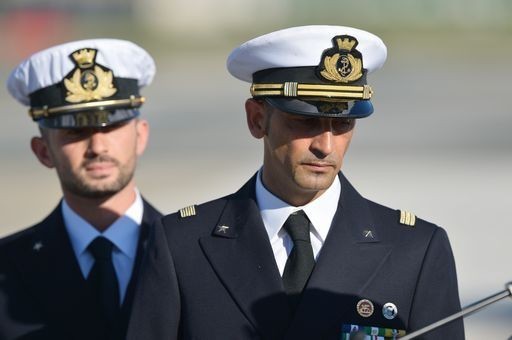
The Italian Marines upon their initial return in Italy in December 2012. Will they remain for good?

The Italian Marines upon their initial return in Italy in December 2012. Will they remain for good?

The recent decision of the Italian Government not to return two Italian marines to India for trial in connection with the killing of Indian fishermen is heightening tensions between Italy and India and is spawning an international diplomatic fallout. Since its inception, the case attracted much debate and conjecture, both by the media but also by specialized political and legal commentators. We have provided our point of view, for instance here and here. In essence, Italy and India disagree on who has jurisdiction to try the Italian marines. Each of their respective arguments is premised on international law, notably the United Nations Convention on the Law of the Sea, as well as municipal law. India contends that it has jurisdiction to try the marines because (1) the victims were Indian nationals, (2) the victims were killed on an Indian ship and (3)  the incident occurred within India’s Contiguous Zone, which extends beyond its territorial waters. For its part, Italy claims it has jurisdiction to try the pair because (1) they are Italian citizens; (2) they were deployed as a Vessel Protection Detachment on the Italian ship Enrica Lexie and (3) the incident occurred within international waters. Worthy of note is that both countries, separately but concurrently, have indeed initiated criminal proceedings against the marines before their internal judicial systems.

Recently, the Italian government formally clarified that since the issuing of the Indian Supreme Court decision in January 2013 in this matter, indicating that the marines shall be tried by a special chamber set up within the Indian judicial system, it has pursued the cooperation of the Indian government under Articles 100 and 283 of UNCLOS for a settlement of this matter under international law. From a formal point of view, therefore, the actions of the Italian government are an attempt to bring the question of which State has jurisdiction to try the marines within the legal framework of UNCLOS provisions related to the settlement of disputes.

UNCLOS builds on the commitment by all United Nations Members States to settle their international disputes by peaceful means in such a manner that international peace and security are not endangered. In particular, one of the main characteristic of UNCLOS and its dispute settlement system is the possibility for a State Party to unilaterally trigger the compulsory and binding jurisdiction of certain judicial institutions for the resolutions of such disputes. Given UNCLOS comprehensive reach, the range of controversies subject to resolution varies, and includes issues relevant to seabed and maritime delimitation, navigation, fisheries and the environment, etc.

Part XV of UNCLOS requires States Parties to first attempt to settle any dispute between them by peaceful means and seek a solution in compliance with the United Nations Charter (Articles 279-280). Importantly, States Parties can agree to seek the settlement of the dispute by peaceful means of their own choice (Article 281), including recourse to general, regional or bilateral agreements (Article 282). Parties also have an obligation to exchange views on the possible settlement (Article 283) and can decide to submit the dispute to a non-binding conciliation (Article 284). Where, however, no settlement has been reached, UNCLOS stipulates that the dispute must be submitted at the request of either party to the dispute to a court or tribunal having jurisdiction in this regard (Article 286). The relevant rules contained in Part XV of UNCLOS are quite complex and foresee the possibility of seeking relief before different fora, depending on the subject matter of the controversy, also setting forth a series of exceptions and opt-outs. With regard to controversies akin to that concerning the Enrica Lexie incident, Article 287 of UNCLOS defines available courts or tribunals as the International Tribunal for the Law of the Sea, in Hamburg (ITLOS), or the International Court of Justice, in the Hague (ICJ). In ratifying the UNCLOS, Italy already declared its acceptance of the jurisdiction of either of these institutions as binding, while India reserved its rights to any such declaration. Alternatively, the parties might choose to refer the unsettled dispute to an ad hoc arbitral tribunal. A Party to a dispute not covered by a declaration in force shall be deemed to have accepted arbitration.  If the parties to a dispute have not accepted the same procedure for the settlement of the dispute, this may be submitted to arbitration unless the Parties otherwise agree. Finally, any decision rendered by a court or tribunal having jurisdiction over the dispute shall be final and shall be complied with by all the parties to the dispute (Article 296).

Arguably, the positions of the two States on this matter have not been more discordant. Italy’s sudden decision not to return its marines to India is premised on a change in circumstances following the perceived lack of cooperation by the Indian authorities in resolving the dispute in accordance with international law. This in itself is considered by the Italian government as a dispute on the scope of application of UNCLOS. The Indian government, on the other hand, has reacted strongly and called the Italian decision “unacceptable”. The Indian Supreme Court is currently precluding the Italian Ambassador, who acted as a guarantor for the return of the marines to India, from leaving the country. While it is unclear whether the Italian Ambassador has any immediate intention to leave India, the Indian Supreme Court should be cognizant of the Vienna Convention on Diplomatic Relations (1961) which provides in Article 29 that the person of a diplomatic agent shall be inviolable. The Indian Supreme Court appears to misconstrue the Italian ambassador as a personal guarantor for the return of the marines, rather than a diplomatic agent of the Italian government. The two states maintain irreconcilable positions. India needs Italy to return the marines back on its soil to eventually commence a meaningful trial before its courts, while Italy needs India to comply with its international rogatory requests to complete its investigations into the matter, thus relaxing the jurisdictional dispute by bringing the marines to trial before its own courts.

ITLOS sits in Hamburg - Is the Enrica Lexie Case on its way there? Courtesy ITLOS

ITLOS sits in Hamburg – Is the Enrica Lexie Case on its way there? Courtesy ITLOS

The recent adjudication by the International Court of Justice in the Hissène Habré case provides useful guidance on the expected complexities of instances where the Parties cannot agree to settle their differences. The judgment of the Court in this case, particularly the findings concerning its admissibility, reveals several years of diplomatic exchanges between Belgium, which petitioned the Court, and Senegal, which was accused of neither prosecuting nor extraditing Mr. Habré, the former President of Chad, based on violations of the Convention Against Torture. The ICJ decision in Habre includes, in the first place, lengthy discussions on whether a disagreement occurred among the Parties, whether this could not be settled by them and whether the jurisdiction of the Court had been triggered.

Paradoxically, the divergences between Italy and India might facilitate recourse to compulsory jurisdiction with ITLOS or the ICJ. The route between New Delhi and Rome in the resolution of the Enrica Lexie incident therefore might  pass through Hamburg or The Hague. The voyage is far from clear and it will continue to be a perilous one.

The “Private Ends” Requirement of UNCLOS in the 9th Circuit: Are Sea Shepherds Pirates?

Sea Sheperd Conservation Society Vessel

The United States Court of Appeals for the 9th Circuit recently discussed the “private ends” requirement of the crime of piracy under international law.  In Cetacean v. Sea Shepherds, Judge Kozinski reversed the lower court and enjoined the Sea Shepherds, an international non-profit, marine wildlife conservation organization, from coming within 500 meters of any Japanese whaling vessels.  Judge Kozinski held that Sea Shepherds satisfied the “private ends” requirement of the United Nations Convention on the Law of the Sea (UNCLOS), and that they could accordingly be considered pirates under international law, regardless of their political and non-pecuniary motivation.    According to Judge Kozinski:

“You don’t need a peg leg or an eye patch. When you ram ships; hurl glass containers of acid; drag metal-reinforced ropes in the water to damage propellers and rudders; launch smoke bombs and flares with hooks; and point high-powered lasers at other ships, you are, without a doubt, a pirate, no matter how high-minded you believe your purpose to be.” (p. 2).

Scholars interested in the field of maritime piracy have been most fascinated by Judge Kozinski’s discussion of the “private ends” requirement.  Many have already debated Judge Kozinski’s determination that Sea Shepherds could be considered pirates under UNCLOS, with both enthusiasm and disagreement.  Eugene Kontorovich on Volokh Conspiracy agreed with Judge Kozinski and argued that the relevant distinction under UNCLOS is between private ends committed by private parties, and other acts committed by governments.  Thus, according to Kontorovich,

“It does not turn on whether the actor’s motives are pecuniary, political, operating under mistake of fact, or simply insane. Private ends are those ends held by private parties. The converse is also true: a government-owned ship in government service cannot commit piracy even if it attacks another vessel solely to enrich itself.”

According to Kontorovich, as long as the Sea Shepherds were acting as private parties, and not governmental agents, their actions would satisfy the “private ends” requirement, despite the fact that the Sea Shepherds’ goals may be purely political (“private” clearly means ‘non-governmental,’ rather than selfish or not selfish”).   Kevin Jon Heller on Opinio Juris disagreed, and argued instead that the “private ends” requirement of UNCLOS excludes all politically motivated acts, not simply those committed by governments or governmental agents.  According to Heller,

“politically-motivated acts of violence on the high seas were not traditionally considered piracy under international law, but were instead simply criminal acts that the offended state could prosecute as it saw fit.”

Pursuant to Heller’s argument, as long as the Sea Shepherds were acting toward a political goal, their actions could not satisfy the “private ends” requirement and they could not be considered pirates under UNCLOS.  Both Kontorovich and Heller would apparently agree that the Shepherds’ acts could be considered acts of maritime violence under the SUA Convention.

Finally, Jon Bellish on EjilTalk! acknowledged the debate between Kontorovich and Heller, and noted that both positions had significant support in the drafting history of UNCLOS and in other international law documents.  Bellish also argued that the question of what exactly the “private ends” requirement constitutes today was more nuanced than either Kontorovich or Heller seem to acknowledge:

“The outer bounds of the private ends requirement are relatively clear. On one end, proving animus furandi – or the intention to steal for personal pecuniary gain – is not required to satisfy the private ends requirement. On the other end, it is undisputed that acts of violence committed on the high seas under state authority fail to satisfy the private ends requirement. But there is significant room between these two extremes. Just exactly where the line should be drawn between these two extremes, and on which side of that line the Sea Shepherds fall, is a more difficult issue.”

Bellish concludes by agreeing with Kontorovich, and Judge Kozinski.  Bellish notes that if one were to adopt a narrow interpretation of the “private ends” requirement and to inquire in each instance about the perpetrator’s subjective intent (whether it was private/pecuniary or political), then one would have to exclude acts of Somali “pirates” from piracy, because their alleged motivation was announced as protecting their waters from illegal fishing exploitation and environmental dumping.

While it is difficult to disagree with this argument, it is equally difficult to conclude that Sea Shepherds easily fit within the traditional paradigm of piracy.  They do not.  Their goals truly are political and non-pecuniary, and their intent belongs more in the “political” category rather than the “private” one.  The Ninth Circuit may have adopted a too formalistic approach and a too wide reading of UNCLOS in holding that they were pirates.  When interpreting UNCLOS, modern-day judges may need to resort to a more flexible approach.  Instead of adopting a strict private/public distinction when interpreting the “private ends” requirement, it would be possible for judges to adopt a presumption that private parties act for private ends, unless such parties can demonstrate convincingly that their acts had a bona fide political purpose.  Under this approach, Sea Shepherds, as private parties, would first be classified as acting for private ends, but presumably they would be able to demonstrate that their purpose is purely political.  Sea Shepherds are not pirates, although their acts of violence at sea may be reprehensible.  Kevin Jon Heller, in the above-mentioned post, quoted the following language, from an essay by His Excellency Jose Luis Jesus, a judge on the International Tribunal for the Law of the Sea:

“This requirement seems to exclude sheer politically motivated acts directed at ships or their crew from the definition of piracy. In the past the issue of whether a politically motivated act was a piratical act drew substantial support from some publicists and governments. The piracy rules, specifically tailored to handle piratical acts, were in the past stretched in their interpretation and application by some national jurisdiction and by some commentators to also cover, by default, other unlawful, politically related, acts against ships and persons on board, such as terrorist acts….Today, however, especially after the adoption of the SUA Convention, it would appear to be a lost cause to continue insisting on considering such a politically-motivated act as piracy. If, in the past, politically-motivated acts of violence or depredation against ships and persons aboard, short of being piracy, were left out of the international regulatory system, as it were, today they are covered by Article 3 of the said SUA Convention.  Likewise, the ‘private ends’ criterion seems to exclude acts of violence and depredation exerted by environmentally-friendly groups or persons, in connection with their quest for marine environment protection. This seems to be clearly a case in which the “private ends’’ criterion seems to be excluded. “

I agree with Judge Jesus, and Kevin Jon Heller, and would encourage courts to adopt a more flexible approach in their interpretation of the “private ends” requirement.

Chinese Drones and Mekong Piracy

Naw Kham (first from right) and members of his gang hear the verdict of the first trial at the Kunming Intermediate People’s Court in Yunnan Province on November 6, 2012. Photo: CFP

There have been some interesting revelations in the case of Naw Kham, the so-called Mekong Pirate who presided over a transnational criminal network in the Golden Triangle of the Mekong river basin. (prior coverage here). Although Naw Kham was convicted of murder, drug trafficking, kidnapping and hijacking across international borders, this does not constitute piracy under UNCLOS as it did not occur on the high seas. Nonetheless, the case provides a fascinating case study in transnational organized crime and has important analogies to piracy on the high seas. Chinese media have focused on the operation to capture Naw Kham, whereas Western media have focused on the fact that China considered using an unmanned drone to kill him.

First the Chinese government-published Global Times provides details on how Naw Kham avoided capture by the Chinese in the Golden Triangle for so long.

During the search, Naw Kham vanished at least three times just as the Chinese police were closing in. [Taskforce leader] Liu said that this was largely because the Chinese police were limited in what they could do overseas. They had to launch appeals before undertaking operations and cooperate with local police.

But Naw Kham had lived in the Golden Triangle for many years and sometimes locals would aid him.

At the end of 2011, Chinese police located Naw Kham at a village by the Mekong River in Boqiao Province in Laos, the hometown of one of Naw Kham’s mistresses.

Chinese and local police encircled the village, but some local officials and villagers obstructed them. “We hit a stalemate. Police were not allowed to enter the village. Even though the local police head was with us, provincial officials were on the other side,” Liu said.

“The deadlock lasted hours, and it was getting dark. According to local customs, the search would have to be suspended after sunset.”

Liu finally found a senior military officer to help break the deadlock; however, police were only able to search six houses in the village and arrest the mistress and some gang members, seizing guns and cash. At night, Naw Kham crossed into Myanmar with the help of locals.

This highlights the fact that transnational criminality, and piracy in particular, will thrive where three conditions coexist: (1) lack of naval/police enforcement; (2) existence of water-borne commerce of significant value; and (3) poverty – motivating foot-soldiers to take extraordinary risks. In this case, the geography and multiple borders provided cross-jurisdictional cover for Naw Kham. Without strong international cooperation, he would not have been captured.

China’s unmanned Yi Long drone on display at the airshow in Zhuhai

In contrast, the New York Times have seized on the mention in the Global Times article that China had considered using an unarmed drone to kill Naw Kham.

Dennis M. Gormley, an expert on unmanned aircraft at the University of Pittsburgh, said of the reported Chinese deliberations, “Separating fact from fiction here is difficult.” But he added, “Given the gruesome nature of the 2011 killings  [for which Naw Kham was convicted] and the Chinese public’s outcry for action, it’s not at all surprising to imagine China employing an armed drone over Myanmar’s territory.”

Mr. Gormley said the decision not to carry out a drone strike might reflect a lack of confidence in untested Chinese craft, control systems or drone pilots. “I think China’s still not ready for prime time using armed drones, but they surely will be with a few more years of determined practice,” he said. “And they surely will have America’s armed drone practice as a convenient cover for legitimating their own practice.”

Similarly, the United States had considered using unmanned drones against Somali pirates in the Indian Ocean, but that program suffered setbacks and U.S. drones were likely only used to surveil pirate-operations off the coast of Somalia. Ultimately, China decided not to use its new assets. Indeed, capturing Naw Kham with no reported casualties and without the need to launch a military strike in Thailand, Laos, or Myanmar was a much cleaner solution.

Update – Le Ponant: Acquitted Somalis Obtain Compensation for Trial Detention

After their acquittal in June 2012, the two Somalis tried for the 2008 hijack of the luxury yacht Le Ponant have recently obtained financial compensation for their 4 year-long detention in France.

The two Somalis Acquitted of piracy on a subway in Paris - Le Monde

The two Somalis Acquitted of piracy on a subway in Paris – Le Monde

We have previously reported about Le Ponant trial here. Along with the 2 acquitted individuals, a third Somali was convicted to 4 years but released immediately after the verdict upon having served his sentence. We have also reported about their living conditions in France here (see also, similarly, here). In addition, 2 other accused were sentenced to 10 and 7 years of detention, respectively. We have made available the judgement in the case here. No appeal was launced by the prosecution or the defendants.

The compensation, among the first of its kind for individuals acquitted in piracy trials before various national courts of States engaged in anti-piracy acitivies off the coast of Somalia, includes 90.000 Euros each in moral damages and 3.000 and 5.000 euros each, respectively, for the loss of their salary as fishermen while in detention. The lawyers for the two Somalis have appealed the decision, seeking 450.000 Euros instead. Meanwhile, the Somalis continue to live in France, pending a decision on their request for asylum. 

Liability for the Destruction of Suspected Pirate Skiffs?

In one of their latest reported joint anti-piracy operation, EUNAVFOR and Combined Task Force 151 announced the disruption of potential piracy attacks off the Somali coast. In November 2012, the Romanian frigate ROS Regele Ferdinand, under EUNAVFOR command, and Turkish warship TCG Gemlik, of Combined Task Force 151, apprehended nine suspected pirates at sea off the coast of Somalia. Earlier, a Swedish EUNAVFOR maritime patrol aircraft located the skiff at 420 nautical miles east of Mogadishu, an area known for pirate activities. At the scene, the TGC Gemlik sent a boarding team to intercept and search the suspected vessel, which for over an hour tried to evade capture. The suspected pirates were then embarked onto the ROS Regele Ferdinand for futher questioning and evidence collection to assess the possibility of their prosecution. No fishing supplies were found on board, while it remains unclear whether the suspects were armed. Shortly after their apprehension, the suspected pirates were released onto a Somali beach for lack of sufficient evidence to proceed to their prosecution. According to EUNAVFOR, despite the strong suspicion that it was a pirate boat, it was determined that there was not sufficient evidence to build a case and prosecute the suspected pirates, as they were not caught actually committing any crime. In additon, building a case against the suspects would be too time-consuming and onerous.

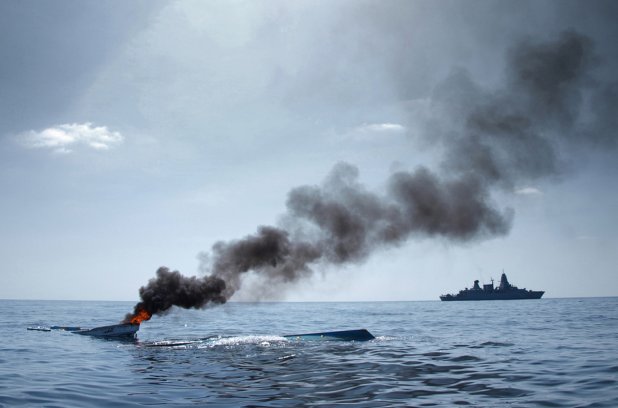
German frigate Hamburg sinks an abandoned skiff off the coast of Somalia. Credit: Christian Bundeswehr - Reuters

German frigate Hamburg sinks an abandoned skiff off the coast of SomaliaCredit: Christian Bundeswehr – Reuters

However, their skiff and other effects on board, including fuel and ladders, were instead destroyed. According to EUNAVFOR, this will prevent the suspected pirates from using the skiff to attack ships in the future. By means of example, this incident, by no means uncommon, raises the question of the diffferent evidentiary grounds and standards of proof for the prosecution of suspected pirates and the destruction of boats and equipment belonging to them. While the destruction of a pirate vessel can prevent the perpetration of further piracy attacks, the sinking of a fishing boat, however small, might put a strain to the fishermen’s livelihoods. Article 106 of UNCLOS (and Article 110(3)) provides for the possible liability for any loss or damange caused by the seizure of a suspected pirate ship when effected without adequate grounds.

Liability for seizure without adequate grounds

Where the seizure of a ship or aircraft on suspicion of piracy has been effected without adequate grounds, the State making the seizure shall be liable to the State the nationality of which is possessed by the ship or aircraft for any loss or damage caused by the seizure.

What are the grounds for the seizure and destruction of suspected pirate vessels and how do these differ from those provided for the arrest and prosecution of suspected pirates? In this regard, the legal framework applicable to the contrast to piracy, particularly in Somalia, needs some additional clarification and interpretation. UNCLOS explicitly provides only for a right of visit when there are reasonable grounds for suspecting that a ship is engaged in piracy (Article 110) and for a right of hot pursuit of a ship into the high seas only when there are good reasons to believe that a violation was committed (Article 111). The SUA Convention, its additional protocol, as well as the Djibouti Code of Conduct also contain references to various evidentiary thresholds, mainly reiterating the principles above contained in UNCLOS relevant to cooperation, rights of visit and liability for loss or damage.

In its recent Resolution 2077 (2012), approved after a significant debate on piracy as a threat to international peace and security, the Security Council renewed its call to continue the fight against piracy, including through the disposition of boats and other relevant equipment for which there are reasonable grounds for suspecting their use in the commission of piracy and armed robbery at sea:

10. Renews its call upon States and regional organizations that have the capacity to do so, to take part in the fight against piracy and armed robbery at sea off the coast of Somalia, in particular, consistent with this resolution and international law, by deploying naval vessels, arms and military aircraft and through seizures and disposition of boats, vessels, arms and other related equipment used in the commission of piracy and armed robbery at sea off the coast of Somalia, or for which there are reasonable grounds for suspecting such use;

Indeed, EUNAVFOR’s seizures or disposals of suspected pirate skiff are premised upon the standard of “reasonabile grounds to suspect” (see also here). How to interpret, therefore, this standard? Resolution 2077, issued under Chapter VII of the UN Charter, also makes various references to the need to ensure compliance with international law and more particularly, “applicable human rights law” and “due process of law in accordance with international standards” in the pursuit of accountability for suspected pirates (see also paras 16-18 and 20). A review of international human rights and criminal law, while concerning crimes of a different nature, might thus provide for futher guidance. Various standards exist and, admittedly, some differ from others by mere semantics. Article 58(1) of the ICC Statute, relevant to the issuing of a warrant of arrests, provides for the evidentiary threshold of “reasonable grounds to believe”. This is significantly different from the threshold required for the confirmation of charges against an individual under Article 61(7) of the same Statute (“substantial grounds to believe”) or, obviously, for a conviction under Article 66(3) (“beyond reasonable doubt”). “Reasonable grounds to believe” are also required before the ICTY for the submission of an indictment by the Prosecutor or in relation to contempt proceedings (Articles 47 and 77(c) of the ICTY Rules of Procedure, respectively). The ICC Pre-Trial Chamber equated the “reasonable grounds to believe” standard to the “reasonable suspicion” standard under Article 5(1)(c) of the European Convention on Human Rights. Arguably, this comparaison appears questionable. Believing is a concept stronger than suspecting. However, while also relevant to arrest and detention, the ECHR determined that this standard consists of the existence of facts and information which would satisfy an objective observer that the person concerned may have committed a crime. The procedure for the submission of an indictment before the ICTY provides the following description of the meaning of “reasonable grounds”:

Reasonable grounds point to such facts and circumstances as would justify a reasonable or ordinarily prudent man to believe that a suspect has committed a crime. To constitute reasonable grounds, facts must be such which are within the possession of the Prosecutor which raise a clear suspicion of the suspect being guilty of the crime. […] It is sufficient that the Prosecutor has acted with caution, impartiality and diligence as a reasonably prudent prosecutor would under the circumstances to ascertain the truth of his suspicions. It is not necessary that he has double checked every possible piece of evidence, or investigated the crime personally, or instituted an enquiry into any special matter. […] The evidence, therefore, need not be overly convincing or conclusive; it should be adequate or satisfactory to warrant the belief that the suspect has committed the crime. The expression “sufficient evidence” is thus not synonymous with “conclusive evidence” or “evidence beyond reasonable doubt.” (Review of the Indictment against Ivica Rajic, Decision of 29 August 1995, Case no. IT-95-12)

Given the limited role played by EUNAVFOR in the investigation and prosecution of piracy, perhaps reference to recent international commissions of inquiry, whose standards are generally lower than those of purely judicial institutions, might also provide for additional guidance. For instance, the International Commission of Inquiry on Darfur acted upon a standard of “reliable body of material consistent with other verified circumstances, which tends to show that a person may reasonably be suspected of being involved in the commission of a crime” (para. 15).

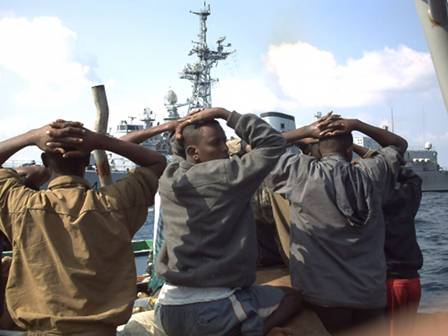
Pirates or Fishermen? - Courtesy AP

Pirates or Fishermen? – Courtesy AP

Put plainly, the review above shows that a discrete amount of supporting evidence and the mere possibility, rather than the certainty, of the commission of a crime are therefore required to meet the “reasonable suspicion” standard encompassed in Resolution 2077 for the seizure and disposition of suspected pirate skiffs. It is, arguably, an extremely low standard but it demarcates the basic threshold for piracy-disruption activities. Suspecting the commission of a crime, however, falls a long way from having demonstrable proof. While this standard might also be akin to that required for the arrest of a suspected pirate, those necessary to proceed to his investigation and prosecution are increasingly higher and still depend upon factors such as the quantity and the quality of the evidence, as well as the willingness of State actors to proceed. Finally, several questions remain on the suitability and susceptibility of claims of unlawful destruction of vessels to be brought before Somali authorities when adequated grounds for such destruction are missing or in doubt.