Somalis Pirates on Trial in France: 4 year long pre-trial detention creates evidentiary hurdles

Following her earlier post on French legislation on PCASP, below is another guest post by Valerie Gabard:

After four years of provisional detention, six Somalis faced a jury trial in Paris this month for the hijacking of the French luxury yacht Le Ponant in the Gulf of Aden, in 2008. They were tried for holding the 30 crew members as hostages in exchange for a 2.15 million euros ransom. The six men were arrested a week after the hijacking while driving in Somalia territory. When arrested by the French Military, they were carrying $200,000 believed to be part of the ransom. The convictions and sentences were delivered on Thursday last week. Two of the accused were acquitted by the Court, while the four others were convicted and sentenced to four to ten years of imprisonment.

The six men were charged with kidnapping, illegal confinement and organized gang theft but not with a specific offence of piracy. The legal qualification chosen by the Prosecution and the Investigating Judge in this case is due to the absence, in 2008, of a specific definition of piracy in the French Penal Code. Since 1825, France had a law criminalizing piracy but it was obsolete and did not reflect the definition adopted by the Montego Bay Convention. This Law was thus abolished in 2007 and only replaced by new Piracy legislation on 7 January 2011. Despite the legal lacunae from 2008 until 2011, the existing offences of kidnapping, illegal confinement or the offence of seizing or taking control of a ship by force or threat of violence (see article 224-6 of the Criminal Code) largely covered the legislative gap. The new legislation does not substantially change this approach as it does not create an independent offence of Piracy but merely refers to existing crimes in the Criminal Code that could qualify as Piracy as defined by the Montego Bay Convention (See Report from the French Senate – in French).

Le Ponant

During the trial, five of the six accused claimed their innocence. Only one admitted his participation in the operation and his presence on the yacht. Two accused admitted being on Le Ponant but only as sellers and three claimed that they were never pirates or having ever boarded the yacht. Although the accused were identified by the crew four years ago, with time passing doubts arose concerning identification and some of the crew members changed their initial statements. The captain of the yacht confirmed at Trial his initial statement but recognized that the identification of the pirates after four years is today impossible. The weakness of the eyewitness identification and the absence of forensic evidence linking the accused to the yacht, lead the Prosecution to rely almost exclusively on circumstantial evidence. The six men were not arrested on board of the yacht but a week later, during an armed operation conducted by French forces, while traveling by car on Somali territory. They were arrested carrying $200,000 believed to be part of the ransom. Establishing whether or not the accused were ever on the yacht, appeared to be the real evidentiary challenge in the case. The Accused benefited from these doubts and, while the motivations of the verdict are not immediately available, this almost certainly explains the acquittals with respect to the two accused that firmly denied their participation in the crimes. The convictions and sentences imposed by the Court also appear to mirror the accused admissions as their role in the operation during the investigation and at Trial. This shows that it is probably their own admissions that lead the jury to believe that they were guilty rather than the evidence presented by the Prosecution.

The Prosecution requested sentences ranging from 10 to 15 years imprisonment but the Court did not follow this approach acquitting two accused, convicting one to ten years, two to seven years and the last one to four years of imprisonment for complicity. This latter only acknowledged driving the car and, presumably should be released with the two acquitted persons as he has already spent four years on provisional detention. Parties have ten days to appeal the judgement but the six Somalis seem generally satisfied with the outcome and only the Prosecution might file an appeal. It is highly possible as the Prosecution wants this case to be an example and a warning for the Somalis still actively implicated in piracy in the Gulf of Aden. Indeed, because it considered the sentences to be too lenient, the Prosecution already appealed last year the Judgement that jailed five Somalis pirates between four and eight years for hijacking the yacht Carréd’As in the Gulf of Aden in September 2008. The appeal trial is still pending.

Four years of provisional detention prior to trial is significant, in particular when a trial concludes with two acquittals. The acquitted men are Somalis being transferred to France for the purpose of the Trial, thus placing them in an isolated and fragile situation. They are now recognized as not guilty and are set free but in an unfamiliar country with no money, no papers and their lawyers as only assistance (See “Abdulkader, «pirate» somalien naufragé dans les rues de Paris”). French authorities appear to repeat the tragic story of the only man acquitted at the first piracy trial (See previous CHO Blog post “Acquitted of Piracy, lost in Paris”).  This emphasized one of the down sides of extraterritorial trials.

Finally it should be noted that there are two more piracy trials coming up in France where the accused are already provisionally detained in France. The first one involves three Somalis arrested while hijacking another French yacht, the Tanit in 2009 and the second one involves the trial of seven men accused of the attack in September 2011 of a catamaran where a French citizen was killed. The latter should be tried based on the new piracy law that appears to be passed to address the unforeseen burgeoning of Somali piracy in the Gulf of Aden.


Prosecution seeks death penalty for Felony Murder

Ahmed Muse Salad, Abukar Osman Beyle and Shani Nurani Shiekh Abrar entered their pleas to murder and other charges in U.S. District Court in Norfolk, July 20, 2011. (Credit: AP)

It was recently announced that federal prosecutors in the U.S. intend to seek the death penalty against three Somalis if they are convicted of murder in the fatal shooting of four Americans which occurred aboard a hijacked yacht during a failed rescue attempt last year. Of the other Somalis implicated in the incident: one was released by authorities because he is a juvenile; eleven have pleaded guilty to piracy and been sentenced to life in prison; and the ransom negotiator’s piracy conviction is on appeal.  Furthermore, the AP reports that four of the hijackers died on board, including two who have been identified in court records as those who shot at the Americans. This last assertion is based on the charging documents before a judge or jury has established the actual facts of the case. But, if these facts are borne out at trial, the three Somalis who remain to be prosecuted, and for whom the Federal prosecutors are seeking the death penalty did not commit premeditated murder.

Somali pirates do not take hostages with the intent of killing them; that is bad for business. They intend to hold the hostages for ransom. Of course, the pirates who pointed guns at the American hostages and killed them evidently changed their plans upon the imminent boarding of the yacht by U.S. Navy SEALS (and were killed themselves). But it is not clear that that those charged in this last case intended to kill the hostages. Some of them claim to have attempted to stop the killings. This is supported in part by the Prosecutor’s charging documents which indicate the deaths occurred in the commission or immediate flight from the offenses of kidnapping, hostage taking and violence against maritime navigation. Therefore, the basis for seeking the death penalty on the murder charges in this case appears to be the felony murder rule, whereby a killing that occurs in the course of a dangerous felony, even an accidental death, can be charged as first-degree murder. If the three pirates at issue here were fleeing the scene when two other pirates killed the hostages, is the death penalty a just sentence?

This issue is further highlighted by a discrepancy in the way the US Attorney is charging the eleven pirates who pleaded guilty and the three for whom the death penalty is sought.  By accepting pleas for life imprisonment for the former, the US Attorney has indicated that the death penalty is not forcibly necessary to serve the interests of justice in this case. It may be that there are facts that support a harsher sentence for the latter three. It may also be that the three refused to enter a plea agreement, so the US Attorney is wielding a stiffer penalty as leverage. But the question remains, is the death penalty an appropriate penalty for felony murder?

One final incongruity is the fact that the Prosecutor is not seeking the death penalty on the charge of piracy. From 1790, the crime of piracy pursuant to U.S. statutory law imposed a mandatory death penalty. The death penalty was replaced by “imprisonment at hard labor for life” in 1897, and then “imprisonment for life” in 1909. Therefore, the death penalty is no longer available for the crime of piracy under 18 U.S.C. 1651. The fact that Congress amended the statute to eliminate the death penalty indicates Congress’ view that the death penalty is not an appropriate punishment for piracy. If the principle crime at issue here is piracy, and Congress intended that no person be put to death for the crime of piracy, should that penalty still be available if the crime is charged as hostage taking or violence against maritime navigation resulting in death? Of course, a jury will have to decide whether the aggravating factors have been proven to justify a sentence of death.  But I really am curious as to what you all think on these issues.

What Does Piracy Have to Do with North Korea?

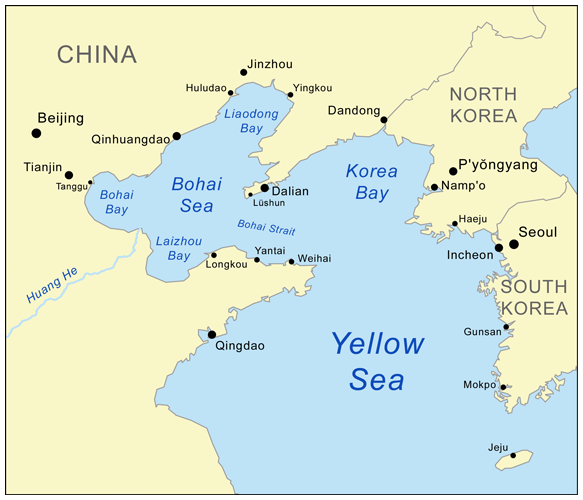
The reclusive authoritarian Democratic People’s Republic of Korea is once again back on the news headlines. Surprisingly, this time is not about the reactivation of its purported nuclear programme, or because of a new attempt to lift off a satellite/ballistic missile, or for some leaked information on the poor living conditions endured by its citizens. Media outlets are reporting on the possible hijack of 3 Chinese fishing vessels and the kidnap of their 29 crew members earlier this month. The vessels and all the captives were released today, following the intervention of the Chinese authorities. The incident has all the hallmarks of a piracy attack off the coast of Somalia or in West Africa. However, it occurred in the Yellow Sea, in an area between North Korea and China.

News reports are still contradictory and any in-depth analysis into this will necessarily depend on the real circumstances of the case. Notably, the incident has not been reported to the IMB Piracy Reporting Centre. In particular, it is not clear whether the incident took place in international waters. The identity of the assailants is also unclear. Some reports indicate that these were members of the North Korean military, while according to others Chinese mafia from the city of Dandong, on the North Korean border, might have been involved, possibly in cooperation with the North Korean military. Several news reports indicate that the vessels, originating from the city of Dalian, were accosted at sea by armed men and forced to sail to North Korea. The ship owners confirmed the capture of the vessels and their crew. According to the owners, the vessels were navigating within Chinese national waters. They also confirmed that the captors have asked for the payment of a ransom of nearly 190.000 US Dollars and have threatened to harm their captives if no payment was made.

If the assailants have no connection with state authorities, the main issue will be to determine whether the incident qualifies as piracy committed in the high seas rather than armed robbery within China’s territorial sea. However, whether the assailants are members of the North Korean military or not, the use of force and the request for a ransom renders them de facto pirates, because they appear to have acted in pursuit of private ends. If the available information is correct, their actions could also qualify as mutiny. In this regard, it is worth recalling that Article 102 UNCLOS encompasses acts of piracy committed by a government ship whose crew has mutinied.

Actions by the North Korea authorities have in the past drawn widespread international condemnation. However, it is difficult to envisage Pyongyang secretive rulers now embracing a state policy to terrorize fishermen in the Yellow Sea for ransom purposes, particularly when this has an impact on a longtime ally and regional military superpower as China. This latter routinely issues strong protests over fishing related disputes with Japanese, South Korean, Vietnamese or Philippine fishing vessels. China will likely take certain actions to prevent any further escalation of such attacks in the Yellow Sea, as it has done by policing Southeast Asia’s  Mekong river from drug smugglers and criminal cartels. However, doubts remain on whether the public outcry sparked by this incident will have an impact on its already strained relationship with North Korea.

Piracy Conviction Sets Stage for 4th Circuit Appeal

Reuters reports that Mohammad Saaili Shibin has been convicted on 15 counts in a U.S. Federal District Court, including charges of piracy, hostage taking, kidnapping and conspiracy. He faces a mandatory life sentence in a U.S. prison on the piracy charge based on the underlying conduct of negotiating ransoms for hostages kidnapped at sea. Due to this harsh sentence, Shibin is likely to appeal the conviction on the piracy charge. As Jon Bellish has previously noted on this blog, this sets the stage for the 4th Circuit Court of Appeals to consider whether “piracy as defined by the law of nations” in 18 U.S.C. § 1651 (adopted in 1816) constitutes a static or evolving concept. In other words, since the “law of nations” is not defined in the statute, is it defined as a matter of international law circa 1816 or does the definition evolve with changes in treaty and customary international law?

In my view, the 4th Circuit should interpret Section 1651 to encompass the defintion of piracy as it appears in the 1982 UN Convention on the Law of the Sea (UNCLOS). If we take the traditional ICJ formulation of the “law of nations,” the definition could derive either from international treaties or customary international law (or general principles). Although not a state party to UNCLOS, the U.S. has accepted the definition of piracy in UNCLOS as customary international law for the last four presidencies (see 2010 Digest of US Practice in International Law). There is no nullum crimen problem, as this definition has been accepted long before the offenses were committed (in 2009 or 2010). Nonetheless, the 4th circuit may be reticent to find an evolving concept within the statute. If the argument is that an evolving concept is antithetical to legal certainty in criminal law, one could argue that piracy is sui generis and limit the evolving concept to this particular crime. Other crimes in Title 18 are unlikely to be defined by “the law of nations”. In any event, the definition arguably has not changed since 1932 as the Harvard study’s definition from that year made its way into UNCLOS. In Shibin’s case, the jury instruction for the piracy charge will be of particular interest as it will have an impact upon how the appellate issues are framed.

If the 4th Circuit adopts the UNCLOS definition of piracy, the second question will be whether negotiating a ransom from land can constitute “inciting or intentionally facilitating” piracy under Section 101(c) of the Convention. The plain language would tend to support an affirmative response. But how far does “intentionally facilitating” extend? For example, does it extend to the cook or driver at the pirate’s land base? The travaux preparatoires of the 1982 UNCLOS Convention (and its precursor 1958 LOS Convention) provide little assistance in delineating the boundaries of these modes of participation. Likewise, these modes are not included in the ICTR, ICTY or ICC statutes, thereby rendering their jurisprudence of little assistance in an interpretive study. (Note: the ICTR Statute does include the mode of direct and public incitement, but this is particular to the crime of genocide and the “direct” and “public” aspects of this mode are integral to the definition). How the 4th Circuit decides this issue could have a significant impact on how future prosecutions proceed.  That being the case, and considering the U.S. judiciary’s recent difficulties in properly examining issues of international law and ICL in particular, the 4th circuit could well benefit from an amicus curiae brief based on expertise in these areas.

The Legality of the SEAL Team 6 Rescue in Somalia

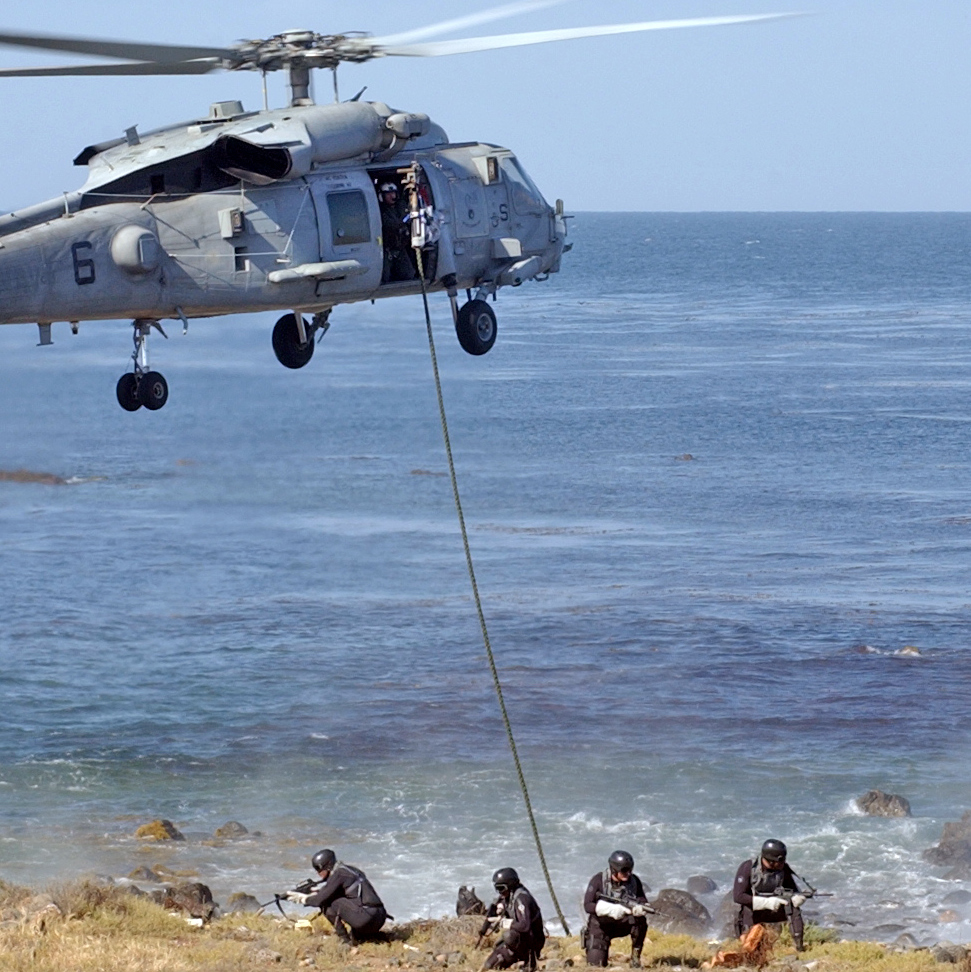
US Navy SEALs have rescued two foreign aid workers (one American and one Dane) deep within the territory of Somalia, killing 8-9 Somalis and perhaps capturing 3-5. This is not the first time the US has authorized deadly force against Somali criminals. In 2009, pirates took hostage the captain of the Maersk Alabama, Richard Phillips. A team of snipers from the Navy SEALs shot the captors from the deck of an aircraft carrier, killing the pirates and freeing Captain Phillips. There are significant differences, however, between the attack on the Maersk Alabama and the most recent attack mainly because the latter occurred within the territory of Somalia on land. The location of the capture and rescue, Galkayo, is divided between the break-away regions of Puntland and Galmudug and, according to the New York Times is at the edge of pirate-controlled territory. Most news organizations are referring to the Somali captors as “pirates” and it may be that the criminal organization that kidnapped and held for ransom these two aid workers has also perpetrated acts of piracy in the seas off the coast of Somalia. But the act of kidnapping in central Somalia is not an act of piracy. This has several implications.

First, what is the legal basis for the incursion into Somali territory? States have a right to capture and prosecute criminals for acts of piracy on the high seas and for armed robbery within a state’s territorial sea. Piracy, however, does not extend to acts without any connection to sea-based criminality. In contrast, for land-based incursions violating the territorial sovereignty of another state, prior assent is required. The U.S. raid of Osama Bin Laden’s compound in Pakistan was ostensibly justified by national self-defence in order to prevent future attacks against Americans which were in the process of being developed. But the criminals in Galkayo did not appear to be threatening the national security of the United States. They seek ransom money, and not some political objective. Therefore national self-defence would not provide a justification for the raid. Nonetheless, the areas of Somalia we are talking about are lawless and without effective governments. In these circumstances, it is doubtful the U.S. considered permission was required prior to invading the territory.

Second, what is the legal basis for the killing and capturing of these criminals? As a legal matter, the former is actually simpler to explain. The doctrine of personal self-defence sometimes extends to the protection of others. If it was determined that the hostages’ lives were in danger, it could justify the use of deadly force. However, news reports indicate the operation was intended to capture, not kill, the criminals in question. Therefore, what is the legal basis for the capture of these Somali criminals? This is actually the more difficult legal question. International treaty and customary law give states the right to arrest and prosecute suspected pirates for criminality on the high seas. Likewise, commercial ships have the right to defend themselves against violent attack. In contrast, yesterday’s rescue occurred on land and the law of piracy is inapplicable. In addition, no Somali law is readily apparent. However, the United Nations Convention against Transnational Organized Crime requires states parties to pass legislation prohibiting the commission of serious crimes involving an organized criminal group where the crime has transnational effects. (the U.S. is a state party, obviously Somalia is not). Likewise, there appears to be a developing consensus that kidnapping is a crime under customary international law with certain well-defined attributes. Therefore, the United States has a jurisdictional basis to prosecute these criminals as the victim was American and there is, arguably, substantive international law applicable in the territory of Somalia which prohibits and would permit a prosecution for kidnapping. Normally, a prosecution would require the U.S. to seek extradition from the suspect’s resident state. Here, where no sovereign exists, the U.S. could argue that it had no such duty. These are some of the arguments that might justify the arrest and detention of the Somali captors pending trial.

Apart from these legal questions is a more practical one: does this signal a new U.S. policy of using its armed forces to rescue American kidnapping victims throughout the world? Following the raid, President Obama issued a statement asserting, “The United States will not tolerate the abduction of our people, and will spare no effort to secure the safety of our citizens and to bring their captors to justice.” This statement must be narrowly construed. Although the U.S. State Department does not publicize the number of Americans kidnapped and held for ransom, it is clearly a widespread problem. The expense and risks of sending in a SEAL team anytime an American is kidnapped would be extraordinary. The Somali context is exceptional in this case because there is no sovereign with whom to negotiate. In addition, this may be a shot across the bow to organized criminal gangs in Somalia. The hope will likely be that this incredible rescue will have a deterrent effect that would diminish the need for similar missions in the future. It could also serve as leverage in ransom negotiations, discouraging captors from becoming too greedy in their demands. On the other hand, there is a concern that the apprehension and killing of these transmaritime criminals will lead to a further escalation in violence.