Intentional Facilitation and Commission of Piracy as part of a Joint Criminal Enterprise

Defendant Ali Mohamed Ali, Source: Foxnews

In the U.S. government’s efforts to ramp up piracy prosecutions to include pirate kingpins, several cases of mid-level negotiators are working their way through the courts. We discussed one such case here. Another such prosecution recently met some setbacks when a U.S. District Court ruled in U.S. v. Ali that conspiracy to commit piracy was not a cognizable crime and further limited the application of intentional facilitation of piracy to acts committed on the high seas. See alsohere. The latter issue was apparently moot at the outset since the prosecution alleged that the negotiator was on the high seas when he intentionally facilitated the acts of piracy. However, in a contentious hearing last week, it became apparent that the Accused only spent about 25 minutes on the high seas and that his criminal conduct may not have occurred in that time frame. Therefore the high seas issue is now central to the outcome of the case. The Prosecution has signalled its intent to file an interlocutory appeal and the Judge has ordered that the Accused be released on bail, noting misrepresentations by the prosecution on this issue. In my view, the conspiracy ruling was correct, but intentional facilitation was improperly limited to conduct on the high seas. This latter error would impede future prosecutions of pirate leaders in U.S. courts.

It should be made clear that U.S. courts that have addressed the issue in the last several years have uniformly concluded that although the U.S. is not a party to the U.N. Convention on the Law of the Sea, this treaty contains the definition of piracy under customary international law which is incorporated by the U.S. piracy statute (18 USC 1651). Therefore, piracy is defined in the U.S. purely by reference to international law, and not domestic U.S. law. See here for further background.

In its 13 July Decision in U.S. v. Ali, the Court held that the piracy statute requires that intentional facilitation occur on the high seas. See Memorandum Opinion at 17. I disagree with this interpretation of UNCLOS for several reasons. First, a plain language reading of UNCLOS does not impose a requirement that inciting or intentionally facilitating an act of piracy occur on the high seas. Article 101(a)(i) of UNCLOS defines piracy as “any illegal acts of violence or detention, or any act of depredation, committed for private ends […] on the high seas […]” Intentional facilitation of such an act of piracy appears in subsection (c) of Article 101 which does not include the requirement that the act occur on the high seas. In other words, the illegal act of violence or detention must occur on the high seas, but the facilitation need not occur there.

The U.S. piracy statute could create some confusion as it specifically refers to piracy committed on the high seas which might be interpreted to extend the high seas requirement to intentional facilitation. (See 18 USC 1651 which provides in full, “Whoever, on the high seas, commits the crime of piracy as defined by the law of nations, and is afterwards brought into or found in the United States, shall be imprisoned for life.”) However, the reference to piracy on the high seas in 18 USC 1651 is redundant. By definition under customary international law, acts of piracy (though not incitement or facilitation) must occur on the high seas. The reference to acts on the high seas in 18 USC 1651 was only meant to emphasize that conduct committed in the territorial waters of another state would not constitute piracy (such conduct is instead robbery at sea, solely within the purview of the littoral state). It is not at all clear that Congress would intend to modify the otherwise settled view of the law of nations. Therefore, to impose the high seas requirement on subsection (c) of UNCLOS (pertaining to intentional facilitation), which does not appear in the plain language of the treaty, would be contrary to the U.S. Supreme Court’s Charming Betsy canon (whereby a statute should be construed not to violate international law).

Furthermore, restricting intentional facilitation of piracy to crimes perpetrated wholly on the high seas is not necessary to protect the sovereignty of states where pirate kingpins may reside. The piracy statute only provides personal jurisdiction over those who are “afterwards brought into or found in the United States.” If a pirate kingpin has negotiated a ransom from the territory of another state, the U.S. must request extradition through the usual means prescribed by international law. For all of these reasons, the high seas requirement should not be added to the crime of intentional facilitation of piracy.

As to the District Court’s second holding, the decision to dismiss the conspiracy to commit piracy charge appears well-founded. However, it is worth considering whether other forms of responsibility, firmly established in customary international law, might support the criminalization of the conduct in question. For example, commission has been interpreted by the ad hoc tribunals (ICTR, ICTY, SCSL, STL) to encompass the form of responsibility referred to as joint criminal enterprise (JCE) where there exists (1) a plurality of persons; (2) a common plan, design or purpose which amounts to or involves the commission of a crime and (4) the accused’s participation in the common plan. Of course, the tribunals did not have competence to consider charges of piracy. However, similar forms of accessory liability are found in numerous domestic legal systems and piracy prosecutions in Seychelles have been successful on a theory of accomplice liability akin to JCE. See here and here. This mode of responsibility has not been considered by any U.S. court in a piracy case.

Jama Idle Ibrahim, sentenced last year to 25 years for his role in the same attack, will be a government witness against Ali.

Apart from the jurisdictional issues, the ultimate question in this prosecution is whether negotiators acting as middlemen between pirate hostage-takers and those seeking their release “intentionally facilitate” piracy pursuant to UNCLOS. The answer will depend on the factual circumstances and how the mens rea of facilitation is construed. The drafters of UNCLOS limited facilitation by requiring that the accused intentionally (not merely negligently or recklessly) facilitated the piratical act. This suggests not only that the Accused must intend to support the illegal act of violence or detention, but also that the facilitator must share the pirate’s intent to commit the act “for private ends” (i.e. for personal enrichment or other non-political purposes). Involvement in negotiations to release the hostages for humanitarian reasons would not satisfy this mens rea requirement. Elsewhere, Professor Kontorovich suggests that intentional facilitation cannot occur after an act of piracy, but must have occurred prior to it. But if the piratical act was committed with the pre-formed intent to hold hostages for ransom, then the completed piratical act would not have been possible but for the intervention and assistance of a negotiator to complete the transaction. If a negotiator also possesses the intent to personally enrich himself, the conduct would appear to fall within Article 101(c) of UNCLOS.

One final word about the fairness of this prosecution. Depending on the circumstances of a case, the negotiation of a ransom (or the financing of piracy for that matter) may appear to be less reprehensible than the acts of violence committed against seafarers on the high seas. Such is the dichotomy between low-level perpetrators and their white-collar sponsors. If a mandatory life sentence, as is imposed by the U.S. piracy statute, is inappropriate in some cases involving accomplice liability, this is a matter of charging strategy best left to the prosecutor. There are a number of other non-piracy statutes in the prosecutor’s repertoire that could be put to use. But it is an overbroad statement to assert that all white-collar facilitators of piracy deserve leniency.

Kingpins Enjoy Impunity

A confidential UN report, made available to Reuters, highlights the considerable disparity in the treatment of low-level operatives versus pirate kingpins in that the latter enjoy impunity. The report notes:

The UN Monitoring Group on Somalia said in a report to the Security Council, seen by Reuters, that senior pirate leaders were benefitting from high level protection from Somali authorities and were not being sufficiently targeted for arrest or sanction by international authorities.

[…]

The UN report said pirate leaders are now increasingly involved in land-based kidnap for ransom of foreign tourists and aid workers in northern Kenya and Somalia, as well as selling services as counter-piracy experts and consultants in ransom negotiations, and exploring “new types of criminal activity”.

“This evolution of the piracy business model is being driven largely by members of the Somali diaspora, whose foreign language skills and bank accounts are all valuable assets,” it said.

[…]

The [Monitoring] Group said that in spite of three international task forces and efforts by a dozen national governments in maritime counter-piracy efforts, serious legal obstacles remain that “impede the prosecution and sanctioning of pirate leaders and kingpins”.

Further to this last observation, a recent opinion by a U.S. District Court brings into question the ability to prosecute pirate kingpins who never set foot aboard a pirate vessel on the high seas. For reasons I will set forth in a forthcoming post, I think the court reached some faulty conclusions. But if the reasoning in that opinion gains traction, prosecution of high-level pirates under the framework set forth in UNCLOS will become increasingly untenable.

Somalis Pirates on Trial in France: 4 year long pre-trial detention creates evidentiary hurdles

Following her earlier post on French legislation on PCASP, below is another guest post by Valerie Gabard:

After four years of provisional detention, six Somalis faced a jury trial in Paris this month for the hijacking of the French luxury yacht Le Ponant in the Gulf of Aden, in 2008. They were tried for holding the 30 crew members as hostages in exchange for a 2.15 million euros ransom. The six men were arrested a week after the hijacking while driving in Somalia territory. When arrested by the French Military, they were carrying $200,000 believed to be part of the ransom. The convictions and sentences were delivered on Thursday last week. Two of the accused were acquitted by the Court, while the four others were convicted and sentenced to four to ten years of imprisonment.

The six men were charged with kidnapping, illegal confinement and organized gang theft but not with a specific offence of piracy. The legal qualification chosen by the Prosecution and the Investigating Judge in this case is due to the absence, in 2008, of a specific definition of piracy in the French Penal Code. Since 1825, France had a law criminalizing piracy but it was obsolete and did not reflect the definition adopted by the Montego Bay Convention. This Law was thus abolished in 2007 and only replaced by new Piracy legislation on 7 January 2011. Despite the legal lacunae from 2008 until 2011, the existing offences of kidnapping, illegal confinement or the offence of seizing or taking control of a ship by force or threat of violence (see article 224-6 of the Criminal Code) largely covered the legislative gap. The new legislation does not substantially change this approach as it does not create an independent offence of Piracy but merely refers to existing crimes in the Criminal Code that could qualify as Piracy as defined by the Montego Bay Convention (See Report from the French Senate – in French).

Le Ponant

During the trial, five of the six accused claimed their innocence. Only one admitted his participation in the operation and his presence on the yacht. Two accused admitted being on Le Ponant but only as sellers and three claimed that they were never pirates or having ever boarded the yacht. Although the accused were identified by the crew four years ago, with time passing doubts arose concerning identification and some of the crew members changed their initial statements. The captain of the yacht confirmed at Trial his initial statement but recognized that the identification of the pirates after four years is today impossible. The weakness of the eyewitness identification and the absence of forensic evidence linking the accused to the yacht, lead the Prosecution to rely almost exclusively on circumstantial evidence. The six men were not arrested on board of the yacht but a week later, during an armed operation conducted by French forces, while traveling by car on Somali territory. They were arrested carrying $200,000 believed to be part of the ransom. Establishing whether or not the accused were ever on the yacht, appeared to be the real evidentiary challenge in the case. The Accused benefited from these doubts and, while the motivations of the verdict are not immediately available, this almost certainly explains the acquittals with respect to the two accused that firmly denied their participation in the crimes. The convictions and sentences imposed by the Court also appear to mirror the accused admissions as their role in the operation during the investigation and at Trial. This shows that it is probably their own admissions that lead the jury to believe that they were guilty rather than the evidence presented by the Prosecution.

The Prosecution requested sentences ranging from 10 to 15 years imprisonment but the Court did not follow this approach acquitting two accused, convicting one to ten years, two to seven years and the last one to four years of imprisonment for complicity. This latter only acknowledged driving the car and, presumably should be released with the two acquitted persons as he has already spent four years on provisional detention. Parties have ten days to appeal the judgement but the six Somalis seem generally satisfied with the outcome and only the Prosecution might file an appeal. It is highly possible as the Prosecution wants this case to be an example and a warning for the Somalis still actively implicated in piracy in the Gulf of Aden. Indeed, because it considered the sentences to be too lenient, the Prosecution already appealed last year the Judgement that jailed five Somalis pirates between four and eight years for hijacking the yacht Carréd’As in the Gulf of Aden in September 2008. The appeal trial is still pending.

Four years of provisional detention prior to trial is significant, in particular when a trial concludes with two acquittals. The acquitted men are Somalis being transferred to France for the purpose of the Trial, thus placing them in an isolated and fragile situation. They are now recognized as not guilty and are set free but in an unfamiliar country with no money, no papers and their lawyers as only assistance (See “Abdulkader, «pirate» somalien naufragé dans les rues de Paris”). French authorities appear to repeat the tragic story of the only man acquitted at the first piracy trial (See previous CHO Blog post “Acquitted of Piracy, lost in Paris”).  This emphasized one of the down sides of extraterritorial trials.

Finally it should be noted that there are two more piracy trials coming up in France where the accused are already provisionally detained in France. The first one involves three Somalis arrested while hijacking another French yacht, the Tanit in 2009 and the second one involves the trial of seven men accused of the attack in September 2011 of a catamaran where a French citizen was killed. The latter should be tried based on the new piracy law that appears to be passed to address the unforeseen burgeoning of Somali piracy in the Gulf of Aden.

4th Circuit Decides Definition of Piracy Evolves with the Law of Nations

A three-judge panel of a U.S. appeals court has decided that UNCLOS sets forth the definition of piracy for purposes of U.S. law. As we signalled here and here, the U.S. Court of Appeals for the 4th Circuit was faced with the question of whether “piracy as defined by the law of nations” in 18 U.S.C. § 1651 (adopted in 1816) constitutes a static or evolving concept. In a well-written and extremely thorough decision, the court has determined that the law of nations is an evolving concept and that the definition contained within UNCLOS constitutes the law of nations as defined in the statute.  Since UNCLOS defines piracy in part as ‘an illegal act of violence,’ a completed theft is not requisite to the crime. This has important repercussions for future prosecutions because pirates are often unsuccessful in boarding ships or taking anything of value even though they may fire upon vessels with AK-47s and RPGs.  Limiting the definition to the law of 1816 would have prevented U.S. courts from exercising jurisdiction where conduct less than a completed robbery was perpetrated. Here are the crucial bits of the opinion:

The defendants would have us believe that, since the Smith era, the United States’ proscription of general piracy has been limited to “robbery upon the sea.” But that interpretation of our law would render it incongruous with the modern law of nations and prevent us from exercising universal jurisdiction in piracy cases. See Sosa, 542 U.S. at 761 (Breyer, J., concurring in part and concurring in the judgment) (explaining that universal jurisdiction requires, inter alia, substantive uniformity among the laws of [the exercising] nations”). At bottom, then, the defendants’ position is irreconcilable with the noncontroversial notion that Congress intended in § 1651 to define piracy as a universal jurisdiction crime. In these circumstances, we are constrained to agree with the district court that § 1651 incorporates a definition of piracy that changes with advancements in the law of nations.

We also agree with the district court that the definition of piracy under the law of nations, at the time of the defendants’ attack on the USS Nicholas and continuing today, had for decades encompassed their violent conduct. That definition, spelled out in the UNCLOS, as well as the High Seas Convention before it, has only been reaffirmed in recent years as nations around the world have banded together to combat the escalating scourge of piracy. For example, in November 2011, the United Nations Security Council adopted Resolution 2020, recalling a series of prior resolutions approved between 2008 and 2011 “concerning the situation in Somalia”; expressing “grave[ ] concern[ ] [about] the ongoing threat that piracy and armed robbery at sea against vessels pose”; and emphasizing “the need for a comprehensive response by the international community to repress piracy and armed robbery at sea and tackle its underlying causes.” Of the utmost significance, Resolution 2020 reaffirmed “that international law, as reflected in the [UNCLOS], sets out the legal framework applicable to combating piracy and armed robbery at sea.”

Considering the importance of this opinion, the public defender may choose to petition for en banc review. The three judges on this panel were all Democratic appointees, which may mean they were more receptive to the evolving law concept. Whereas if the entire bench (15 judges) were to hear the case, it could reach a different conclusion.  The defendants also have the option of appealing to the U.S. Supreme Court. Therefore, there may yet be more to this story.

What Does Piracy Have to Do with North Korea?

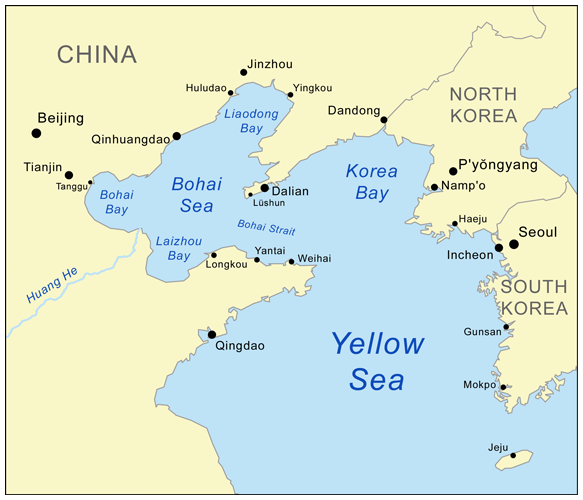
The reclusive authoritarian Democratic People’s Republic of Korea is once again back on the news headlines. Surprisingly, this time is not about the reactivation of its purported nuclear programme, or because of a new attempt to lift off a satellite/ballistic missile, or for some leaked information on the poor living conditions endured by its citizens. Media outlets are reporting on the possible hijack of 3 Chinese fishing vessels and the kidnap of their 29 crew members earlier this month. The vessels and all the captives were released today, following the intervention of the Chinese authorities. The incident has all the hallmarks of a piracy attack off the coast of Somalia or in West Africa. However, it occurred in the Yellow Sea, in an area between North Korea and China.

News reports are still contradictory and any in-depth analysis into this will necessarily depend on the real circumstances of the case. Notably, the incident has not been reported to the IMB Piracy Reporting Centre. In particular, it is not clear whether the incident took place in international waters. The identity of the assailants is also unclear. Some reports indicate that these were members of the North Korean military, while according to others Chinese mafia from the city of Dandong, on the North Korean border, might have been involved, possibly in cooperation with the North Korean military. Several news reports indicate that the vessels, originating from the city of Dalian, were accosted at sea by armed men and forced to sail to North Korea. The ship owners confirmed the capture of the vessels and their crew. According to the owners, the vessels were navigating within Chinese national waters. They also confirmed that the captors have asked for the payment of a ransom of nearly 190.000 US Dollars and have threatened to harm their captives if no payment was made.

If the assailants have no connection with state authorities, the main issue will be to determine whether the incident qualifies as piracy committed in the high seas rather than armed robbery within China’s territorial sea. However, whether the assailants are members of the North Korean military or not, the use of force and the request for a ransom renders them de facto pirates, because they appear to have acted in pursuit of private ends. If the available information is correct, their actions could also qualify as mutiny. In this regard, it is worth recalling that Article 102 UNCLOS encompasses acts of piracy committed by a government ship whose crew has mutinied.

Actions by the North Korea authorities have in the past drawn widespread international condemnation. However, it is difficult to envisage Pyongyang secretive rulers now embracing a state policy to terrorize fishermen in the Yellow Sea for ransom purposes, particularly when this has an impact on a longtime ally and regional military superpower as China. This latter routinely issues strong protests over fishing related disputes with Japanese, South Korean, Vietnamese or Philippine fishing vessels. China will likely take certain actions to prevent any further escalation of such attacks in the Yellow Sea, as it has done by policing Southeast Asia’s  Mekong river from drug smugglers and criminal cartels. However, doubts remain on whether the public outcry sparked by this incident will have an impact on its already strained relationship with North Korea.