The Mistreatment of Somalis Accused of Piracy

This guest commentary, cross-posted at ilawyerblog, is by Rachel Lindon, who has represented Somalis charged with piracy in legal proceedings in France. An English version is available here. We have previously discussed piracy trials in France, here and here.

Three of the six Somalis charged with taking the crew of Le Ponant hostage walk along a wall of La Sante jailhouse in Paris on 15 June 2012, a day after being released from prison (Photo: THOMAS COEX/AFP/GettyImages)

Deux procès se sont tenus à ce jour en France, à l’encontre de somaliens accusés d’actes de piraterie au large des côtes somaliennes. Lors du premier procès, qui s’est tenu en novembre 2011, dans l’affaire dite du Carré d’As, sur les six personnes accusées, une a été acquittée, et les cinq autres ont été condamnées à des peines de 4 à 8 années d’emprisonnement. Le Parquet ayant interjeté appel, cette décision n’est pas définitive. Lors du deuxième procès, qui s’est tenu en juin 2012, dans l’affaire dite du Ponant, sur les six personnes accusées, deux ont été acquittées, et les quatre autres ont été condamnées à des peines de 4 à 10 années d’emprisonnement. Cette décision est devenue définitive, en l’absence d’appel des parties. Ainsi, à ce jour, quatre somaliens se retrouvent libres en France : trois qui ont été acquittés et souffert pendant plusieurs années de détention provisoire indue et arbitraire, et un dont  la détention provisoire abusivement longue de quatre années a couvert sa peine (la France, régulièrement condamnée par la Cour Européenne des Droits de l’Homme pour des durées de détention trop longues, a établi un funeste record mondial en matière de détention provisoire de supposés pirates somaliens…). Après avoir été interpellés en territoire somalien (territoire maritime ou terrestre selon les cas), transférés en France, quelles ont été les conditions des détentions provisoires des somaliens pendant les longs mois d’enquêtes, et qu’a-t-il été prévu à leur sortie ?

 LE TRAITEMENT PAR LA FRANCE DES SOMALIENS EN DETENTION

 Ces douze somaliens, coupables ou non, ont été arrachés de leurs terres pour être transférés dans des geôles d’un pays qui leur était inconnu. Déracinés brutalement, ils ont été incarcérés dans des conditions devenues presqu’inhumaines: ne parlant que le somalien, et devant être séparés les uns des autres pendant l’enquête, ils n’ont pu communiquer avec personne pendant des années, sauf pendant les interrogatoires chez le juge d’instruction. Les avocats ont systématiquement sollicité les services d’un interprète, pour les parloirs. Les magistrats ont également sollicité les interprètes pour tous les actes d’instruction. Pourtant, ces douze somaliens n’ont jamais bénéficié du truchement d’un interprète, en détention, tant pour les actes médicaux, parfois lourds, que pour les commissions disciplinaires, en violation du principe du respect de la dignité humaine du prisonnier, reconnu par la Cour européenne des Droits de l’Homme (RAFFRAY TADDEI C. France, 21 décembre 2010, §50) et les règles minima pour le traitement des détenus, telles que définies par le Haut Commissariat des Nations Unies aux droits de l’homme (article 36§2). Nombre d’entre eux ont été victimes de violences de la part de codétenus, d’autant plus qu’ils étaient particulièrement isolés, et l’Administration Pénitentiaire française semble avoir trop souvent manqué à son devoir d’enquête, en violation de la jurisprudence de la CEDH (PREMININY C. RUSSIE, 10 février 2011).

 A ces violations s’ajoutaient les difficultés et l’isolement propres à leur situation de ressortissants somaliens : ils ne recevaient pas de deniers de l’extérieur (alors qu’il est connu dans les prisons françaises qu’il faut un pécule minimal pour survivre, louer un téléviseur, et s’acheter de la nourriture), ils ne recevaient aucune visite et que très rarement des nouvelles de leurs familles, un courrier annuellement tout au plus, alors que la plupart étaient mariés et pères de familles. Ces détentions provisoires furent d’une telle violence que nombre d’entre eux ont souffert de problèmes psychologiques graves, ont été internés dans les hôpitaux psychiatriques de l’Administration Pénitentiaire, au point qu’aujourd’hui, certains, même libres, doivent encore faire l’objet d’un suivi psychiatrique.

 LE TRAITEMENT PAR LA FRANCE DES SOMALIENS HORS DE DETENTION

 L’espoir du procès et de la fin de la dureté de la détention n’a été que de courte durée pour ceux qui ont été libérés : relâchés quelques heures après les délibérés, en pleine nuit, dans Paris, l’Administration pénitentiaire française leur a remis, outre leurs ballots de vêtements accumulés pendant la détention grâce au secours populaire, un kit indigent comprenant un ticket de métro, cinq tickets restaurant et une carte de téléphone… La France n’a pas estimé utile de prévoir ce qu’il adviendrait de ces hommes, appréhendés à plus de 6.000 km, reconnus innocents pour trois d’entre eux, après la détention. Ils ne peuvent, qu’ils soient innocents ou coupables, retourner dans leur pays, du fait des  mesures de rétorsion encourues. En effet, la justice  a exigé une coopération complète, en les sommant d’indiquer les noms des puissants chefs pirates qui agissent en Somalie.

 Ces véritables coupables, ces chefs de guerre exploitant la misère des somaliens, et possédant eux mêmes des biens immobiliers issus de la piraterie, aussi bien à Nairobi qu’à Londres, sont toujours actifs sur place, sans jamais avoir été inquiétés, la France se contentant de lampistes ou d’innocents, qui aujourd’hui risquent la peine de mort en cas de retour. Les somaliens acquittés, et ceux coupables mais ayant coopéré, libres ou encore détenus, sont par conséquent contraints de demander l’asile en France, puisqu’ils craignent d’être persécutés dans leur pays et de ne peuvent se réclamer de sa protection. puisque « craignant avec raison d’être persécutés du fait de (…) (leur) appartenance à un certain groupe social ou de (leurs) opinions politiques, se trouvent hors du pays dont (ils ont) la nationalité et qui ne (peuvent) ou, du fait de cette crainte, ne (veulent) se réclamer de la protection de ce pays ».

 Mais pas plus qu’un retour dans leur pays n’est possible, une vie en France ne l’est. Lâchés dans les rues de Paris aussi brutalement qu’ils avaient été appréhendés en Somalie, ils n’ont eu de toits pour dormir et se nourrir que grâce à la solidarité de la société civile, compatriotes, conseils et interprète, puis d’associations pour le logement… Pêcheurs somaliens, parlant peu ou pas le français, ils se retrouvent à nouveau dans un dénuement extrême, mais dans un environnement inconnu, et définitivement séparés des leurs.

 Leur situation ubuesque ayant interpellé certaines personnes, les trois somaliens du dossier du Ponant, sortis de détention le 15 juin 2012, à 3 heures du matin, ont finalement trouvé une association pour les héberger temporairement, dans l’attente prochaine de places en Centre d’Accueil pour Demandeurs d’Asile (leur situation particulière a permis que leur demande de logement soit considérée comme prioritaire). Ils recevront également l’aide financière conférée par l’Etat français pour tout demandeur d’asile, quel qu’il soit, de l’ordre de 400 euros mensuellement. Enfin, pour ceux définitivement acquittés, une requête en référé d’indemnisation de détention arbitraire est en cours. La justice aura à quantifier 50 mois de détention arbitraire et des vies définitivement brisées…

 Pendant ce temps, le sort de ceux encore détenus est loin d’être résolu, car condamnés à des peines de 4 à 10 années d’emprisonnement (peines qui pourraient paraître légères, mais le peuple français, au travers de ses jurés, a pris en compte la particularité des crimes et de la situation sur place), ils sortiront bientôt de détention.

 Dans un mois, le mineur du dossier du Carré d’As, âgé de 17 ans au moment des faits et donc de son incarcération, condamné à 4 années d’emprisonnement, aura accompli l’intégralité de sa peine. Il devra par conséquent être libéré. Encore une fois, rien n’est prévu pour sa sortie : il ne pourra quitter le territoire français, car il se doit d’attendre l’appel de son affaire (qui se déroulera probablement au printemps 2013). Mais pour autant, il ne sera pas régulier sur le territoire, et ne pourra espérer aucune aide au logement… Il sera hors des murs de FLEURY MEROGIS, sans  argent, sans famille et sans papiers, mais non expulsable et contraint de rester. L’Etat français, qui a tant voulu protéger ses ressortissants navigant dans le Golf d’Aden, va ainsi laisser un jeune mineur, totalement isolé, ne parlant que quelques mots de français appris au contact des autres détenus  et ne connaissant de notre territoire que nos maisons d’arrêt, errer dans nos rues, le temps de l’audiencement de l’appel interjeté par le Parquet… La France ne lui aura appris ni sa langue ni un métier, seulement à survivre dans une maison d’arrêt, puis survivre dans une ville si éloignée de sa vie passée…

 Les somaliens libérés se heurteront ensuite à la rigueur administrative française : Les services d’insertion et de probation des maisons d’arrêts appliquent leur règles : sans papiers, pas d’aide à la sortie. Les services des demandeurs d’asiles les leurs : à la suite d’une demande d’asile (à effectuer dans les limites des règles très strictes), et sans s’attarder sur leur situation pénale, le logement n’est conféré qu’à certaines conditions. Les services du Ministère de la Justice demandent que l’on applique les leurs : il ne reste qu’à demander une indemnisation pour ceux innocentés, et sinon, cela ne les regarde plus… La France se comporte comme la communauté internationale : appliquons des règles abstraites, à la Somalie, ou à ses ressortissants transférés en France, sans qu’il soit évoqué le particularisme de leurs situations…

 Le combat contre la piraterie et les déclarations d’intention aux visées électoralistes autorisent-ils la « patrie des droits de l’homme » à bafouer ces droits et à jeter dans nos geôles puis dans nos rues des hommes ? Le traitement que ces hommes, accusés de piraterie, innocents ou coupables, ont subi en France leur en fait regretter la Somalie, pays  sans Etat, en situation de guerre civile depuis 20 ans, mais qu’ils ne pourront, tout comme leur famille, plus jamais retrouver.

The Tragedy of Universal Jurisdiction

Jon Bellish is a Project Officer at the Oceans Beyond Piracy project in Boulder, Colorado (though all of his views are his own), and he has experience in United States piracy trials. He just got on Twitter. Cross-posted at The View from Above.

Picture a medieval town, 110 acres in size and populated entirely by 10 cattle ranchers. Each rancher lives on a 1 acre parcel of land that together surround a 100 acre open space used for grazing cattle.
If the 100 acre open space is shared by all 10 ranchers in common, each herder has a strong and continuing incentive to increase the size of his herd. For each additional cow sent to pasture, the individual herder receives the full benefit of one additional cow’s milk or meat. Yet because the grazing land is shared by all 10 ranchers in common, each herder suffers only 10% of the harm caused by that additional cow, which comes in the form of deterioration of the common grazing land.

Over time, however, as the ranchers realize this economic advantage and add additional heads of cattle to the pasture, the common land’s overall grazing capacity will diminish to the point that the land is no longer usable for any of our 10 medieval ranchers, leaving them all with less milk and meat than they would have had otherwise.

This parable, known as the “Tragedy of the Commons,” is well known to anyone who has sat through a college level economics class. It is often cited as a key rationale for the private ownership of property, illustrated in this case through the privatization of the grazing pasture that forced each herder to account for the full cost and benefit of each additional cow sent to pasture.

Other commons problems include population growth, fisheries, and pollution. In each scenario, the idea is that allocating costs and benefits in individuals – rather than in communities – is the surest way to ensure that resources are accurately valued and efficiently employed.

In its own way, the modern prosecution of pirates presents something of a commons problem, with prosecution under a theory of universal jurisdiction standing in for common grazing space and prosecution using a more direct theory of jurisdiction representing the enclosure of that common space.

Where a state prosecutes a pirate under the theory of universal jurisdiction, that state bears the vast majority – if not all – of the cost of the extradition, trial, and imprisonment of the suspect. While those costs are both real and substantial, the benefits are much less so. A prosecuting state asserting universal jurisdiction is fulfilling its international obligation to combat piracy as well as making the high seas marginally safer for international shipping traffic, but these benefits flow to the international community as a whole, in equal measure. No benefits fall discretely to the prosecuting state.

On the other hand, if a state prosecutes under territorial, nationality, passive personality, or protective jurisdiction, the costs of prosecution remain the same, but the benefits become both more sizable and more concrete. In addition to the undifferentiated benefits of a universal jurisdiction prosecution, the prosecuting state is either protecting its territorial integrity, punishing a national for committing piracy, vindicating violence committed against a citizen, or protecting its own political and economic interests, depending on the chosen theory of jurisdiction.

This brings us back to the classic commons parable involving the cattle ranchers.

In that example, the common grazing of land led to internalized benefits and externalized costs, which in turn led to an increase in economic activity even if such activity was imprudent in the long run. When the commons was enclosed, both costs and benefits were internalized within the individual rancher, who then tended to have the “right” amount of cattle on his pasture thereby improving every rancher’s individual prospects along with the prospects of the group.

Universal jurisdiction piracy prosecutions lead to a similar (though converse) situation where costs are internalized and benefits externalized such that under-prosecuting – as opposed to over-grazing – is the norm. If the benefits of prosecution are internalized within a given state through a more substantial basis for jurisdiction, the chances of a prosecution should actually increase.

Indeed, the facts on the ground suggest that piracy prosecutions can be viewed as a commons problem. In a 2010 empirical study, Eugene Kontorovich found that between 1998 and 2009, only fourteen out of the 1,063 reported piracies in international waters resulted in a universal jurisdiction prosecution, a rate of 1.31%.

Put another way, a state is over 75 times more likely to prosecute a pirate when the costs and benefits of prosecution – rather than just the costs – fall to that state. This is exactly what one would expect under the commons formulation.

In a simpler world, one in which more jurisdictional avenues are better than fewer, the idea that a pirate negotiator who neither enters into an ex ante agreement with the pirates nor is physically present on the high seas has not committed a crime of universal jurisdiction may appear to be a hindrance to the international community seeking to put an end to maritime piracy.

Yet both facts and theory tell a different story. States are much more likely to assert jurisdiction based on the territorial, national, passive personality, or protective theories of jurisdiction than universality, and if prosecuting pirates is fashioned as a commons issue, this is exactly what economic theory would predict.

When considering jurisdictional avenues to prosecute pirate negotiators at least, less can be more.

The Oil Continues to Spill: Transmaritime Criminality in West Africa

This time last year, we dedicated a few posts to the rise of piracy and other criminal activities in the Gulf of Guinea.  In particular, we discussed how much of these activities was a by-product of internal insurgencies and economic discontent in Nigeria and how the country’s attempted crackdown had the unintended consequence of pushing these criminal activities to nearby countries where lack of enforcement powers allowed them to thrive.

The situation has since continued to worsen. While there is currently a lull in piracy activities in Somalia and the Gulf of Aden, armed robberies and pirate attacks are sharply on the rise in West Africa. Reported incidents in the territorial waters of Nigeria, as well as Togo and Ghana, or in the international waters adjacent thereto, are now almost a daily occurrence. In the most recent of such attacks, the MT Energy Centurion, a Greek-owned oil tanker was hijacked and its 24 member crew kidnapped off the coast of Togo.

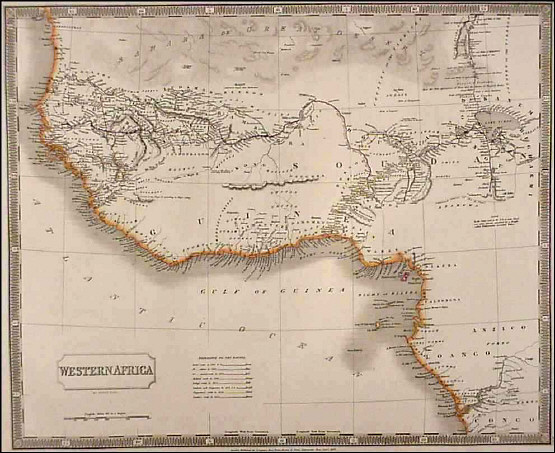
Historic Map of West Africa dated 1829 by Sidney Hall – Garwood & Voigt

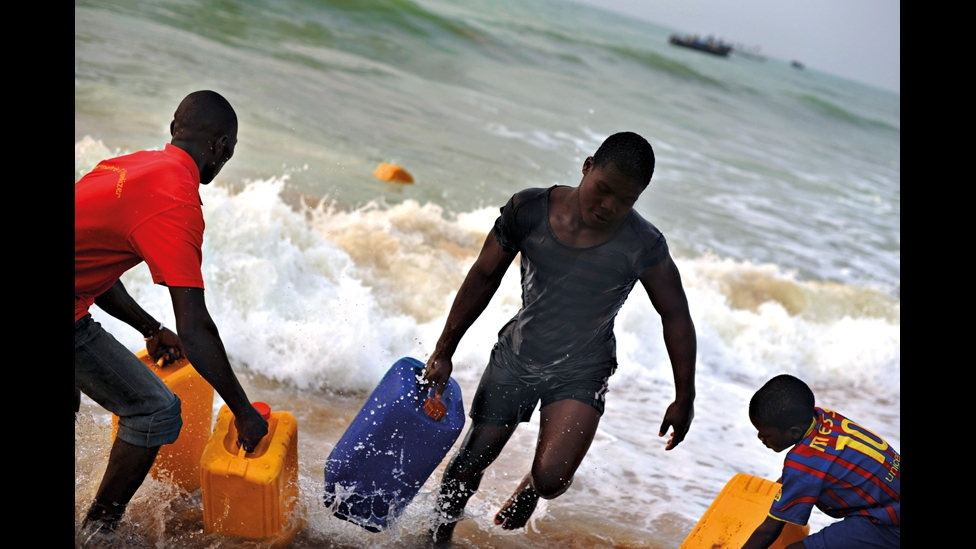
The region is traditionally considered as a cornucopia of natural resources. West Africa is rich in oil and other hydrocarbons, but also fish, cocoa and timber, for instance. Nigeria is currently the biggest African oil producer, with an output of about 3 million barrels a day, most of which is exported to Europe and the US. Ghana, Liberia and Sierra Leone are the next countries to enter the oil production and export business, with new deposits discovered in their national waters in recent years. Such discoveries have the potential to bring economic development to some of the poorest countries in the world, in a region often forgotten even when plaugued by years of ruthless civil wars and rampant mismanagement. Development, however, needs to be matched by strong governance capabilities. Due to its social and geographical features, the Gulf of Guinea is not only suitable for commercial transportation but is also a potential hotspot for criminal activities, particularly exacerbated by unemployment, corruption and  lack of governance. Oil bunkering, piracy, illegal waste dumping, poaching, drugs and migrant smuggling are only the most visible tip of a larger array of criminal activities. Autonomous movements also have increasingly resorted to violence, with terrorism often inexorably spurring into ties with criminality. These activities are often, but not exclusively, perpetrated by organized criminal cartels. Smaller criminal gangs, however, also operate some activities. Their common medium, often or exclusively, is the sea, which provides direct opportunities for criminal acts as well as the means to perpetrate such acts. Oil platforms in international waters are increasingly the targets of pirates and robbers, while subsidized petrol is smuggled from Nigeria into neighboring countries in overnight trips just a few miles off their coasts. Transmaritime criminality consists of the composite interaction of various forms of organized criminal activities, including criminal cartels, oil, drugs, arms and human trafficking, the deeply rooted social causes at their basis as well as their economic and environmental impact. Transmaritime Criminality thrives on the high seas as well as in coastal developing countries due to limited law enforcement and rule of law capabilities.

Despite its apparent similarities with pirate activities in Somalia, the situation in West Africa is potentially more complex. Attacks are often reckless, and more violent. Rarely do these entail long lasting hijackings and kidnapping for ransom. Presumably due to the lack of capabilities to hold a ship  and its crew hostage for long periods, criminals often resort to stealing the ship’s cargo and releasing it after a few days. This was the case, for instance, in the hijacking of the MT Energy Centurion, which was quickly released in Nigerian waters with its crew after its valuable cargo was siphoned off. The oil will then likely be sold through the black market in face of the complacency, or powerlessness, of local authorities.

Subsidized Nigerian Oil is Smuggled Overnight to Togo and Picked up Directly Ashore to be Sold in the Local Black Market – Photo Daniel Hayduk – BBC

This criminal surge in West Africa did not go unnoticed at both the international and regional level. The UN Security Council has already dedicated various meetings and resolutions to the situation in the Gulf of Guinea. The US, but also France and China, among others, have stepped forward to provide assistance, in the form of training or equipment, to countries in the region. These, in turn, have engaged in coordination and dialogue, launching joint policing operations. The past spiraling of piracy in Somalia has obviously provided an indicator of the potential gravity of piracy thriving in lawless environments. It also developed a set of best practices in combatting piracy and its root causes. No internationally-sponsored naval patrolling mission akin to those launched by the EU or NATO in the Indian Ocean is foreseen in West Africa. The envisaged solution is that of a funneling these best practices through regional coordination, encompassing strategies of short and long term period, rather than direct international intervention. These strategies include the strengthening of enforcement powers and ad-hoc legislation. Typically, several affected countries have found their penal codes to be lacking the full criminalization of piracy and terrorism. A UN-sponsored regional conference aiming to put this phenomenon high on the agenda has been long envisaged, but yet failed to materialize. Against this background, it is worth reiterating the need to avoid the immediate risk of resource fragmentation, with already a plethora of UN and regional agencies and organizations involved as stakeholders. The fight against transmaritime criminality in West Africa has also the potential risk of becoming another lucrative self-feeding business, with military contracts already allegedly awarded to contractors of dubious background.

A second avenue to assert universal jurisdiction over negotiators

Jon Bellish is a Project Officer at the Oceans Beyond Piracy project in Boulder, Colorado (though all of his views are his own), and he has experience in United States piracy trials. He just got on Twitter. Cross-posted at The View From Above. 

In my previous post, I argued that the two pirate negotiators prosecuted by the United States – Mohammad Saaili Shibin and Ali Mohamed Ali – must have incited or intentionally facilitated piracy while on the high seas in order to have exposed themselves to prosecution by a court whole only basis for taking the case is universal jurisdiction.

There is another way for a pirate negotiator to subject himself to universal jurisdiction: an ex ante agreement to negotiate for pirates in the event of a successful hijacking.

This avenue is not applicable in the Shibin or Ali cases, as there is no evidence suggesting such an agreement, but it is nonetheless worth exploring because this is the avenue through which the true kingpins can be brought to justice.

The source of this second avenue of universal jurisdiction is the plain meaning of the verbs “to incite” and “to facilitate” contained in UNCLOS art. 101(c).

In the English dictionaries of the 18th, 19th, and 21st centuries, to incite is “to stir up,” “to animate,” and “to move to action.” To facilitate is to “to make easy,” “to free from difficulty,” or “to help bring about.”

Both of these verbs have prospective implications. An inciter or facilitator must either induce violence, detention or deprivation on the high seas or make such violence, detention, or deprivation on the high seas easier than that it would have been without the inciter or facilitator.

It strains both logic and credulity to suggest that an individual who had no involvement in – or even knowledge of – a hijacking on the high seas somehow spurred on or made easier that particular hijacking.

So in the end, we are left with two potential avenues for a pirate negotiator to subject himself to universal jurisdiction. The first is to commit an act of inciting or facilitating while physically present on the high seas, and the second is to enter into an ex ante agreement with the pirates.

The second avenue brings the real kingpins – financiers and investors, not negotiators – within the scope of universal jurisdiction. As for negotiators who neither enter into an ex ante agreements nor set foot on the high seas, they should still be judiciously targeted for prosecution, but something more than universal jurisdiction is required.

Flag states of the victim ship, national states of the crewmembers, as well as Somalia itself must step in and fulfill their international obligation to prosecute.

The Illegality of a General Pirate Amnesty

The Shiuh Fu No.1 fishing boat, pirated Christmas Day 2010; the whereabouts of the crew of 13 Chinese, 12 Vietnamese and 1 Taiwanese mariners is unknown

It is estimated that 245 hostages and 7 hijacked vessels remain in pirate hands. There exists a kind of stalemate as pirates hold prisoners and ships in Somali ports while negotiations between pirates and shipping insurance companies have slowed or broken down completely. Somalia’s presidential candidates have offered one possible solution to this stalemate. President Sheikh Sharif Sheikh Ahmed has said that, “Those who leave behind what they have done will be forgiven.” For his part, Prime Minister Abdiweli Mohamed Ali has said that “There is no mercy for pirates, not from me, but if someone gives up and says, ‘I repent and want forgiveness’, then we have to do it.” However, a general amnesty for pirates might be illegal and, in any event, might be ineffectual.

Pursuant to UNCLOS, Article 100 “Duty to cooperate in the repression of piracy” provides that “All States shall cooperate to the fullest possible extent in the repression of piracy on the high seas or in any other place outside the jurisdiction of any State.” UNCLOS does not specifically assert there is a duty to prosecute pirates once apprehended. On this point, the International Law Commission, in its commentary to the predecessor treaty (1958 LOS treaty), has said of this provision that “Any State having an opportunity of taking measures against piracy, and neglecting to do so, would be failing in a duty laid upon it by international law.” But it also asserted that states “must be allowed a certain latitude as to the measures it should take to this end in any individual case.” It has been convincingly argued by others (namely Geib and Petrig) that prosecution is discretionary under this provision. Geib and Petrig also note that there may be an obligation to prosecute certain acts of armed robbery at sea which are in violation of the SUA Convention and the Hostages Convention. However, Somalia is not a party to either of these conventions. Therefore, a general amnesty for Somali pirates arguably would not be in violation of the duty under Article 100 of UNCLOS or other treaty obligations.

There also exists under international law, a duty to prosecute egregious human rights violations, such as genocide, grave breaches of the Geneva Conventions, torture, and crimes against humanity. (for a summary see this decision of the ECCC Trial Chamber). International tribunals and treaty bodies have generally held amnesties to be incompatible with this overriding duty to prosecute. In particular, the Special Court for Sierra Leone Appeals Chamber has held that blanket amnesties are impermissible under international law for universal jurisdiction crimes. The duty to prosecute arises not only from the treaty obligations taken on by states but also the egregiousness of the proscribed conduct. Based on this international norm, there may be a duty to prosecute pirates who have engaged in the practice of torturing hostages or for any other act constituting piracy if sufficiently egregious. It has been argued that piracy is not among the most egregious of international offences, but piracy consistently garners impressively long sentences and capital punishment remains a potential penalty for pirates in the United States. Based on this background, a general amnesty of pirates might run afoul of an international duty to prosecute.

One possible avenue for the provision of amnesties is discussed in the Provisional Constitution of Somalia. Article 111 provides for the creation of a Truth and Reconciliation Commission, “established […] to foster national healing, reconciliation and unity”. It further provides the TRC’s mandate shall include “bearing witness to, record and in some cases grant amnesty to the perpetrators of crimes relating to human rights violations”. It is not clear if the drafters intended this provision to encompass possible amnesties for pirates. However, the language of the Article is sufficiently broad to apply to such crimes. Any such amnesties would have to be approved by the TRC composed of traditional elders, members of the Federal Parliament, respected members of civil society, judges and security personnel. Insofar as the TRC could dispense individual amnesties based on the particular circumstances of a case, it might not run afoul of an international duty to prosecute.

This brings us to two very practical matters. Even if such amnesties were granted by the Somali government, would they be respected by other states were they to gain custody of these individuals? Any state may prosecute Somali pirates based on universal jurisdiction. States whose vessels and nationals have been victim of pirate attack would have to exercise a great deal of restraint to not prosecute such individuals due to an amnesty dispensed by the Somali government.

Finally, there is no guarantee that an amnesty for Somali pirates would be effective at definitely quashing the phenomenon in the long term. Nigeria provides a helpful example (see here for background). In 2009, the Nigerian government offered many of the militants/pirates in the Niger Delta an amnesty and stipends if they agreed to stop attacks of oil platforms and other interests. The cost of this amnesty programme is immense, estimated to be $405 million in 2012 alone. But not all ex-militants have found new jobs and there is an increasing danger that the attacks on off-shore oil interests may reignite. For Somalia, the lessons are two-fold: (1) an amnesty must be accompanied by alternative job training and job creation to be effective and (2) such a programme is potentially very expensive and perhaps outside of its means.