The International Day of the Seafarer

Today, 25 June 2012 marks the second international Day of the Seafarer. This year, the IMO is asking people around the world to use the power of social networks to highlight the importance of the work of seafarersm and raise awareness of seafarers and their unique role. Everyone, regardless of where they live, can join the campaign online, in particular by commenting the Day of the Seafarer Facebook page at www.facebook.com/SeafarerDay.

“Seafarers leave their homes and families, often for long periods to ensure that essential items and commodities on which our lives depend arrive safely at our homes.” (IMO)

Seafarer often finds themselves under demanding and sometimes dangerous circumstances, particularly in pirate-prone areas. The following are some of the most significant findings from the recently released 2011 Oceans Beyond Pirates Report on the human cost of piracy in the Indian Ocean:

  • 3,863 seafarers were fired upon by Somali pirates with assault rifles and rocket propelled grenades;
  • 968 seafarers came into close contact with pirates, who managed to board their vessels;
  • 413 seafarers were rescued from citadels;
  • 1,206 hostages were held captive by Somali pirates;
  • 555 seafarers were taken hostage in 2011; 645 hostages were captured in 2010 and remained captive during 2011; 6 tourists and aid workers were kidnapped on land;
  • 35 hostages died as a result of pirate captivity in 2011;
  • Average length of captivity was 8 months.

These findings are particulary concerning and demand continuing attention and engagement from all stakeholders in the maritime field. Several initiatives have been launched to support the plight of kidnapped seafarers and their families. Among those, is Save Our Seafarers which runs an on-going worldwide awareness campaign to raise the profile of Somali piracy in political and media circles, in order to see Somali piracy deterred, defeated and eradicated, and to stop seafarers being tortured and murdered.

Somalis Pirates on Trial in France: 4 year long pre-trial detention creates evidentiary hurdles

Following her earlier post on French legislation on PCASP, below is another guest post by Valerie Gabard:

After four years of provisional detention, six Somalis faced a jury trial in Paris this month for the hijacking of the French luxury yacht Le Ponant in the Gulf of Aden, in 2008. They were tried for holding the 30 crew members as hostages in exchange for a 2.15 million euros ransom. The six men were arrested a week after the hijacking while driving in Somalia territory. When arrested by the French Military, they were carrying $200,000 believed to be part of the ransom. The convictions and sentences were delivered on Thursday last week. Two of the accused were acquitted by the Court, while the four others were convicted and sentenced to four to ten years of imprisonment.

The six men were charged with kidnapping, illegal confinement and organized gang theft but not with a specific offence of piracy. The legal qualification chosen by the Prosecution and the Investigating Judge in this case is due to the absence, in 2008, of a specific definition of piracy in the French Penal Code. Since 1825, France had a law criminalizing piracy but it was obsolete and did not reflect the definition adopted by the Montego Bay Convention. This Law was thus abolished in 2007 and only replaced by new Piracy legislation on 7 January 2011. Despite the legal lacunae from 2008 until 2011, the existing offences of kidnapping, illegal confinement or the offence of seizing or taking control of a ship by force or threat of violence (see article 224-6 of the Criminal Code) largely covered the legislative gap. The new legislation does not substantially change this approach as it does not create an independent offence of Piracy but merely refers to existing crimes in the Criminal Code that could qualify as Piracy as defined by the Montego Bay Convention (See Report from the French Senate – in French).

Le Ponant

During the trial, five of the six accused claimed their innocence. Only one admitted his participation in the operation and his presence on the yacht. Two accused admitted being on Le Ponant but only as sellers and three claimed that they were never pirates or having ever boarded the yacht. Although the accused were identified by the crew four years ago, with time passing doubts arose concerning identification and some of the crew members changed their initial statements. The captain of the yacht confirmed at Trial his initial statement but recognized that the identification of the pirates after four years is today impossible. The weakness of the eyewitness identification and the absence of forensic evidence linking the accused to the yacht, lead the Prosecution to rely almost exclusively on circumstantial evidence. The six men were not arrested on board of the yacht but a week later, during an armed operation conducted by French forces, while traveling by car on Somali territory. They were arrested carrying $200,000 believed to be part of the ransom. Establishing whether or not the accused were ever on the yacht, appeared to be the real evidentiary challenge in the case. The Accused benefited from these doubts and, while the motivations of the verdict are not immediately available, this almost certainly explains the acquittals with respect to the two accused that firmly denied their participation in the crimes. The convictions and sentences imposed by the Court also appear to mirror the accused admissions as their role in the operation during the investigation and at Trial. This shows that it is probably their own admissions that lead the jury to believe that they were guilty rather than the evidence presented by the Prosecution.

The Prosecution requested sentences ranging from 10 to 15 years imprisonment but the Court did not follow this approach acquitting two accused, convicting one to ten years, two to seven years and the last one to four years of imprisonment for complicity. This latter only acknowledged driving the car and, presumably should be released with the two acquitted persons as he has already spent four years on provisional detention. Parties have ten days to appeal the judgement but the six Somalis seem generally satisfied with the outcome and only the Prosecution might file an appeal. It is highly possible as the Prosecution wants this case to be an example and a warning for the Somalis still actively implicated in piracy in the Gulf of Aden. Indeed, because it considered the sentences to be too lenient, the Prosecution already appealed last year the Judgement that jailed five Somalis pirates between four and eight years for hijacking the yacht Carréd’As in the Gulf of Aden in September 2008. The appeal trial is still pending.

Four years of provisional detention prior to trial is significant, in particular when a trial concludes with two acquittals. The acquitted men are Somalis being transferred to France for the purpose of the Trial, thus placing them in an isolated and fragile situation. They are now recognized as not guilty and are set free but in an unfamiliar country with no money, no papers and their lawyers as only assistance (See “Abdulkader, «pirate» somalien naufragé dans les rues de Paris”). French authorities appear to repeat the tragic story of the only man acquitted at the first piracy trial (See previous CHO Blog post “Acquitted of Piracy, lost in Paris”).  This emphasized one of the down sides of extraterritorial trials.

Finally it should be noted that there are two more piracy trials coming up in France where the accused are already provisionally detained in France. The first one involves three Somalis arrested while hijacking another French yacht, the Tanit in 2009 and the second one involves the trial of seven men accused of the attack in September 2011 of a catamaran where a French citizen was killed. The latter should be tried based on the new piracy law that appears to be passed to address the unforeseen burgeoning of Somali piracy in the Gulf of Aden.

In Brief: the Second Istanbul Conference on Somalia

(Participants to the Second Istanbul Conference on Somalia)

The Second Istanbul Conference on Somalia took place in Istanbul, Turkey from 31 May to 1 June 2012. The Conference, which followed an initial event held in 2010, was attended by several representatives of Somalia’s government, autonomous regions, tribal elders and diaspora, as well as of the international community. Under the theme “Preparing Somalia’s Future: Goals for 2015”, the Conference focused on long-term and multi-dimensional solutions to the country democratization process, including recovery, social and economic development and peace consolidation.

Organized in partnership with the United Nations, the Conference is the lastest effort in Turkey’s growing engagement in Somalia. In recent years, Turkey launched a major diplomatic, economic and humanitarian campaign culminating with the visit of its Prime Minister to Mogadishu and the opening of an Embassy in 2011. Turkey’s “ soft power” efforts have drawn praises as well as some concerns, particularly by the US and Ethiopia.

“[P]rimary responsibility for establishing a political solution in the country lies with Somalis. The role of the international community is to support Somalis to provide leadership and ownership in rebuilding a functioning state and local governments that can provide security, ensure the rule of law and respect for human rights, provide basic social services and create an enabling environment that allows for economic opportunity for all its citizens.”

(Istanbul II Declaration)

Obviously, piracy featured in the Conference Agenda. However, also in light of the upcoming specialized Second International Counter-Piracy Conference in Dubai, UAE on 27-28 June 2012, the International Piracy Conference in Perth, Australia on 15-17 July 2012 as well as the Plenary Meeting of the Contact Group on Piracy off the Coast of Somalia, in New York, USA on 25 July 2012,  the discussion focused on broader issues affecting the country’s justice and security sectors, such as  inter-clan conflict, violence, corruption and misappropriation of funds, kidnapping, terrorism and human rights abuses.

The Conference Final Declaration can be found here.

Upcoming Event: Second International Counter-Piracy Conference – Dubai, 27-28 June 2012

As announced during the anti-piracy chapter of the recent London Conference on Somalia, the United Arab Emirates will host its second International Counter-Piracy Conference next month. The event, which follows a similar initiative convened in April 2011, will be held in Dubai, UAE on 27-28 June 2012. The Conference aims to further advance public-private coordination and partnership to combat maritime piracy, bringing together high-level government officials from more than 50 countries, senior representatives of international organizations and CEOs from leading global companies from maritime-related businesses. The UAE, the current chairman of the Contact Group on Piracy Off the Coast of Somalia, has since long engaged in counter-piracy initiatives in the Gulf of Aden and the larger area of the Indian Ocean.

The official website of the Conference can be found here. Notably, some of the main presentations and position papers are already available, giving a sneak preview of the upcoming debate.

What Does Piracy Have to Do with North Korea?

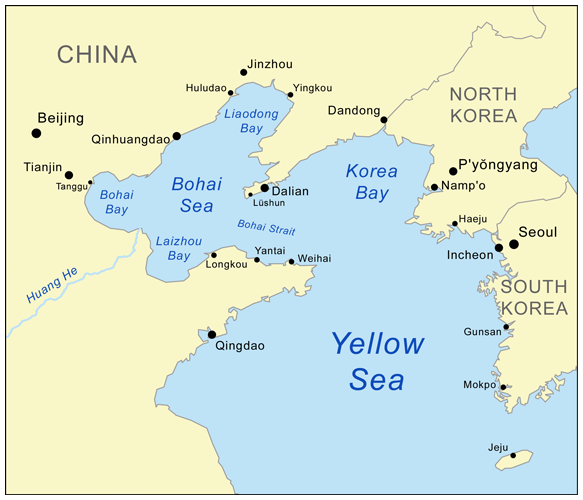
The reclusive authoritarian Democratic People’s Republic of Korea is once again back on the news headlines. Surprisingly, this time is not about the reactivation of its purported nuclear programme, or because of a new attempt to lift off a satellite/ballistic missile, or for some leaked information on the poor living conditions endured by its citizens. Media outlets are reporting on the possible hijack of 3 Chinese fishing vessels and the kidnap of their 29 crew members earlier this month. The vessels and all the captives were released today, following the intervention of the Chinese authorities. The incident has all the hallmarks of a piracy attack off the coast of Somalia or in West Africa. However, it occurred in the Yellow Sea, in an area between North Korea and China.

News reports are still contradictory and any in-depth analysis into this will necessarily depend on the real circumstances of the case. Notably, the incident has not been reported to the IMB Piracy Reporting Centre. In particular, it is not clear whether the incident took place in international waters. The identity of the assailants is also unclear. Some reports indicate that these were members of the North Korean military, while according to others Chinese mafia from the city of Dandong, on the North Korean border, might have been involved, possibly in cooperation with the North Korean military. Several news reports indicate that the vessels, originating from the city of Dalian, were accosted at sea by armed men and forced to sail to North Korea. The ship owners confirmed the capture of the vessels and their crew. According to the owners, the vessels were navigating within Chinese national waters. They also confirmed that the captors have asked for the payment of a ransom of nearly 190.000 US Dollars and have threatened to harm their captives if no payment was made.

If the assailants have no connection with state authorities, the main issue will be to determine whether the incident qualifies as piracy committed in the high seas rather than armed robbery within China’s territorial sea. However, whether the assailants are members of the North Korean military or not, the use of force and the request for a ransom renders them de facto pirates, because they appear to have acted in pursuit of private ends. If the available information is correct, their actions could also qualify as mutiny. In this regard, it is worth recalling that Article 102 UNCLOS encompasses acts of piracy committed by a government ship whose crew has mutinied.

Actions by the North Korea authorities have in the past drawn widespread international condemnation. However, it is difficult to envisage Pyongyang secretive rulers now embracing a state policy to terrorize fishermen in the Yellow Sea for ransom purposes, particularly when this has an impact on a longtime ally and regional military superpower as China. This latter routinely issues strong protests over fishing related disputes with Japanese, South Korean, Vietnamese or Philippine fishing vessels. China will likely take certain actions to prevent any further escalation of such attacks in the Yellow Sea, as it has done by policing Southeast Asia’s  Mekong river from drug smugglers and criminal cartels. However, doubts remain on whether the public outcry sparked by this incident will have an impact on its already strained relationship with North Korea.