Kiobel Oral Argument: Piracy May Spell Trouble for Shell

The Supreme Court opened up its October term with a healthy dose of international law in Kiobel v. Royal Dutch Shell. The petitioner, Esther Kiobel, is bringing suit against Royal Dutch Shell (Shell) alleging that the oil company aided and abetted the Nigerian government in committing gross human rights violations in the oil rich Ogoni region of Nigeria.

This is the second time this year that the Court has heard Paul Hoffman’s arguments in favor of the plaintiffs and Kathleen Sullivan’s arguments on behalf of Shell, and maritime piracy played a role in both rounds of arguments.

The first round of Kiobel oral arguments considered whether the Alien Tort Statute (ATS) could be applied to corporations as well as natural persons. There, Justice Breyer evoked the concept of “Pirates, Incorporated” to inquire into whether an in rem action against an 18th century pirate could be foreclosed because “Pirates, Inc.” rather than the individual pirate, owned the property at issue.

The United States Supreme Court

In the second round of oral arguments, held yesterday morning, the issue had changed from whether the ATS can be applied to corporations to whether it can be applied extraterritorially. Despite this change of focus, maritime piracy played an even more important substantive role in the second iteration of the Kiobel arguments than the first.

Piracy first came up when Justice Scalia asked Royal Dutch Shell’s attorney, Kathleen Sullivan, whether she believed – as Scalia thought she “must” – that the ATS applied to high seas conduct. She did not. Ms. Sullivan then quickly tried to turn her argument to the Marbois incident concerning an assault on a French diplomat.

But Chief Justice Roberts immediately raised the question of piracy again, noting that “it was the most clear violation of an international norm” at the time of the ATS’s passage.

Ms. Sullivan again attempted to minimize her high seas argument, noting that even if the justices concluded that the ATS reached high seas conduct, it does not extend into the territory of another state. However, she doubled down when she argued that Sosa v. Alvarez-Machain – the last ATS case heard by the Supreme Court – does not foreclose the possibility that the ATS’s reach stops at the high seas, as that opinion stated that piracy might be an area covered by the statute.

Despite her repeated attempts to stray away the issue of piracy, the oldest international crime came up again and again, including in the context of Filartiga v. Peña-Irala, where the Second Circuit held that, “[f]or the purposes of civil liability, the torturer has become – like the pirate and slave trader before him – an enemy of all mankind.”

As Shell’s attorney, Ms. Sullivan wished to steer clear of the issue of maritime piracy for several reasons. The first is that the Supreme Court explicitly found that the First Congress meant to include piracy as one of three torts available to 18th century ATS plaintiffs. The Supreme Court would likely be reluctant to admit that it was wrong less than a decade after Sosa was handed down.

Second, foreclosing ATS claims that occur on the high seas is the furthest possible extension of the respondents’ argument, one that the majority need not adopt to reach the respondents’ desired verdict.

Finally – and this may have been what Justice Scalia was getting at when he initially posed the question – it is difficult to find an example of an American law that applies on the high seas but not on foreign soil.[1] The presumption against extraterritoriality is purely a creature of Congressional intent, and it seems that Congress rarely distinguishes between the high seas and foreign soil when considering a statute’s extraterritoriality.

If the conservatives on the Supreme Court find the argument that ATS application on the high seas and on another country’s soil rises and falls together persuasive, there is enough historical evidence that the ATS was meant to apply to piracy that more newly-minted universal violations could ride on piracy’s coattails and allow for extraterritorial application of the ATS.

The effect such an opinion would have on pending litigation over a high seas requirement for facilitators of piracy is better saved for another day.


[1] Depending on the ultimate outcome of pending litigation, a notable exception to this general rule could be, however ironically, 18 USC § 1651, the statute criminalizing piracy.
In Brief: the Journal of International Criminal Justice – Symposium on Somali Piracy

The Journal of International Criminal Justice (JICJ) stepped out of its international criminal law-grounded comfort zone dedicating part of its latest issue to a symposium on the rise of piracy off the coast of Somalia from a variety of legal and non-legal perspectives. The symposium includes important contributions, ranging from an overview of counter-piracy initiatives undertaken by the international stakeholders, the local context of the historical and social background to piracy in Somalia, the role of domestic courts worldwide in prosecuting pirates, the key legal issues and challenges to the use of private military companies as well as anti-money laundering practices that could be used to counter Somali piracy. In particular, in his contribution Douglas Guilfoyle describes the international law governing the seizure and prosecution of suspected pirates, critically evaluating past proposals for international or internationalized piracy courts.

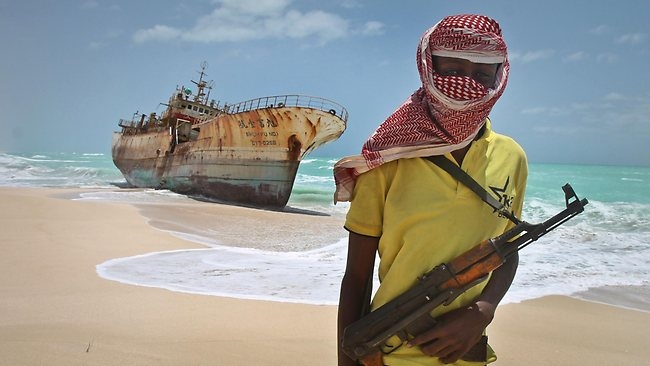
An abandoned hijacked Taiwanese fishing vessel in Hobyo, Somalia – Courtesy AP

The symposium is currently available only upon subscription.  In consideration of its fascinating subject matter, we hope that at least some parts of the symposium will soon be made available free of charge through JICJ’s “Editor’s Choice” section.

The Mekong Pirates on Trial

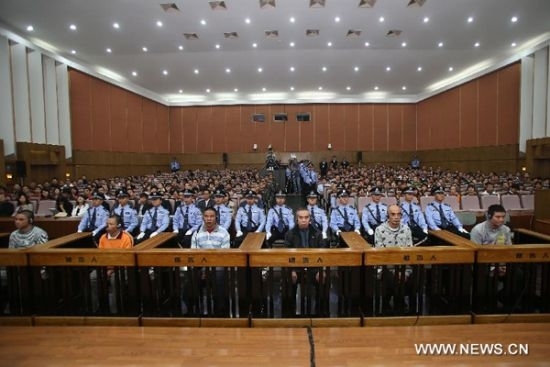
For 3 days at the end of last week, the Intermediate People’s Court in Kunming, the capital of the Yunnan Province in southwest China, was the stage for yet another high profile, yet swift, criminal trial. The case involved the mysterious murder of 13 Chinese sailors on the Golden Triangle’s area of the Mekong River in October last year. We have blogged about the incident here, focusing in particular on China’s unprecedented role in strengthening law enforcement in the strategic Mekong River basin. Since the murders, Laos, Vietnam, Myanmar and even Thailand joined China in holding several military patrols across the lawless boundary waters.

The Mekong River Trial in Session at the Intermediary People’s Court in Kunming

The murders, one the deadliest assault on Chinese nationals oversea, sparked a large public outcry in China. It therefore comes as little surprise that the trial attracted much attention from the Chinese press. Among the 6 defendants was Naw Kham (aka Nor Kham aka Jai Norkham),a member of Myanmar’s Shan ethnic minority and a notorious once-untouchable drug lord and gang leader who for years is thought to have ruthlessly run the drug and other illicit trade in the Golden Triangle area. Naw Kham was arrested in April in Laos in another joint military sting operation and traded over to China shortly thereafter. Prior to his arrest, only two blurred pictures of Naw Kham were said to exist.

Naw Kham is Extradited to Beijing amid Tight Security – Xinhua

Much of the news regarding the investigation and trial is limited to Chinese media, with only a few outlets providing reporting in the English language. The holding of the trial has been hailed as another example, further to the joint river patrols, of China’s growing concern over cross-border security issues and its novel policy of regional cooperation in combating international crimes. Indeed, it is unlikely that the arrest and trial of the alleged perpetrators could have taken place in such a swift manner without China’s involvement. As discussed in another previous post, most notably this policy included China’s unprecedented participation in the international anti-piracy patrols off the coast of Somalia and in the larger Gulf of Aden area. Chinese media praised the trial as a model of judicial cooperation, coupling armed drug trafficking gangs on the Mekong and Somali pirates as “common enemies of mankind” and calling for their prosecution as a duty of all States. This is a remarkable development in the debate over the universal nature of piracy prosecution but also, leaving piracy aside, in the more controversial debate over modern China’s sovereignty and its role in large-scale international cooperation. However, China’s sudden primary stance in the Mekong murders also seems to be a show of strength in view of other disputes concerning the economic development in the Mekong River basin as well as in other areas of economic interest in Asia.

After allegedly confessing his role in the Mekong River murders upon his arrest and recanting it in a recent interview, the media reports that Naw Kham partially admitted knowledge of the murders at the beginning of the short trial, which then concluded with his full admission of guilt and plea for leniency. All other defendants, members of Naw Kham’s gang, promptly confessed their responsibility upon the opening of the trial. They were all accused of murder, drug trafficking, kidnapping and hijacking and now face the possibility of the death penalty. During the trial, simultaneous interpretation was provided in Laotian and Thai to accommodate the testimony of foreign policemen and witnesses from Laos and Thailand. Such testimonies are apparently unprecedented in Chinese judicial proceedings. China asserted jurisdiction over the case upon its direct links with the crimes and the victims as well as within the general framework of regional cooperation within the Mekong River. Chinese media also praised the trial as a demonstration of the efficiency of Chinese judiciary to the rest of the world. From an international justice perspective, however, doubts still remain as to the procedural fairness and completeness of such fast-paced trials whose outcome increasingly relies on the defendant confession. Interestingly, the arrest and trial of Naw Kham seems to have fallen under Interpol’s radar, as at the time of writing Naw Kham still remains on its Most Wanted Fugitive List.

Naw Kham Arrives in Court Blindfolded – Not a Common Procedure Everywhere – Xinhua

According to the prosecution, the Chinese boat refused to pay protection money for safe-passage in Naw Kham controlled areas and the murders were framed as a drug related incident to set an example. Several aspects of the murders, however, remain unclear. In particular, one possibly relevant factual element of the case appears to have been given limited consideration, namely the alleged participation in the murders of 9 members of the Thai military, part of an army unit responsible for security along the Mekong. Initial investigations by Chinese authorities already revealed a role played by a group of Thai military. It is still unclear whether they acted in collusion with Naw Kham’s gang. Investigation by Thai authorities, who are currently holding the soldiers as suspects, appear to show conclusive and corroborative evidence of the Thai soldiers shooting at the Chinese boats once they crossed over into Thailand.

The Oil Continues to Spill: Transmaritime Criminality in West Africa

This time last year, we dedicated a few posts to the rise of piracy and other criminal activities in the Gulf of Guinea.  In particular, we discussed how much of these activities was a by-product of internal insurgencies and economic discontent in Nigeria and how the country’s attempted crackdown had the unintended consequence of pushing these criminal activities to nearby countries where lack of enforcement powers allowed them to thrive.

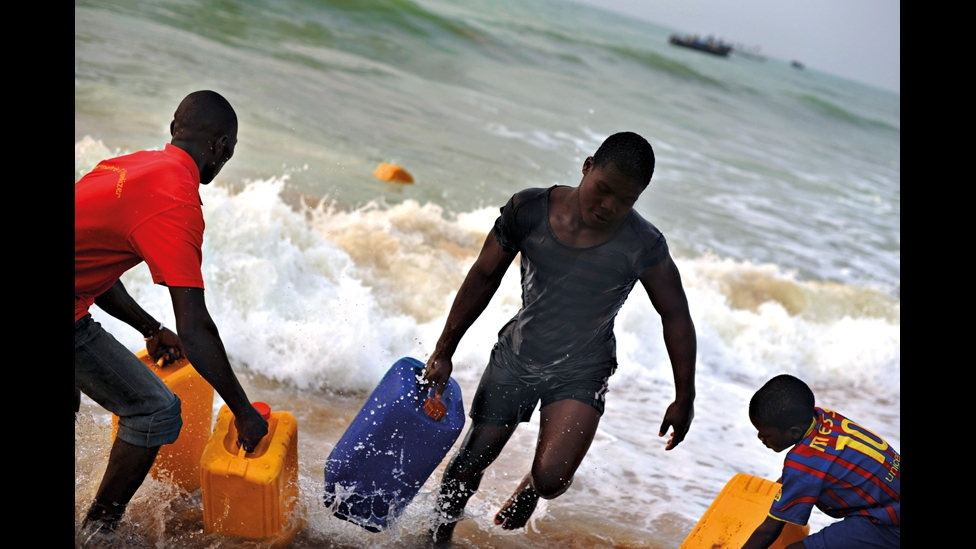
The situation has since continued to worsen. While there is currently a lull in piracy activities in Somalia and the Gulf of Aden, armed robberies and pirate attacks are sharply on the rise in West Africa. Reported incidents in the territorial waters of Nigeria, as well as Togo and Ghana, or in the international waters adjacent thereto, are now almost a daily occurrence. In the most recent of such attacks, the MT Energy Centurion, a Greek-owned oil tanker was hijacked and its 24 member crew kidnapped off the coast of Togo.

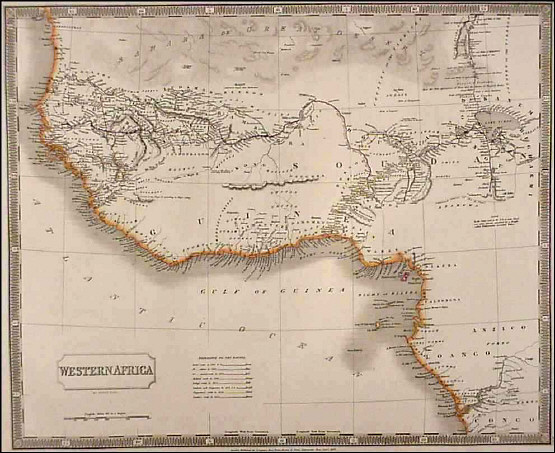
Historic Map of West Africa dated 1829 by Sidney Hall – Garwood & Voigt

The region is traditionally considered as a cornucopia of natural resources. West Africa is rich in oil and other hydrocarbons, but also fish, cocoa and timber, for instance. Nigeria is currently the biggest African oil producer, with an output of about 3 million barrels a day, most of which is exported to Europe and the US. Ghana, Liberia and Sierra Leone are the next countries to enter the oil production and export business, with new deposits discovered in their national waters in recent years. Such discoveries have the potential to bring economic development to some of the poorest countries in the world, in a region often forgotten even when plaugued by years of ruthless civil wars and rampant mismanagement. Development, however, needs to be matched by strong governance capabilities. Due to its social and geographical features, the Gulf of Guinea is not only suitable for commercial transportation but is also a potential hotspot for criminal activities, particularly exacerbated by unemployment, corruption and  lack of governance. Oil bunkering, piracy, illegal waste dumping, poaching, drugs and migrant smuggling are only the most visible tip of a larger array of criminal activities. Autonomous movements also have increasingly resorted to violence, with terrorism often inexorably spurring into ties with criminality. These activities are often, but not exclusively, perpetrated by organized criminal cartels. Smaller criminal gangs, however, also operate some activities. Their common medium, often or exclusively, is the sea, which provides direct opportunities for criminal acts as well as the means to perpetrate such acts. Oil platforms in international waters are increasingly the targets of pirates and robbers, while subsidized petrol is smuggled from Nigeria into neighboring countries in overnight trips just a few miles off their coasts. Transmaritime criminality consists of the composite interaction of various forms of organized criminal activities, including criminal cartels, oil, drugs, arms and human trafficking, the deeply rooted social causes at their basis as well as their economic and environmental impact. Transmaritime Criminality thrives on the high seas as well as in coastal developing countries due to limited law enforcement and rule of law capabilities.

Despite its apparent similarities with pirate activities in Somalia, the situation in West Africa is potentially more complex. Attacks are often reckless, and more violent. Rarely do these entail long lasting hijackings and kidnapping for ransom. Presumably due to the lack of capabilities to hold a ship  and its crew hostage for long periods, criminals often resort to stealing the ship’s cargo and releasing it after a few days. This was the case, for instance, in the hijacking of the MT Energy Centurion, which was quickly released in Nigerian waters with its crew after its valuable cargo was siphoned off. The oil will then likely be sold through the black market in face of the complacency, or powerlessness, of local authorities.

Subsidized Nigerian Oil is Smuggled Overnight to Togo and Picked up Directly Ashore to be Sold in the Local Black Market – Photo Daniel Hayduk – BBC

This criminal surge in West Africa did not go unnoticed at both the international and regional level. The UN Security Council has already dedicated various meetings and resolutions to the situation in the Gulf of Guinea. The US, but also France and China, among others, have stepped forward to provide assistance, in the form of training or equipment, to countries in the region. These, in turn, have engaged in coordination and dialogue, launching joint policing operations. The past spiraling of piracy in Somalia has obviously provided an indicator of the potential gravity of piracy thriving in lawless environments. It also developed a set of best practices in combatting piracy and its root causes. No internationally-sponsored naval patrolling mission akin to those launched by the EU or NATO in the Indian Ocean is foreseen in West Africa. The envisaged solution is that of a funneling these best practices through regional coordination, encompassing strategies of short and long term period, rather than direct international intervention. These strategies include the strengthening of enforcement powers and ad-hoc legislation. Typically, several affected countries have found their penal codes to be lacking the full criminalization of piracy and terrorism. A UN-sponsored regional conference aiming to put this phenomenon high on the agenda has been long envisaged, but yet failed to materialize. Against this background, it is worth reiterating the need to avoid the immediate risk of resource fragmentation, with already a plethora of UN and regional agencies and organizations involved as stakeholders. The fight against transmaritime criminality in West Africa has also the potential risk of becoming another lucrative self-feeding business, with military contracts already allegedly awarded to contractors of dubious background.

Update: Le Ponant Trial Judgement

Our readers might remember Valerie Gabard’s guest post on the recent trial for the 2008 hijack of the French luxury yacht Le Ponant and the kidnap of its crew. After four years of pre-trial detention, two of the six Somali accused were acquitted, while the four others were convicted and sentenced to four to ten years of imprisonment.

We have now obtained the trial judgement in the case, issued by the 2nd Section of the Court d’Assise of Paris. Contrary to initial speculations, it seems that the Prosecution have decided not to appeal the Court’s decision, which is therefore final. Unfortunately, the judgement won’t shed much light on the Court’s motivations. In keeping with French practice for criminal trials, the judgement, at least when looked at from the perspective of international justice standards, is scantily reasoned, containing little or no more than the accusations against the accused, a recall of the main trial procedural steps and the court’s verdict.

It has to be recalled that the accused were charged with kidnapping, illegal confinement and organized gang theft in pursuance of Articles 224-6 of the French Criminal Code but not with a specific offence of committing piracy due to the temporary absence, in 2008, of a specific definition of piracy in the French criminal system. In the meantime, a new Anti-Piracy legislation was introduced in January 2011.