The OTHER Anti-Piracy Legislation

There is a continuing debate over whether flag states should sanction the hiring of armed guards aboard commercial ships. There are significant financial risks associated with hiring Private Military and Security Companies (PMSCs), including liability for damages to cargo and crew. As a Congressional Research Office report concluded in April 2011, “Some industry experts suggest that hiring armed security teams may be more expensive than taking the risk and paying the occasional ransom.” Nonetheless, there is a growing trend among flag states to permit the use of PMSCs on-board commercial ships. India and the UK paved the way, and a number of other states have indicated a willingness to accept such practices. Just today it was announced that the Philippines issued guidelines to permit armed security details.

Likely because of prior controversies in Iraq and Afghanistan, the United States has been reluctant to embrace the use of PMSCs aboard marine vessels. Thus far, the U.S. has not publicly sanctioned the use of PMSCs, although some reports indicate that the U.S. State Department has privately encouraged the use of PMSCs in pirate hot spots. It is in this context that in November 2011, the U.S. House of Representatives passed the Piracy Suppression Act of 2011 (within H.R. 2838) which would require the Department of Transportation to train U.S. mariners in “standard rules for the use of force for self defense […] including instruction on firearm safety for crewmembers of vessels.” This suggests that mariners would be permitted to carry and use firearms in certain situations. The Bill would also require all U.S. flagged ships carrying goods belonging to the United States to be provided with armed personnel to be paid for by the U.S. government. The initial house bill was even more ambitious and would have permit the U.S. to seek reimbursement for U.S. military assistance to pirate victims from other states, as well as criminalize attempts to commit piracy. Interestingly, the Senate version of the Bill (S. 1665) omits all of these provisions. Therefore, if the Senate Bill passes, the Piracy Suppression Act is unlikely to become law. (The House tried to pass a similar bill in 2010 (H.R. 2647), but the Senate version did not include the armed security provisions and they failed.) It remains an open question whether the U.S. Congress will keep the Piracy Suppression Act within the bill. But the conditions may be different this time around as Congress considers the successful rescue of two aid workers in Somalia and the maritime world starts to coalesce around the view that sanctioning PMSCs is the most practical, immediate solution to counter piracy.

UK House of Commons Issues Piracy Report, Eyes Private Security Guards on Board, Local Prosecutions in East Africa (Part I)

The Foreign Affairs Committee of the UK House of Commons recently released an interesting report on piracy off the coast of Somalia.  For those who are not conversant with its work, here is some background.

The Report was originally commissioned in June 2011 in response to the growing concerns from piracy and armed robberies activities in recent years, particularly off the coast of Somalia, and on their effect on the UK’s economy and security:

“Piracy off the coast of Somalia has escalated over the last four years and is a major concern for the UK. The threat is not primarily to UK ships as very few have been captured. Rather, the threat is to the UK’s economy and security. Piracy affects the UK’s banking, insurance and shipping industries, and threatens the large volume of goods which are transported to the UK by sea.” (para. 20)

More particularly, the Committee examined the role of the Foreign Commonwealth Office (FCO) in support of UK and international efforts to combat piracy, including the adequacy of international and domestic anti-piracy legislation, the support for anti-piracy projects on the ground in Somalia (including coordination at the international level, particularly with the United Nations), as well as UK naval involvement with NATO and EU anti-piracy operations. As part of this inquiry, the Committee received evidence from shipping and insurance industries, EUNAVFOR and the Ministry of Defence, in addition to experts on piracy and Somalia. Paul and Rachel Chandler, whose yacht was hijacked by Somali pirates in October 2009 and who were held captive for over a year also provided testimony.

The Report contains a set of wide ranging conclusions, the most important of which is a call for the UK, as a state “whose strengths and vulnerabilities are distinctly maritime”, to “play a leading role in the international response to piracy.” However, while its publication has been promptly noted by an authoritative legal source and welcomed by experts in the shipping, naval and security fields, the Report is yet to receive an in-depth legal analysis, at least with regard to some of its main recommendations. It is hoped that the UK Government response to the Report will help generate more discussion on the UK policies (as well as those of the international community) towards piracy in Somalia. As noted in the Report, the UK is also soon to host an high-profile international conference on piracy, to be held in February 2012.

The Committee’s final recommendations touch upon several relevant issues. These include the UK’s overall response to piracy and the need for the FCO to increase its support to victims and families as well as the continuation of the UK contribution to the naval task forces patrolling the Gulf of Aden. The Report also commended the positive efforts made by the shipping industry to ensure safety and exercise self-defence and discussed the appropriateness of the payment of ransoms to pirates to rescue hijacked boats and kidnapped seafarers as well as the need to improve the financial tracking of the monetary flows connected with piracy. In addition, the Report called for  more coordination in the international response and local solutions on the ground to tackle the social and economic root causes of piracy in Somalia. Finally, the Report addressed the deployment of armed security guards on board of vessels and local efforts to prosecute and enforce penalties against pirates. These two last points appear of particular momentum and interest, thus warranting a more focused comment.

Private Armed Security Guards (paras 26-43)

The use of private armed security guards (PASG) in post-war settings is not a novelty. Most recently, governments have increasingly resorted to outsource their security functions while private security companies have notoriously rushed to provide relief to military intervention forces in places such as Iraq and Afghanistan. It is therefore not surprising that, also considering the high costs associated with episodes of piracy and armed robberies off the Somali coast, the sector of private armed security on board of shipping and cruise vessels is booming. A simple internet search reveals a plethora of security companies offering services to the maritime industry. One cannot but agree with the Report when it cautions a “‘gold rush’ of new private maritime security firms.” As discussed in a recent post, the unprecedented launch of a fleet of fully fledged private armed ships appears imminent. As suprising as this might sound, worthy of note is that private security contractor Blackwater Worldwide appears to have previously attempted to provide similar security services. See also a comprehensive jurisdictional analysis on the use of PASG here, particularly noting how the underlying legal issue is mainly one of the exercise, and limits, of self-defence.

The Report notes and supports the recent UK Government about-face by now permitting the deployment of PASG on board of UK-flagged vessels:

“the evidence in support of using private armed security guards is compelling and, within legal limits and according to guidance, shipowners should be allowed to protect their ships and crew by employing private armed security guards if they wish to do so.”

This recommendation certainly marks a shift in favor of the deterrent effect and towards empowering and calling for shipowners, as well as insurers, to bear some of the responsibilities and costs associated with providing security along the main shipping routes. However, regulation and accountability mechanisms have not kept pace with the surging growth of the private security sector. The Report addresses the various risks of using PASG on board (particularly using lethal force), and calls for further formal and practical guidelines to better regulate their operation. However, it falls short of emphasising any concrete direction on what force can be used and when. The International Maritime Organization (IMO) has also issued interim guidelines on the use of private security guards as well as several aspects of their activities. The IMO previously clarified that these guidelines are not intended to institutionalise the use of armed and privately contracted security guards on ships and that they do not address all the legal issues that could be linked to their use. India and the U.S. have also issued guidances.

Calls for further and uniform clarifications have already been raised and, together with an assessment of the need for a permanent legislative framework that substitutes the current interim guidelines, should be on top of the agenda for the Government response to the report. In addition, with other States having opposed the use of such armed guards, the risk of fragmentation between flag, port and coastal states is of particular concern.  This leaves PASGs in the awkward position of being permitted by a flag-state to bear weapons on board and ship and tossing those weapons overboard before calling to port in a jurisdiction that may not permit armed personnel aboard commercial ships

In addition to the security of commercial ships, any holistic solution will encompass mechanisms for the prosecution, transfer and imprisonment of pirates. The solutions suggested by the Report in this regard will be discussed in a forthcoming separate posting.

India Advocates UN-led Anti-Piracy Force

This past Wednesday, the UN Security Council received a briefing on the current situation in Somalia.  The main focus of the meeting was the increase in size of the African Union Mission in Somalia (AMISOM), which may be coordinating its efforts against al Shabaab with Ethiopian and Kenyan forces.  The meeting also addressed the continuing problem of piracy. In this regard, the Indian ambassador to the UN stated that the UN needs to adopt a comprehensive counter-piracy strategy and that part of this strategy should include a “UN-led anti-piracy force to conduct naval operations.” At present, naval operations in the Gulf of Guinea are fragmented, with several navies operating independently, others working under the auspices of NATO or EUNAVFOR, and soon, a private company operating a fleet of armed ships.  This fragmentation is complicated with the increasing use of armed private security contractors aboard ships which some have suggested should also be replaced with UN forces. The proper mix of international military forces and private security forces will continue to be a point of debate.  But with so many different forces operating in the same seas, a coordinated strategy is desperately needed.

An Arms Race at Sea

The vulnerability of commercial ships to piracy and armed robbery at sea is caused in part by the weak capacity of East African navies and coast guards. The inability of the Kenyan police and the Kenyan Navy to prevent the kidnapping of a UK national off the island of Lamu brings this issue into relief.  In that incident, “The police sent a boat to Manda [near Lamu] to investigate, but soon returned to Lamu to gather reinforcements — which was not a simple task. Although Lamu’s police have three boats, each equipped with twin 115-horsepower outboard engines, two of the boats were out of commission that morning. Instead officers had to hire one 140-horsepower craft from a local captain and requisition another from the Kenya Wildlife Service.“  The Kenyan Navy also had trouble responding: “The Kenyan Navy had sent out a small boat to intercept the kidnappers, but it struck a coral reef and capsized.”

Failures such as these have resulted in two related developments. One, a call to build up naval and coast guard capabilities of states in regions affected by piracy and two, an increasing acceptance of armed guards on board commercial ships to fill the void of naval capacity.

First, there has been a call to build up naval capacity of littoral states. In his July 2011 report concerning the modalities for establishing courts to prosecute pirates, the UN Secretary General discussed the possibility of an extraterritorial Somali court based in Tanzania. He noted, “Tanzania wished to communicate to the international community its willingness to assist under the right conditions. Tanzania’s primary concerns were security and the need to reach international standards. He indicated that his Government had collected views from the judiciary, prisons authority and navy on what would be needed to achieve these elements. The prisons needed sufficient facilities and the navy needed a ship to defend the coast.”

Similarly, Tayé-Brook Zerihoun, Assistant Secretary-General for Political Affairs said the international community should consider ways of developing Somali capacity to deal with piracy on land and waters close to shore through the establishment of a coast guard.

The phenomenon is not limited to East Africa.  Both Ghana and Benin are in the process of acquiring naval boats to patrol their waters.  Ghana has ordered two 46 metre patrol vessels from China’s Poly Technologies Incorporated as part of a larger drive to modernise its navy. The vessels will be used to combat piracy and increase maritime security off Ghana’s coast once they are delivered before year-end. Likewise, China provided a grant of four million euros in September to Benin for the purchase of a patrol boat.

Without question, littoral states have the right pursuant to international law to protect their territorial waters. These states may also have rights to patrol in the exclusive economic zone (extending beyond territorial waters) if established pursuant to the UN Convention on the Law of the Sea. But the effects of building up navies and coast guards will be felt long after maritime piracy and armed robbery at sea have been neutralized. The common enemy of piracy has brought together strange bedfellows (for example, the joint naval operations in the Indian Ocean including China, the United States, and India). However, once the common enemy is vanquished old rifts will likely reappear. In the case of the Gulf of Guinea in particular, where the coastal and territorial waters are resource rich, the build up of navies may create post-piracy tension.

The second obvious trend, is the build up of small arms on ships.  The October 2011 Secretary General Report to the UN notes that a combination of new tactics have reduced the success rate of pirate attacks in the Gulf of Aden and Indian Ocean. He notes, ”As of early October 2011, 316 people and 15 vessels were being held hostage. This compares with 389 people and 18 vessels held in October 2010. The reduction was achieved through a combination of actions by naval forces and the improved implementation of the IMO guidance and industry-developed Best Management Practices for Protection against Somalia-Based Piracy. That included better application of self-protection measures and situational awareness by merchant ships. Naval forces reported that in the last year, 75 per cent of attacks were warded off by military intervention, while this  year, merchant ships achieved the same success rate by taking robust action, including through the use of fortified safe rooms.”

While the Secretary General downplays the effect of private security contractors, PMSCs have obviously had an impact on reducing the success rate of pirate attacks. As a result, the International Maritime Organization, and several states, including the UK, India and the US have become increasingly tolerant of private military contractors being hired to protect commercial ships transiting through high risk areas.

“The [IMO] guidance includes sections on risk assessment, selection criteria, insurance cover, command and control, management and use of weapons and ammunition at all times when on board and rules for the use of force as agreed between the shipowner, the private maritime security company and the Master. The interim recommendations for flag States recommend that flag States should have in place a policy on whether or not the use of [PMSC] will be authorized and, if so, under which conditions. A Flag State should take into account the possible escalation of violence which could result from the use of firearms and carriage of armed personnel on board ships when deciding on its policy.  The recommendations are not intended to endorse or institutionalize the use of [PMSCs] and do not address all the legal issues that might be associated with their use onboard ships.”

Likewise, following on India’s issuing of guidance to permit PMSCs on-board commercial ships, Prime Minister Cameron has said he wishes to legalise armed guards on ships passing through dangerous waters, such as the Red Sea and the Gulf of Aden. Although the United States has not gone so far as to create new laws in this area, it has started to privately encourage the use of PMSC’s for ships transiting the high-risk corridor.

The increased use of PMSCs was perhaps unavoidable in this area. But, as pirates become increasingly desperate to find available targets, and commercial shippers resort to armed escorts, an escalation in violence will ensue.  This will lead to increased risk to the lives of hostages and seafarers as well as the valuable cargo transiting these waters.
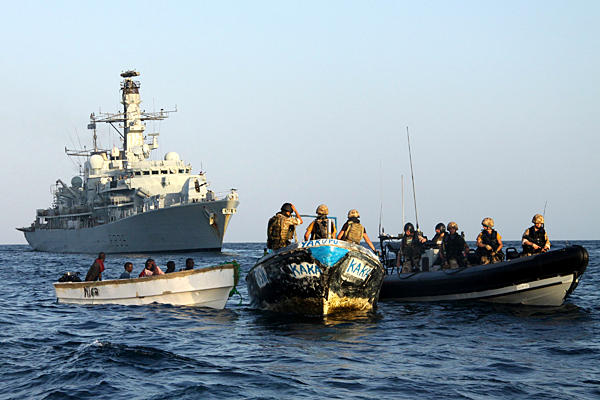
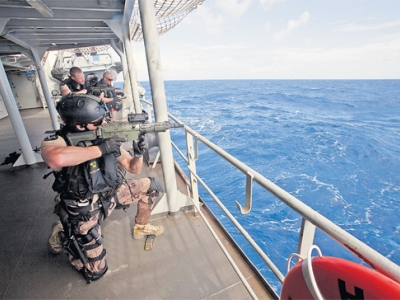
Sophisticated Planning Operations of Somali Pirates

A newly-released report by a UN agency (UNOSAT) statistically analysed 2005-2009 Somali piracy attacks and reached some surprising conclusions which contradict widely-held assumptions about the reactivity of pirates. It concludes:

• The dramatic expansion of piracy in the Indian Ocean was initiated during the spring of 2008 – predating major international naval patrols;
• Falling piracy success rates may be partially the result of a statistical bias due to changes in incident reporting over time, and may reflect a naturally occurring decline resulting from more aggressive pirate rules of engagement and a large influx of untrained pirate recruits;
• A significant majority of failed attacks on merchant vessels occurred without any direct international naval assistance;
• Counter-piracy training, technology and tactics of merchant vessels has likely had the greatest impact on improved maritime security levels and falling hijacking success rates in the Gulf of Aden

Many have assumed that the increasing use of international naval assistance (such as the EU NAVFOR Atalanta mission) have reduced the success-rate of pirate attacks. The UNOSAT report finds that pirate activity had moved away from the Gulf of Aden (formerly the primary targeted area) and into the Indian Ocean, before the international community created a safe-travel corridor and protected convoys in the Gulf. This suggests a level of sophistication and planning on the part of pirate organizations. Before the international community could react, Somali pirates were already picking their next targets.  As the report puts it:

The more convincing interpretation of the dramatic spread of piracy into the vast expanse of the Indian Ocean was that this was a deliberate strategy planned and initiated not in reaction to anti-piracy patrols in the Gulf, but as part of a hugely successful piracy expansion program – most visibly and successfully demonstrated at that time in the Gulf.

The report also points out that falling success rates do not necessarily mean success in the fight against piracy. For the actual number of successful pirate attacks increased from 2008 to 2009 despite a reduced rate of successful attacks. Faced with more difficult conditions, pirates simply initiated more attacks. The report suggests that the higher number of attacks required use of less-experienced recruits and this may partly account for the reduced rate of successful pirate attacks.

One final point identified by the report is the correlation between a lull in attacks with the seasonal monsoon from May/June through mid-September. It is possible that the recent attacks on land-based tourists in Kenya were an attempt to increase ransom-revenues during the monsoon – when attacks at sea were not possible. Always looking for new opportunities, tourists located less than 100km from the Somali border must have appeared easy targets, especially considering attacks have been attempted as far as 1600 nautical miles from the Somali coast.

Although this report is not fully up to date, the implications are that pirate criminal organizations have a sophisticated planning apparatus, in which shipping lanes, vulnerabilities, sea conditions, and potential ship defences are all taken into consideration. It also suggests that pirates are proactively seeking new targets. This explains why countries far to the south, such as Mozambique and South Africa, are considering the potential of attacks in their own waters.