In Brief: the Journal of International Criminal Justice – Symposium on Somali Piracy

The Journal of International Criminal Justice (JICJ) stepped out of its international criminal law-grounded comfort zone dedicating part of its latest issue to a symposium on the rise of piracy off the coast of Somalia from a variety of legal and non-legal perspectives. The symposium includes important contributions, ranging from an overview of counter-piracy initiatives undertaken by the international stakeholders, the local context of the historical and social background to piracy in Somalia, the role of domestic courts worldwide in prosecuting pirates, the key legal issues and challenges to the use of private military companies as well as anti-money laundering practices that could be used to counter Somali piracy. In particular, in his contribution Douglas Guilfoyle describes the international law governing the seizure and prosecution of suspected pirates, critically evaluating past proposals for international or internationalized piracy courts.

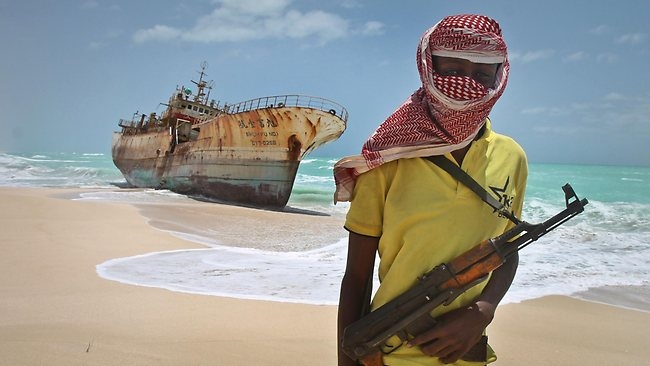
An abandoned hijacked Taiwanese fishing vessel in Hobyo, Somalia – Courtesy AP

The symposium is currently available only upon subscription.  In consideration of its fascinating subject matter, we hope that at least some parts of the symposium will soon be made available free of charge through JICJ’s “Editor’s Choice” section.

Somalia Monitoring Group Report Now Available

The latest Report of the UN Monitoring Group on Somalia is now publicly available. The Monitoring Group is tasked to focus on the ongoing violations of the embargo imposed on Somalia since 1992 by the Security Council. The Group prepares reports of its activities, which are then submitted to the UN Security Council and its subsidiary Sanctions Committee on Somalia. The Sanctions Committee concerning Somalia was intially established to oversee the arms embargo and its violations. The mandate  of the Committee was then amended and modified by subsequent Security Council resolutions relevant to Somalia. In parallel, the Committee also oversees a sanction regime imposed on Eritrea. For further information, see here.

The Report, of over 300 pages in length, can be downloaded here. A previous unofficial dissemination of the Report generated a debate on the ongoing situation in Somalia, particularly concerning allegations of widespread corruption and collusion of government officials. Several aspects of the Report are also dedicated to the issue of piracy off the coast of Somalia. (See paras 38-50 and Annex 4). Interestingly, the Monitoring Group has found no evidence that would suggest a structural or organizational link between Al-Shabaab as an organization and Somali pirate networks.

“Somali-based piracy threatens not only the peace, the security and the stability of Somalia, but regional and international security as well. Although pirates have been more active than ever in 2011, the adoption of best management practices by the shipping industry, more effective international counter-piracy naval operations and the increasing use of private maritime security companies have substantially lowered the number of vessels successfully hijacked. As a result, pirates have to adapt and diversify, engaging in kidnap for ransom on land, and marketing their services as “counter-piracy” experts and “consultants” in ransom negotiations. This evolution of the piracy business model is being driven largely by members of the Somali diaspora, whose foreign language skills, passports and bank accounts are all valuable assets. But the Monitoring Group has also been able to confirm the collusion of senior Transitional Federal Government officials in shielding a notorious pirate kingpin from prosecution, providing him with a diplomatic passport and describing him as a “counter-piracy” envoy.”

According to the Monitoring Group, the situation appears particularly concerning in the autonomous Puntland region (see Annex 4.1). In particular, the Report discussed the much rumored Puntland Maritime Police Force, in connection with the use of private security companies operating on the ground in the region (See Annex 5.3).

The Report is also critical of the role of the international community, calling for a more robust commitment to investigate Somali piracy from a law enforcement perspective and to prosecute identifying key individuals who organize, finance or benefit from it, also singlying out a somewhat ambivalent role played by the UK in twarthing piracy.

“The UK Government’s ambivalent posture with respect to Somali piracy is illustrative of a more general international reluctance to tackle Somali piracy as a form of international organized crime, rather than as a sui generis product of Somali statelessness requiring custom-made military and custodial responses. Unless and until this attitude changes, international counter piracy efforts will continue to treat the symptoms of Somali piracy rather than the cause.”

Finally, the Report also discusses the role of private maritime security companies (See paras 72-74 and Annex 5.4) and the risk of some of these representing a potential new channel for the flow of arms into Somalia. In this regard, the Report expresses concern for the increasing use of “floating armouries” to store arms and ammunitions at sea.

“The Monitoring Group recommends that:

(a) The Committee should proceed without further delay to designate known pirates and their associates identified by the Monitoring Group or Member States for targeted measures;

(b) The Security Council should consider the possibility of establishing a specialized investigative group of experts with a mandate to collect information, gather evidence and record testimonies relating to acts of Somali piracy, including and especially the identification of pirate leaders, financiers, negotiators, facilitators, support networks and beneficiaries;

(c) The Security Council should consider making explicit reference, in its next resolutions on Somalia and piracy, to the Monitoring Group’s responsibility of investigating and identifying key individuals responsible for acts of piracy off the coast of Somalia, as well as the movement and investment of piracy proceeds, and call upon Governments, international organizations and national law enforcement agencies to exchange evidence and information with a view to the arrest and the prosecution of senior pirate leaders and their associates, or to their designation for targeted measures;

(d) The Security Council should consider options for the establishment of an international regulatory authority that regulates, monitors and inspects the activities of private maritime security companies operating floating armouries and providing armed protection to vessels in international waters.”

Pirate Attacks Hit “Low Season” in Somalia – Why and What’s Next?

According to the International Maritime Bureau, pirate attacks off the coast of Somalia continued to fall sharply in the first half of 2012.  July 2012 was particularly significant, with no reported attempted attack. Remarkably, it was the first full month with no noteworthy pirate activity off the coast of Somalia and the larger Indian Ocean since at least half a decade. The last reported attack dates back to 26 June 2012, when a Maltese-flagged bulk ship was fired upon near the Yemeni coast. As of 29 July 2012, Somali pirates are still holding at least 11 vessels and 174 crew members.

A piracy situational map we’ve rarely seen – Courtesy Oceanus Live

The suprising drop in Somali pirate activity is spurring a debate on the reasons behind it and the impact of the international efforts to counter pirate attacks. Among the main factors are the pre-emptive and disruptive counter piracy tactics employed by the international navies, with military operations now extending both at sea and on land, the effective implementation of the Best Management Practices by the shipping industry, including the use of citadels and other ship hardening means, the strengthening of a regional judicial system of law enforcement and prosecution, also targeting piracy financiers and kingpins, and in particular, the manyfold increase in the use of Privately Contracted Armed Security Personnel and government-provided Vessel Protection Detachments by ships travelling through the area. It is likely that all these factors together and concurrently have contributed to the falling numbers, tipping the risk aspect to rise above the possible profit expectations for wannabe pirates. Bad monsoon weather is also an additional factor often overlooked, with July and August being traditionally difficult months to set off to sea in the region for both pirate mother ships and small skiffs.

What’s Behind the Horizon?

The current status quo requires the operational strategy to continue and focus also on wider land-based solutions encompassing both security and economic development. Some commentators have warned that pirates and their financiers are simply sitting idle awaiting for better days to come.  Notably, August 2012 will mark the end of the Somalia TGF. While there are high hopes for a better future for Somalia, it is difficult to assess how this will reshape the Country’s current political landscape. There are also fears that the successes of current anti-piracy measures will detract the necessary attention below warning levels with a consequential lull in the international and national effors to combat piracy. If so, the momentum could shift back in the pirates’ favor.

Private Navies and Ships on Government Service

Blackwater’s failed venture – McArthur

Over the last few years, entrepreneurs and private insurers have floated a number of proposals for the creation of private security escorts (so-called “private navies”). These types of proposals address several pressing concerns. The international naval escorts, such as EUNAVFOR, provide protection to a limited number of ships. But waiting for a critical mass of ships to initiate a convoy at the entrance to the high-risk zone can be time-consuming and costly for shippers. Furthermore, international naval escorts can only provide an escort in the highest risk zones (e.g. the Gulf of Aden), leaving ships vulnerable to attack in other areas such as the vast Indian Ocean. Private security escorts promise to be available to individual ships throughout their journey in high-risk waters. Though the cost of such services could be significant, there is the promise of savings in insurance premiums.

In the past, the U.S. state department has expressed hightened concern with regard to private security escorts vis a vis private security guards on-board ships (the latter are now openly encouraged). What then governs the use of force by these private security escorts and under what circumstances is the use of force permissible pursuant to international law?  Three examples provide a useful backdrop to consider the legal issues. The answer, it turns out, will likely depend on whether private security escorts are “on government service” and whether in the circumstances of a particular encounter, they overstretch the concept of self-defence by engaging in pirate hunting.

Blackwater, the security contractor who ran into trouble in Iraq and Afghanistan, was one of the first companies to venture into the private security escort business. It purchased a retired naval vessel, the 183 foot McArthur and, in 2007, it offered its services as a counter-piracy escort vessel. Perhaps due to uncertainty regarding the legal issues, and Blackwater’s compromised reputation, it received no customers and soon left the counter-piracy business. Maybe it was just before its time as several additional ventures have been announced more recently.

In September 2010, it was reported that:

[A] leading London insurer is pushing ahead with radical proposals to create a private fleet of about 20 patrol boats crewed by armed guards to bolster the international military presence off the Somali coast. They would act as escorts and fast-response vessels for shipping passing through the Suez Canal and the Indian Ocean.

Jardine Lloyd Thompson Group (JLT), which insures 14 per cent of the world’s commercial shipping fleet, said the unprecedented “private navy” would work under the direct control of the military with clear rules of engagement valid under international law. Early discussions have also been held with the Ministry of Defence, the Department of Transport and the Foreign Office. (emphasis added).

This particular venture would place the private security escort “on government service.” Article 107 of UNCLOS provides that a pirate boat may be seized by “other ships or aircraft clearly marked and identifiable as being on government service and authorized to that effect.” The idea here is the a government may hire private companies to engage in police functions so long as it is made explicitly clear by markings and identification that the ship is controlled by the government and under a presumably military chain of command. It has been argued that ships on government service could not only provide self-defence to an escorted ship but could also engage in pirate hunting. However, the responsible government, in this case the U.K., would be taking a considerable risk in authorizing defensive as well as aggressive use of force.

Most recently, in November 2011, a company put forward a new proposal.

Convoy Escort Programme Ltd., backed by the marine insurance industry, will initially deploy seven former naval patrol boats, each with armed security teams of eight people on board, Angus Campbell, chief executive officer, said by phone from Swarland, England today. The bullet-proofed boats will charge about $30,000 per ship traveling in a convoy of around four vessels over three to four days, he said.

“We are going to be a deterrent,” Campbell said. “We are not in the business of looking for trouble but if anybody tries to attack a vessel we are escorting, our security teams will deploy force if they have to act in self defence.”

It was confirmed yesterday that this project has secured (paid subscription required) additional funding from private insurers and hopes to have boats on the water by the summer.

In contrast to the prior example, there is no indication that Convoy Escort Programme is being coordinated with regular naval forces. Therefore it is not “on government service.”  Although Article 107 of UNCLOS does not permit private security companies not on government service from engaging in pirate hunting, the general principle of self-defence, and defence of others, would justify protecting vessels from an on-going attack. Such conduct must be carefully circumscribed. The risk here is that private security personnel would, in the heat of battle, step outside of the orbit of “self-defence” and into the breach of pirate hunting.  For example, if personnel decide to chase down suspected pirate boats that have (1) not approached the vessel they are protecting or (2) approached the vessel and fled, the personnel may have overstepped what was strictly necessary to protect the vessel under attack. Furthermore, the absence of clear rules of engagement creates the real possibility of mistaken identity at sea. If these projects go ahead, pirates off the coast of Somalia will have to contend with more heavily-armed foes, but so will Somali and Yemeni fishermen who frequent these same waters.
Privately Contracted Armed Security Personnel and Counter-Piracy: Is France at a turning point?

A guest post by Valerie Gabard. Valerie is a French national with notable experience in both French and International Law. Previously, she was a legal officer at the Extraordinary Chambers in the Courts of Cambodia. She is currently a legal officer at the International Criminal Tribunal for the Former Yugoslavia. Valerie is also a regular contributor to the Bulletin of the French Society for International Law.

The number of recent blog posts on the issue of Privately Contracted Armed Security Personnel (PCASP) undeniably shows the growing role of PCASP as a piracy deterrent. As mentioned in an earlier post, the United States strongly supports the use of PCASP as an efficient means of containing piracy. In Europe, there is no harmonized position either at the European Union level, or among the individual States. As opposed to Great Britain, France has repeatedly expressed reluctance to rely on PCASP to protect French vessels against pirates’ attacks. So far, the French response has been limited to the on board deployment of Vessel Protection Detachments (VPDs) composed of professional soldiers. Until very recently the organization of French ship-owners (les armateurs de France) showed the same lack of enthusiasm with respect to the use of PCASP. Nevertheless, the deployment of VPDs appears insufficient to ensure the security of all French vessels traveling through the Gulf of Aden. As a result, French ship-owners recently changed their standpoint and began supporting the use of PCASP. This development may lead the French government to review its current position on the matter.

In late February 2012 a statement from the organization of French ship-owners noted the limits of the VPDs in protecting crew members and the urgent need for alternative solutions. They expressed strong support for a report filed by two members of the French National Assembly. The report underlines the need to reform French Law in order to allow the use of private security companies and to create a proper legal framework for their activities. According to its authors, the report aims to end a French taboo that traditionally associates private security with mercenary activities. The report underlines that the use of private security actors is a phenomenon that cannot be ignored at the international level, especially in the field of piracy, and that private security services have a potential worldwide market value of up to 200 billion USD a year. It further suggests that France should legislate to create a proper legal framework that would ensure transparency and address the responsibility of private security firms in contrast with the current legal limbo. Noting that there is a real and immediate need for private security on board French vessels, the report proposes that counter-piracy could be an area in which the use of PCASP can be tested with a view to possible broader application in the future. It also points to the increasing role of PCASP in the fight against piracy and the fact that French ship-owners may turn to British firms for protection if France does not react adequately. The report notes that although the number of French private security firms is still very low (around 10 to 15), there are important business opportunities in this field. The report is not naïve as it underlines the economic implications behind authorizing private security actors to counter piracy. It implies that France’s position against PCASP is untenable at the international level. With or without France, the number and scope of PCASP will increase in the fight against piracy. It is now up to France to decide whether to create a proper legal framework and be part of it or be left behind. The economic pressure represented by French ship-owners may force the French authorities to review their present position on the matter. While there is still no official position it is clear that France is now at a turning point and that there is an urgent need to take decisions on the matter. With the presidential elections looming, it is nevertheless not expected that an official position will be taken before the summer, at very least.

The debate around PCASP in France does not impact or call into question the current French military involvement inthe fight against piracy. This remains the main tool of the French counter-piracy policy and France recently reaffirmed the importance it attaches to a military deterrrent in the Gulf of Aden. Indeed, since April 2012 France assumed command of European Union Naval Force (EU NAVFOR) Atlanta counter-piracy mission off the coast of Somalia. This is the second time that France has held command of the EU NAVFOR Task Force. It is also worth noting that the Council of the European Union has extended the mandate of the EU NAVFOR until December 2014 and has increased the area of operations to include Somali coastal territory and its internal waters.