U.S., Iran and China target pirate financiers and Kingpins

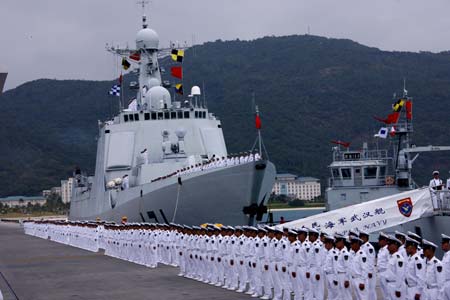
Rescued Chinese crew aboard cargo ship Xianghuamen wave to a welcoming Chinese delegation near Bandar Abbas, Iran, April 7, 2012. One of Somalia’s most wanted pirates was captured after Iranian commandos rescued the hijacked ship. PHOTO | XINHUA |

In May, Thomas P. Kelly, Principal Deputy Assistant Secretary of State gave a lengthy speech to the American Petroleum Institute outlining the U.S. strategy to address piracy. The approach includes the following:

  • diplomatic engagement to spur collective international action;
  • expanding security at sea through the use of naval assets to defend private vessels and to disrupt pirate attacks;
  • preventing attacks by encouraging industry to take steps to protect itself;
  • deterring piracy through effective legal prosecution and incarceration; and
  • disrupting the piracy enterprise ashore, including the financial flows that make it possible.

Of particular interest to the prosecution of pirate leaders and organizers was the following:

After an intensive review of our strategy last year, Secretary Clinton approved a series of recommendations which constitute a new strategic approach. A focus on pirate networks is now at the heart of our strategy. We are using all of the tools at our disposal in order to disrupt pirate networks and their financial flows. We are focused on identifying and apprehending the criminal conspirators who lead, manage, and finance the pirate enterprise, with the objective of bringing them to trial and disrupting pirate business processes. Often, the best way to attack organized crime is to follow the money. That’s how the U.S. put some nefarious criminals behind bars. Pirate organizers receive income both from investors and ransom payments, and disburse a portion of the proceeds of ransoms back to these investors. Already, the United States has convicted one Somali pirate negotiator.

This highlights the focus on high-value kingpins as opposed to just the foot soldiers executing attacks. In 2010, President Obama signed Executive Order 13536 concerning Somalia which identified 11 individuals who were suspected of financing piracy. The Executive Order imposed economic sanctions on individuals who “have engaged in acts that directly or indirectly threaten the peace, security, or stability of Somalia” and indicated that “among other threats to the peace, security, or stability of Somalia, acts of piracy or armed robbery at sea off the coast of Somalia threaten the peace, security, or stability of Somalia.” Some of these same individuals were named in a list created by the UN Security Council in February 2012 indicating they are “individuals and entities subject to the travel ban, assets freeze and targeted arms embargo imposed by paragraphs 1, 3 and 7 of Security Council resolution 1844 (2008).”

The list of individuals annexed to the Executive Order includes, Mohamed Abdi Garaad, who was recently arrested together with 12 other suspected pirates on 4 April by Iranian commandos after the pirates had hijacked a Chinese cargo ship. It is reported that Garaad was:

In command of one of the largest pirate militias, Garaad is outspoken and well known to the international media.  He is reported to command 13 separate militia groups, totaling over 800 pirates.  In a 2009 interview, he proclaimed, “The navies, they can’t stop us … we have more than 200 crews and we are increasing all the time.”  Garaad is responsible for the attack on M/V Maersk Alabama, which ended with the successful operation by US Navy SEALs.  After this operation, Garaad publicly threatened to retaliate against US ships and crews.  Garaad is also responsible for the 2009 attack on the M/V Sea Horse, a ship delivering World Food Program aid to Somalia.

See also here and here. It is unclear whether he is in the custody of Iranian or Chinese authorities, whether he will be brought to trial and if so where and under what legal regime.
Private Navies and Ships on Government Service

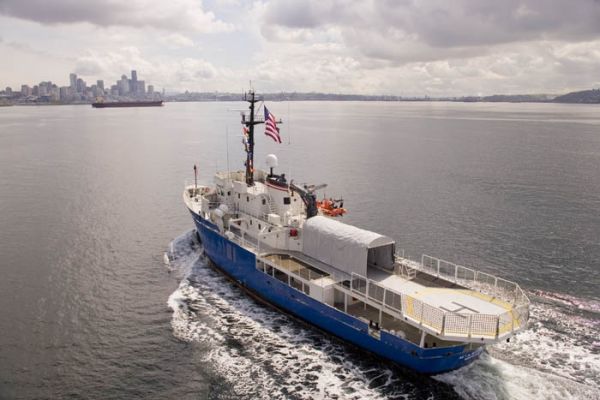
Blackwater’s failed venture – McArthur

Over the last few years, entrepreneurs and private insurers have floated a number of proposals for the creation of private security escorts (so-called “private navies”). These types of proposals address several pressing concerns. The international naval escorts, such as EUNAVFOR, provide protection to a limited number of ships. But waiting for a critical mass of ships to initiate a convoy at the entrance to the high-risk zone can be time-consuming and costly for shippers. Furthermore, international naval escorts can only provide an escort in the highest risk zones (e.g. the Gulf of Aden), leaving ships vulnerable to attack in other areas such as the vast Indian Ocean. Private security escorts promise to be available to individual ships throughout their journey in high-risk waters. Though the cost of such services could be significant, there is the promise of savings in insurance premiums.

In the past, the U.S. state department has expressed hightened concern with regard to private security escorts vis a vis private security guards on-board ships (the latter are now openly encouraged). What then governs the use of force by these private security escorts and under what circumstances is the use of force permissible pursuant to international law?  Three examples provide a useful backdrop to consider the legal issues. The answer, it turns out, will likely depend on whether private security escorts are “on government service” and whether in the circumstances of a particular encounter, they overstretch the concept of self-defence by engaging in pirate hunting.

Blackwater, the security contractor who ran into trouble in Iraq and Afghanistan, was one of the first companies to venture into the private security escort business. It purchased a retired naval vessel, the 183 foot McArthur and, in 2007, it offered its services as a counter-piracy escort vessel. Perhaps due to uncertainty regarding the legal issues, and Blackwater’s compromised reputation, it received no customers and soon left the counter-piracy business. Maybe it was just before its time as several additional ventures have been announced more recently.

In September 2010, it was reported that:

[A] leading London insurer is pushing ahead with radical proposals to create a private fleet of about 20 patrol boats crewed by armed guards to bolster the international military presence off the Somali coast. They would act as escorts and fast-response vessels for shipping passing through the Suez Canal and the Indian Ocean.

Jardine Lloyd Thompson Group (JLT), which insures 14 per cent of the world’s commercial shipping fleet, said the unprecedented “private navy” would work under the direct control of the military with clear rules of engagement valid under international law. Early discussions have also been held with the Ministry of Defence, the Department of Transport and the Foreign Office. (emphasis added).

This particular venture would place the private security escort “on government service.” Article 107 of UNCLOS provides that a pirate boat may be seized by “other ships or aircraft clearly marked and identifiable as being on government service and authorized to that effect.” The idea here is the a government may hire private companies to engage in police functions so long as it is made explicitly clear by markings and identification that the ship is controlled by the government and under a presumably military chain of command. It has been argued that ships on government service could not only provide self-defence to an escorted ship but could also engage in pirate hunting. However, the responsible government, in this case the U.K., would be taking a considerable risk in authorizing defensive as well as aggressive use of force.

Most recently, in November 2011, a company put forward a new proposal.

Convoy Escort Programme Ltd., backed by the marine insurance industry, will initially deploy seven former naval patrol boats, each with armed security teams of eight people on board, Angus Campbell, chief executive officer, said by phone from Swarland, England today. The bullet-proofed boats will charge about $30,000 per ship traveling in a convoy of around four vessels over three to four days, he said.

“We are going to be a deterrent,” Campbell said. “We are not in the business of looking for trouble but if anybody tries to attack a vessel we are escorting, our security teams will deploy force if they have to act in self defence.”

It was confirmed yesterday that this project has secured (paid subscription required) additional funding from private insurers and hopes to have boats on the water by the summer.

In contrast to the prior example, there is no indication that Convoy Escort Programme is being coordinated with regular naval forces. Therefore it is not “on government service.”  Although Article 107 of UNCLOS does not permit private security companies not on government service from engaging in pirate hunting, the general principle of self-defence, and defence of others, would justify protecting vessels from an on-going attack. Such conduct must be carefully circumscribed. The risk here is that private security personnel would, in the heat of battle, step outside of the orbit of “self-defence” and into the breach of pirate hunting.  For example, if personnel decide to chase down suspected pirate boats that have (1) not approached the vessel they are protecting or (2) approached the vessel and fled, the personnel may have overstepped what was strictly necessary to protect the vessel under attack. Furthermore, the absence of clear rules of engagement creates the real possibility of mistaken identity at sea. If these projects go ahead, pirates off the coast of Somalia will have to contend with more heavily-armed foes, but so will Somali and Yemeni fishermen who frequent these same waters.

Use of Private Guards and VPDs Remains Controversial

Staff of IntelEdge - A Private Security Firm

The Contact Group on Piracy off the Coast of Somalia, as you will recall, was created by a UN Security Council Resolution in 2009 and is now composed of more than 60 countries and international organizations. It recently held its eleventh plenary session and issued a press communique measuring the progress of the fight against piracy. The statement first notes that the problem of piracy is far from under control:

Concluded that piracy continues to pose a serious threat, noting that while the number of hostages in captivity has decreased since the last meeting (currently 197 individuals as of 19 March 2012, as compared to 250 in November 2011), the number of hijacked vessels has gone up, and currently stands at 13, compared to ten at the last Plenary in November 2011; total incidence of attacks also remains high, with 36 reported so far in 2012, seven of which have been successful;

The statement then acknowledges the assistance that private guards and, government-provided vessel protection detachments (VPDs) can provide.

Noted that the low success rate of attacks was a positive development due to a combination of factors, including the application of best management practices (BMPs) by the shipping industry, the continuing naval presence and more effective engagement rules, deployment of military Vessel Protection Detachments (VPDs), and the more legally challenging issue of privately contracted armed security personnel (PCASP); and recalled the need for close cooperation between coastal states in the region, flag states, and countries deploying VPDs;

Key here are the difficult legal issues raised by the use of private armed guards and the fact that these issues have not found any ready answers. In fact, the statement,

Noted the concern of some coastal states in the Indian Ocean region about the increasing use of armed guards by commercial ships in the proximity of such states, and invited [Working Group] 2 and [Working Group] 3 to discuss the implications of the use of such guards, and potential ways to address the related concerns.

In addition to legal issues such as when the use of force is justified, some new ones have presented themselves. Private Security Companies were always confronted with the difficulty of complying with multiple legal regimes in different ports of call. While a point of origin might permit possession of some weapons, perhaps the next port of call would not. In some instances, this led to the disposal of weapons at sea. See also here. Now, in order to avoid these conflicting legal regimes, some private security companies have reportedly, stored guns aboard floating armories on the high seas in order cut costs and circumvent laws limiting the import and export of weapons. As the statement of the Contact Group makes clear, a consensus position on these issues is still some ways off.

A Broader Trend of Engagement for China? On China’s Vote in Favour of an International Piracy Tribunal


It is fair to observe that China has generally disassociated itself with the flow of the international criminal justice. Voting against the Rome Statute in 1998 has best elaborated its stand on this issue. An “overly active” global court is perceived to have the potential to jeopardize state sovereignty, the cornerstone of the Five Principles of Peaceful Co-Existence China has consistently adhered to in its engagement of international affairs. A survey of China’s involvement with all the other UN-backed tribunals further confirms the above observation. Apart from Chinese judges, I am aware of only two senior staff to work in UN international tribunals. China is rarely interested in the work of these tribunals. Starting with low expectations, commentators were amazed, if not at all surprised, by China’s vote in favour of an international tribunal to prosecute piracy. In his speech at the UNSC debate, Chinese Ambassador Wang said his country would be in favour of the option of prosecution in Tanzania in an international court. To what extent is this an indicator of China’s broader trend of engagement with international criminal justice?

Observers arguing in favour of this proposition would suggest this happens in a wave of change in China’s view on international tribunals. In particular, China (the People’s Republic of China only took back the seat in the United Nations in 1971) for the first time appeared before the International Court of Justice in its proceedings in the Kosovo Advisory Opinion. China’s participation in this case is full-fledged, by both submitting written submissions as well as participating in the oral arguments. Lead by Ministry of Foreign Affair’s Legal Adviser, Ambassador Xue Hanqin (who later become a Judge at ICJ), the strength of the team is also unprecedented. As the words of Ambassador Xue plainly put:

[although] this is the first time for the People’s Republic of China to participate in the proceedings of the Court, the Chinese Government has always held great respect for the authority and importance of the Court in the field of international law.

If it is true that China has always paid tribute to the work of the ICJ, why is it only in 2009 that China first joined in its proceedings? One of the reasons is the nature of this case. It concerns the competing interests of the sovereign territorial integrity of a state and a minority group’s wish for independence under the principle of self-declaration. One may find it very easy to relate the situation to those China has been facing with regard to Taiwan, Tibet and Xinjiang. All of these regions are legally and constitutionally part of China and recognized as such by the overall majority of international community. Yet each of them has been through different degrees of secessionist movements, in particular Taiwan, which arguably has been enjoying a de facto independent status. Beijing has unequivocally submitted these territorial integrity issues as the core interests of China. To resolve these issues in favour of China has always been one of the foremost tasks of Chinese diplomats like Ambassador Xue and her team. Fortunately enough for us in favour of the proper functioning of international law, she has successfully persuaded the country and its rulers to endorse her endeavour at the International Court of Justice.

Those who are sceptical of the above proposition might suggest that this is also true for the case of international prosecution of piracy: enormous Chinese interests are at stake. Chinese vessels are not immune to piracy. In a wave of pirate attacks in 2008, a Hong Kong vessel was seized in September 2008. Later another attempted siege was launched on a Chinese fishery boat in December 2008 and was fortunately defeated by “friendly countries’ force”. At the end of that year, China decided to send its own battle vessels to the area, a practice lasting until today. Nevertheless, Chinese vessels continue to be harassed by pirates. For example, the Chinese vessel “De Xin Hai” was seized in October 2009. After arduous negotiations, Beijing was forced to pay a large ransom. China’s efforts have also extended to transnational crime along international rivers, more particular the Mekong. China has prominently displayed its naval force in response to recent deadly attacks along the river. In conclusion, a lesson has been learnt in Beijing: there must be an orchestrated effort in this regard, probably including the international prosecution of crimes.

Having highlighted the special situation of these two cases, the question to be answered is will these be the only isolated incidents? I would refute that argument. Simply stated, for a country as significant as China with national interests interspersed throughout the globe, these examples tend to exhibit a general pattern rather than isolated incidents. No Chinese would have imagined China being so much involved in piracy off the coast of an East African country. Yet here we are.  As Chinese have frequently said, there is always a direct cause and a fundamental cause for an event. Applying this formulation to the trend of engagement with international criminal justice, the tangible Chinese interests at stake are the direct cause whilst the fundamental cause is the rising awareness of the value of international law, the functioning of the international courts and at its remote back the growing role of China in the global affairs.

A further extension of this principle to the International Criminal Court is still far off and the road to Rome will not be easy. After Ambassador Xue’s team headed back to China, challenges to this endeavour appeared. Critics believe if the sovereign integrity argument was refused by the International Court of Justice, the legitimacy of this consistently adhered-to position will be undermined. This was later proved to be not at all pessimistic. After all, China has much to learn in defending its national interest through the international justice system. Yet the signal is clear, China is getting on board!

The Enrica Lexie and Unintentional Terrorism

GUEST POST BY: Jon Bellish cross-posted at The View From Above.

An interesting exchange took place at the Kerala High Court on Friday between presiding Justice PS Gopinathan and VJ Matthew, counsel for the owner of the Enrica Lexie. Regardless of the level of significance one attributes to Justice Gopinathan’s remarks, the dialogue sheds light on the tension and deep mistrust surrounding the events of February 15th.

Mr. Matthews, representing Dolphin Tankers argued that the Italian marines had to be classified as terrorists in order for the India’s statute implementing the IMO’s SUA Convention (SUA Act)[1] to apply. In response, Justice Gopinathan said, “[t]he firing on Indian fishermen by two Italian marines- Massimiliano Latorre and Salvatore Girone-off the Kerala coast was an act of terrorism…As far as victims are concerned, their relatives are concerned, as far as Indians are concerned [the alleged shooting was] a terrorist act.”

To be fair, Justice Gopinathan did not declare the Italian marines terrorists as a matter of law. He merely stated that that is how the general public viewed them. It is nonetheless disturbing for an officer of an Indian High Court to give voice to his private opinion about the facts of a case before him, especially when that opinion deviates so far from reality.

Where Mr. Matthew’s claims are concerned, it is far from certain that the marines must be classified as terrorists for the SUA Act to apply. Although the SUA Convention was passed with the goal of suppressing international terrorism in mind,[2] the Convention seeks to achieve its aim by proscribing acts, not classes of people. Article 3 of the SUA Convention lists the crimes punishable under the Convention, stating that if “any person” “performs an act of violence against a person on board a ship if that act is likely to endanger the safe navigation of that ship,” that person has committed “an offense” under the Convention. Similarly, the SUA Act states that “whoever unlawfully and intentionally” commits an act of violence against a person on board a ship has violated the Act and is subject to punishment for that act under Indian law.[3]

The words “terror,” “terrorist,” or “terrorism” do not appear at all in the operative clauses of the SUA Convention, nor do they appear in any portion of India’s SUA Act. Thus Mr. Matthew’s argument that legal classification as a terrorist is a prerequisite to be charged under the SUA Act appears at odds with the text of the SUA Act itself and the Convention upon which it is based.

But Justice Gopinathan’s response to Mr. Matthew’s good faith legal claim was far more dubious than the claim itself. Rather than satisfying himself by pointing out that an individual need not be legally classified as a terrorist for the SUA Act to apply, Justice Gopinathan declared by fiat, and counter to all reason, that the Italian marines had indeed committed “an act of terrorism.”

Though some argue that there is simply no internationally recognized definition of terrorism,[4] Judge Antonio Cassese, presiding over the Appeals Chamber at Special Tribunal for Lebanon, announced last year that a definition of terrorism “has gradually emerged” in customary international law.[5] According to the STL, terrorism is defined under customary international law as consisting of the following three elements:

(i) the perpetration of a criminal act (such as murder, kidnapping, hostage-taking, arson, and so on), or threatening such an act; (ii) the intent to spread fear among the population (which would generally entail the creation of public danger) or directly or indirectly coerce a national or international authority to take some action, or to refrain from taking it; (iii) when the act involves a transnational element.

Of the three enumerated elements, only the third, that the act must involve a transnational element, is clearly present. As for the second, there is no way to argue that the Italian marines fired upon the Indian vessel to spread fear among the Indian population or coerce the Indian government. They were acting as agents of the Italian government charged with the protection of a merchant vessel from the real and credible threat of maritime piracy. The unfortunate deaths of two fishermen do not change the character of the marines’ actions. Finally, it is presently impossible to know whether the Italians’ acts could be considered “murder” under the first prong. That determination can only be made once a competent tribunal establishes that the Italians were in fact the ones who shot the Indians and entertains any affirmative claim of self-defense made by the marines.

Furthermore, the alleged acts of the marines fails to satisfy even the minimal, “core definition” of terrorism proposed by Professor Marcello Di Filippo in the European Journal of International Law.[6] After surveying relevant international and domestic laws and sloughing aside any contested definitional aspect of terrorism, Professor Di Filippo concludes that an act of terrorism requires, at the very least: (i) an act of violence; (ii) when that act is targeted at civilians.[7] According to Di Filippo, this core definition is the absolute minimum standard under which an act could be properly considered terrorism.

Implicit in Di Filippo’s core definition is the requirement that the actor must at least believe that the targets are civilians, and one could even argue that the actor must intend to target the victims because they are civilians. Thus unless the Indian authorities can prove, at minimum, that the Italians knew that the Indians were unarmed before firing upon them, the acts of the marines do not rise to the level of terrorism. Justice Gopinathan’s statement that the marines committed a “terrorist act” accuses the Italians of a crime that does not exist – negligent or reckless terrorism.

An oral pronouncement by a Justice with no legal ramifications is hardly a groundbreaking development in what will surely be an interesting case. It does illustrate the depth of mistrust between the Italians and Indians in this particular instance, with the Italians accusing the Indians of a vast conspiracy involving fabricated evidence and the Indians accusing the Italians of murder and now, apparently, terrorism. We are therefore back where we started: waiting for the results of the ballistics report and hoping, perhaps against the available evidence, that cooler heads will prevail and due process will be afforded to all.


[1] Suppression of Unlawful Acts Against Safety of Maritime Navigation and Fixed Platforms on Continental Shelf Act, 2002

[2] The Preamble of the SUA Convention notes that the state parties are “DEEPLY CONCERNED about the world-wide escalation of acts of terrorism in all its forms.”

[3] The Suppression of Unlawful Acts Against Safety of Maritime Navigation and Fixed Platforms on Continental Shelf Act, 2002 Act No. 69 of 2002, art. 3(1)(a) (Dec. 20, 2002).

[4] Jean-Marc Sorel, Some Questions About Terrorism and the Fight Against its Financing, 14 Eur. J Int’l L. 365, 368 (2003) (describing the “confused mix” of definitions).

[5] Interlocutory Decision on the Applicable Law: Terrorism, Conspiracy, Homicide, Perpetration, Cumulative Charging, Case No. STL-11-01/I, at para. 83 (Feb. 16, 2011), available at http://www.stl-tsl.org/x/file/TheRegistry/Library/CaseFiles/chambers/20110216_STL-11-01_R176bis_F0010_AC_Interlocutory_Decision_Filed_EN.pdf

[6] Marcello Di Filippo, Terrorist Crimes and International Co-Operation: Critical Remarks on the Definition of Terrorism in the Category of International Crimes, 19 Eur. J. Int’l L. 533 (2008).

[7] Id. at 558-61.