Tanzania – a case study

One of the goals of this blog has been to evaluate strategies for prosecuting Somali pirates.  A major strategy by the international community has been to transfer pirates who are captured by EUNAVFOR to regional countries, mainly Kenya and the Seychelles, to tackle prosecution. This strategy was undermined when a Kenyan Court ruled that it did not have jurisdiction to try piracy on the high seas. Nonetheless, there are a number of other regional States that are developing the capacity to prosecute piracy. This is the first in a series of posts examining how piracy affects other coastal nations in Africa and attempts by those States to increase capacity.

In Tanzania, examples of pirate activity are commonplace. But the following report provides some context. Pirates have been captured on the traditional tourist hot-spot of Mafia Island:

They were caught with various weapons, including a magazine laden with 21 rounds of ammunition, and SMG and SAR guns, police said. Anglers operating along the Indian Ocean shores saw the suspected pirates and tipped off the law enforcers, who arrested them at around 7pm at Kirongwe Village in Mafia District on Thursday.

Reports say the suspects landed at Kifinge Village at Baleni Ward at around 2pm on Wednesday aboard a fibre boat powered by an engine.

They reportedly looked hungry and tired, gesturing to the villagers as they asked for food in their mother language.

The villagers first took all the six suspects to a dispensary at the Kirongwe Village township where good Samaritans provided them with first aid and porridge before calling in the law enforcers.

Mr Mwakyoma said the interrogations were constrained by language hitches, as the suspects could neither speak Kiswahili nor English.

The suspects explained after an interrogation that they were 11 aboard two fibre boats, but the boat carrying some of their colleagues capsized and they were not aware of their whereabouts.

These Somalis were clearly far from home, not speaking the local languages and suffering from hunger and thirst.  But this has not stopped them from initiating attacks in Tanzania’s waters.

With the expansion of piracy east and south of Somalia, there have been attacks both within Tanzania’s territorial waters and within its exclusive economic zone. The ports of Mombasa, Kenya and Dar Es Salaam, Tanzania are high-traffic areas for commercial ships. Therefore, the shipping lanes through Tanzanian waters are ripe ground for pirate attacks.  Due to the increase of pirate attacks, the East African reported on 28 February 2011 (print edition only, updated article here) that Andy Linington, a top official of the UK union Nautilus said:

We could well have a situation this year where the leading seafarer nations, including the Filipinos, will refuse to crew ships which are sailing near the Gulf of Aden, the Somali coast or to the East African ports of Mombasa or Dar es Salaam.”

Such action would obviously deal a crushing blow to the economies of East Africa. Tanzania has a significant economic interest to protect as well as its reputation. Tanzania People’s Defence Forces have indicated it intends to protect commercial and private ships within its exclusive economic zone. But until recently it did not have a legal basis to prosecute piracy on the high seas.

However, in May 2010, Tanzania amended its Penal Code, adding a Section 6, which gives the Courts of Tanzania jurisdiction for “offences committed by any person on the high seas,”  where “high seas” is defined as “the open seas of the world outside the jurisdiction of any state.”

The law defines piracy as (a) “any act of violence or detention or any act of degradation, committed for private ends;” (b) participation in the operation of a ship with knowledge that the ship was intended was has been used in acts of piracy; or (c) incitement or intentional facilitation of either (a) or (b). Section 66(1)(c) appears aimed at financiers and pirate bosses, permitting prosecution of individuals who never step foot aboard a pirate ship. Whereas Section 66(1)(b) is interesting in that it permits prosecution of individuals who are not engaged in an attack of a vessel, so long as it can be proven that the ship in which they are traveling was intended to be used for pirate acts. Proof of intent might be a tricky business. Certainly, possession of guns, RPGs and ladders might be circumstantial evidence, but such evidence is routinely tossed overboard by pirates on the verge of capture.

Nonetheless, to date 11 pirates have been tried and sentenced in Tanzanian courts, presumably since the new law was enacted in May 2010.

Two other interesting provisions of the piracy law show that Tanzania is aware of the significant resources that might be involved in pursuing pirate prosecutions. Section 66(3) provides that unless a pirate ship is registered in Tanzania, “no prosecution shall be commenced unless there is a special arrangement between the arresting state or agency and Tanzania.” Likewise, pursuant to Section 66(4), the Director of Public Prosecutions must consent to any prosecution for piracy. Tanzania does not want to become the dumping ground for every pirate captured on the high seas.

To this end, EU anti-piracy task force officials have asked Tanzania to consider taking over the prosecutions as part of joint efforts to combat piracy in the region. Tanzanian Attorney General Frederick Werema confirmed that a special committee had been set up to consider the request. Tanzania, like other States, will undoubtedly request financial backing from Western powers to pursue the prosecution of pirates.

Prosecution of Pirates under CAT

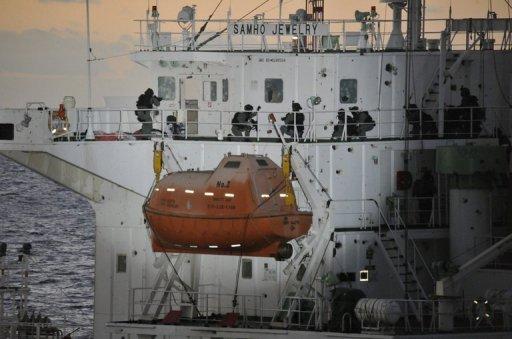
A South Korean Navy-issued photo shows SEAL troops storming the Samho Jewelry hijacked by Somali pirates in the Indian Ocean

UPDATE: The question has been raised in another forum how acts of piratical torture might be imputed to a State authority (as CAT is only applicable where such authorities participate in or acquiesce to such conduct). There are at least two cases on point. In 1999, the Committee Against Torture held that factions within Somalia “exercise certain prerogatives that are comparable to those normally exercised by legitimate governments,” and therefore, “the members of those factions can fall, for the purposes of the application of the Convention, within the phrase “public officials or other persons acting in an official capacity” contained in article 1 [of CAT]”. See Zelmi v. Australia. Similarly, a UK criminal court has held that an Afghan warlord could be considered a de facto public official for purposes of CAT even though a central government existed in Afghanistan at the time. See R v. Zardad. The crucial issues in that inquiry were: (1) the degree of organization of the entity; (2) the level of control exercised over a region; and (3) whether the entity exercised the types of functions that would normally be exercised by a government.

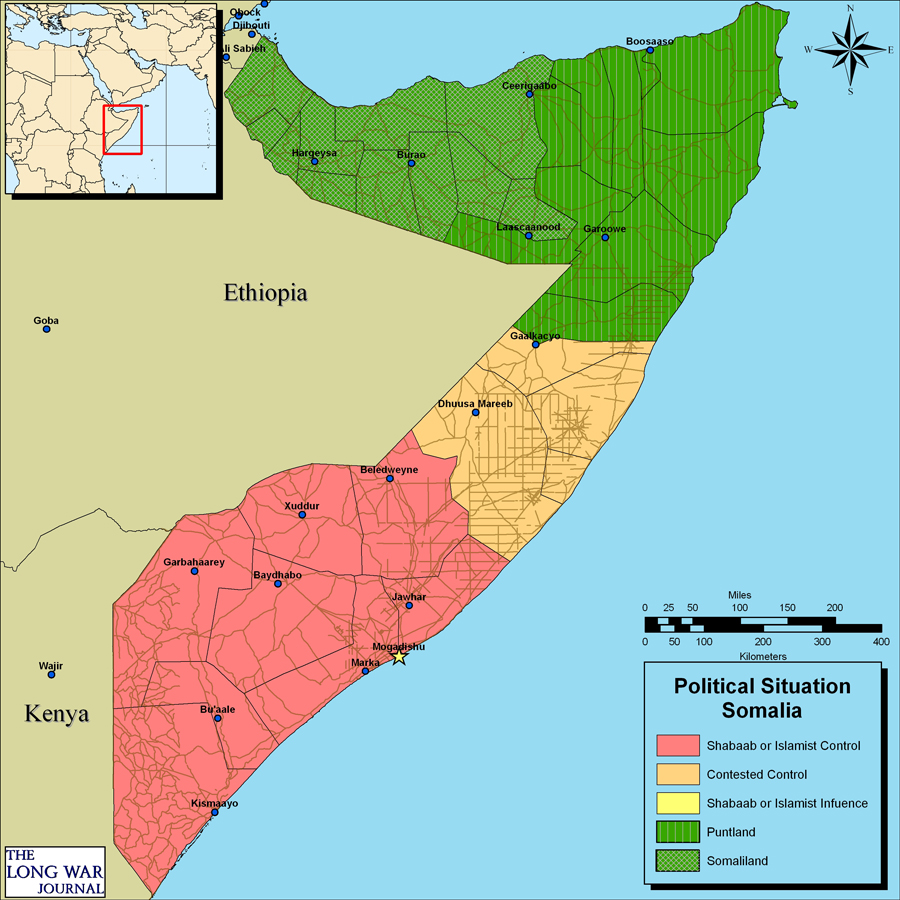
Since a majority of pirate attacks originate in the unrecognized region of Puntland, the question then becomes whether the officials in Puntland are to be held responsible as de facto public officials, or even, whether the leaders of pirate enterprises might be considered de facto public officials if they exercise effective control over the towns or regions in which they reside. The existence of a Transitional Authority in Mogadishu does not seem to prevent application of CAT since it does not have any influence outside a small part of the capital.

So much for pragmatic businessmen. Escalation is the word of the day. A seamen on a ship captured off of the Seychelles was killed, apparently in retribution for an attempted rescue. In another report, South Korean seamen from the Samho Jewelry described how their Somali pirate captors beat them. A Major General explained that Somali pirates “have begun systematically using hostages as human shields and torturing them.” These reports raise an important legal question: can the Somali pirates who hijacked the Samho Jewelry and who are currently being detained in South Korea, be prosecuted for torture?

There are at least two legal issues here: one jurisdictional and the other substantive. As to the first issue, the UN Convention Against Torture (UNCAT) provides that a State may exercise jurisdiction to prosecute a suspect for torture: (1) where the offence took place in its territorial jurisdiction or onboard a ship registered in that State; (2) where the suspect is a national of that State; or (3) where a victim is a national of that State. See UNCAT Article 5(1). Even where none of these criteria are met, UNCAT also permits any State in which the suspect is present to exercise jurisdiction. This begs the question, how a suspect would find himself in a State which did not, but for his presence, have jurisdiction to try him. Of course, once the suspect is transferred to any State, his presence alone would grant that State jurisdiction to try him on torture charges. But what is the legal basis for arresting and/or extraditing the suspect on torture charges, if none of the four jurisdictional criteria are met prior to the extradition?

In any event, the alleged victim appears to be a South Korean national. Therefore, there is a basis for exercising jurisdiction pursuant to UNCAT. Note: the Samho Jewelry is a Maltese flagged ship, so Malta would also have jurisdiction.

As to the second legal issue, the definition of UNCAT creates a problem in the prosecution of non-state actors. UNCAT was devised to prohibit torture by States and defines torture as:

Any act by which severe pain or suffering, whether physical or mental, is intentionally inflicted on a person [to obtain information, as punishment, intimidation, or coercion or for any discriminatory reason], when such pain or suffering is inflicted by or at the instigation of or with the consent or acquiescence of a public official or other person acting in an official capacity. (emphasis added).

Therefore, one element of the offence of torture pursuant to UNCAT is the participation of a public official. In a failed State such as Somalia, there are no public officials or other persons acting in any official capacity to consent or acquiesce to the conduct. This element cannot be proven and a prosecution for torture would fail.

The ICTY Appeals Chamber has addressed the peculiarity of the public official requirement in the UNCAT definition of torture. In one case, it held that the definition of torture in UNCAT, which now constitutes customary international law, included a public official element. See Furundzija Appeal Judgement at. para. 111. But in a subsequent case, in dicta, the ICTY Appeals Chamber opined, “[t]he public official requirement is not a requirement under customary international law in relation to the criminal responsibility of an individual for torture outside of the framework of the Torture Convention.” See Kunarac Appeal Judgement at paras. 147-48. In other words, where a State is concerned, there is a public official requirement. But where a State is not involved, the crime of torture does not require the involvement of a public official. Considering this was dicta, the issue has not been definitively resolved.

South Korea ratified UNCAT in 1995, but whether or not it could prosecute Somali pirates for torture would depend on the domestic legislation that was passed in conjunction with its ratification. If South Korea’s domestic legislation incorporated the public official requirement in the definition of torture, it might create a barrier to prosecution on this charge.

I should note that Piracy is defined by UNCLOS as “any illegal acts of violence,” and therefore, encompasses within its broad definition, acts of torture. See UNCLOS Article 101(a). However, there may be circumstances where a prosecution for Piracy fails and reliance must be made on other charges. In such a situation, UNCAT would provide a novel basis for prosecution.

Terrorism as a Defence to Piracy (a definitional problem)

Last August, in U.S. v. Said, a federal court dismissed the most serious count of piracy, ruling mere attempts at piracy were not proscribed by the provision in question. The defendants in that case had approached the USS Ashland 300 miles off the coast of Djibouti, mistaking it for a commercial ship, and one of the defendants had fired a shot. They made no attempt to board the ship and their skiff was shot out of the water. Judge Jackson held that even if the facts were proved, this “attempt” did not amount to piracy. There has been considerable discussion of the memorandum decision here, here and here.  Most of the criticism centers on the Court’s limited reading of 18 U.S.C. 1651 which provides, “[w]hosoever, on the high seas, commits the crime of piracy as defined by the law of nations and is afterwards brought into or found in the United States, shall be imprisoned for life.”

Judge Jackson relied upon the U.S. Supreme Court decision of United States v. Smith, 18 U.S. 153 (1820) which defined piracy as robbery at sea. Many critics have noted the 1958 Convention on the High Seas (ratified by the U.S.) and the UNCLOS (not ratified by the U.S.), define Piracy to be inclusive of “attempt,” and that these Conventions constitute customary international law.  Because 18 U.S.C.1651 adopts the Law of Nation’s definition of piracy, the Court should have given more weight to the definition within these Conventions.

The definitional problem examined in U.S. v. Said is indicative of the challenges faced by States attempting to prosecute Somali pirates. Piracy laws are often antiquated or sometimes do not exist at all.  Even where a State has clear penal legislation proscribing acts of piracy and has adopted the UNCLOS definition, there are other potential hurdles.

The Old U.S. Supreme Court Chambers ca. 1820

UNCLOS article 101 defines piracy as “any illegal acts of violence or detention, or any act of depredation, committed for private ends…” (emphasis added).  The plain language of this definition provides that the motive for piracy must be pecuniary.  What if a private ship attacks another in order to achieve a political, as opposed to, a commercial purpose?  Professor Isanga points out several examples of this phenomenon, including attacks in the Niger Delta in Nigeria, and the PLF attack of the M/S Achille Lauro.  Although Somali pirates are generally attacking ships for profit, they have on occasion expressed political motivations.  For example, Somali pirates threatened to kill any South Korean seamen they take hostage in revenge for the killing of eight pirates by South Korean troops.  Furthermore, the Somali parliament failed to adopt piracy legislation with some parliamentarians arguing the pirates were protecting their national waters from overfishing by foreign vessels.  The current definition of piracy under UNCLOS would not encompass crimes with these motivational bases. (See Professor Isanga’s article for a discussion of this and other definitional issues.)

Establishing the jurisdictional parameters of a special tribunal for piracy creates a unique problem in this regard.  If a special tribunal’s jurisdiction is limited to the crime of piracy as defined by UNCLOS, it would not be competent to try attacks at sea committed for political purposes.  In answering charges of piracy, a suspect might claim to have attacked a ship for political, as opposed to pecuniary purposes.  If believed, the manifestly unjust result would be an acquittal on a piracy charge based on a defence of terrorism.  As the special tribunal would not have jurisdiction to try the terrorism charge, the suspect would go free.  Of course, the suspect could be transferred to a court with competence to hear terrorism charges.  However, the efficiency of the special tribunal would be undermined.  Further, in a terrorism trial, the suspect might change tack and claim that he was in fact pursuing commercial interests in the attack.

To avoid this result, the international community could (1) expand the definition of piracy to include terrorism or (2) expand the jurisdiction of piracy tribunals to encompass terrorism charges.  Either alternative would confuse two quite distinct issues.  I recently spoke with an individual who provides private security to commercial ships against Somali pirates.  He claims that piracy is a business (albeit an illegal one).  Few hostages have been killed because it is unprofitable to do so.  He told me that if a pirate ship sees a commercial ship is guarded by armed security, it generally withdraws to look for an easier target.  In contrast, terrorism seeks to use violent means to achieve a political result.  Hostage situations involving terrorists are highly unpredictable and hostages are often killed.  Piracy seeks the most profitable outcome; Terrorism often seeks the most violent outcome.  Do the two crimes deserve similar treatment?  As individual States and the international community pursue piracy prosecutions in earnest, these definitional problems will have to be addressed.

NB: It is possible that a pirate would have dual motives, both pecuniary and political. In such cases, a “terrorism defence” would not negate the criminal intent for piracy.  Cf. Prosecutor v. Ntakirutimana, ICTR-96-10-A, Judgement (AC)(holding in the context of the crime of genocide, “it is immaterial, as a matter of law, whether the refugees were targeted solely on the basis of their ethnicity or whether they were targeted for their ethnicity in addition to other reasons.”)

Kenya: No Jurisdiction to Try Piracy?

One important factor which played into Jack Lang’s recommendation to create piracy courts in Puntland, Somaliland and Tanzania, was Kenya’s apparent unwillingness to take the entire problem upon itself.  Until last year, the international community was relying on Kenya to prosecute suspected pirates in Mombasa based upon bilateral agreements. However, in April 2010, Kenyan Foreign Minister Moses Wetangula told reporters, “We discharged our international obligation. Others shied away from doing so. And we cannot bear the burden of the international responsibility.” Subsequently, the Kenya High Court at Mombasa ruled that “the Local Courts can only deal with offences or criminal incidents that take place within the territorial jurisdiction of Kenya.” Therefore, it did not have jurisdiction to prosecute Piracy on the High Seas (which lies outside of a State’s territorial seas). The specifics of that case provide an interesting case study into a piracy prosecution as well as the perils in amending legislation. In re Mohamud Mohamed Hashi et. al.

The facts of the case provide some colorful background. Mohamud Mohamed Hashi and eight other persons were charged with being armed with three AK 47 Rifles, one pistol, one RPG – 7 portable Rocket Launcher, one SAR 80 Rifle and one Carabire rifle, attacking the MV COURIER vessel and at the time of such act put in fear the lives of the crew men of the said vessel. They were in a skiff like the one pictured in the header of this blog. They were arrested on the High Seas of the Gulf of Aden in the Indian Ocean by the German Naval Vessel, the FGS Rhineland – PFALZ, with the help of its helicopters and a U.S. helicopter assigned to the USS – Monterey, who “accosted” them in their small boat and arrested them. The Commander and/or officers of the German Naval Vessel, brought the men to Mombasa Kenya and placed them in the custody of the Kenyan police ten days after being captured in the Gulf of Aden.

The legal issue boiled down to two competing statutory provisions addressing the jurisdiction of the Magistrate to consider piracy charges. The first relevant section of the Kenyan Penal Code provided: “5. The jurisdiction of the Courts of Kenya for the purpose of this Code extends to every place within Kenya, including territorial waters.” Whereas, the second section considered by the High Court provided: “69. (1) any person who in territorial waters or upon the high seas, commits any act of piracy jure gentium is guilty of the offence of Piracy.”

The High Court held that these two sections were inconsistent because Section 5 of the Penal Code limited the Court’s jurisdiction to territorial waters and Section 69 expanded the Court’s jurisdiction to include the High Seas.  The High Court concluded that Section 5 was juridically paramount because “It is the defining provision with regard to jurisdiction of the Kenyan Courts in so far as the [Penal] Code is concerned.”  The limiting provision in Section 5 prevailed and, he concluded, “the whole process was therefore null and void, ab initio.  A nullity from the word go.”

What of universal jurisdiction you ask? Doesn’t it permit any State to prosecute any act of Piracy on the High Seas? Universal Jurisdiction permits a State to prosecute a suspect for piracy. However, the the substantive provisions must be supplied by that State’s penal code.  Jose Luis Jesus, the President of the International Tribunal for the Law of the Sea explains:

The international legal regime on piracy, as codified in articles 100 to 107 of UNCLOS, is, as already mentioned, a jurisdictional regime and, as such, only allows States to arrest pirates, seize their ships and cargo, and bring them to trial in the State’s domestic judicial system. This legal regime is not predicated on the existence of an international criminal substantive law, nor does it contemplate any international judicial means or structure to try pirates.

As it stands now, there is no international court or tribunal that includes in its jurisdiction a mandate to try pirates. Once a State asserts its jurisdiction over pirates and their ship by arresting them, under the international piracy regime, that State is encouraged to try the pirates and dispose of the pirate ship and its cargo in accordance with its own national legislation and judicial system. This means that if the arresting State does not have penal legislation allowing for the punishment of pirates, or if the arresting State does not want to try them in its own territory for political or other convenience, then the legal regime as codified in UNCLOS is of little use.

In this case, the Kenya High Court appears to have determined that there were no substantive provisions of the Kenyan Penal Code which permitted it to prosecute the suspects. Although one might argue the court conflated the issues of jurisdiction and substantive penal law.

There also appeared to be a serious error in the manner of enacting the new piracy law. The High Court noted that during the prosecution of the defendants in this case, the statute under which they had been charged was repealed.  There was no sunset clause. In other words, when the Parliament repealed the old piracy law, it did not consider what would happen to persons who had already been arrested and charged under the old law.  Once the old law was repealed, defendants could not be convicted of an offence which ceased to exist. In addition, they could not be charged afresh with a violation of the new piracy statute for it would be an ex post facto violation. As nations in the region start the process of updating their piracy laws, this provides a cautionary tale.

The final kicker was the High Court decision to order the defendants released and request that the UNHCR repatriate them back to Somalia. The case in currently on appeal.

Lockerbie in Arusha – Significant Challenges Remain

UPDATE: Lang actually recommended the creation of three courts: one in Puntland, one in Somaliland, and one in Arusha (to be moved to Mogadishu when conditions warrant). The Security Council members are generally in support of his recommendations, but you can discern some variations in their preferences by parsing the language of their statements. A number of questions come immediately to mind: (1) how will an arresting force determine to which of the three courts to send an arrested person? (2) Have Puntland and Somaliland delimited territorial waters where they would have exclusive jurisdiction? (3) Insofar as any nation may prosecute piracy on the High Seas, will the process of determining the proper venue be ad hoc or based upon formalized negotiations and agreements?

Jack Lang, UN Special Adviser on Piracy, has issued his report to the Secretary General.  News agencies are saying that he has recommended the creation of a Somali court sitting in another regional state (akin to the Lockerbie court).  There is some indication that Arusha, Tanzania is being considered as a seat for the Somali court due to the infrastructure already in place at the ICTR.  A number of serious challenges would need to be overcome to create such a court.

First, Somalia continues to be described as a monolithic entity, thereby necessitating a bilateral treaty between the regional State in which the court would be situated and Somali.  However, the United States policy has recently changed with regard to the heretofore unrecognized regions of Somaliland and Puntland. Assistant Secretary of State Johnnie Carson said at a briefing in September 2010:

We hope to be able to have more American diplomats and aid workers going into those countries [Somaliland and Puntland] on an ad hoc basis to meet with government officials to see how we can help them improve their capacity to provide services to their people, seeing whether there are development assistance projects that we can work with them on […] We think that both of these parts of Somalia have been zones of relative political and civil stability, and we think they will, in fact, be a bulwark against extremism and radicalism that might emerge from the South.

Carson said the United States will follow the African Union position and recognize only a single Somali state. However, with Somaliland and Puntland apparently offering to house convicted pirates within their territories, and other States increasingly recognizing their practical autonomy, it begs the question of whether or not an agreement to create a Somali court would require the assent of the Somaliland and Puntland governments. It would seem that a prerequisite to these regions signing an international treaty would be recognition of their Statehood.

The 26 July 2010 Report to the Security Council set forth several additional challenges with regard to the option put forward by Lang.  These include:(1) the considerable assistance that the UN will need to extend to the court; (2) the amount of time necessary for the court to commence functioning could be significant; and (3) the inadequacy of Somalia’s piracy laws and the capacity of Somalia’s judicial system.  In particular, the report noted:

Although there is some judicial capacity in Somalia and among the Somali diaspora, the challenge of establishing a Somali court meeting international standards in a third State would be considerable at present. Further, any advantages that such a court may enjoy would be outweighed if it were to draw limited judicial resources from Somalia’s courts.

One final point that should not be lost amidst the excitement is the mundane, but essential task of determining where Somalis who are eventually convicted of piracy, in the yet to be created court, will serve their sentences. Apparently, Lang has recommended the construction of one prison each in Somaliland and Puntland.  To which, Bronwyn Bruton, an author of reports on Somalia for the New York-based Council on Foreign Relations, reportedly said:

The idea that they’re [pirates] going to be scared off by prisons that meet UN human rights standards is wholly unrealistic. In these jails, they will have food, protection from violence and probably some basic literacy training. For these guys, it’s going to sound like a holiday camp.

Indeed the prospect of serving time in these prisons may not create a serious deterrent to piracy.  However, during the 8 or 20 years in which a pirate might serve a sentence, he will not be capable of committing further acts of piracy.  Furthermore, rehabilitation is a real possibility if stability can be maintained, jobs created, and inmates trained.  Any sustainable solution should take into account the possibilities for a newly released pirate.  If it does not, there is nothing to stop a jobless, ex-convict from continuing to seek bounty on the high seas.