The Legality of the SEAL Team 6 Rescue in Somalia

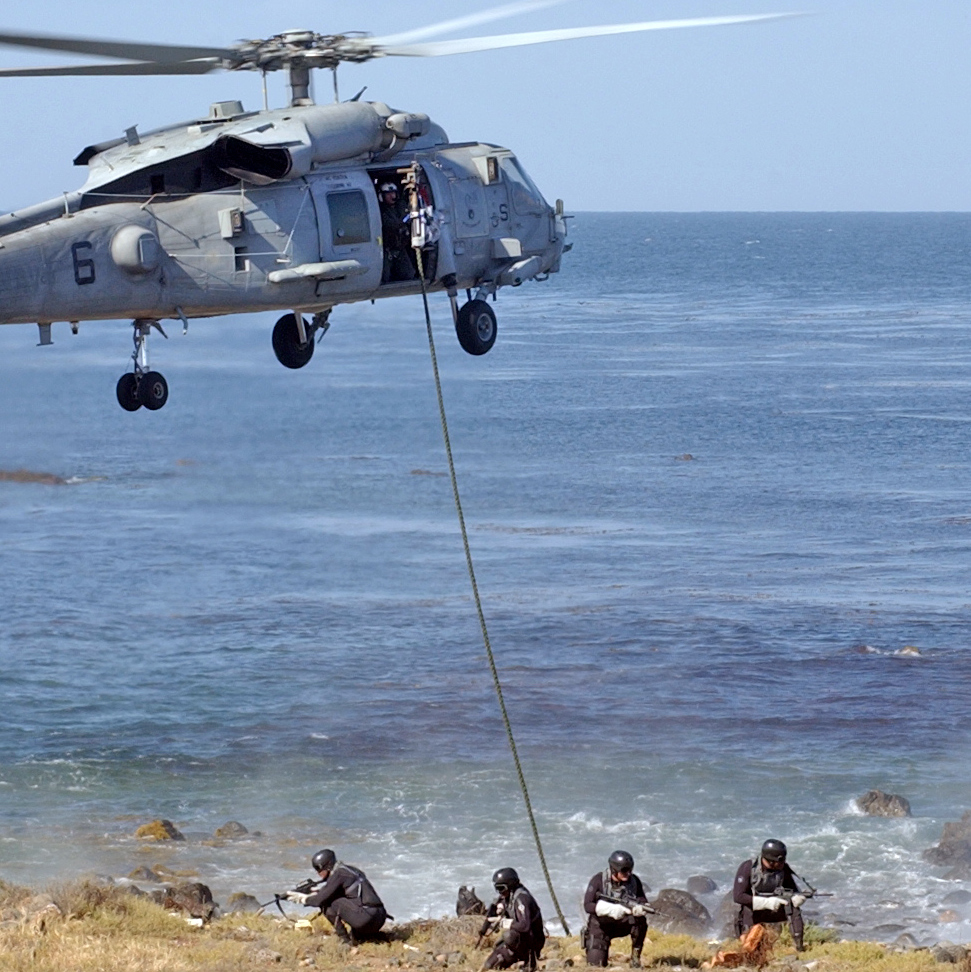
US Navy SEALs have rescued two foreign aid workers (one American and one Dane) deep within the territory of Somalia, killing 8-9 Somalis and perhaps capturing 3-5. This is not the first time the US has authorized deadly force against Somali criminals. In 2009, pirates took hostage the captain of the Maersk Alabama, Richard Phillips. A team of snipers from the Navy SEALs shot the captors from the deck of an aircraft carrier, killing the pirates and freeing Captain Phillips. There are significant differences, however, between the attack on the Maersk Alabama and the most recent attack mainly because the latter occurred within the territory of Somalia on land. The location of the capture and rescue, Galkayo, is divided between the break-away regions of Puntland and Galmudug and, according to the New York Times is at the edge of pirate-controlled territory. Most news organizations are referring to the Somali captors as “pirates” and it may be that the criminal organization that kidnapped and held for ransom these two aid workers has also perpetrated acts of piracy in the seas off the coast of Somalia. But the act of kidnapping in central Somalia is not an act of piracy. This has several implications.

First, what is the legal basis for the incursion into Somali territory? States have a right to capture and prosecute criminals for acts of piracy on the high seas and for armed robbery within a state’s territorial sea. Piracy, however, does not extend to acts without any connection to sea-based criminality. In contrast, for land-based incursions violating the territorial sovereignty of another state, prior assent is required. The U.S. raid of Osama Bin Laden’s compound in Pakistan was ostensibly justified by national self-defence in order to prevent future attacks against Americans which were in the process of being developed. But the criminals in Galkayo did not appear to be threatening the national security of the United States. They seek ransom money, and not some political objective. Therefore national self-defence would not provide a justification for the raid. Nonetheless, the areas of Somalia we are talking about are lawless and without effective governments. In these circumstances, it is doubtful the U.S. considered permission was required prior to invading the territory.

Second, what is the legal basis for the killing and capturing of these criminals? As a legal matter, the former is actually simpler to explain. The doctrine of personal self-defence sometimes extends to the protection of others. If it was determined that the hostages’ lives were in danger, it could justify the use of deadly force. However, news reports indicate the operation was intended to capture, not kill, the criminals in question. Therefore, what is the legal basis for the capture of these Somali criminals? This is actually the more difficult legal question. International treaty and customary law give states the right to arrest and prosecute suspected pirates for criminality on the high seas. Likewise, commercial ships have the right to defend themselves against violent attack. In contrast, yesterday’s rescue occurred on land and the law of piracy is inapplicable. In addition, no Somali law is readily apparent. However, the United Nations Convention against Transnational Organized Crime requires states parties to pass legislation prohibiting the commission of serious crimes involving an organized criminal group where the crime has transnational effects. (the U.S. is a state party, obviously Somalia is not). Likewise, there appears to be a developing consensus that kidnapping is a crime under customary international law with certain well-defined attributes. Therefore, the United States has a jurisdictional basis to prosecute these criminals as the victim was American and there is, arguably, substantive international law applicable in the territory of Somalia which prohibits and would permit a prosecution for kidnapping. Normally, a prosecution would require the U.S. to seek extradition from the suspect’s resident state. Here, where no sovereign exists, the U.S. could argue that it had no such duty. These are some of the arguments that might justify the arrest and detention of the Somali captors pending trial.

Apart from these legal questions is a more practical one: does this signal a new U.S. policy of using its armed forces to rescue American kidnapping victims throughout the world? Following the raid, President Obama issued a statement asserting, “The United States will not tolerate the abduction of our people, and will spare no effort to secure the safety of our citizens and to bring their captors to justice.” This statement must be narrowly construed. Although the U.S. State Department does not publicize the number of Americans kidnapped and held for ransom, it is clearly a widespread problem. The expense and risks of sending in a SEAL team anytime an American is kidnapped would be extraordinary. The Somali context is exceptional in this case because there is no sovereign with whom to negotiate. In addition, this may be a shot across the bow to organized criminal gangs in Somalia. The hope will likely be that this incredible rescue will have a deterrent effect that would diminish the need for similar missions in the future. It could also serve as leverage in ransom negotiations, discouraging captors from becoming too greedy in their demands. On the other hand, there is a concern that the apprehension and killing of these transmaritime criminals will lead to a further escalation in violence.
UK House of Commons Issues Piracy Report, Eyes Private Security Guards on Board, Local Prosecutions in East Africa (Part II)

This is the second part of an earlier post discussing the UK Foreign Affairs Committee Report on piracy off the coast of Somalia.

Regional and Local Prosecutions of Pirates (paras 74-110)

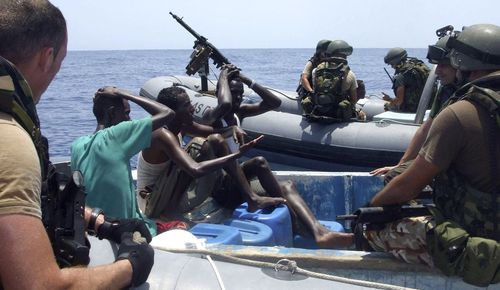
The trial and prosecution of pirates is also an extremely relevant, and pressing, topic. As noted in the Report, the peculiar features of modern day piracy, particularly in the Gulf of Aden and the lack of cohesive governance in Somalia, create several practical difficulties, including the apprehension, detention on board and transfer of suspected pirates. One of the primary purposes of policing activities through naval operations is, indeed, its deterrent effect on pirate attacks rather than the arrest and prosecution of the perpetrators.

The collection of sufficient evidence to secure successful prosecutions is particularly problematic, as we noted in a recent post. It should be remarked how any evidentiary assessment on whether to bring alleged perpetrators to justice should, ordinarily, be best placed in the hands of judicial authorities as neutral fact-finders rather than subject to the prelimary evaluation by the naval authorities upon the capture of suspected pirates. Moreover, the Report correctly points out how such assessment could benefit from modern technological means already available to the naval authorities, namely video, radar and satellite recording. In addition, remote testimony via video or audio link is recommended, particularly when victims are located in third countries or, more likely, have already set sail.

Modern international law asserts the possibility to exercise universal jurisdiction over piracy prosecutions. However, as one expert who gave evidence before the Committee put it, the obstacle to prosecution is not identifying the appropriate jurisdiction, but rather the inability, and unwillingness, to prosecute. In addition, the surge of modern piracy and armed robbery at sea has exposed the current inadequacy of national laws, including in the UK, against piracy. For those operating within the field of international criminal prosecutions, the phenomenon is not new. Several states suddenly found themselves incapable to put Genocide suspects on trial before municipal courts due to the inadequacy of their national laws in enacting the provisions of the Genocide Convention.

We have also discussed whether the response to modern piracy should contemplate a revision of the existing international counter-piracy legislation and mechanisms, in particular because it appears that current treaties have difficulty in addressing the difference between political and purely-financial motivations of pirates attacks, or whether attempted attacks are also punishable. Interestingly, as noted in the Report, the IMO has taken the view that “the development of a new multilateral instrument might be premature, or unnecessary, in light of the existing international legal framework on piracy, which was generally considered to be adequate”. Some concerns remain, however, particularly on the practical implementation and effectiveness of these mechanisms.

The main recommendation contained in the Report with regard to options for the investigation and prosecution of pirates is therefore the rejection of the establishment of a specialized Somali tribunal, initially recommended by the UN Special Adviser to the Secretary General Jack Lang as one possible alternative. This option would have established a court outside of Somalia in a neighboring state (most likely Tanzania) with funding and administration from the international community, but would employ Somali judges applying Somali law. There appear to be a number of compelling legal complications against such court, including its legality vis a vis the Somali Constitution. The UK Report rejected this proposal stating:

 “the Government was right to oppose the establishment of an extra-territorial Somali court as proposed in the Jack Lang report to try Somali pirates in a third country. We recommend that the Government set out in its response to this report its views on the more recent proposals for specialised anti-piracy courts established within regional states under ordinary national law.”(para. 92)

Among the main arguments in support of this conclusion are also the possible high costs of an extra-territorial institution, with a tentative figure of $100 million a year. This is not convincing, particularly considering the lack of clarity at the basis of this figure as well as the present estimates of the global costs of piracy, which already identified high costs from the current prosecutions as well as a cost of ransoms alone capping over $130 million per year. In addition, this figure would remain a fraction of the overall economic costs of piracy. It must be acknowledged, however, that an extra-territorial court, financially supported by international organizations, might not be able to promptly contribute as an anti-piracy deterrent and develop effective outreach capabilities within the turned-pirate population in and around the Gulf of Aden.

The rejection of the UN-funded option reflects a gaining trend to favor specialized piracy prosecutions within the area where the alleged attacks took place, counting on a much stronger deterred effect than trials taking place thousands of miles away. Local prosecution projects have already taken shape in Kenya, Mauritius and Seychelles, among other countries in the region. In addition, a small number of historic trials were also held in the US, Germany and the Netherlands, mainly because the alleged pirates were captured by the naval forces of these countries, or due to a nexus between the piracy acts and these latter.

However, while piracy prosecutions in the UK are still contemplated, albeit in limited circumstances, in the Report, the support expressed therein for local or regional anti-piracy courts also present several difficulties which should be carefully weighed. Requesting the help of regional states to prosecute pirates in their courts does not obviate the need to provide support to the various local authorities in the form of financing, training, monitoring and oversight extending not only to the mere prosecutions and trials of suspected pirates, but also to transfer, investigation, security, procurement and infrastructures as well as pre-trial and post sentence detention. Indeed, the fate of a recently arrested group of alleged Somali pirates by the UK Royal Navy after both Kenya and the Seychelles have refused to detain them because “their court systems are swamped”  is a rather timely reminder of some of these difficulties. As the Kenyan government stated last year when it refused to continue piracy prosecutions, ““We discharged our international obligation. Others shied away from doing so. And we cannot bear the burden of the international responsibility.”

Iran’s Piracy Problem

If you haven’t heard by now, the American Navy has rescued a group of Iranian fishermen whose boat had been hijacked by Somali pirates. The pirates used the fishing dhow al Molai as a mother ship to stage attacks on other higher-value targets. Iran’s Foreign Ministry was initially silent, but has since commended the American rescue as a humanitarian gesture.

U.S. Navy Sailor greets crew member of the Iranian-flagged fishing dhow Al Molai

For the moment, the rescue is a public relations coup for the United States as tensions escalate over strengthened economic sanctions against Iran and competing shows of naval force through the Strait of Hormuz, the only waterway connecting Persian Gulf oil resources with Asia and the West. This incident is an embarrassment to Iran and highlights the indiscriminating nature of Somali piracy.

Just like other sea-faring nations, Iran has struggled to combat piracy off the coast of Somalia. There are currently about 14 ships and 254 hostages in the hands of Somali Pirates. Although EUNAVFOR estimates 7 ships and 194 hostages, not including dhows and smaller vessels. Most non-officer seafarers come from developing countries and particularly, the Philippines, India, and increasingly China.  Therefore, these countries have the highest proportion of hostages being held. However, Iran has also suffered with 10 Iranians taken hostage aboard the Sinan in 2011 and another 45 taken hostage in 2008 and 2009.

Likewise, some of its ships have been targeted, with al Molai the most obvious example, but also including the Delight and the Iran Deyanat, not to mention other vessels with Iran as a destination.

In response to these attacks, Iran has sent naval vessels to the Gulf of Aden to protect Iranian ships from pirates.  It appears to be maintaining two destroyers on mission in the Gulf of Aden, although increasing tensions in the Strait of Hormuz may require Iran’s navy to reallocate resources.  See also here. It is unclear to what extent Iranian war ships have interacted or cooperated with other navies while on mission in the Gulf of Aden and Indian Ocean. However, Iran participates in the 19-member grouping of the Indian Ocean RIM – Association for Regional Cooperation (IOR-ARC) which also includes India, Yemen, Australia, Bangladesh, Indonesia, Kenya, Madagascar, Malaysia, Mauritius, Mozambique, Oman, Singapore, South Africa, Sri Lanka, Tanzania, Thailand, the UAE and Seychelles. The IOR-ARC issued the Bangalore Declaration last November, agreeing to share information, experiences and best practices in the fight against maritime piracy.

Although a momentary boost to the United States, this incident will be quickly overshadowed by the tension in the Strait of Hormuz. As tensions between the United States and other countries (to the extent that they are also imposing economic sanctions on Iran) continue to increase, any naval interaction with Iran will be potentially risky.  Iran’s presence in the Gulf of Aden is no exception. However, with EUNAVFOR, NATO, and the United States-led international naval coalition of 25 nations all operating in the area, Iran is vastly outnumbered in that area and will be reticent to engage offensively there.

It is also worth noting that Iranian’s most valuable asset, its oil tankers, are not seriously at risk to Somali pirates. Transit through the Gulf of Aden, when tankers are most susceptible to attack by Somali pirates, is only necessary to transport oil to Western countries. Although 18 percent of Iran’s crude oil exports went to the EU in the first 6 months of 2011, that percentage will likely drop considerably as a result of new economic sanctions. The remainder of Iran’s exports go to Asia, notably Japan, India, China and South Korea which do not transit the areas most susceptible to pirate attacks. Al Molai fishing dhow was attacked much closer to Iran, but attacks in that region are exceptional.

But what of these particular Somalis?  Will they be prosecuted and where? After the incident, the pirates were in American custody. The New York Times reports that the rescue occurred 210 miles off the coast of Iran, presumably in international waters.  If that is the case, the United States as the seizing nation, has jurisdiction to prosecute, decide on penalties, and determine the action to be taken with regard to ships or property “subject to the rights of third parties acting in good faith.” (Article 105, UNCLOS). Iran, as a third party whose nationals were victims of the attacks, also has an interest in prosecuting the pirates. In this case, it is likely that Iran will defer to the U.S. to prosecute the pirates.

There are also some problems of proof, as the pirates apparently threw their arms overboard and claimed to be joy-riding on the seas. Therefore, prosecution will be based upon video and testimony obtained by the navy helicopters and ships that performed surveillance on the ship and the testimony of the victims.

The problem of prosecuting in United States courts is that testimony must be in person due to the confrontation clause (and the U.S. Supreme Court decision in Crawford). This is where U.S. prosecution presents significant hurdles as U.S. servicemen may not be available to testify in court and it is unclear whether video-link testimony would be constitutionally permissible. In the case of the Iranian victims, there are even more serious practical concerns, as they would have to be given permission by the Iranian government to travel to the US to testify. For these Iranians there may be a temptation to seek asylum while in the U.S. just as witnesses at the ICC have done after reaching the Hague from Africa, notably from the DRC and the CAR.

Hypothetically, the pirates could be prosecuted in Iran. Iran is a signatory to UNCLOS without any reservations as to the definition of piracy contained therein. However, Iran has not ratified the Convention and it is unclear whether Iran has particular legislation that criminalizes piracy directly. Insofar as Islamic law applies in Iran, Islam considers piracy to be forbidden and may be punishable by death.  In a related context, the Iranian Foreign Ministry has called Israel’s attack of an humanitarian aid flotilla to the Gaza strip to recall, “acts of sea piracy in the past centuries, which are clear example of maritime terrorism.”  In 2009, Iran also acceded to the UN Convention for the Suppression of Unlawful Acts Against the Safety of Maritime Navigation (SUA Convention) which defines maritime terrorism (the U.S. is also a state party). If Iran and Somalia were to request extradition of the pirates to Iran, the SUA convention requires the U.S. to pay due regard to Iran’s rights as the flag state of the victim ship(s). (Article 11(5) of SUA). Nonetheless, the U.S. would likely consider it difficult for the pirates to receive a fair trial in Iran and could deny extradition to Iran on that basis. (Article 11(6) of SUA Convention).

A more practical solution would be to identify the home community of the pirates in Somalia, be it Puntland, Galmadug, or Somaliland, etc. for prosecution in their home jurisdiction. The UN Office for Drugs and Crime has established programs to strengthen the prosecutorial capacity of some of these regions. However, there continue to be concerns of corruption and judge-intimidation that undermine confidence of a just outcome in these judicial systems. Likewise, the penalties imposed for piracy may be significantly less than in the U.S. where life-imprisonment has been the norm for recent prosecutions of Somali pirates.

Some difficult decisions will have to be made by the American authorities in this regard. Although policy will likely have been made with regard to which pirates to transfer to other authorities and which to prosecute state-side, the enhanced exposure of this particular case might require a re-examination of this calculus.

At the end of the day, piracy is perhaps the only area where the U.S. and Iran share common interests. For both countries, prosecution of pirates remains a problem without any easy solutions.

UPDATE: I just found a summary Iran submitted to the UN of Iranian law applicable to maritime piracy.  The summary asserts that piracy is punishable by a sentence of 3 to 15 years imprisonment. It also states, “It should be mentioned that “moharebeh” in accordance with “Sharia Law” is resorting to arms in order to frighten people; and “mohareb” [which includes pirates] is a person convicted of “moharebeh”.  The punishmen (sic) of “moharebeh” is “exile” or “death penalty”.” The summary does not state to what extent Shariah law is applied in Iran.

The Mekong Pirates

The recent murder of 13 Chinese sailors on South-East Asia’s Mekong river triggered unprecedented joint international naval patrols by China, Laos, Myanmar and Thailand to provide security along parts of the estimated 4900 Km long river.

After crossing the Tibetan plateau and leaving China’s Yunnan Province, the Mekong flows southwest and forms the border between Myanmar and Laos for about 100 kilometers. It then turns southeast to form briefly the border of Laos with Thailand, then flows east and south into Laos for some 400 kilometers and defines the Laos-Thailand border again for some 850 kilometers as it flows east. It then reaches Cambodia, providing significantly for the country’s fishing and rice farming economy. Finally the Mekong empties into the South China Sea and upon entering Vietnam, subdivides into the Mekong Delta. The Mekong flows at the hearth of the so-called “Golden Triangle”, an area overlapping the mountains of Myanmar, Vietnam, Laos, and Thailand which has long since been one of the most extensive opium and heroin-producing areas of Asia and of the world. More recently, the drug production and trade has shifted to methamphetamines.

According to initial reports, the sailors were attacked in October when sailing aboard two ships in the Golden Triangle area. Some of the sailors had been found in the river with their hands tied behind their backs, some were blindfolded and some had been shot. The ships were recovered by Thai river police after a gunfight. Some 900,000 methamphetamine tablets worth more than $3m were found aboard, hence drug smugglers were initially suspected of the attack. In response, China suspended all shipping activities on the Mekong and urged Thai authorities to arrest those responsible. Later reports suggest the involvement of 9 Thai soldiers attached to an anti-drug task force who surrendered shortly after the attack and are now facing prosecution.

While the motives of the attack appear closely linked with drug trafficking, the economic and political interests of the Mekong’s numerous riparian States give an international dimension to the incident. Seasonal variations in water flow and the presence of waterfalls have historically made navigation of the river difficult, thus dividing, rather than uniting, the people of the Mekong. In 1995, following the UN mediation, Laos, Thailand, Cambodia and Vietnam established the Mekong River Commission to assist in the management and coordinated use of the Mekong’s resources. In 1996, China and Myanmar became “dialogue partners” of the Commission and the six countries now work together within a cooperative framework. Recently, each of these countries have been notoriously engaged in lengthy discussions regarding a Chinese-sponsored hydroelectric dam construction project – currently suspended – and its overall impact on the region.

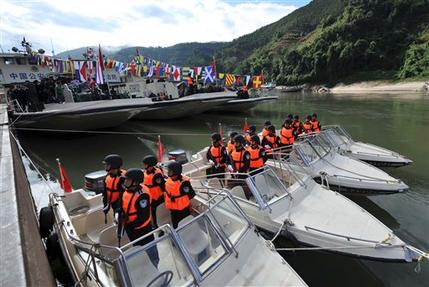
The patrols mark a significant shift in China’s long standing policy of non interference in other States internal affairs. The patrols are said to be the first instance of Chinese police being deployed outside their territory without a UN mandate. It is thus not surprising that China is taking a leading role in the operations. The patrols are headquartered in China with stations in each of the other countries. At a meeting in Beijing, ministers from all four countries agreed on the new measures. China contributed with the deployment of 200 police officers and 11 ships. The plan also involves police departments in the four countries setting up a coordination team to explore further security measures. Finally, China will also help train and equip police in Laos and Myanmar for the patrols.

It is problematic to fully assess the legal framework in which the patrols could be deemed to operate as well as their relation with anti-piracy and armed robbery efforts. Interestingly, a cursory review of the history of piracy reveals limited reported instances of so called “river piracy”, mainly consisting of fluvial criminal activities in the 18th century within the USA. However, lacking its most fundamental element, namely the occurrence of the attack in the high seas, the Mekong incident squarely falls outside the relevant provisions of the Convention on the Law of the Sea (UNCLOS) relevant to piracy. Yet again, there appears to be a situation where the current applicable specialized international legal framework is not directly applicable to contemporary criminal activities or is capable to address their underlying root causes and overall impact, particularly in areas of flourishing economic development. States (including signatories to UNCLOS) are free to adopt broader definitions of piracy applicable to internal waters. However, the current trend is to legislate the definition in Article 101 of UNCLOS. Armed robbery at sea pertains to piratical acts within the territorial sea, but criminal acts within internal waters (even if such waters have an international character) remain unaddressed. The most important upshot to the situation at hand is that the principles which could resolve competing claims of police and judicial jurisdiction over criminal activity along the Mekong are not codified.

Recourse to the current, yet scarce and developing, legal framework attaching to international rivers might therefore provide for more focused analysis. Rivers are ordinarily considered as part of a country’s internal waters. However, rivers are also often used to demarcate borders. More importantly, lengthy rivers could cross several countries, reflecting a wide range of political, geographic, economic and cultural circumstances. The Mekong, the world’s 10th longest, is one such international river. These are also referred to as shared or transboundary rivers, as well as international watercourses.

Riparian states, namely states through which a transboundary river flows or form part of its borders, developed riparian rights and obligations normally confined over the use of the river for livelihood or sustainability purposes. Riparian States traditionally resorted to specific watercourse agreements or treaties to regulate the use of a shared river. Much of these rights and obligations are defined by the UN Convention of Non-Navigational Use of International Watercourses, which has yet to enter into force. Among its key guiding principles, contained in Articles 5 and 7, are the “equitable and reasonable utilization” and the obligation “not to cause significant harm” to other riparian states.

Literature on sharing international rivers define these as both catalyst for cooperation or conflict but also points to several important benefits from a structured cooperation among riparian states, including environmental, direct economic, political, and indirect economic benefits. Instances of state cooperation, however, seldom refer directly to issues relevant to the security of the watercourses, with the exception of risks deriving from pollution or excessive exploitation. Notably, Articles 7 and 8 of the UN Watercourses Convention requires States to “take all appropriate measures” to prevent or mitigate significant harm to other States as well as a general obligation to cooperate among riparian states.

Control of international rivers is inextricably linked with economic opportunity, national security, society and culture. It is within this general framework that the agreed cooperation over patrolling the Mekong and ensuring the safety of its navigation, in essence an international basin or watercourse agreement, should be seen. Such cooperation could cut individual States security costs and further their overall benefits from the use of the river, addressing issues of policing, extradition and prosecution as well as solidifying channels of communication between riparian states to address a potentially volatile situation. In other words, better security over the river will promote unity and integration among the riparian States and more possibility for each of them to manage the development and use of the river.

Kenyan Ready to Start Hearing Piracy Cases Again?

In November 2010, the Kenyan High Court in Mombasa ruled that Kenyan courts did not have jurisdiction to try the crime of piracy. As I have previously noted, the case followed on the the Kenyan Foreign Minister’s assertion that, “We discharged our international obligation. Others shied away from doing so. And we cannot bear the burden of the international responsibility.” The Kenyan Director of Public Prosecutions, is now appealing the High Court decision. Special Prosecutor Patrick Kiage asserts that Kenyan courts derive their jurisdiction from international law, which declares piracy an international crime and that “Under international law, suspected pirates can be charged in any country where they are captured.”

The timing of this appeal is striking as it follows two separate attacks on tourists near Kenya’s border with Somalia, potentially devastating Kenya’s tourist industry. The two recent attacks near Lamu, Kenya (see map) were committed on Kenyan territory. Therefore, even if the High Court’s ruling were to stand, the acts could be prosecuted as murder, kidnapping, armed robbery, assault, or other such crimes under Kenyan national law. Nonetheless, as attacks affect more than just commercial shipping interests (which are in any case insured) and start to affect economic interests closer to home, Kenya will have more of an incentive to advertise its diligence in prosecuting pirates, whether for attacks in its own territory or in international waters.