Weekly Piracy Review: Land-Based Counter Measures

Three vessels from Russia’s Pacific fleet are en route to replace Russia’s current deployment in the Arabian sea and take over their counter-piracy patrols in the area. This flotilla is the eighth sent from Russia since they joined the international anti-piracy operations three years ago. During this time the Russian Navy has escorted more than 130 commercial and aid ships through the Red Sea and other pirate-infested shipping lanes off Africa.

NATO’s counter-piracy ships in the Indian Ocean are focusing this week on patrolling waters along the shore of Somalia. Teams have employed smaller rigid-hull inflatable boats to approach the skiffs and fishing boats run by Somalis to exchange information with them regarding the continued presence of patrolling warships in the area. This campaign is undertaken with the intent of discouraging would-be pirates from beginning the enterprise at all, before they launch their boats. Though the increased presence of patrol ships and better communication between merchant vessels has made it increasingly difficult for pirate boats to remain unseen at sea for extended periods of time, the hope is that making the naval presence more well-known close to shore will discourage pirates from setting out to sea at all.

Speakers at the Maritime and Coastal Security Africa 2012 conference held in Cape Town last week discussed the variety of factors that have caused a recent drop in the number of pirate attacks carried out this year [from increased presence of warships and patrols to enhanced communication regarding pirate sightings and the placement of armed guards onboard merchant vessels]. Jason Marriott-Watson of the maritime security company ISPS Group asserted that the recent seizure of the Somali port city of Kismayo from al-Shabab militants was a major cause of this decline. Kismayo had been a stronghold for Somali pirates until control was taken from the group, which is linked to al Qaeda. Many of the al-Shabab militants were arrested by the African Union forces who wrested back control, which were led by Kenyan troops.

Worldwide, pirates have killed at least six crew and taken 448 seafarers hostage this year. The IMB reports that 125 vessels were boarded, 24 hijacked and 26 fired upon while there were 58 attempted attacks. These numbers are the lowest reported since 2009, when maritime piracy was at its height. They show the success of the effort undertaken by the international community to put pressure on those committing acts of piracy, but many organizations say the need for vigilance has not decreased and warn against complacency.

Ahead of Security Council Debate, Secretary General Outlines Anti-Piracy Progress

As anticipated by Roger, on 19 November 2012 the UN Security Council is scheduled to hold an open debate on piracy as a threat to international peace and security. The meeting is called under the auspices of India’s current presidency. Earlier this month, the Council already approved the extension of the UN-AU joint military mission in Somalia (AMISOM) until March 2013, in another effort to provide continuity in security and governance to the current state authorities. Yet, the Council failed to reach an agreement on the funding of a maritime component for AMISOM. The Council also received the latest 3-montlhy report of the Sanctions Committee for Somalia. The briefing included an update on requests received by the Committee for exemptions to the on-going arms embargo on Somalia. It appears that calls by the African Union for a partial lifting of the arms embargo to strengthen Somalia’s poorly equipped military were so far unsuccessful.
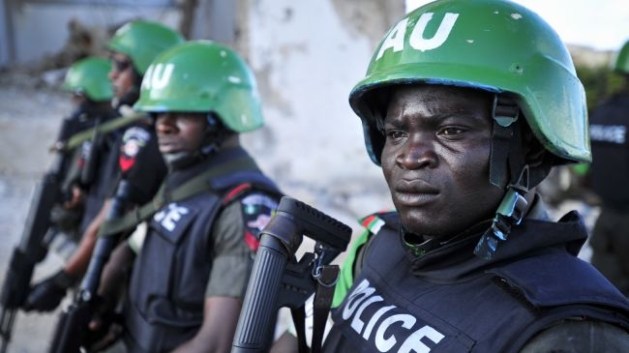
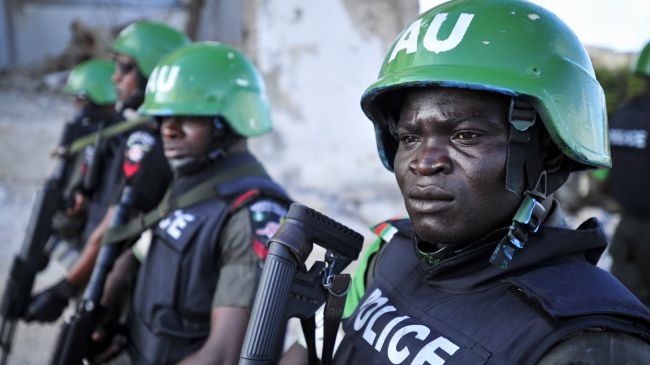
Nigerian Troops Attached to AMISOM on Patrol in Mogadishu – Press TV

The upcoming debate will review the most recent UN Secretary General efforts to combat piracy in the Gulf of Aden region, contained in his latest report on this matter. The report covers the most important activities relevant to the fight against piracy launched by or in cooperation with the UN following the Council’s Resolution 2020 last year. These include the progress in prosecution, detention and transfer of convicted pirates, the activity of the main UN bodies and of the Contact Group on Piracy Off the Coast of Somalia, naval patrolling and anti-piracy capacity building in the region as well as a number of international conferences. Throughout the year, we have covered these issues here, here and here.

Interestingly, the report takes quite a direct stance on the impact of illegal fishing and illegal dumping toward piracy:

64.  Some observers continue to argue that illegal dumping of toxic waste and illegal fishing off the coast of Somalia is one of the factors responsible for forcing Somali youths to resort to piracy and attack foreign vessels because such activities deprive them from engaging in gainful employment opportunities. However, the United Nations has received little evidence to date to justify such claims. Most pirate attacks have been carried out against large merchant vessels several hundred nautical miles off the coast of Somalia.

65.  As for the dumping of toxic waste on land and at sea, while this may have occurred a few years ago in the waters off the coast of Somalia, there is no evidence of such activities currently. Concerns about the protection of the marine environment and resources should not be allowed to mask the true nature of piracy off the coast of Somalia, which is a transnational criminal enterprise driven primarily by the opportunity for financial gain.

The possibility for a specialized judicial structure solely devoted to investigate and prosecute piracy cases is also still gaining some momentum. The report refers to the initiative by Qatar for the establishment of a “special court for piracy” in the Gulf State (para. 42). As a first step, a delegation from UNODC and the Contact Group on Piracy off the Coast of Somalia visited Qatar last September for detailed discussions with the Qatari authorities. Additional initiatives pertain to a possible direct involvement of the UN in anti-piracy policing activities. The Asian Shipowners’ Forum called for the establishment of a multinational anti-piracy military task force under the auspices of the UN that could be deployed, a sort of UN Peacekeeping Vessel Protection Detachment on board of merchant ships (para. 43). These developments are not ripe for further exploration in the Secretary General report, but they raise fascinating preliminary legal issues. For instance, on the jurisdiction of special criminal fora, rule of law enforcement and the immunity of peacekeepers in connection with the prevention and punishment of universal jurisdiction crimes, that are worth considering for discussion in the near future.
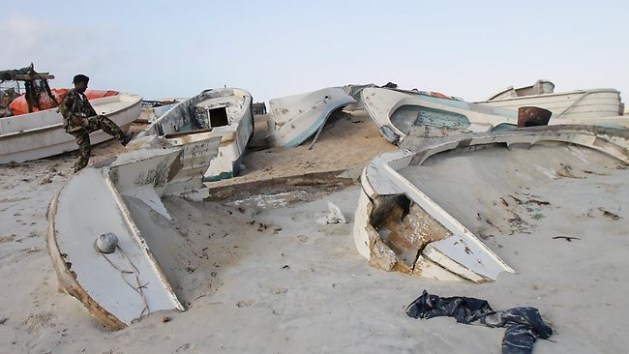
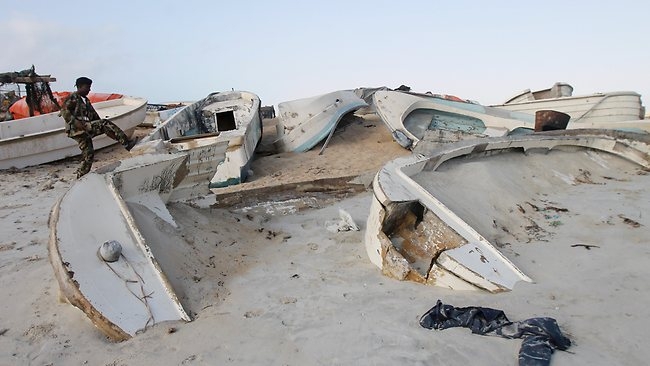
Unused Pirate Skiffs in the Somali Town of Hobyo – AP

The most updated figures show a significant drop of both attempted and successful piracy attacks in the Gulf of Aden and the larger Indian Ocean area, speaking volume of the regional, international, government-lead as well as the private industry’s efforts in combating piracy. With the end of the monsoon season and the possible risk of disengagement by the international community as Somalia continues its current path of democratization, the jury is still out on how effective these efforts have been and what, if any, the pirates’ next move will be. These concerns are addressed in the report, which also recalls the need to add focus on land-based solutions to piracy:

74.  The recent gains made by the international community in its collective fight against piracy off the coast of Somalia are encouraging. However, although there are signs of progress, they can be easily reversed. Until the root causes of piracy, namely, instability, lawlessness and a lack of effective governance in Somalia, are addressed, counter-piracy efforts must not be minimized. In particular, ongoing efforts to build the rule of law and livelihood opportunities ashore should be intensified.

75.  A significant gap still exists in land-based programmes in Somalia to address piracy. This is primarily owing to the lack of security on the ground and lack of sufficient funding to support capacity-building and alternative livelihoods. An ever greater emphasis must now be placed on providing focused assistance to States in the region and to authorities in Somalia to build their capacity to deal with the institutional and operational challenges to governance, the rule of law, maritime law enforcement and security, and economic growth. In addition, counter-piracy actions should run alongside a concerted effort to rebuild the civil structures and institutions of Somalia in close cooperation with the Somali authorities and civil society.

76.  The successful end of the political transition in Somalia should act as a catalyst to address the root causes of piracy. I encourage the new Government to develop a comprehensive national counter-piracy strategy, working closely with the regional administrations and neighbouring States. This should include efforts to facilitate the development of skills necessary to earn sustainable incomes in such sectors as agriculture, livestock, fisheries and industry. I also call upon the Somali authorities to adopt appropriate counter-piracy legislation without further delay to ensure the effective prosecution of individuals suspected of piracy and to facilitate the transfer of prosecuted individuals elsewhere to Somalia. The new Government should proclaim an exclusive economic zone off the Somali coast in accordance with the 1982 United Nations Convention on the Law of the Sea.

77.  Although pirates’ proceeds decreased significantly in 2012 owing to a lower number of executed attacks, militias and parallel illicit activities sponsored by pirate money will continue to pose a threat to the stability and security of Somalia. It is imperative that pressure on Somali pirates and their business model be maintained.

The current lull in piracy activity in Somalia is, however, matched by a growing rise of violent robbery-style pirate attacks in West Africa’s Gulf of Guinea, often connected with other illicit activities of a transmaritime and transnational nature. The Security Council already held an open debate on piracy in West Africa in October 2011. For the first time, the upcoming debate within the Security Council will provide the opportunity for a joint and integrated discussion on piracy in both East and West Africa. Hopefully, it will also be capable to provide for an opportunity to confront these differing realities, identify their root causes and peculiarities and, most importantly, share the relevant lessons learned on the ground so far. We will closely follow the debate and report on its achievements, or failures, as soon as possible.

Piracy Takes Center Stage at UN Security Council

Indian ambassador to the UN Hardeep Singh Puri, who assumed the month-long presidency of the UN Security Council, interacts with the media after convening an emergency meeting on Syria, in New York. Source: PTI Photo

As noted by Christine, India has assumed the month-long presidency of the UN Security Council and has brought piracy to the center of the debate. As the Security Council Report points out this is the first time that piracy has been addressed as a thematic issue as opposed to in a state or regional discussion.

Key Issues

A key issue for the Council is how to strengthen the international response to piracy as a global threat to international peace and security.

Another issue is what lessons can be learned from the experiences gained so far at the regional level that may be applied universally.  These experiences cover areas such as effective coordination and cooperation mechanisms, preventive measures taken by the shipping industry (which include the use of privately contracted armed security personnel on ships), strengthening legal frameworks to ensure accountability for acts of piracy, capacity-building for states in the affected regions and addressing the root causes of piracy. A related issue is the difference across regions in the way pirates operate and the capacity of regional states to take effective action.

There also seems to be growing recognition of the human cost of piracy as an issue deserving more attention, including how to ensure assistance to hostages and their families.

Options

The main option for the Council is to adopt a presidential statement that would call for strengthened international action against piracy based on some of the experiences already gained and mechanisms in place. Such a statement could also ask the Secretary-General for a report on piracy at the global level and recommendations for further action.

The framework adopted by the Security Council could form the basis for the further solidification of customary international law. While the Security Council has issued numerous resolutions regarding piracy off the coast of Somalia, it has been careful to disclaim any opinio juris in creating precedents that might contradict UNCLOS. A further strengthening of the UNCLOS framework, in addition to an elucidation of areas of ambiguity in the treaty would be welcome in light of continued acts of piracy off the coast of Somalia, in the Gulf of Guinea, in the Malacca Straight, and, potentially, in new areas where conditions are ripe for such criminality.

Weekly Piracy Review: Expanded Territory

Map of attempted (yellow) and successful (red) attacks in 2012

Recent trends indicate that piracy around Somalia and in the Gulf of Aiden is becoming less prevalent. Through September of this year Somali pirates have reportedly carried out 70 attacks, down from 199 in the same period of 2011. These attacks are becoming less successful as well – in 2011 about one in three attempted raids were successful, while now the figure is closer to about one in 20. Armed guards onboard ships, the presence of patrolling warships in the region, and onboard security measures such as barbed wire are among the efforts credited with this decrease in piracy. However, agencies such as the International Maritime Bureau continue to warn against complacency, pointing out that Somali pirates alone still hold 11 ships and 167 crew members hostage. More than 20 of those hostages have been under the control of their captors for over 30 months. The IMB also reports that it calculates the global cost of piracy was $12 billion in 2010, which is a clear indication that continued efforts to impede the ability of these criminals in carrying out acts of piracy is essential moving forward.

Along with this decrease in pirate activity off of East Africa, there is a growing threat in West Africa around the Gulf of Guinea. As the international community has put an increased effort into protecting merchant ships in other hot-spots, the threat of maritime piracy is spreading farther and affecting areas previously thought to be fairly safe. Specifically, reported attacks have more than doubled off of West Africa so far this year from those reported in 2011. Oil production is growing in countries such as Nigeria, and as a result shipping traffic is increasing, creating a new “market” for those seeking to hijack boats and seize cargo for profit. Since August at least three large tankers have been attacked, and about 10,000 tons of oil have been robbed from those ships. Up until recently it was considered relatively safe for large ships to anchor for days at a time and carry out ship-to-ship transfers near Ivory Coast, but recent attacks there indicate that the reach of maritime piracy is spreading quickly.Though prior attacks have often focused on holding a ship and its crew hostage for ransom, these goal in these recent incidents appears to be the appropriation of oil to be sold on the black market. The more widespread area in which attacks have occurred, and the fact that many have taken place much further out to sea than in the past, shows that these are sophisticated pirates with access to larger ships, greater resources, and information on ship movement.

Over the weekend the Nigerian Navy and the Nigerian Maritime Administration and Safety Agency (NIMASA) met to strengthen efforts under a memorandum signed a few years ago outlining the need for counter-piracy measures. The meeting was prompted after a presidential directive to end illegal activities (specifically maritime piracy and sea robbery) in Nigeria was handed down. The hope is to more effectively police the waters around Nigeria through increased cooperation and resource-sharing between the two agencies.

On Monday senior officials from the US, India, and Japan met for the third time to formally discuss strategies for combating piracy and bolstering maritime security. The three agreed to increase efforts in combating piracy through greater cooperation.

India took over the rotating Presidency of the United Nation Security Council (UNSC) this week. Hardeep Singh Puri, India’s Representative to the UNSC, has already indicated that India will use its post to seek a “comprehensive anti-piracy strategy to tackle the maritime menace.” Maritime piracy clearly presents a significant challenge to the international community and its effects are felt especially strongly in India and the surrounding region, so Puri intends to cultivate debate on the topic of how the UNSC will address piracy as an international crime.

Weekly Piracy Review: Crossfire near Somalia, Hostages Released

Pirate vessel ignites during firefight with HNLMS Rotterdam, NATO’s counter-piracy flagship

While patrolling the waters off the coast of Somalia on Wednesday the HNLMS Rotterdam, NATO’s counter-piracy flagship, destroyed a pirate fishing boat. The Rotterdam had deployed a boarding team to check out the boat, and upon confronting those aboard the ship the team began to take fire from fighters on the boat and on land. The fishing boat aroused suspicion as it was the type generally employed to transport pirates in their efforts to hijack larger merchant ships. The attack on the boarding team prompted the Rotterdam to return fire, which resulted in the fishing boat catching fire. Those on board were forced to flee into the sea, and despite continuing to draw fire from those onshore the Rotterdam proceeded to rescue at least 25 people from the water. One person was found dead, and it is unknown whether they were a pirate or being held hostage. It is also unclear how that person died. The Rotterdam suffered only minor damage and no one from the Dutch warship was injured.

In December of 2010 the MV Orna, a UAE-owned cargo vessel, was hijacked by a group of Somali pirates about 400 nautical miles North East of the Seychelles in the Indian Ocean. Since then the ship has been held hostage, along with the crew members who were taken with it. After growing impatient following nearly two years of attempting to collect a ransom for the return of the Orna and its’ crew, it has been reported that one of the hostages was killed in late August of this year. This killing was allegedly  carried out in an effort to prompt a ransom payment, though the truth of the story has recently been disputed by a technical advisor to the ship’s management company. If true, this act is believed to have been the first killing of a hostage by Somali pirates, as generally hostages are held unharmed until ransom is paid.

MV Orna

Last Saturday the vessel and 13 of the 19 crew believed to have been aboard were finally released following a ransom payment reported to be between $400,000 and $600,000. The ship’s captain, the chief engineer, and four other crew members were not released, and are still being held hostage. It is believed that their captors are divided into two separate groups, who disagree over the amount of money they require in order to release these remaining six hostages. The remaining hostages are being held by piracy investors, who support piracy by providing food and security for hostages during negotiations in return for a portion of the ransom. Negotiations are continuing between these piracy investors and the UAE company that owns the Orna.

The UAE’s National Transport Authority (NTA) announced a new anti-piracy security system it will be implementing. As part of the security measures being taken, tracking devices are being installed on commercial ships bearing UAE flags and carrying over 300 tons of cargo. This will allow these ships to be monitored around the clock from offices in Abu Dhabi and Dubai. According to the NTA, 150 ships have already been outfitted with the system, which will soon be installed on about 800 more. In addition, the system implemented by the NTA will provide on-board security protection for these vessels to further discourage piracy attacks.

The International Maritime Bureau reported this week that the number of reported attacks by Somali pirates has dropped to its’ lowest point since 2009. This is largely a reflection of increased efforts on the part of the international community to police the waters of the Arabian Sea around Somalia, focusing on patrolling the Gulf of Aiden. Along with this drop in pirate activity around Somalia there has been an increase in the number of attacks in other areas, including the Gulf of Guinea, Indonesia, and other parts of South Asia.