Mauritius Strengthens Its Anti-Piracy Capacity

Last month, Mauritius became the latest country in the Indian Ocean area to enter into an agreement with the United Kingdom for the transfer of suspected pirates before its courts for prosecution. The agreement was announced earlier this year during the London Conference on Somalia, which highligthed the UK driving role in Somalia’s recovery, including the fight against piracy. Mauritius thus follows in the footsteps of Tanzania and the Seychelles who have recently penned similar agreements with the UK, in 2012 and 2010, respectively, aiming to break the pirates business circle by providing a jurisdictional basis for their prosecution after apprehension at sea.
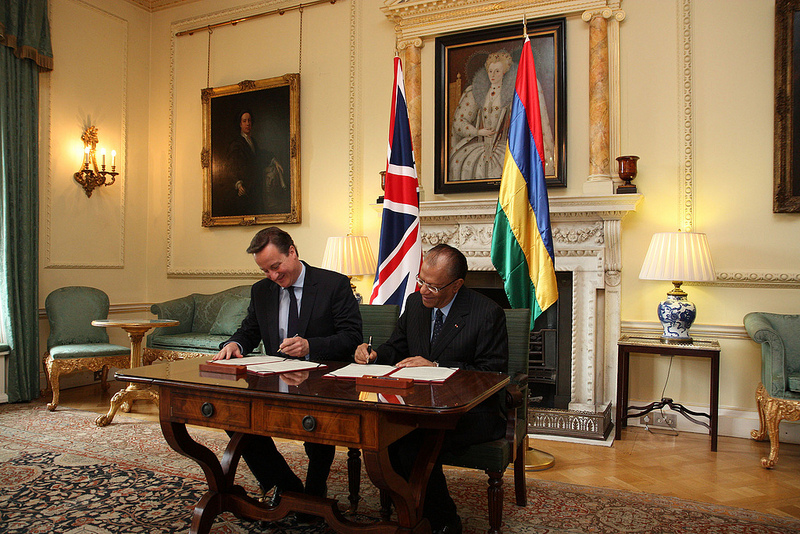
Prime Minister David Cameron and his Mauritius counterpart Navinchandra Ramgoolam sign the prisoners transfer agreement – FCO

Notoriously, foreign navies deployed off the Somali coast to counter piracy are reluctant to take pirate suspects to their own countries because they either lack the jurisdiction to put them on trial, or fear that the pirates may seek asylum. Evidentiary hurdles are also seen as an increasing impediment to effective prosecutions. Suspected pirates detained on the high seas are therefore often released after a brief detention due to the governments’ reluctance to bring them to trial.

Under the terms of the new international agreement, Mauritius will receive and try suspected pirates captured by British Forces patrolling the Indian Ocean. Last year, Mauritius entered into another agreement with the European Union for the transfer, trial and detention of suspected pirates captured by the EUNAVFOR naval mission. As reported on this blog, Mauritius has also inked a deal with the TFG, Somaliland and Puntland to start to transfer convicted pirates to Somali prisons, paving the way for the commencement of prosecutions in Mauritius.

The first trial of a suspected Somali pirates is due to commence in September 2012. In the meantime, Mauritius, already a signatory of UNCLOS, further strengthened its anti-piracy capabilities by adopting various relevant legislative instruments. First and foremost, a new anti piracy law was adopted at the end of 2011. The new Piracy and Maritime Violence Act 2011, premised on the transnational dimension of modern day piracy and the principle of universal jurisdiction to counter it, incorporates nearly verbatim in the national judicial system the definition of piracy as contained in Article 101 of UNCLOS. Acts of violence within Mauritius internal waters are defined as “Maritime Attack”. The novel term adds a degree of fragmentation in the definition of this offence, which is otherwise commonly referred to internationally as “armed robbery at sea”. In an attempt to cater for a wider range of piracy related criminal activities, the Piracy Act also criminalizes the offences of hijacking and destroying ships as well as endangering the safety of navigation. For each of these offences, the Piracy Act provides for a maximum term of imprisonment of 60 years.

More interestingly, the Piracy Act introduces the possibility for the holding of video-link testimonies and/or the admission of evidence in written form where the presence of a witness, for instance a seafearer, cannot be secured. While not uncommon in certain national criminal jurisdictions, as well as those of international criminal courts, the introduction of out of court statements, particularly when relevant to the acts and conducts of an accused, could trigger fair trial rights issues. These issues are principally due to the limited ability of the defence to test such evidence when relied upon at trial in the absence of the witness. In light of these concerns, the Piracy Act provides for the admissibility of evidence in rebuttal as well as for the court’s discretionary power in assessing the weight to be given to written statements.

In addition to the Piracy Act, which entered into force on 1 June 2012, Mauritius also adopted and/or amended its laws concerning assets recovery and mutual assistance in criminal matters in order to foster cooperation with foreign governments to tackle pirates and criminal cartels. The implementation of the agreement with the UK, however, is still to be fully tested. In May 2012, the UK announced that defence budget cuts required it to scale back its naval commitments in the region, withdrawning its ships from full-time counter-piracy operations.

 

The HMS Ocean Arrives in London Ahead of the London 2012 Olympic Games – Courtesy AP

These difficulties have been compounded by the need to commit ships and personnel to the security efforts for the London 2012 Olympic Games. The UK long-term commitment to combat piracy in Somalia extends beyond its current patrolling and disruption efforts in the Indian Ocean. To remain within the Olympic spirit, French Baron Pierre de Coubertin, considered the founder of the modern Olympics Games, famously noted how “The important thing in life is not the triumph but the struggle, the essential thing is not to have conquered but to have fought well.”  With piracy attacks in the region at their lowest level, during monsoon season, however, it is worth considering whether we should be content with the current efforts to combat piracy, or whether we should be aiming for more.

Kingpins Enjoy Impunity

A confidential UN report, made available to Reuters, highlights the considerable disparity in the treatment of low-level operatives versus pirate kingpins in that the latter enjoy impunity. The report notes:

The UN Monitoring Group on Somalia said in a report to the Security Council, seen by Reuters, that senior pirate leaders were benefitting from high level protection from Somali authorities and were not being sufficiently targeted for arrest or sanction by international authorities.

[…]

The UN report said pirate leaders are now increasingly involved in land-based kidnap for ransom of foreign tourists and aid workers in northern Kenya and Somalia, as well as selling services as counter-piracy experts and consultants in ransom negotiations, and exploring “new types of criminal activity”.

“This evolution of the piracy business model is being driven largely by members of the Somali diaspora, whose foreign language skills and bank accounts are all valuable assets,” it said.

[…]

The [Monitoring] Group said that in spite of three international task forces and efforts by a dozen national governments in maritime counter-piracy efforts, serious legal obstacles remain that “impede the prosecution and sanctioning of pirate leaders and kingpins”.

Further to this last observation, a recent opinion by a U.S. District Court brings into question the ability to prosecute pirate kingpins who never set foot aboard a pirate vessel on the high seas. For reasons I will set forth in a forthcoming post, I think the court reached some faulty conclusions. But if the reasoning in that opinion gains traction, prosecution of high-level pirates under the framework set forth in UNCLOS will become increasingly untenable.

4th Circuit Decides Definition of Piracy Evolves with the Law of Nations

A three-judge panel of a U.S. appeals court has decided that UNCLOS sets forth the definition of piracy for purposes of U.S. law. As we signalled here and here, the U.S. Court of Appeals for the 4th Circuit was faced with the question of whether “piracy as defined by the law of nations” in 18 U.S.C. § 1651 (adopted in 1816) constitutes a static or evolving concept. In a well-written and extremely thorough decision, the court has determined that the law of nations is an evolving concept and that the definition contained within UNCLOS constitutes the law of nations as defined in the statute.  Since UNCLOS defines piracy in part as ‘an illegal act of violence,’ a completed theft is not requisite to the crime. This has important repercussions for future prosecutions because pirates are often unsuccessful in boarding ships or taking anything of value even though they may fire upon vessels with AK-47s and RPGs.  Limiting the definition to the law of 1816 would have prevented U.S. courts from exercising jurisdiction where conduct less than a completed robbery was perpetrated. Here are the crucial bits of the opinion:

The defendants would have us believe that, since the Smith era, the United States’ proscription of general piracy has been limited to “robbery upon the sea.” But that interpretation of our law would render it incongruous with the modern law of nations and prevent us from exercising universal jurisdiction in piracy cases. See Sosa, 542 U.S. at 761 (Breyer, J., concurring in part and concurring in the judgment) (explaining that universal jurisdiction requires, inter alia, substantive uniformity among the laws of [the exercising] nations”). At bottom, then, the defendants’ position is irreconcilable with the noncontroversial notion that Congress intended in § 1651 to define piracy as a universal jurisdiction crime. In these circumstances, we are constrained to agree with the district court that § 1651 incorporates a definition of piracy that changes with advancements in the law of nations.

We also agree with the district court that the definition of piracy under the law of nations, at the time of the defendants’ attack on the USS Nicholas and continuing today, had for decades encompassed their violent conduct. That definition, spelled out in the UNCLOS, as well as the High Seas Convention before it, has only been reaffirmed in recent years as nations around the world have banded together to combat the escalating scourge of piracy. For example, in November 2011, the United Nations Security Council adopted Resolution 2020, recalling a series of prior resolutions approved between 2008 and 2011 “concerning the situation in Somalia”; expressing “grave[ ] concern[ ] [about] the ongoing threat that piracy and armed robbery at sea against vessels pose”; and emphasizing “the need for a comprehensive response by the international community to repress piracy and armed robbery at sea and tackle its underlying causes.” Of the utmost significance, Resolution 2020 reaffirmed “that international law, as reflected in the [UNCLOS], sets out the legal framework applicable to combating piracy and armed robbery at sea.”

Considering the importance of this opinion, the public defender may choose to petition for en banc review. The three judges on this panel were all Democratic appointees, which may mean they were more receptive to the evolving law concept. Whereas if the entire bench (15 judges) were to hear the case, it could reach a different conclusion.  The defendants also have the option of appealing to the U.S. Supreme Court. Therefore, there may yet be more to this story.

What Does Piracy Have to Do with North Korea?

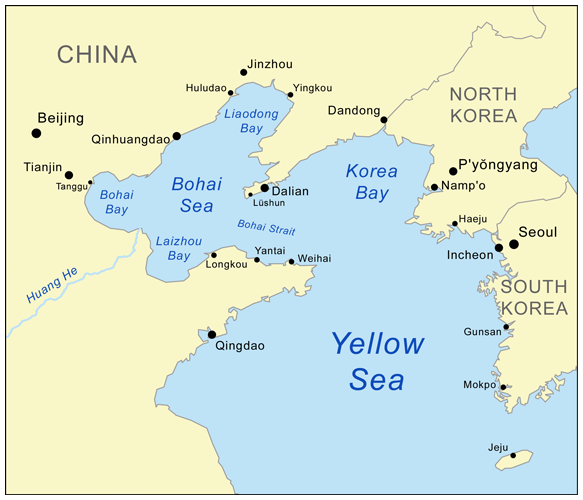
The reclusive authoritarian Democratic People’s Republic of Korea is once again back on the news headlines. Surprisingly, this time is not about the reactivation of its purported nuclear programme, or because of a new attempt to lift off a satellite/ballistic missile, or for some leaked information on the poor living conditions endured by its citizens. Media outlets are reporting on the possible hijack of 3 Chinese fishing vessels and the kidnap of their 29 crew members earlier this month. The vessels and all the captives were released today, following the intervention of the Chinese authorities. The incident has all the hallmarks of a piracy attack off the coast of Somalia or in West Africa. However, it occurred in the Yellow Sea, in an area between North Korea and China.

News reports are still contradictory and any in-depth analysis into this will necessarily depend on the real circumstances of the case. Notably, the incident has not been reported to the IMB Piracy Reporting Centre. In particular, it is not clear whether the incident took place in international waters. The identity of the assailants is also unclear. Some reports indicate that these were members of the North Korean military, while according to others Chinese mafia from the city of Dandong, on the North Korean border, might have been involved, possibly in cooperation with the North Korean military. Several news reports indicate that the vessels, originating from the city of Dalian, were accosted at sea by armed men and forced to sail to North Korea. The ship owners confirmed the capture of the vessels and their crew. According to the owners, the vessels were navigating within Chinese national waters. They also confirmed that the captors have asked for the payment of a ransom of nearly 190.000 US Dollars and have threatened to harm their captives if no payment was made.

If the assailants have no connection with state authorities, the main issue will be to determine whether the incident qualifies as piracy committed in the high seas rather than armed robbery within China’s territorial sea. However, whether the assailants are members of the North Korean military or not, the use of force and the request for a ransom renders them de facto pirates, because they appear to have acted in pursuit of private ends. If the available information is correct, their actions could also qualify as mutiny. In this regard, it is worth recalling that Article 102 UNCLOS encompasses acts of piracy committed by a government ship whose crew has mutinied.

Actions by the North Korea authorities have in the past drawn widespread international condemnation. However, it is difficult to envisage Pyongyang secretive rulers now embracing a state policy to terrorize fishermen in the Yellow Sea for ransom purposes, particularly when this has an impact on a longtime ally and regional military superpower as China. This latter routinely issues strong protests over fishing related disputes with Japanese, South Korean, Vietnamese or Philippine fishing vessels. China will likely take certain actions to prevent any further escalation of such attacks in the Yellow Sea, as it has done by policing Southeast Asia’s  Mekong river from drug smugglers and criminal cartels. However, doubts remain on whether the public outcry sparked by this incident will have an impact on its already strained relationship with North Korea.

ReCAAP and the Anti-Piracy Information-Sharing System in Asia

Furthering its current efforts to enhance international cooperation to tackle piracy, the United Kingdom recently became the 18th party to the Regional Cooperation Agreement on Combating Piracy and Armed Robbery against Ships in Asia, commonly referred to as ReCAAP.

Entered into force in September 2006, ReCAAP is the first regional agreement for the promotion and the enforcement of multilateral cooperation against piracy and armed robbery at sea in Asia. Among its original contracting parties are South and East Asian countries. Since its entry into force, ReCAAP is also open for accession by other countries. Like the U.K., other global shipping countries with an interest in Asian maritime economy, such as Norway and the Netherlands, are also parties. Pursuant to its Article 1, ReCAAP adopts the same definition of piracy set forth in UNCLOS as well as the IMO definition of armed robbery at sea. However, ReCAAP does not provide for enforcement powers beyond those already provided in UNCLOS. Many of the lessons learned from the implementation of ReCAAP were incorporated in the Djibouti Code of Conduct, which provides a framework for information sharing, training and capacity building in the Gulf of Aden.

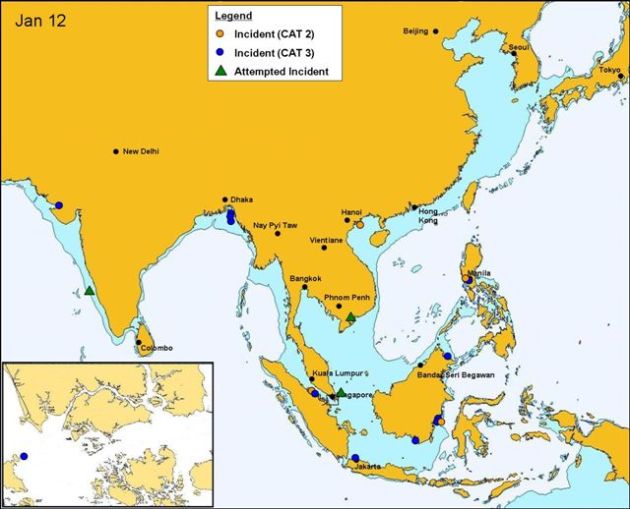
Notably, ReCAAP established an Information Sharing Centre (ReCAAP ISC), which is now a recognized international organization, headquartered in Singapore. ReCAAP ISC’s main functions include facilitating communication and piracy-related information-sharing among the contracting parties as well as furthering capacity building with other organizations and the shipping industry to develop and improve anti-piracy measures. As part of its mandate, ReCAAP ISC produces periodic consolidated incident reports and alerts on piracy and armed robberies at sea in the Asia region. Incidents are classified under 4 different gravity levels, measuring violence and economic impact.

 Map of ReCAAP Consolidated Incident Report for January 2012

Once piracy hot-spots, the straits of Malacca and Singapore as well as the South-China Sea more recently registered a significant drop in piracy related incidents. Due to improved surveillance and security presence, reported incidents now mainly consist of armed robberies or petty thefts at ports and anchorages, particularly in Indonesia.