From New Delhi to Rome (and Back) via Hamburg or The Hague: the Enrica Lexie Incident and the UNCLOS Dispute Settlement Mechanism

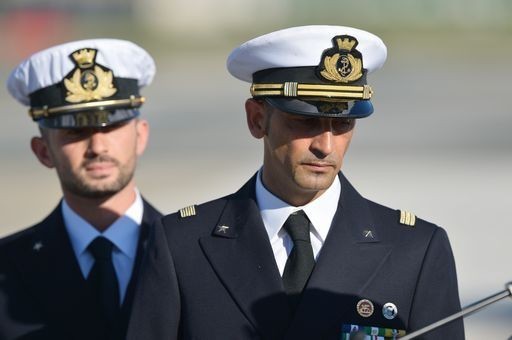
The Italian Marines upon their initial return in Italy in December 2012. Will they remain for good?

The Italian Marines upon their initial return in Italy in December 2012. Will they remain for good?

The recent decision of the Italian Government not to return two Italian marines to India for trial in connection with the killing of Indian fishermen is heightening tensions between Italy and India and is spawning an international diplomatic fallout. Since its inception, the case attracted much debate and conjecture, both by the media but also by specialized political and legal commentators. We have provided our point of view, for instance here and here. In essence, Italy and India disagree on who has jurisdiction to try the Italian marines. Each of their respective arguments is premised on international law, notably the United Nations Convention on the Law of the Sea, as well as municipal law. India contends that it has jurisdiction to try the marines because (1) the victims were Indian nationals, (2) the victims were killed on an Indian ship and (3)  the incident occurred within India’s Contiguous Zone, which extends beyond its territorial waters. For its part, Italy claims it has jurisdiction to try the pair because (1) they are Italian citizens; (2) they were deployed as a Vessel Protection Detachment on the Italian ship Enrica Lexie and (3) the incident occurred within international waters. Worthy of note is that both countries, separately but concurrently, have indeed initiated criminal proceedings against the marines before their internal judicial systems.

Recently, the Italian government formally clarified that since the issuing of the Indian Supreme Court decision in January 2013 in this matter, indicating that the marines shall be tried by a special chamber set up within the Indian judicial system, it has pursued the cooperation of the Indian government under Articles 100 and 283 of UNCLOS for a settlement of this matter under international law. From a formal point of view, therefore, the actions of the Italian government are an attempt to bring the question of which State has jurisdiction to try the marines within the legal framework of UNCLOS provisions related to the settlement of disputes.

UNCLOS builds on the commitment by all United Nations Members States to settle their international disputes by peaceful means in such a manner that international peace and security are not endangered. In particular, one of the main characteristic of UNCLOS and its dispute settlement system is the possibility for a State Party to unilaterally trigger the compulsory and binding jurisdiction of certain judicial institutions for the resolutions of such disputes. Given UNCLOS comprehensive reach, the range of controversies subject to resolution varies, and includes issues relevant to seabed and maritime delimitation, navigation, fisheries and the environment, etc.

Part XV of UNCLOS requires States Parties to first attempt to settle any dispute between them by peaceful means and seek a solution in compliance with the United Nations Charter (Articles 279-280). Importantly, States Parties can agree to seek the settlement of the dispute by peaceful means of their own choice (Article 281), including recourse to general, regional or bilateral agreements (Article 282). Parties also have an obligation to exchange views on the possible settlement (Article 283) and can decide to submit the dispute to a non-binding conciliation (Article 284). Where, however, no settlement has been reached, UNCLOS stipulates that the dispute must be submitted at the request of either party to the dispute to a court or tribunal having jurisdiction in this regard (Article 286). The relevant rules contained in Part XV of UNCLOS are quite complex and foresee the possibility of seeking relief before different fora, depending on the subject matter of the controversy, also setting forth a series of exceptions and opt-outs. With regard to controversies akin to that concerning the Enrica Lexie incident, Article 287 of UNCLOS defines available courts or tribunals as the International Tribunal for the Law of the Sea, in Hamburg (ITLOS), or the International Court of Justice, in the Hague (ICJ). In ratifying the UNCLOS, Italy already declared its acceptance of the jurisdiction of either of these institutions as binding, while India reserved its rights to any such declaration. Alternatively, the parties might choose to refer the unsettled dispute to an ad hoc arbitral tribunal. A Party to a dispute not covered by a declaration in force shall be deemed to have accepted arbitration.  If the parties to a dispute have not accepted the same procedure for the settlement of the dispute, this may be submitted to arbitration unless the Parties otherwise agree. Finally, any decision rendered by a court or tribunal having jurisdiction over the dispute shall be final and shall be complied with by all the parties to the dispute (Article 296).

Arguably, the positions of the two States on this matter have not been more discordant. Italy’s sudden decision not to return its marines to India is premised on a change in circumstances following the perceived lack of cooperation by the Indian authorities in resolving the dispute in accordance with international law. This in itself is considered by the Italian government as a dispute on the scope of application of UNCLOS. The Indian government, on the other hand, has reacted strongly and called the Italian decision “unacceptable”. The Indian Supreme Court is currently precluding the Italian Ambassador, who acted as a guarantor for the return of the marines to India, from leaving the country. While it is unclear whether the Italian Ambassador has any immediate intention to leave India, the Indian Supreme Court should be cognizant of the Vienna Convention on Diplomatic Relations (1961) which provides in Article 29 that the person of a diplomatic agent shall be inviolable. The Indian Supreme Court appears to misconstrue the Italian ambassador as a personal guarantor for the return of the marines, rather than a diplomatic agent of the Italian government. The two states maintain irreconcilable positions. India needs Italy to return the marines back on its soil to eventually commence a meaningful trial before its courts, while Italy needs India to comply with its international rogatory requests to complete its investigations into the matter, thus relaxing the jurisdictional dispute by bringing the marines to trial before its own courts.

ITLOS sits in Hamburg - Is the Enrica Lexie Case on its way there? Courtesy ITLOS

ITLOS sits in Hamburg – Is the Enrica Lexie Case on its way there? Courtesy ITLOS

The recent adjudication by the International Court of Justice in the Hissène Habré case provides useful guidance on the expected complexities of instances where the Parties cannot agree to settle their differences. The judgment of the Court in this case, particularly the findings concerning its admissibility, reveals several years of diplomatic exchanges between Belgium, which petitioned the Court, and Senegal, which was accused of neither prosecuting nor extraditing Mr. Habré, the former President of Chad, based on violations of the Convention Against Torture. The ICJ decision in Habre includes, in the first place, lengthy discussions on whether a disagreement occurred among the Parties, whether this could not be settled by them and whether the jurisdiction of the Court had been triggered.

Paradoxically, the divergences between Italy and India might facilitate recourse to compulsory jurisdiction with ITLOS or the ICJ. The route between New Delhi and Rome in the resolution of the Enrica Lexie incident therefore might  pass through Hamburg or The Hague. The voyage is far from clear and it will continue to be a perilous one.


Broadcast of Mekong Pirate’s Execution May Have Violated Chinese Law

You likely have heard about the execution of Naw Kham, the Mekong Pirate found guilty of killing 13 Chinese in the Golden Triangle. See our prior coverage here. The moments leading up to the execution were televised live in China, although the execution itself was not. Siweiluozi’s Blog points out this violates the spirit if not the letter of Chinese law meant to curb such public executions.

This prohibition was subsequently written into China’s Criminal Procedure Law, and the relevant Supreme People’s Court interpretation on implementation of the death penalty also prohibits “other acts that degrade the personality of criminals” (其他有辱罪犯人格的行为).

Siweiluozi’s Blog also points to a commentary in the Changjiang Daily, the official “organ” of the party in Wuhan, providing the following critique:

Perhaps it is not illegal in China to broadcast live as the condemned are transferred to the execution ground, but I still oppose broadcasting live. Before, China used to have so-called public sentencing rallies and parade bound criminals in the streets for public viewing. Now, live broadcast of the transfer is no different in any real sense and is even more repulsive. Why?
It is because the live broadcast voluntarily and consciously revived these kinds of backward, barbaric scenes lacking in any modern notion of rights or rule of law. The live broadcast even delivered these scenes right in front of your eyes, so that you didn’t even need to go out of doors or be in the streets: you could see the barbarity and backwardness from your own home. You could say, in other words, that this live broadcast was itself barbaric and backwards, displaying no progress at all.

Event: The Global Fight against Maritime Piracy – Learning Lessons from Somalia

Global Policy Journal and the Greenwich Maritime Institute are hosting a seminar on contemporary maritime piracy. This is the theme of a special section published in the February 2013 issue of Global Policy, edited by Dr Christian Bueger of Cardiff University.

The seminar will take place on April 17th from 18.00-20.00 in the Howe Lecture Theatre, Queen Anne Court, Greenwich Campus of Greenwich University. The event is free to attend and hosted by the Greenwich Maritime Institute.

The Global Fight against Maritime Piracy – Learning Lessons from Somalia

The fight against maritime piracy remains a crucial global challenge. Current incident numbers indicate that piracy in Eastern African waters is in decline and that the measures taken by the international community and the shipping industry have been effective. Yet, the global fight against piracy is not won. Questions have to be addressed how piracy can be contained and prevented in the long run, beyond the engagement of international naval forces. What are the lessons learned from our experience with Somali piracy? What help can be expected from development aid? How can state building assist maritime security? What role should navies have in ensuring good order at sea? What contributions can the transport industry make to prevent and contain piracy? What types of global and regional governance institutions will be required to prevent further outbreaks of piracy? The authors and panelists will address these and other questions based on their practical and academic expertise.

Confirmed panellists include Professor Christopher Bellamy, (Director of the Greenwich Maritime Institute) Dr Christian Bueger (Cardiff University), Dr Douglas Guilfoyle (University College London), Dr Axel Klein (University of Kent), Dr Anja Shortland (Brunel University), as well as representatives from the maritime security sector.

EUCAP NESTOR: Bolstering the Rule of Law to Counter Piracy in the Horn of Africa – Interview with David HAMMOND

David HAMMONDFollowing retirement for the UK Royal Marines as a former frontline operator and then latterly as a naval barrister (Counsel), David Hammond was instructed by the UK Foreign and Commonwealth Office to be the UK representative and lead lawyer for the planning, establishment and delivery of the €40m European Union’s “NESTOR” Common Security and Defence policy (CSDP) Counter-Piracy Legal Advisory Programme for East Africa. As part of the advance planning team, David gained unique and valuable experience throughout East Africa, including in Somalia and where he led the legal liaison with the Somaliland and Puntland authorities at Ministerial and Attorney-General level. David successfully delivered the NESTOR Legal Advisory Programme, involving the establishment of significant rule of law programmes and which he headed up until June 2012.

As the Horn of Africa slowly progresses from a strategy of immediate counter-piracy to a strategy of post-piracy development, David kindly accepted our invitation to respond to a few questions on NESTOR’s mandate and operation. The following answers are provided on the basis that they are correct to the best of his current knowledge.

• What is EUCAP NESTOR main role in tackling piracy in the Horn of Africa and the Indian Ocean and, in particular, what are its main thematic areas of operation?

As per the EU Council Decision 2012/389/CFSP of 16 July 2012, the objective of EUCAP NESTOR is to assist the development in the Horn of Africa and the Western Indian Ocean States of a self-sustainable capacity for continued enhancement of their maritime security including counter-piracy, and maritime governance. EUCAP NESTOR will have initial geographic focus on Djibouti, Kenya, the Seychelles and Somalia. EUCAP NESTOR will also be deployed in Tanzania, following receipt by the Union of an invitation from the Tanzanian authorities.

In order to achieve the objective, the tasks of EUCAP NESTOR were identified as being:

(a) assist authorities in the region in achieving the efficient organisation of the maritime security agencies carrying out the coast guard function;

(b) deliver training courses and training expertise to strengthen the maritime capacities of the States in the region, initially Djibouti, Kenya and the Seychelles, with a view to achieving self-sustainability in training;

(c) assist Somalia in developing its own land-based coastal police capability supported by a comprehensive legal and regulatory framework;

(d) identify priority equipment capability gaps and provide assistance in addressing them, as appropriate, to meet the objective of EUCAP NESTOR;

(e) provide assistance in strengthening national legislation and the rule of law through a regional legal advisory programme, and legal expertise to support the drafting of maritime security and related national legislation;

(f) promote regional cooperation between national authorities responsible for maritime security;

(g) strengthen regional coordination in the field of maritime capacity building;

(h) provide strategic advice through the assignment of experts to key administrations;

(i) implement mission projects and coordinate donations;

(j) develop and conduct a regional information and communication strategy.

• Why the creation of a mission with such peculiar mandate in the Horn of Africa setting?

At that time, and as far as I was aware, it was determined that in concert with various other on-going counter-piracy initiatives, including military action by EUNAVFOR, established work by EU delegations alongside the IMO, UNODC piracy programme and the likes of the Djibouti Code of Conduct, that a land-based regional programme which imparted expert knowledge and training to judicial, constabulary and other engaged entities throughout the Horn of Africa was the most efficient and effect method of assisting with the suppression of the piracy threat. Bolstering the effectiveness of the rule of law throughout affected areas was also seen as being of key importance in assisting with regional political stability.

Hargeysa Secure Hotel and Compound - Courtesy of David Hammond

Hargeysa Secure Hotel and Compound – Courtesy of David Hammond


• What are, therefore, the main differences in the mandates of EUCAP Nestor and EUNAVFOR and how these coordinate their respective activities?

NESTOR, as described, focuses on the imparting of expert constabulary, judicial, coastguard and logistical knowledge by Member State subject matter experts through training courses. This is separate to, but compliments the military presence provided for by EUNAVFOR alongside the on-going initiatives led by the EU Special Representative for the Horn of Africa.

• What is the current status of EUCAP Nestor deployment and what will be its overall structure and geographic area of operation?

I understand that at the moment staff are currently deployed to three countries: Djibouti (Mission Headquarters), the Republic of the Seychelles and Kenya. They will operate in those countries, plus Somalia and which will be the main focus. Tanzania has been asked to participate but so far has not invited the mission to carry out work there. The mission is mandated to run for 2 years commencing from 16 Jul 2012 and is headed up by Jacques Launay.

• What were the most challenging aspects in EUCAP Nestor set up and preliminary deployment process, given its geographic and thematic breadth?

The lasting memory I have in relation to the initial stages of the pre-deployment planning for the Technical Assessment Mission (TAM) and subsequent drafting of the Concept of Operations which led to the Operational plan (OPLAN), was the positive drive and collegiate Member State political will in Brussels to make the operation work. This meant significant and sustained drafting, revision and constant presentational updates to the Political and Security Committee (PSC) from what was a small team, as set against the enormity of the task which then faced us. This was undertaken in a structured, collegiate and team-focused manner with many long days and nights spent brain-storming the successive issues that arose. This was undertaken with significant levels of professionalism from selected Member State individuals who had previously never before worked together and this often required a ready sense of humour from all of us.

For my part, once deployed in the Horn of Africa, the issue of establishing a new rule of law and legal advisory programme sat with me due to the limited size of the team. The TAM ran for over one month in total and involved multiple visits to five States by all team members. There was continuous ‘hot’ planning, setting up of meetings on the sour of the moment and exploiting every opportunity to meet key in-country stakeholders. It was what I would call “quick and dirty planning and mission development” and which proved most successful.

The biggest challenge was, in my mind, to achieve local buy-in for our mission and its purpose. This meant that I needed to identify and seek out the key decision makers at every stage and convince them of the benefits of the EU mission and especially of the merits of the Legal Advisory Programme.

Meeting with Puntland Attorney General - Courtesy of David Hammond

Meeting with Puntland Attorney General – Courtesy of David Hammond


The most striking mission development work for the Legal Advisory Programme that I undertook, was in Somaliland and Puntland alongside the judicial and ministerial authorities. This included being present at piracy trials in the Garowe court and spending time in discussion with the Attorney General, before going on to meet with the Chief Justice and Minister of Justice and Religious Affairs for Puntland. The issue of extending the rule of law into the coastal areas, as well as support within the IDP camps for education in terms of women’s rights and humanitarian law was of particular note and interest for me. Subsequently, I was able to draft the individual programmes that would assist in some of those areas of articulated need and which was most gratifying. In Somaliland, the essence of the interactions were the same in terms of seeking out areas in which we could assist the authorities with the development of the rule of law through imparting knowledge via training and advisory roles.

• Current available data shows that piracy attacks in Somalia are diminishing. Is this the result of the international community efforts to combat piracy and what impact will this have on the continuation of such efforts, particularly the full implementation of EUCAP Nestor mandate? 

I am informed that the decrease in attacks is due to a variety of factors, including: EUNAVFOR’s ATALANTA operation and other naval operations, greater use of PSCs, greater use of best practices to avoid risks as well as improved information sharing. However, I am informed that this reduction is probably fragile and could be reversed without careful oversight. As such, the environment in which EUCAP NESTOR was envisaged to act has changed, but arguably there is now an even greater need for the mission as the success of reducing piracy at sea has opened the possibility of doing even more to create security and stability on land, which will provide the conditions for a lasting reduction in piracy.

David Hammond can be contacted at:

david.hammond@9bedfordrow.co.uk

http://www.9bedfordrow.co.uk/members/David_Hammond

http://uk.linkedin.com/in/davideuanhammond

One Step Closer to a Pirate Amnesty

The Special Court for Sierra Leone held that the amnesty granted to rebel leader Morris Kallon (left) did not deprive the court of jurisdiction to prosecute the Accused.

It is being reported that Somalia’s federal government is offering an amnesty to junior pirates in an attempt to end the hijackings of merchant vessels. The Somali President notes that the amnesty is intended for low-level pirates and not pirate kingpins. “We are not giving them amnesty, the amnesty is for the boys,” he said. Depending on how the amnesty is framed, however, it could run afoul of an international obligation to prosecute universal jurisdiction crimes. As we noted last August when President Sheikh Sharif Sheikh Ahmed first discussed the possibility of a pirate amnesty, the duty to prosecute arises not only from the treaty obligations taken on by states but also the egregiousness of the proscribed conduct. Based on this international norm, there may be a duty to prosecute pirates who have engaged in the practice of torturing hostages or for any other act constituting piracy if sufficiently egregious.

Moreover, a national amnesty granted by Somalia might not be respected by other states who have prosecuted hundreds of Somali pirates over the last several years. The Special Court for Sierra Leone declared an amnesty was “ineffective in removing the universal jurisdiction to prosecute persons accused of such crimes that other states have by reason of the nature of the crimes. It is also ineffective in depriving an international court such as the Special Court of jurisdiction.” We previously noted the similar situation in Nigeria, where pirates had accepted an offer of amnesty, but subsequently returned to arms due to the Nigerian government’s failure to provide alternative means of livelihood as it had promised. For Somalia, the lesson is that an amnesty must be accompanied by job training and job creation to be effective. Such a program is potentially very expensive. However, certain international organizations and NGOs may be willing to assist in this regard.