DC Circuit publishes Ali appeal

This morning, the DC Circuit published an opinion concerning the scope of permissible charges against Ali Mohammed Ali. In the opinion, the DC Circuit affirmed Judge Ellen Huevelle’s decision to dismiss one count for conspiracy to commit piracy, but reversed the dismissal of the hostage-taking charges and a limitation of aiding and abetting piracy to acts committed on the high seas.

I agree with the DC Circuit’s decisions regarding the conspiracy and hostage taking charges, but it will come to no surprise to readers of this blog that I disagree with the aiding and abetting reversal, which was based on the conclusion that aiding and abetting piracy under 18 USC § 2 (and by extension 18 USC § 1651 and UNCLOS 101(c)) can occur from within the territorial jurisdiction of another state. I argue differently in my forthcoming law review article in the San Diego International Law Journal, and I am mostly unpersuaded by the Court’s opinion. I plan on writing more about this subject after I have a chance to read the opinion more carefully.

Interestingly, the Associated Press left out the reversal limiting the scope aiding and abetting charge, reporting only that “the three-judge panel of the U.S. Court of Appeals for the District of Columbia Circuit reversed the dismissal of the of hostage-taking charges, while upholding the decision to dismiss the conspiracy to commit piracy charge.” Perhaps adding, “reversed the lower court ruling limiting piracy to acts committed on the high seas” would have seemed too controversial.

Forthcoming article on private security

Yvonne Dutton, an Associate Professor of Law at Indiana University Robert H. McKinney School of Law (not to mention a friend and colleague), has a law review article forthcoming in the Duke Journal of Comparative & International Law on regulating the private maritime security industry. Here’s the abstract:

Since only mid-2011, states have increasingly authorized their shippers to hire private armed guards to protect them as they travel through pirate-infested waters. Estimates indicate that in 2011, the percentage of ships employing armed guards rose from approximately 10% to upwards of 50%. Primarily, the guards are hired out by the 200 to 300 private maritime security companies (PMSCs) that have been created overnight to capitalize on this new opportunity. This article recognizes the importance of protecting innocent seafarers from violent pirate attacks. It also recognizes that the worlds’ navies may not be able to protect each and every ship and crew from being attacked. Nevertheless, it argues that states should not be permitted to include private citizens in the fight against piracy without first ensuring that those guards will abide by governing laws and norms and be held accountable should they fail to do so. Yet, as the article shows through a comparison and analysis of the laws and guidance of five states, only some states appear to be providing any guidance regarding the necessary training and qualifications that armed guards must possess or how and when they may lawfully use and transport weapons. This article argues that states need to do more. At the very least, it urges states to agree on vetting and monitoring procedures to make certain that any guards who are hired by shippers are well trained and prepared to safely transport, store, and use weapons. States are responsible for the fight against piracy, and if they want to include private contractors in that fight, then they should act responsibly and regulate and monitor the guards’ conduct. Otherwise, in a world where each state is creating its own rules or even no rules at all, the likely outcome is chaotic and violent seas — and perhaps the next “Blackwater” moment.

The full article can be accessed here.

When the Use of Force is Lawfull: The 100 Series Rules are Released

After a lengthy incubation process, the 100 Series Rules have finally been released. Courtesy of the author, David Hammond, we have obtained a copy here.

The Logo of the 100 Series Rules

The Logo of the 100 Series Rules for the Use of Force

The 100 Series Rules are an international model standard and example benchmark of best practice for the use of force in the maritime security and anti-piracy fields for application by privately contracted armed security personnel (PCASP) and private maritime security companies (PMSCs) on board ships.

The Rules are set out for the benefit of the Master, Ship owner, charterer, insurer, underwriters, PMSCs, PCASP and interested third parties, providing guidance on lawful graduated response measures and lawful use of force, including lethal force, in accordance with the right of self-defence in the context of maritime piracy, armed robbery or hijacking. The Rules aim to provide for transparency of rules, clarity in use and accountability of actions in those situations, and hope to fill gaps in these areas often lamented by the stakeholders of maritime industry and maritime security.

The 100 Series Rules have been developed for the benefit of the entire maritime industry and under-pinned by a thorough public international and criminal law legal review of what is “reasonable and necessary” when force is used, as a lawful last resort, in self-defence.

Further details about the 100 Series Rules can be found at www.100seriesrules.com.

New UN Assistance Mission in Somalia

The United Nations confirmed their commitment for the future of Somalia by establishing a new fully integrated assistance mission, UNSOM. The mission will start deploying in June 2013, for an initial period of one year. For a background on the debate which preceeded the Security Council decision, see our previous post here as well as additional reporting on What’s in Blue.

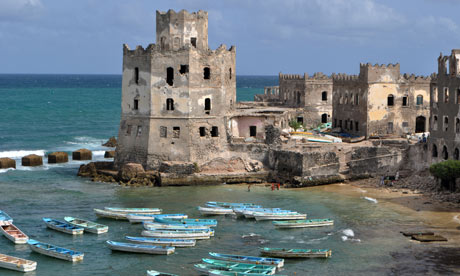
A view of Mogadishu's Old Town - Courtesy of Clar Ni Changhaile - The Guardian

A view of Mogadishu’s Old Town – Courtesy of Clar Ni Changhaile – The Guardian

UNSOM’s mandate focuses on governance, security sector reform, disengagement of combatants, development of a federal system, preparations for elections in 2016, and coordination of international donor support. Notably, it also contains a strong component of rule of law and human rights elements. UMSOM, to be headquartered in Mogadishu, would help build the Federal Government’s capacity to promote respect for human rights and women’s empowerment, promote child protection, prevent conflict-related sexual and gender-based violence, and strengthen justice institutions. Further, it would monitor, help investigate and report on any abuses or violations of human rights or of international humanitarian law committed in Somalia, or any abuses committed against children or women. In addition, UNSOM will also work  towards the implementation of the Somali Maritime Security Strategy and work with Somali authorities on maritime challenges, including capacity-building and development.

While the UN mantained a presence in Somalia for the past 15 years, the approval of the new assistance mission is another sign of the UN growing engagement in Somalia. Following the downfall of Siad Barre in 1991, the UN unsuccefully deployed a peacekeeping presence in the country from 1992 to 1995, with the UNOSOM I and II missions. Earlier this year, the UN approved the extension of the AU-backed AMISOM peacekeeping mission for another year  and partially lifted the 20-year arms embargo imposed on the country. AMISON will play a fundamental role in the operation of UNSOM, particularly by ensuring the necessary levels of safety and security in the country. Last week, the UN also approved a package of projects in support of anti-piracy efforts in Somalia and other affected States in the region, including Djibouti, Ethiopia, Kenya, Maldives and the Seychelles.

USAID Budget to Somalia Proposed to Double

As we noted here, some within the US Congress are pushing for the US Agency for International Development budget allocation to Somalia to be increased. A February visit to the region by USAID’s top official, highlights this new emphasis. Although, it is likely that USAID will experience some significant budget cuts in the coming year due to austerity measures and a general distaste for foreign assistance in difficult economic times in the U.S.,  the pain will not be felt equally by all USAID projects. Under President Obama’s proposed 2014 fiscal year budget, Iraq will experience the largest reduction in USAID funding down 91 percent to $22.5 million. The flip side of that coin are countries like Myanmar, with a 62 percent increase to $75 million.

Importantly, USAID’s Somalia projects will double in size to close to $50 million.  This is a significant sum of money to allocate to a country with limited structural and institutional capacity. As noted in a summary of the administration’s proposed foreign affairs budget:

Somalia ($49.4 million): The end of the political transition in 2012 and the formal recognition of the Government of Somalia in January 2013 represent the beginning of a new political phase. The FY 2014 request will assist Somalis in reestablishing viable governance institutions, which are essential to alleviating humanitarian suffering in the broader Horn of Africa. Increased resources will focus on stabilization and reconciliation efforts; nascent political party development; civil society efforts to promote peace, good governance, and consensus-building; and programs in education, livelihoods, and economic growth.

In addition to this sum, is the administration’s proposed contribution to the UN Peacekeeping operation in Somalia:

The FY 2014 request also includes $136.6 million for Support Office for the African Union Mission in Somalia (UNSOA). UNSOA will continue to provide a logistical support package for the Africa Union Mission in Somalia (AMISOM) for up to a maximum of 17,731 uniformed personnel including the reimbursement of contingent-owned equipment including force enablers and multipliers. The logistics package provides equipment and support services similar to that provided for a United Nations 48 peacekeeping operation. UNSOA is working very closely with the UN Political Office for Somalia (UNPOS) and AMISOM to help create the necessary political and security conditions in Somalia, working in concert with the international community and other UN bodies.

It is not entirely clear, but there may be an additional line of expenditures for contributions to AMISOM:

Somalia ($70 million): FY 2014 funds will be used to continue voluntary support to AMISOM, including training and advisory services, equipment, and transportation of forces from current and new troop-contributing countries. Given the newly recognized government of Somalia and the security gains and expansion made by AMISOM, increased support to the national Somali military forces is critically important. Accordingly, PKO funds will be used to professionalize and provide operational support to Somali security forces, to ensure their capability in contributing to national peace and security in support of the international peace process efforts, and as part of a multi-sector approach to post-conflict security sector reform. Funds to pay the United States’ portion of the UN assessment for support of the UN Support Office for the AMISOM (UNSOA) are being requested in the Contributions to International Peacekeeping Activities account.

Evidently, the U.S. government sees promise in the recent governmental reforms in Somalia and hopes to support reform efforts with significant contributions. Peacekeeping funds are intended to foreclose any gains by the terrorist group al Shabaab. However, the USAID designated funds are to be focused more on job-creation and improving the economy. These are the efforts most important to preventing the spread of piracy at its roots, before young, unemployed Somalis can be tempted to seek their fortunes at sea. Although the proposed budget must be approved by Congress, and there will likely be significant modifications in the coming months, I would venture that the proposed expenditures in Somalia will remain largely intact.