January 21, 2012
by Matteo Crippa
This is the second part of an earlier post discussing the UK Foreign Affairs Committee Report on piracy off the coast of Somalia.
Regional and Local Prosecutions of Pirates (paras 74-110)
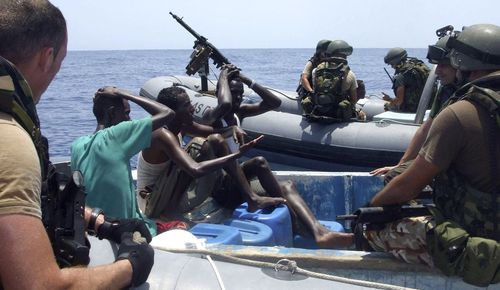
The trial and prosecution of pirates is also an extremely relevant, and pressing, topic. As noted in the Report, the peculiar features of modern day piracy, particularly in the Gulf of Aden and the lack of cohesive governance in Somalia, create several practical difficulties, including the apprehension, detention on board and transfer of suspected pirates. One of the primary purposes of policing activities through naval operations is, indeed, its deterrent effect on pirate attacks rather than the arrest and prosecution of the perpetrators.
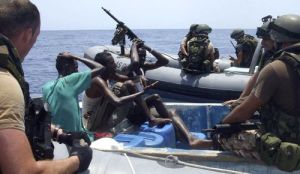 The collection of sufficient evidence to secure successful prosecutions is particularly problematic, as we noted in a recent post. It should be remarked how any evidentiary assessment on whether to bring alleged perpetrators to justice should, ordinarily, be best placed in the hands of judicial authorities as neutral fact-finders rather than subject to the prelimary evaluation by the naval authorities upon the capture of suspected pirates. Moreover, the Report correctly points out how such assessment could benefit from modern technological means already available to the naval authorities, namely video, radar and satellite recording. In addition, remote testimony via video or audio link is recommended, particularly when victims are located in third countries or, more likely, have already set sail.
Modern international law asserts the possibility to exercise universal jurisdiction over piracy prosecutions. However, as one expert who gave evidence before the Committee put it, the obstacle to prosecution is not identifying the appropriate jurisdiction, but rather the inability, and unwillingness, to prosecute. In addition, the surge of modern piracy and armed robbery at sea has exposed the current inadequacy of national laws, including in the UK, against piracy. For those operating within the field of international criminal prosecutions, the phenomenon is not new. Several states suddenly found themselves incapable to put Genocide suspects on trial before municipal courts due to the inadequacy of their national laws in enacting the provisions of the Genocide Convention.
We have also discussed whether the response to modern piracy should contemplate a revision of the existing international counter-piracy legislation and mechanisms, in particular because it appears that current treaties have difficulty in addressing the difference between political and purely-financial motivations of pirates attacks, or whether attempted attacks are also punishable. Interestingly, as noted in the Report, the IMO has taken the view that “the development of a new multilateral instrument might be premature, or unnecessary, in light of the existing international legal framework on piracy, which was generally considered to be adequate”. Some concerns remain, however, particularly on the practical implementation and effectiveness of these mechanisms.
The main recommendation contained in the Report with regard to options for the investigation and prosecution of pirates is therefore the rejection of the establishment of a specialized Somali tribunal, initially recommended by the UN Special Adviser to the Secretary General Jack Lang as one possible alternative. This option would have established a court outside of Somalia in a neighboring state (most likely Tanzania) with funding and administration from the international community, but would employ Somali judges applying Somali law. There appear to be a number of compelling legal complications against such court, including its legality vis a vis the Somali Constitution. The UK Report rejected this proposal stating:
“the Government was right to oppose the establishment of an extra-territorial Somali court as proposed in the Jack Lang report to try Somali pirates in a third country. We recommend that the Government set out in its response to this report its views on the more recent proposals for specialised anti-piracy courts established within regional states under ordinary national law.”(para. 92)
Among the main arguments in support of this conclusion are also the possible high costs of an extra-territorial institution, with a tentative figure of $100 million a year. This is not convincing, particularly considering the lack of clarity at the basis of this figure as well as the present estimates of the global costs of piracy, which already identified high costs from the current prosecutions as well as a cost of ransoms alone capping over $130 million per year. In addition, this figure would remain a fraction of the overall economic costs of piracy. It must be acknowledged, however, that an extra-territorial court, financially supported by international organizations, might not be able to promptly contribute as an anti-piracy deterrent and develop effective outreach capabilities within the turned-pirate population in and around the Gulf of Aden.

The rejection of the UN-funded option reflects a gaining trend to favor specialized piracy prosecutions within the area where the alleged attacks took place, counting on a much stronger deterred effect than trials taking place thousands of miles away. Local prosecution projects have already taken shape in Kenya, Mauritius and Seychelles, among other countries in the region. In addition, a small number of historic trials were also held in the US, Germany and the Netherlands, mainly because the alleged pirates were captured by the naval forces of these countries, or due to a nexus between the piracy acts and these latter.
 However, while piracy prosecutions in the UK are still contemplated, albeit in limited circumstances, in the Report, the support expressed therein for local or regional anti-piracy courts also present several difficulties which should be carefully weighed. Requesting the help of regional states to prosecute pirates in their courts does not obviate the need to provide support to the various local authorities in the form of financing, training, monitoring and oversight extending not only to the mere prosecutions and trials of suspected pirates, but also to transfer, investigation, security, procurement and infrastructures as well as pre-trial and post sentence detention. Indeed, the fate of a recently arrested group of alleged Somali pirates by the UK Royal Navy after both Kenya and the Seychelles have refused to detain them because “their court systems are swamped” is a rather timely reminder of some of these difficulties. As the Kenyan government stated last year when it refused to continue piracy prosecutions, ““We discharged our international obligation. Others shied away from doing so. And we cannot bear the burden of the international responsibility.”
 Check out our new Facebook page. We’ll be posting regular updates on the latest events regarding maritime piracy and the international community’s attempts to address the issue. More in-depth analyses will remain on piracy-law.com. Please feel free to comment on either site!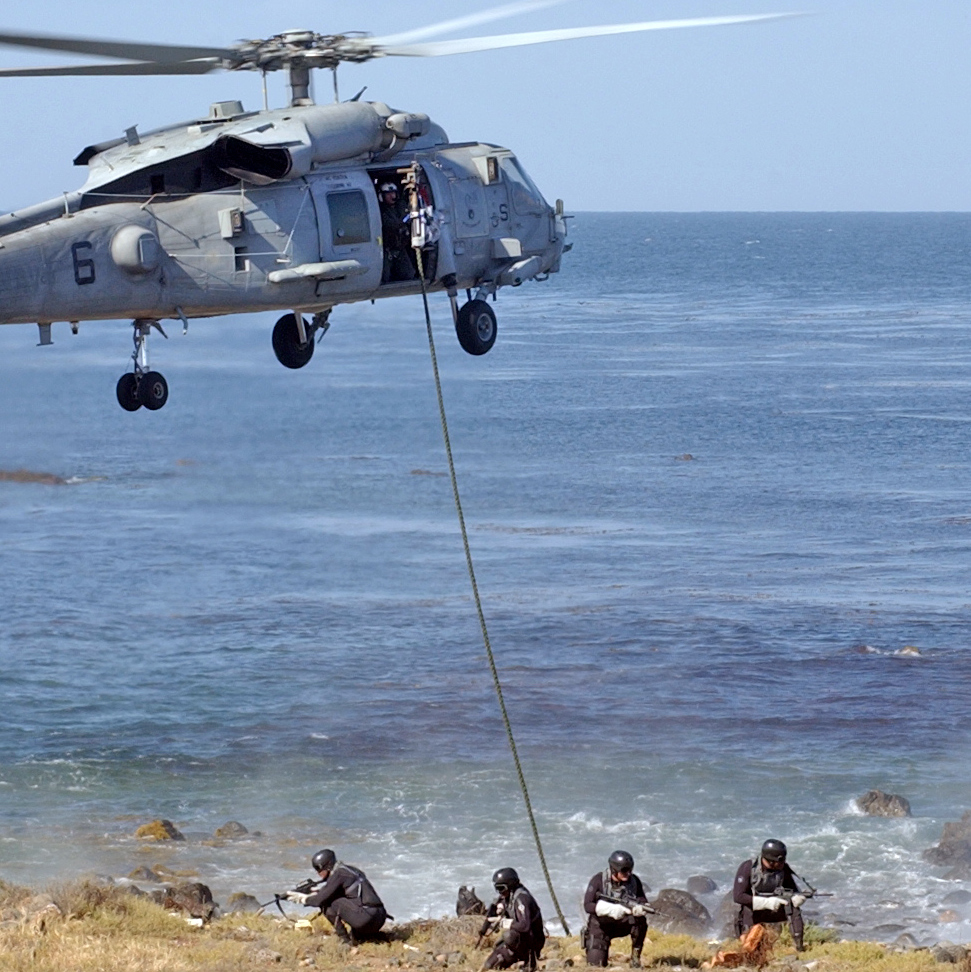
 First, what is the legal basis for the incursion into Somali territory? States have a right to capture and prosecute criminals for acts of piracy on the high seas and for armed robbery within a state’s territorial sea. Piracy, however, does not extend to acts without any connection to sea-based criminality. In contrast, for land-based incursions violating the territorial sovereignty of another state, prior assent is required. The U.S. raid of Osama Bin Laden’s compound in Pakistan was ostensibly justified by national self-defence in order to prevent future attacks against Americans which were in the process of being developed. But the criminals in Galkayo did not appear to be threatening the national security of the United States. They seek ransom money, and not some political objective. Therefore national self-defence would not provide a justification for the raid. Nonetheless, the areas of Somalia we are talking about are lawless and without effective governments. In these circumstances, it is doubtful the U.S. considered permission was required prior to invading the territory.




 Roger L. Phillips
 Hilarie Henry
 Jon Bellish
 Matteo Crippa
 Milena Sterio
 Shannon Maree Torrens
 sonia messaoudi
 Michael Y. Liu
 Communis Hostis Omnium