After the London Conference on Somalia: A First Appraisal of Counter-Piracy Measures

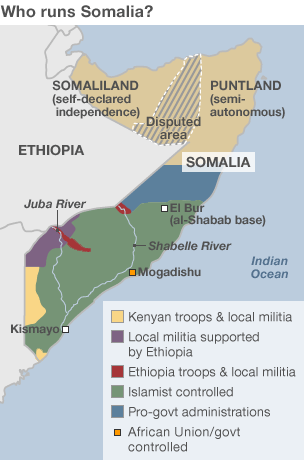
The much awaited London Conference on Somalia was finally held at Lancaster House, London on 23 February 2012. Fifty-five delegations attended the Conference, including the UK Prime Minister, David Cameron, the UN Secretary General, Ban-ki Moon and the US Secretary of State, Hillary Clinton as well as the leaders of various countries in the Gulf of Aden and East Africa region, such as Djibouti, Seychelles, Mauritius, Kenya and Tanzania. Leaders of Somalia’s Transitional Federal Government as well as of the breakaway regions of Puntland, Galmudug and Aluh Sunnah wal Jamaah (ASWJ) also participated. As anticipated, the self declared autonomous region of Somaliland attended the Conference, marking a major policy shift for the former British protectorate which deliberately stayed away from several previous peace conferences on Somalia. While the participation of all regions of Somalia was certainly a legitimating factor for the Conference, it is worth noting that the direct interests of Somalia were represented by 5 different delegations.

The Conference was meant to be a key moment in Somalia’s troubled history and called for a change in the international approach from the fruitless policies of the past 20 years. The Conference was preceded by much debate and a degree of controversy, particularly on the future of Somalia’s transitional federal institutions, whose mandate will end in August 2012. The Somali diaspora showed hope for more inclusiveness in building the political and economic landscape of the country. On the eve of the conference, in a bid to increase leverage of the decisions to be taken in London, the UN Security Council boosted the current African Union peacekeeping mission, raising its troop contingent up to 17000 soldiers.
The Conference registered a series of important political commitments from the stakeholders of the Somali cause, relevant to political, humanitarian, security and governance issues. Notably, leaders attending the Conference recognized the importance of empowering the Somali population and creating accountability for its political leadership, with the international community acting as a facilitator of the process. We will soon assess whether these commitments could turn into effective and practical action and what will be their contribution in shaping the future of this country. Not surprisingly, the fight against piracy occupied a prominent place in the discussion. Perhaps the most important aspect of the Conference in this regard was the acknowledgment that piracy in Somalia requires a comprehensive approach on land as well as at sea to tackle the root causes of piracy. This is a very important step. A military-focused approach of targeting pirates at sea coupled with limited judicial accountability measures could only provide a short term deterrent if not coupled with social development, economic growth and good governance. The underlying causes of piracy, but also its direct effects, are inextricably intertwined with all other problems affecting Somalia.

“We agreed that piracy cannot be solved by military means alone, and reiterated the importance of supporting communities to tackle the underlying causes of piracy, and improving the effective use of Somali coastal waters through regional maritime capacity-building measures.”

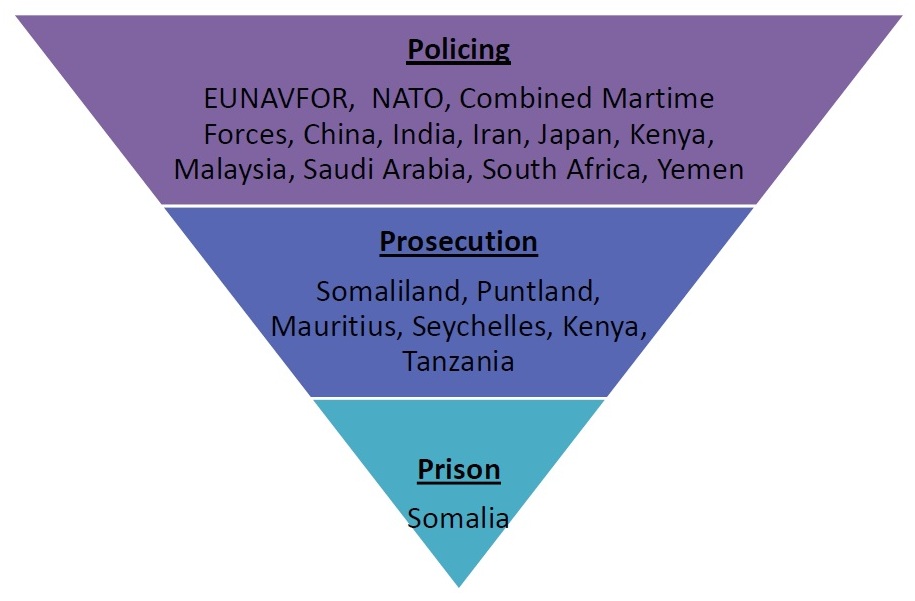
Some of the most encouraging developments of the Conference pertain to the immediate fight against piracy. These include the signing of important agreements enhancing the current plans by the international community to create a “cycle of justice”, or, as we called it, a “Globalized System of Criminal Justice”, where pirates are caught at sea, transferred to regional states for prosecution and, finally, imprisoned in Somalia. Hosting the Conference created momentum upon the UK’s own contribution to tackle piracy. The UK and Tanzania signed a memorandum of understanding allowing the UK Royal Navy to transfer suspected pirates apprehended at sea to Tanzania for prosecution. The UK also signed a statement of intent with Mauritius for the same purposes. These agreements are particularly relevant in light of Kenya’s current suspension of the transfer of suspected pirates for prosecution before its national courts. Plans for the imprisonment of pirates also registered some significant development. Puntland committed to the transfer of convicted pirates in the region to its prisons from August 2012. In an effort to enhance its anti-piracy strategy, Somaliland will also focus on improving its capacity to jail suspected and convicted offenders. Somaliland signed a ground breaking agreement with Seychelles for the transfer of convicted pirates to its prisons. In addition, Somaliland has recently passed a law declaring piracy illegal and making it an offense punishable by a maximum of twenty-five years. Somaliland previously limited prosecutions to charging alleged pirates with armed robbery.

“There will be no impunity for piracy. We called for greater development of judicial capacity to prosecute and detain those behind piracy both in Somalia and in the wider region and recognised the need to strengthen capacity in regional states. We welcomed new arrangements, which enable some states and naval operations to transfer suspected pirates captured at sea for trial by partners across the Indian Ocean region, and if convicted, to transfer them to prisons in Puntland and Somaliland which meet international standards. We noted the intention to consider further the possibility of creating courts in Somalia specialised in dealing with piracy.”

The first chance to evaluate the outcome of the London Conference will be, yet again, at another conference. Turkey, an increasingly growing ally of the Somali cause, will organize in cooperation with the UN the Second International Conference on Somalia. The conference will be held on 1 June 2012 in Istanbul. In addition, the UAE, the current chair of the Contact Group on Piracy off the Coast of Somalia. will host a second International Maritime Counter-Piracy Conference on 27-28 June 2012 in Dubai, further to an initial event hosted in April 2011. But the real work will be on the ground as attempts are made to execute the promises made at the conference, including exercising the rights and obligations set out in the newly minted transfer agreements.

The Enrica Lexie Incident – Private Security Counterpoint

Italian Marines on Trial in India

There has been considerable public interest in a recent incident off the coast of India where an Italian Vessel Protection Detachment (VPD) of Italian marines shot and killed two Indians aboard a fishing vessel whom they apparently mistook for pirates. Jurisdiction over the incident has been contested by the two nations and the facts are very much in dispute.  It is now reported that an Indian court has ordered the Italians be held in jail while they await trial. The report notes:

Italy’s Foreign Minister Guilio Terzi traveled to New Delhi last week to press his country’s position that the men should be tried in an Italian court, but India refused to cede jurisdiction.

New Delhi says the case should be tried in India because the killings happened on an Indian boat. Rome says the shooting took place in international waters and the case should be handled in Italy.

There are several interesting analyses about the jurisdictional arguments in this case. Douglas Guilfoyle states that UNCLOS provides for concurrent jurisdiction to India (as the flag ship of the victims) and Italy (as the flag ship of the defendants). He notes, however,

As Indian courts have jurisdiction, the next question is immunity. The easy thing to assume about VPDs is that they will enjoy State immunity for their official actions. While this is true, it falls for other States’ courts to respect it in practice – and there will always be pressure to look for exceptions where the death of a national is involved.

Jon Bellish also notes that the Convention for the Suppression of Unlawful Acts of Violence Against the Safety of Maritime Navigation supports the finding of concurrent jurisdiction in these circumstances as it more explicitly provides for jurisdiction based on  territorial, nationality, passive personality, and protective principles.

Apart from the diplomatic drama, what makes this incident extremely important is the repercussions it may have on Private Military and Security Companies (PMSCs). If these two marines are granted State immunity and let go, it could be an encouraging sign to other seagoing nations to support VPDs on their own flagged vessels. If State immunity is denied, and VPDs risk the same liabilities that exist with PMSCs, it could discourage states from continuing to provide VPDs. In the latter case, shipping companies would be left to decide whether to hire PMSCs and take on the liabilities that come with hiring companies in a loosely regulated industry. The stakes are very high as one report valued the PMSC industry for piracy alone at around $1 billion in 2011.

Adrift for two months, Somalis to stand trial in Seychelles

The U.S. has finally found a state willing to prosecute 15 pirates captured aboard an Iranian mothership in January 2012. As we noted at the time, there was no convenient location for prosecution. The U.S. had a legal basis to prosecute, but the cost of transferring the Somalis to the U.S. coupled with the risk that some would claim asylum was a deterrent. Iran was not likely to be the prosecuting nation. Although it may have a legal basis in its own domestic legislation to prosecute the pirates, the U.S. might have doubts that the pirates would receive a fair trial there. Further, it would be a public relations coup for Iran if it took possession and prosecuted the pirates. Finally, Somalia still has significant hurdles to overcome before it will be ready to administer fair piracy trials, be it in Somaliland, Puntland, or elsewhere.

Today the nytimes notes:

Fifteen Somali men accused of being pirates, who were captured aboard a hijacked Iranian fishing vessel by the United States Navy in January, were transferred on Tuesday to the Seychelles for trial.

The move from Djibouti to the Seychelles, an island nation in the Indian Ocean, was a welcome development for the United States in a high-profile case that had no clear legal resolution.

It also signaled the end of an intensive interagency effort to find a jurisdiction willing to receive the suspects, who had been held aboard a series of American warships for almost two months.

From its outset, the case, for all its high-seas drama, underscored the difficulties in developing effective and comprehensive programs to fight piracy. Capturing pirates, once international navies applied themselves to the task, has proved easier than bringing them to justice.

None of the nations most directly involved in the case — Somalia, home of the suspects; Iran, home of 13 hostages seized in the case; or the United States, which detained the Somalis — had either the capacity or desire to take on the costs and difficulties of prosecuting the suspects.

And the Seychelles, which in recent years has been a regional hub for hearing piracy cases, had no space in its tiny prison system for more convicts, American officials said.

Nonetheless, the recent transfer of several convicted pirates from Seychelles to Somaliland based upon a bilateral transfer agreement, freed up space in Seychelles to hold these defendants in jail and prosecute them. The U.S. Navy must be breathing a sigh of relief as considerable resources were occupied with maintaining the pirates on board:

A senior Navy officer expressed satisfaction at the Seychelles’ decision, which ended weeks of transferring the suspects among vessels at sea. The pirates, he said, first captured by the Kidd, a destroyer, had been held aboard three nuclear aircraft carriers, another destroyer and an amphibious warship before being brought ashore in Djibouti on Tuesday for a flight aboard an American military C-130 transport plane to the Seychelles.

Following on the London conference, a number of prisoner-transfer agreements were signed by East African states where prosecutions will most often occur and either Somaliland or Puntland, where UNODC is supporting the construction of new prisons. Until these new prisons are built, there will continue to be a bottleneck and could lead to a repeat of this incident where Somalis remain in military custody. This also raises some fair trial concerns. Insofar as it was not clear where they would be prosecuted, the Somalis could not very well have been charged with any offence during their two months in captivity. Piracy would have been the charge, but under which state’s legal system? Moreover, there remain questions as to how the prosecution will obtain eyewitness testimony. As we mentioned before, the Iranian hostages may not be at liberty to provide such testimony in order to support piracy charges for the hijacking of their fishing dhow. In addition, the nytimes notes that two of the pirates claim to be minors. All of that said, a solution has been found to the most pressing issue: where to prosecute. Other issues will remain for another day.

A Globalized System of Criminal Justice

Piracy and armed robbery incidents reported to the IMB Piracy Reporting Centre during 2011. Map courtesy of International Chamber of Commerce.

Criminal Justice for pirates has become a truly global affair, utilizing diverse state resources to funnel pirates through a limited number of regional states in East Africa back to their homeland of Somalia. More specifically, the UN’s preferred option for prosecuting Somali pirates will be national prosecutions in several East African states (Seychelles, Mauritius, Kenya, Tanzania) as well as in several semi-autonomous regions of Somalia (Somaliland, Puntland).  Prosecution in European states and the US would remain a backup plan. But this is only one piece of the criminal justice apparatus. Police functions in the Indian Ocean will continue to be performed by a combination of naval coalitions such as NATO and EUNAVFOR and by individual naval states with interests in commercial shipping through the high-risk piracy corridor (including the motley crew of the U.S., India, China, Iran, and others).  At the other end of the criminal justice chain is the prison system where there is currently a bottleneck.  In this regard, the United Nations Office of Drugs and Crime is in the process of refurbishing and building new prisons in Somaliland and Puntland to house convicted pirates.

This solution has several benefits as compared with the other solutions outlined by Jack Lang in January 2011. Prosecuting pirates in multiple regional states creates redundancies, so that if one or more courts prove incapable of continuing prosecutions, other options remain available. For example, Kenya recently stopped all of its piracy prosecutions due to a High Court decision ruling Kenyan courts did not have jurisdiction over piracy offences. Likewise, the Seychelles recently refused to accept pirates from a Danish ship because there was no guarantee that the pirates, if convicted, could be sent back to Somalia (for lack of prison space) and because the Seychelles’ limited judicial capacity. In situations such as these, other states might serve as back-up solutions so that prosecutions could be directed elsewhere.

Funneling Pirates Back to Somalia

Another advantage of this proposed solution is that it has the benefit of building local capacity. Instead of directing resources into a foreign institution, providing support to local courts and local prosecutors promises to increase the capacity of regional state institutions to address criminal justice issues beyond piracy.

The report also raises hopes that the financiers and organizers of piracy can be adequately addressed by East African states. In relation to Mauritius and Seychelles in particular, the report highlights the capacity of these states to prosecute inchoate crimes such as conspiracy, incitement and attempts to commit piracy. The UK and the Netherlands are funding a Regional Anti-Piracy Prosecutions Intelligence Co-ordination Centre (RAPPICC) in Seychelles, in part, for this purpose. This capability will be crucial in order to bring to justice those individuals who organize pirate enterprises, but never step foot on board a pirate vessel.

There will be heavy reliance on prisons in Puntland and Somaliland

However, the report and the plan are lacking in several respects.  First, the cost savings of this plan have likely been exaggerated. There is no final accounting provided in the UNSG report. But a cursory survey of the various costs associated with refurbishing courtrooms, providing expert assistance, hiring additional judges and prosecutors, conducting trainings and, especially building prisons, shows a quickly rising price tag. Combine this with additional unspecified costs that would likely accompany this proposal such as rule of law, general training, and governance projects and the costs may actually be about the same as a hybrid tribunal such as the Special Court for Sierra Leone or the Extraordinary Chambers in the Courts of Cambodia (about $40 million each annually). In any event, the proposed solution’s budget is modest compared with the sums that are currently being dumped into unsustainable solutions that fail to address the root of the problem.

In addition, the UNSG report apparently hazards some guesses as to the potential of its proposed course of action. Despite the different conditions in each country or region, the report indicates that Somaliland, Puntland, Kenya, and Mauritius will be capable of performing piracy investigations in 20 months and within two years would be able to prosecute 24 cases of 10 defendants each. These are good benchmarks to evaluate the success of these projects.  But it is hard to believe that they are realistic assessments of local conditions. The report evaluates the local capacities of each state/region indicating the number of prosecutors and judges in each. But it fails to compare these numbers of professionals to the actual populations that they must serve. Three hundred and five (305) Prosecutors in Tanzania seems to be a significant number compared to the 36 prosecutors for the whole of Somaliland. However, Tanzania’s population is 43.5 million and the population in Somaliland appears to be around 3.5 million. Therefore, the number of prosecutors per capita in Somaliland (1/10,000) is higher than in Tanzania (1/140,000). In addition, only 10 Tanzanian prosecutors would be in charge of piracy prosecutions. Likewise, the report fails to take into consideration the caseload of the respective prosecutorial groups that would be responsible for piracy prosecutions (i.e. the number of cases each attorney is responsible for, thereby dictating how much time they would have to devote to piracy cases). This suggests the projected capacities are not based upon a realistic assessment of current capacity.

More importantly, the report acknowledges that it was unable to predict with any accuracy the number of piracy cases that would likely proceed to trial. That is, how much prosecutorial and penal resources will likely be required in the next few years.  Due to the volatility of Somalia, the changing tactics of pirates and of commercial vessels responding with various self-defence measures, an accurate assessment in this regard is quite difficult. However, the report suggests that anticipating the numbers of piracy suspects likely to be apprehended at sea and transferred to regional states for prosecution was not possible because no information was available as to the reasons for the release of piracy suspects from the numerous states conducting naval anti-piracy missions in the Indian Ocean.  It is unclear why the UNSG was unable to obtain this information from various member states of the United Nations. But it has certainly left a conspicuous gap in the report’s findings.

Finally, the report ends without any recommendations as to how to prevent recidivism, including programs to retrain Somali prisoners and integrate them back into the community. In this regard, the proposed solution is short-sighted, enabling the relocation of pirates back to Somalia, but providing no real long-term preventative measures. The only permanent solution to piracy is a stable and economically prosperous Somalia. Hopefully, the London Conference can initiate positive reforms in this regard as it is widely accepted that the solution or piracy resides on land, and not at sea.

New Logo!

A big thanks to Steve Tierney of teaguesart for our new logo and header!