What Does Piracy Have to Do with North Korea?

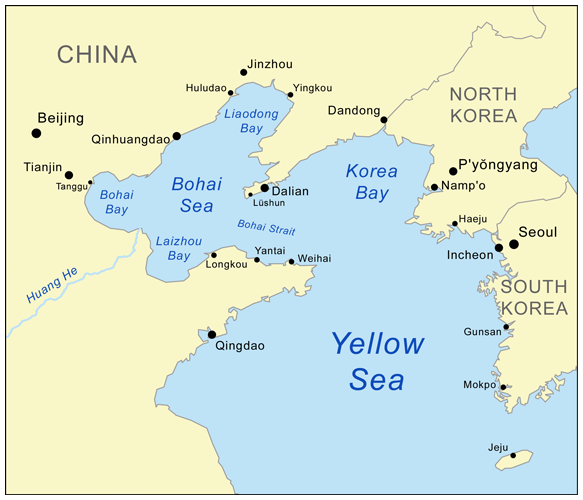
The reclusive authoritarian Democratic People’s Republic of Korea is once again back on the news headlines. Surprisingly, this time is not about the reactivation of its purported nuclear programme, or because of a new attempt to lift off a satellite/ballistic missile, or for some leaked information on the poor living conditions endured by its citizens. Media outlets are reporting on the possible hijack of 3 Chinese fishing vessels and the kidnap of their 29 crew members earlier this month. The vessels and all the captives were released today, following the intervention of the Chinese authorities. The incident has all the hallmarks of a piracy attack off the coast of Somalia or in West Africa. However, it occurred in the Yellow Sea, in an area between North Korea and China.

News reports are still contradictory and any in-depth analysis into this will necessarily depend on the real circumstances of the case. Notably, the incident has not been reported to the IMB Piracy Reporting Centre. In particular, it is not clear whether the incident took place in international waters. The identity of the assailants is also unclear. Some reports indicate that these were members of the North Korean military, while according to others Chinese mafia from the city of Dandong, on the North Korean border, might have been involved, possibly in cooperation with the North Korean military. Several news reports indicate that the vessels, originating from the city of Dalian, were accosted at sea by armed men and forced to sail to North Korea. The ship owners confirmed the capture of the vessels and their crew. According to the owners, the vessels were navigating within Chinese national waters. They also confirmed that the captors have asked for the payment of a ransom of nearly 190.000 US Dollars and have threatened to harm their captives if no payment was made.
If the assailants have no connection with state authorities, the main issue will be to determine whether the incident qualifies as piracy committed in the high seas rather than armed robbery within China’s territorial sea. However, whether the assailants are members of the North Korean military or not, the use of force and the request for a ransom renders them de facto pirates, because they appear to have acted in pursuit of private ends. If the available information is correct, their actions could also qualify as mutiny. In this regard, it is worth recalling that Article 102 UNCLOS encompasses acts of piracy committed by a government ship whose crew has mutinied.

Actions by the North Korea authorities have in the past drawn widespread international condemnation. However, it is difficult to envisage Pyongyang secretive rulers now embracing a state policy to terrorize fishermen in the Yellow Sea for ransom purposes, particularly when this has an impact on a longtime ally and regional military superpower as China. This latter routinely issues strong protests over fishing related disputes with Japanese, South Korean, Vietnamese or Philippine fishing vessels. China will likely take certain actions to prevent any further escalation of such attacks in the Yellow Sea, as it has done by policing Southeast Asia’s  Mekong river from drug smugglers and criminal cartels. However, doubts remain on whether the public outcry sparked by this incident will have an impact on its already strained relationship with North Korea.
Private Navies and Ships on Government Service

Blackwater’s failed venture – McArthur

Over the last few years, entrepreneurs and private insurers have floated a number of proposals for the creation of private security escorts (so-called “private navies”). These types of proposals address several pressing concerns. The international naval escorts, such as EUNAVFOR, provide protection to a limited number of ships. But waiting for a critical mass of ships to initiate a convoy at the entrance to the high-risk zone can be time-consuming and costly for shippers. Furthermore, international naval escorts can only provide an escort in the highest risk zones (e.g. the Gulf of Aden), leaving ships vulnerable to attack in other areas such as the vast Indian Ocean. Private security escorts promise to be available to individual ships throughout their journey in high-risk waters. Though the cost of such services could be significant, there is the promise of savings in insurance premiums.

In the past, the U.S. state department has expressed hightened concern with regard to private security escorts vis a vis private security guards on-board ships (the latter are now openly encouraged). What then governs the use of force by these private security escorts and under what circumstances is the use of force permissible pursuant to international law?  Three examples provide a useful backdrop to consider the legal issues. The answer, it turns out, will likely depend on whether private security escorts are “on government service” and whether in the circumstances of a particular encounter, they overstretch the concept of self-defence by engaging in pirate hunting.

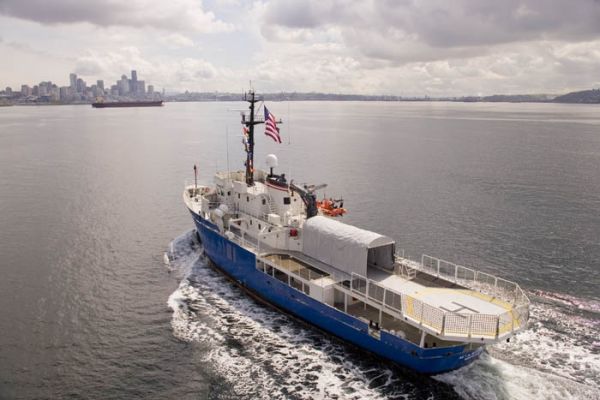
Blackwater, the security contractor who ran into trouble in Iraq and Afghanistan, was one of the first companies to venture into the private security escort business. It purchased a retired naval vessel, the 183 foot McArthur and, in 2007, it offered its services as a counter-piracy escort vessel. Perhaps due to uncertainty regarding the legal issues, and Blackwater’s compromised reputation, it received no customers and soon left the counter-piracy business. Maybe it was just before its time as several additional ventures have been announced more recently.

In September 2010, it was reported that:

[A] leading London insurer is pushing ahead with radical proposals to create a private fleet of about 20 patrol boats crewed by armed guards to bolster the international military presence off the Somali coast. They would act as escorts and fast-response vessels for shipping passing through the Suez Canal and the Indian Ocean.

Jardine Lloyd Thompson Group (JLT), which insures 14 per cent of the world’s commercial shipping fleet, said the unprecedented “private navy” would work under the direct control of the military with clear rules of engagement valid under international law. Early discussions have also been held with the Ministry of Defence, the Department of Transport and the Foreign Office. (emphasis added).

This particular venture would place the private security escort “on government service.” Article 107 of UNCLOS provides that a pirate boat may be seized by “other ships or aircraft clearly marked and identifiable as being on government service and authorized to that effect.” The idea here is the a government may hire private companies to engage in police functions so long as it is made explicitly clear by markings and identification that the ship is controlled by the government and under a presumably military chain of command. It has been argued that ships on government service could not only provide self-defence to an escorted ship but could also engage in pirate hunting. However, the responsible government, in this case the U.K., would be taking a considerable risk in authorizing defensive as well as aggressive use of force.

Most recently, in November 2011, a company put forward a new proposal.

Convoy Escort Programme Ltd., backed by the marine insurance industry, will initially deploy seven former naval patrol boats, each with armed security teams of eight people on board, Angus Campbell, chief executive officer, said by phone from Swarland, England today. The bullet-proofed boats will charge about $30,000 per ship traveling in a convoy of around four vessels over three to four days, he said.

“We are going to be a deterrent,” Campbell said. “We are not in the business of looking for trouble but if anybody tries to attack a vessel we are escorting, our security teams will deploy force if they have to act in self defence.”

It was confirmed yesterday that this project has secured (paid subscription required) additional funding from private insurers and hopes to have boats on the water by the summer.

In contrast to the prior example, there is no indication that Convoy Escort Programme is being coordinated with regular naval forces. Therefore it is not “on government service.”  Although Article 107 of UNCLOS does not permit private security companies not on government service from engaging in pirate hunting, the general principle of self-defence, and defence of others, would justify protecting vessels from an on-going attack. Such conduct must be carefully circumscribed. The risk here is that private security personnel would, in the heat of battle, step outside of the orbit of “self-defence” and into the breach of pirate hunting.  For example, if personnel decide to chase down suspected pirate boats that have (1) not approached the vessel they are protecting or (2) approached the vessel and fled, the personnel may have overstepped what was strictly necessary to protect the vessel under attack. Furthermore, the absence of clear rules of engagement creates the real possibility of mistaken identity at sea. If these projects go ahead, pirates off the coast of Somalia will have to contend with more heavily-armed foes, but so will Somali and Yemeni fishermen who frequent these same waters.

Will the United States Play a Role in Prosecuting Pirate “Kingpins”?

Somalia has no trouble producing pirates. Between a central government that controls little beyond the capitol city of Mogadishu, an utter lack of economic opportunity for young men, and a 3,025 mile long coastline with access to the world’s busiest shipping corridors, for every Somali pirate captured at sea, there are many more waiting to take his place. Accordingly, one of the most promising means to put an end to this global menace is the prosecution and detention of the financiers of pirate action groups – those benefitting most from lawlessness in the Indian Ocean but never actually setting foot on a boat.

The Eastern District of Virginia and the Fourth Circuit Court of Appeals are in the process of hearing two separate cases that, taken together, could decide whether or not the United States of America will have any role in the prosecution of these so-called “kingpins” of piracy.

One case, United States v. Shibin, is just beginning the trial phase and is the United States first attempt to prosecute a high level facilitator of piracy. The case concerns Mohammad Saaili Shibin’s role in the hijackings of the M/V Marida Marguerite and the S/V Quest. In both attacks, Shibin’s role was that of translator and hostage negotiator. Shibin was paid between $30,000 and $50,000 for his role in the M/V Marida Marguerite attack but was paid nothing in for his role in the S/V Quest, as all hostages were killed before a ransom could be negotiated. Shibin confessed to his role in both hijackings to American authorities.

Mohammad Saaili Shibin – AP Photo

At issue is, inter alia, whether Shibin can be charged with Piracy under 18 U.S.C. § 1651, which outlaws “piracy as defined by the law of nations” and carries with it a mandatory life sentence.

Because Judge Robert G. Doumar denied the defendant’s motion to suppress his confessions, it will be difficult for Mr. Shibin to argue that he did not participate in the hijackings in the manner alleged. Instead, his case will rise and fall on the way the Fourth Circuit settles a split on the legal question of whether “piracy as defined by the law of nations” is an evolving or a static concept.

This legal question comes to the Fourth Circuit in the context of a split within the Eastern District of Virginia on two cases with essentially the same set of facts. In both United States v. Said and United States v. Hasan, the defendants set out to plunder a merchant vessel and fired upon what they believed to be such a vessel. In both cases, the would-be pirates were actually firing upon a United States Naval vessel.

In Said, the trial court held that § 1651 should be interpreted in light of the nineteenth century definition of piracy, which included only “robbery at sea.” Because the defendants in Said only fired upon a ship and never actually stole anything, their acts did not rise to the level of piracy.

The Hasan trial court, on the other hand, found that “the ‘law of nations’ connotes a changing body of law,” and that Congress meant to keep pace with those changes as they relate to maritime piracy when they drafted § 1651. The court went on to find that the contemporary definition of general piracy under customary international law is embodied in the High Seas Convention and UNCLOS,[1] both of which define piracy as:

(A) (1) any illegal act of violence or detention, or any act of depredation; (2) committed for private ends; (3) on the high seas or a place outside the jurisdiction of any state; (4) by the crew or the passengers of a private ship or a private aircraft; (5) and directed against another ship or aircraft, or against persons or property on board such ship or aircraft; or

(B) (1) any act of voluntary participation in the operation of a ship or an aircraft; (2) with knowledge of the facts making it a pirate ship; or

(C) (1) any act of inciting or of intentionally facilitating (2) an act described in subparagraph (A) or (B).

The cases of United States v. Shibin and United States v. Hasan are therefore inexorably tied to one another. If the Fourth Circuit overrules the Hasan trial court and holds that, for the purposes of § 1651, piracy only includes armed robbery at sea, none of the defendants in Hasan, Said, and Shibin are guilty of a crime under that statute. If it affirms the Hasan trial court’s holding that that the definition of piracy under the law of nations has expanded to include the definition embodied in UNCLOS and the High Seas Convention the result will almost certainly be the opposite. The defendants in Hasan and Said would be guilty of piracy resulting from acts of violence on the high seas, and Mohammad Saaili Shibin would be guilty of intentionally facilitating piracy. Though Shibin, as a translator and hostage negotiator, would be considered a mid-level pirate at best, the same legal reasoning that applies to him will apply to higher level facilitators who “incit[e] or . . . intentionally facilitat[e]” piracy but do not themselves commit robbery at sea.

An interpretation of § 1651 as embodying an evolving definition of piracy would make the United States an excellent venue to prosecute the financiers and facilitators of piracy, as the level of due process afforded to the defendants would be unassailable and the mandatory life sentence imposed by § 1651 would be a strong deterrent. Prosecuting these “kingpins” is, apart from solving Somalia’s broader governance problems, the surest way to put an end to maritime piracy in the Indian Ocean and Arabian Seas. Hopefully the American judicial system can adapt to this modern realities of maritime piracy.


[1] Actually, this conceptualization of piracy was first announced in a 1932 study on the international law of piracy conducted by Harvard University and later incorporated into the Law of the Sea Treaty in 1958 and reproduced in UNCLOS in 1982.

Privately Contracted Armed Security Personnel and Counter-Piracy: Is France at a turning point?

A guest post by Valerie Gabard. Valerie is a French national with notable experience in both French and International Law. Previously, she was a legal officer at the Extraordinary Chambers in the Courts of Cambodia. She is currently a legal officer at the International Criminal Tribunal for the Former Yugoslavia. Valerie is also a regular contributor to the Bulletin of the French Society for International Law.

The number of recent blog posts on the issue of Privately Contracted Armed Security Personnel (PCASP) undeniably shows the growing role of PCASP as a piracy deterrent. As mentioned in an earlier post, the United States strongly supports the use of PCASP as an efficient means of containing piracy. In Europe, there is no harmonized position either at the European Union level, or among the individual States. As opposed to Great Britain, France has repeatedly expressed reluctance to rely on PCASP to protect French vessels against pirates’ attacks. So far, the French response has been limited to the on board deployment of Vessel Protection Detachments (VPDs) composed of professional soldiers. Until very recently the organization of French ship-owners (les armateurs de France) showed the same lack of enthusiasm with respect to the use of PCASP. Nevertheless, the deployment of VPDs appears insufficient to ensure the security of all French vessels traveling through the Gulf of Aden. As a result, French ship-owners recently changed their standpoint and began supporting the use of PCASP. This development may lead the French government to review its current position on the matter.

In late February 2012 a statement from the organization of French ship-owners noted the limits of the VPDs in protecting crew members and the urgent need for alternative solutions. They expressed strong support for a report filed by two members of the French National Assembly. The report underlines the need to reform French Law in order to allow the use of private security companies and to create a proper legal framework for their activities. According to its authors, the report aims to end a French taboo that traditionally associates private security with mercenary activities. The report underlines that the use of private security actors is a phenomenon that cannot be ignored at the international level, especially in the field of piracy, and that private security services have a potential worldwide market value of up to 200 billion USD a year. It further suggests that France should legislate to create a proper legal framework that would ensure transparency and address the responsibility of private security firms in contrast with the current legal limbo. Noting that there is a real and immediate need for private security on board French vessels, the report proposes that counter-piracy could be an area in which the use of PCASP can be tested with a view to possible broader application in the future. It also points to the increasing role of PCASP in the fight against piracy and the fact that French ship-owners may turn to British firms for protection if France does not react adequately. The report notes that although the number of French private security firms is still very low (around 10 to 15), there are important business opportunities in this field. The report is not naïve as it underlines the economic implications behind authorizing private security actors to counter piracy. It implies that France’s position against PCASP is untenable at the international level. With or without France, the number and scope of PCASP will increase in the fight against piracy. It is now up to France to decide whether to create a proper legal framework and be part of it or be left behind. The economic pressure represented by French ship-owners may force the French authorities to review their present position on the matter. While there is still no official position it is clear that France is now at a turning point and that there is an urgent need to take decisions on the matter. With the presidential elections looming, it is nevertheless not expected that an official position will be taken before the summer, at very least.

The debate around PCASP in France does not impact or call into question the current French military involvement inthe fight against piracy. This remains the main tool of the French counter-piracy policy and France recently reaffirmed the importance it attaches to a military deterrrent in the Gulf of Aden. Indeed, since April 2012 France assumed command of European Union Naval Force (EU NAVFOR) Atlanta counter-piracy mission off the coast of Somalia. This is the second time that France has held command of the EU NAVFOR Task Force. It is also worth noting that the Council of the European Union has extended the mandate of the EU NAVFOR until December 2014 and has increased the area of operations to include Somali coastal territory and its internal waters.

A Broader Trend of Engagement for China? On China’s Vote in Favour of an International Piracy Tribunal


It is fair to observe that China has generally disassociated itself with the flow of the international criminal justice. Voting against the Rome Statute in 1998 has best elaborated its stand on this issue. An “overly active” global court is perceived to have the potential to jeopardize state sovereignty, the cornerstone of the Five Principles of Peaceful Co-Existence China has consistently adhered to in its engagement of international affairs. A survey of China’s involvement with all the other UN-backed tribunals further confirms the above observation. Apart from Chinese judges, I am aware of only two senior staff to work in UN international tribunals. China is rarely interested in the work of these tribunals. Starting with low expectations, commentators were amazed, if not at all surprised, by China’s vote in favour of an international tribunal to prosecute piracy. In his speech at the UNSC debate, Chinese Ambassador Wang said his country would be in favour of the option of prosecution in Tanzania in an international court. To what extent is this an indicator of China’s broader trend of engagement with international criminal justice?

Observers arguing in favour of this proposition would suggest this happens in a wave of change in China’s view on international tribunals. In particular, China (the People’s Republic of China only took back the seat in the United Nations in 1971) for the first time appeared before the International Court of Justice in its proceedings in the Kosovo Advisory Opinion. China’s participation in this case is full-fledged, by both submitting written submissions as well as participating in the oral arguments. Lead by Ministry of Foreign Affair’s Legal Adviser, Ambassador Xue Hanqin (who later become a Judge at ICJ), the strength of the team is also unprecedented. As the words of Ambassador Xue plainly put:

[although] this is the first time for the People’s Republic of China to participate in the proceedings of the Court, the Chinese Government has always held great respect for the authority and importance of the Court in the field of international law.

If it is true that China has always paid tribute to the work of the ICJ, why is it only in 2009 that China first joined in its proceedings? One of the reasons is the nature of this case. It concerns the competing interests of the sovereign territorial integrity of a state and a minority group’s wish for independence under the principle of self-declaration. One may find it very easy to relate the situation to those China has been facing with regard to Taiwan, Tibet and Xinjiang. All of these regions are legally and constitutionally part of China and recognized as such by the overall majority of international community. Yet each of them has been through different degrees of secessionist movements, in particular Taiwan, which arguably has been enjoying a de facto independent status. Beijing has unequivocally submitted these territorial integrity issues as the core interests of China. To resolve these issues in favour of China has always been one of the foremost tasks of Chinese diplomats like Ambassador Xue and her team. Fortunately enough for us in favour of the proper functioning of international law, she has successfully persuaded the country and its rulers to endorse her endeavour at the International Court of Justice.

Those who are sceptical of the above proposition might suggest that this is also true for the case of international prosecution of piracy: enormous Chinese interests are at stake. Chinese vessels are not immune to piracy. In a wave of pirate attacks in 2008, a Hong Kong vessel was seized in September 2008. Later another attempted siege was launched on a Chinese fishery boat in December 2008 and was fortunately defeated by “friendly countries’ force”. At the end of that year, China decided to send its own battle vessels to the area, a practice lasting until today. Nevertheless, Chinese vessels continue to be harassed by pirates. For example, the Chinese vessel “De Xin Hai” was seized in October 2009. After arduous negotiations, Beijing was forced to pay a large ransom. China’s efforts have also extended to transnational crime along international rivers, more particular the Mekong. China has prominently displayed its naval force in response to recent deadly attacks along the river. In conclusion, a lesson has been learnt in Beijing: there must be an orchestrated effort in this regard, probably including the international prosecution of crimes.

Having highlighted the special situation of these two cases, the question to be answered is will these be the only isolated incidents? I would refute that argument. Simply stated, for a country as significant as China with national interests interspersed throughout the globe, these examples tend to exhibit a general pattern rather than isolated incidents. No Chinese would have imagined China being so much involved in piracy off the coast of an East African country. Yet here we are.  As Chinese have frequently said, there is always a direct cause and a fundamental cause for an event. Applying this formulation to the trend of engagement with international criminal justice, the tangible Chinese interests at stake are the direct cause whilst the fundamental cause is the rising awareness of the value of international law, the functioning of the international courts and at its remote back the growing role of China in the global affairs.

A further extension of this principle to the International Criminal Court is still far off and the road to Rome will not be easy. After Ambassador Xue’s team headed back to China, challenges to this endeavour appeared. Critics believe if the sovereign integrity argument was refused by the International Court of Justice, the legitimacy of this consistently adhered-to position will be undermined. This was later proved to be not at all pessimistic. After all, China has much to learn in defending its national interest through the international justice system. Yet the signal is clear, China is getting on board!