EUCAP NESTOR: Bolstering the Rule of Law to Counter Piracy in the Horn of Africa – Interview with David HAMMOND

David HAMMONDFollowing retirement for the UK Royal Marines as a former frontline operator and then latterly as a naval barrister (Counsel), David Hammond was instructed by the UK Foreign and Commonwealth Office to be the UK representative and lead lawyer for the planning, establishment and delivery of the €40m European Union’s “NESTOR” Common Security and Defence policy (CSDP) Counter-Piracy Legal Advisory Programme for East Africa. As part of the advance planning team, David gained unique and valuable experience throughout East Africa, including in Somalia and where he led the legal liaison with the Somaliland and Puntland authorities at Ministerial and Attorney-General level. David successfully delivered the NESTOR Legal Advisory Programme, involving the establishment of significant rule of law programmes and which he headed up until June 2012.

As the Horn of Africa slowly progresses from a strategy of immediate counter-piracy to a strategy of post-piracy development, David kindly accepted our invitation to respond to a few questions on NESTOR’s mandate and operation. The following answers are provided on the basis that they are correct to the best of his current knowledge.

• What is EUCAP NESTOR main role in tackling piracy in the Horn of Africa and the Indian Ocean and, in particular, what are its main thematic areas of operation?

As per the EU Council Decision 2012/389/CFSP of 16 July 2012, the objective of EUCAP NESTOR is to assist the development in the Horn of Africa and the Western Indian Ocean States of a self-sustainable capacity for continued enhancement of their maritime security including counter-piracy, and maritime governance. EUCAP NESTOR will have initial geographic focus on Djibouti, Kenya, the Seychelles and Somalia. EUCAP NESTOR will also be deployed in Tanzania, following receipt by the Union of an invitation from the Tanzanian authorities.

In order to achieve the objective, the tasks of EUCAP NESTOR were identified as being:

(a) assist authorities in the region in achieving the efficient organisation of the maritime security agencies carrying out the coast guard function;

(b) deliver training courses and training expertise to strengthen the maritime capacities of the States in the region, initially Djibouti, Kenya and the Seychelles, with a view to achieving self-sustainability in training;

(c) assist Somalia in developing its own land-based coastal police capability supported by a comprehensive legal and regulatory framework;

(d) identify priority equipment capability gaps and provide assistance in addressing them, as appropriate, to meet the objective of EUCAP NESTOR;

(e) provide assistance in strengthening national legislation and the rule of law through a regional legal advisory programme, and legal expertise to support the drafting of maritime security and related national legislation;

(f) promote regional cooperation between national authorities responsible for maritime security;

(g) strengthen regional coordination in the field of maritime capacity building;

(h) provide strategic advice through the assignment of experts to key administrations;

(i) implement mission projects and coordinate donations;

(j) develop and conduct a regional information and communication strategy.

• Why the creation of a mission with such peculiar mandate in the Horn of Africa setting?

At that time, and as far as I was aware, it was determined that in concert with various other on-going counter-piracy initiatives, including military action by EUNAVFOR, established work by EU delegations alongside the IMO, UNODC piracy programme and the likes of the Djibouti Code of Conduct, that a land-based regional programme which imparted expert knowledge and training to judicial, constabulary and other engaged entities throughout the Horn of Africa was the most efficient and effect method of assisting with the suppression of the piracy threat. Bolstering the effectiveness of the rule of law throughout affected areas was also seen as being of key importance in assisting with regional political stability.
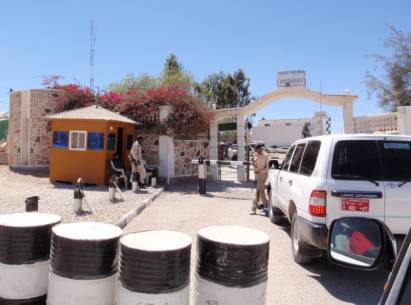
Hargeysa Secure Hotel and Compound - Courtesy of David Hammond

Hargeysa Secure Hotel and Compound – Courtesy of David Hammond


• What are, therefore, the main differences in the mandates of EUCAP Nestor and EUNAVFOR and how these coordinate their respective activities?

NESTOR, as described, focuses on the imparting of expert constabulary, judicial, coastguard and logistical knowledge by Member State subject matter experts through training courses. This is separate to, but compliments the military presence provided for by EUNAVFOR alongside the on-going initiatives led by the EU Special Representative for the Horn of Africa.

• What is the current status of EUCAP Nestor deployment and what will be its overall structure and geographic area of operation?

I understand that at the moment staff are currently deployed to three countries: Djibouti (Mission Headquarters), the Republic of the Seychelles and Kenya. They will operate in those countries, plus Somalia and which will be the main focus. Tanzania has been asked to participate but so far has not invited the mission to carry out work there. The mission is mandated to run for 2 years commencing from 16 Jul 2012 and is headed up by Jacques Launay.

• What were the most challenging aspects in EUCAP Nestor set up and preliminary deployment process, given its geographic and thematic breadth?

The lasting memory I have in relation to the initial stages of the pre-deployment planning for the Technical Assessment Mission (TAM) and subsequent drafting of the Concept of Operations which led to the Operational plan (OPLAN), was the positive drive and collegiate Member State political will in Brussels to make the operation work. This meant significant and sustained drafting, revision and constant presentational updates to the Political and Security Committee (PSC) from what was a small team, as set against the enormity of the task which then faced us. This was undertaken in a structured, collegiate and team-focused manner with many long days and nights spent brain-storming the successive issues that arose. This was undertaken with significant levels of professionalism from selected Member State individuals who had previously never before worked together and this often required a ready sense of humour from all of us.

For my part, once deployed in the Horn of Africa, the issue of establishing a new rule of law and legal advisory programme sat with me due to the limited size of the team. The TAM ran for over one month in total and involved multiple visits to five States by all team members. There was continuous ‘hot’ planning, setting up of meetings on the sour of the moment and exploiting every opportunity to meet key in-country stakeholders. It was what I would call “quick and dirty planning and mission development” and which proved most successful.

The biggest challenge was, in my mind, to achieve local buy-in for our mission and its purpose. This meant that I needed to identify and seek out the key decision makers at every stage and convince them of the benefits of the EU mission and especially of the merits of the Legal Advisory Programme.
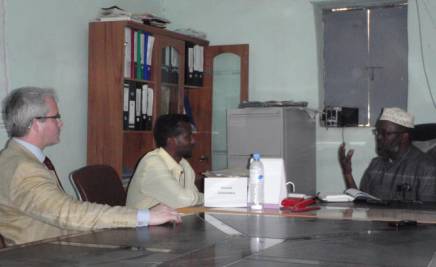
Meeting with Puntland Attorney General - Courtesy of David Hammond

Meeting with Puntland Attorney General – Courtesy of David Hammond


The most striking mission development work for the Legal Advisory Programme that I undertook, was in Somaliland and Puntland alongside the judicial and ministerial authorities. This included being present at piracy trials in the Garowe court and spending time in discussion with the Attorney General, before going on to meet with the Chief Justice and Minister of Justice and Religious Affairs for Puntland. The issue of extending the rule of law into the coastal areas, as well as support within the IDP camps for education in terms of women’s rights and humanitarian law was of particular note and interest for me. Subsequently, I was able to draft the individual programmes that would assist in some of those areas of articulated need and which was most gratifying. In Somaliland, the essence of the interactions were the same in terms of seeking out areas in which we could assist the authorities with the development of the rule of law through imparting knowledge via training and advisory roles.

• Current available data shows that piracy attacks in Somalia are diminishing. Is this the result of the international community efforts to combat piracy and what impact will this have on the continuation of such efforts, particularly the full implementation of EUCAP Nestor mandate? 

I am informed that the decrease in attacks is due to a variety of factors, including: EUNAVFOR’s ATALANTA operation and other naval operations, greater use of PSCs, greater use of best practices to avoid risks as well as improved information sharing. However, I am informed that this reduction is probably fragile and could be reversed without careful oversight. As such, the environment in which EUCAP NESTOR was envisaged to act has changed, but arguably there is now an even greater need for the mission as the success of reducing piracy at sea has opened the possibility of doing even more to create security and stability on land, which will provide the conditions for a lasting reduction in piracy.

David Hammond can be contacted at:

david.hammond@9bedfordrow.co.uk

http://www.9bedfordrow.co.uk/members/David_Hammond

http://uk.linkedin.com/in/davideuanhammond

One Step Closer to a Pirate Amnesty

The Special Court for Sierra Leone held that the amnesty granted to rebel leader Morris Kallon (left) did not deprive the court of jurisdiction to prosecute the Accused.

It is being reported that Somalia’s federal government is offering an amnesty to junior pirates in an attempt to end the hijackings of merchant vessels. The Somali President notes that the amnesty is intended for low-level pirates and not pirate kingpins. “We are not giving them amnesty, the amnesty is for the boys,” he said. Depending on how the amnesty is framed, however, it could run afoul of an international obligation to prosecute universal jurisdiction crimes. As we noted last August when President Sheikh Sharif Sheikh Ahmed first discussed the possibility of a pirate amnesty, the duty to prosecute arises not only from the treaty obligations taken on by states but also the egregiousness of the proscribed conduct. Based on this international norm, there may be a duty to prosecute pirates who have engaged in the practice of torturing hostages or for any other act constituting piracy if sufficiently egregious.

Moreover, a national amnesty granted by Somalia might not be respected by other states who have prosecuted hundreds of Somali pirates over the last several years. The Special Court for Sierra Leone declared an amnesty was “ineffective in removing the universal jurisdiction to prosecute persons accused of such crimes that other states have by reason of the nature of the crimes. It is also ineffective in depriving an international court such as the Special Court of jurisdiction.” We previously noted the similar situation in Nigeria, where pirates had accepted an offer of amnesty, but subsequently returned to arms due to the Nigerian government’s failure to provide alternative means of livelihood as it had promised. For Somalia, the lesson is that an amnesty must be accompanied by job training and job creation to be effective. Such a program is potentially very expensive. However, certain international organizations and NGOs may be willing to assist in this regard.

Round Two for the Ashland Defendants

The trial of the remaining five pirates accused of mistaking the U.S. Navy amphibious dock landing ship Ashland for a commercial tanker and attacking it in 2010 has restarted. Initially, the trial court dismissed the charges against the defendants under the 1820 case of United States v. Smith — defining piracy as “robbery at sea” — because the defendants never boarded the ship or attempted to steal anything. However, after the 4th Circuit endorsed the UNCLOS definition of piracy in United States v. Dire, the Ashland defendants are back in court.

USS Ashland

USS Ashland entering port in Florida (U.S. Navy photo by Scott Lehr)

Here is what the Norfolk-based Virginian-Pilot had to say about the case:

Prosecutors argue the men were pirates who mistook the amphibious dock landing ship for a commercial vessel.

Defense attorneys, however, claim they were merely lost at sea and trying to get the ship’s attention.

A jury trial for five of the men started Wednesday in U.S. District Court in Norfolk. Over the next week, prosecutors are expected to call to the stand sailors who were on the Virginia Beach-based Ashland at the time of the incident and a Somali man who was on the skiff and is now cooperating with authorities.

Jama Idle Ibrahim, also known as Jaamac Ciidle, pleaded guilty in August 2010 to attempting to plunder a vessel and two related charges. He was sentenced to 30 years in prison but could have his sentence reduced.

Due to the similarities between the case of the USS Ashland and that involving the USS Nicholas (which culminated in the Dire opinion), the defendants’ overall prospects do not look strong.

Piracy: Declining in the Gulf of Aden, Rising in the Gulf of Guinea

We are pleased to welcome Milena Sterio as a contributing author to Communis Hostis Omnium. She is an Associate Professor at the Cleveland-Marshall College of Law, where she teaches international law and international criminal law.  She has published numerous articles on the topic of maritime piracy, and she frequently lectures on this topic.  She is a member of the Piracy Working Group, an expert think tank founded by members of the prominent non-governmental organization, the Public International Law and Policy Group.  In her capacity as Piracy Working Group member, she traveled to the Seychelles and to Mauritius, where she consulted with local prosecutors and judges on best strategies toward successful national piracy prosecutions.

A crew member prepares to board a tanker that was hijacked by pirates in Benin on 24 July 2011. Photo: IRIN/Daniel Hayduk

Maritime piracy in the Gulf of Aden and elsewhere in the Indian Ocean appears to be on the decline.  In 2012, only 35 piracy attacks took place, compared to 163 attacks in 2009.  As of January 2013, Somali pirates were holding 4 large ships with an estimated 108 hostages.  In the past, the pirates had held dozens of ships and several hundred hostages at one time.  Some news reports indicate that many Somali pirates seem ready to abandon this once lucrative criminal endeavor.  Last year, Mohamed Abdi Hassan, a high-profile Somali pirate, was quoted as saying “I have given up piracy and succeeded in encouraging more youths to give up piracy.”

This decline in piratical activity off the east cost of the African continent is most likely due to several factors.  First, the Gulf of Aden and other waters of the Indian Ocean have been more heavily patrolled by joint maritime forces of several nations, including European Union and NATO-led fleets.  The presence of naval forces in these waters has deterred some pirates from attempting attacks on merchant ships.  Second, many merchant and passenger cruise ships sailing off the east coast of Africa have been staffed with armed security guards.  Statistics show that no successful pirate attack has ever occurred against a ship protected by armed guards.  Third, Somali pirates seemed to engage in the crime of piracy because it represented a lucrative business opportunity, which posed minimal risk and promised tens of thousands of dollars in financial gains.  Today, piracy is a more risky endeavor, because of the presence of naval fleets in the Indian Ocean as well as armed guards aboard ships.  Thus, Somali pirates may seem willing to abandon this criminal enterprise in order to possibly explore other kinds of opportunities.

Yet, although piracy seems to be declining off the east coast of Africa, the opposite is true for the west coast of the African continent.  Piracy in the Gulf of Guinea, home to major oil-producing states such as Nigeria, Angola, Equatorial Guinea, Gabon and Ghana, has been on the rise.  34 piracy incidents were recorded between January and September 2012, up from thirty in 2011. Togo reported more attacks in 2012 than in the previous five years combined, with three vessels hijacked, two boarded and six attempted attacks.  Piracy has also been on the rise in Benin.  In addition, Nigeria reported over twenty attacks in 2012.  And on February 3, 2013, a French oil tanker was reported missing off the Ivory Coast; according to the International Maritime Bureau, the ship was probably pirated off the shores of Nigeria.

The piracy model in the Gulf of Guinea resembles its counterpart in the Gulf of Aden in terms of the pirates’ modus operandi: in West Africa, pirates sail out to the sea on larger vessels but then launch attacks using smaller skiffs.  In addition, pirates in West Africa seem to be resorting to this crime because of factors similar to those that have existed in Somalia for several decades: insecurity, poverty, as well as a lack of education and employment opportunities.  However, while Somali pirates seemed mostly after collecting ransoms from shipping companies in exchange for the crew and cargo, pirates in West Africa seem more interested in keeping the cargo (mostly oil) of any successful hijacking operations, which they then sell on the black market.  Reports also indicate that pirates in the Gulf of Guinea are more prone to violence, and that they act in more brutal ways toward the captured crewmembers.  And because the Gulf of Guinea is a rich oil-producing region, its strategic importance, and thus the necessity of curbing the rising piracy threat, may be even greater than the piracy menace in the Gulf of Aden had ever been.

Unsurprisingly, like in the case of Somali piracy, the United Nations Security Council has become involved in finding solutions for this developing regional crisis.  On February 29, 2012, the Security Council adopted resolution 2039 calling on the Secretary-General to “support efforts towards mobilising resources following the creation of the regional strategy to assist in building national and regional capacities in close consultation with states and regional and extraregional organizations.”  Furthermore, on October 31, 2012, the United Nations Security Council, in resolution 2018, condemned all acts of maritime piracy and armed robbery at sea in West Africa’s Gulf of Guinea and encouraged states in the region to work together toward a comprehensive response to the menace of piracy.  The Security Council, in this unanimously adopted resolution, encouraged several regional organizations (the Council encouraged the Economic Community of West African States (ECOWAS), the Economic Community of Central African States (ECCAS) and the Gulf of Guinea Commission (GGC)) to jointly develop a strategy against maritime piracy.  Such joint strategy could entail the drafting of more comprehensive domestic laws which would criminalize piracy and armed robbery at sea, as well as the development of an information-sharing regional center.  Moreover, the regional anti-piracy efforts could include the development of domestic laws which would implement international agreements existing in the field of international maritime law.  In addition, ECOWAS, ECCAS and GGC could engage in bilateral or regional maritime patrols in the Gulf of Guinea, in order to ensure the safety of maritime navigation and thwart potential piratical attacks.  Finally, the Security Council urged member states of ECOWAS, ECCAS, and GGC to cooperate with other states, such as states where ships are registered, and states where victims or perpetrators come from, in the prosecution of pirates as well as of piracy facilitators and financiers, in accordance with applicable international law.   The Security Council thus encouraged all states in the international community to assist countries in the region in strengthening anti-piracy efforts in the Gulf of Guinea.

Like the Security Council, the Secretary-General, Ban Ki-moon, has also expressed his intention to focus on the piracy problem in the Gulf of Guinea, by deploying a United Nations assessment mission to the region in order to explore options on how to best address the problem.  According to the Secretary-General, piracy in the Gulf of Guinea could hinder economic development and undermine security in the region.

Within the next few months, the Security Council expects a briefing from Said Djinnit, the Secretary-General’s Special Representative and head of the UN Office for West Africa (UNOWA), on the Secretary-General’s semi-annual report, including an update on the Gulf of Guinea piracy problem.  The international community will have hopefully learned from the Gulf of Aden piracy epidemic, which seems to have been successfully curbed through coordinated international maritime efforts, that anti-piracy efforts in the Gulf of Guinea will similarly require international and regional strategy and a comprehensive anti-piracy plan.

UN Optimistic for Progress in Somalia – Looks to Increase Its Engagement

Later next week, the UN Security Council will resume its discussion on Somalia. Among the main issues will be the future of AMISON as well as the embargo on arms and Somali charcoal. Before the Security Council is also the Secretary General Report S/2013/69 pursuant to Resolution 2067 (2012) containing the Secretary General’s options and recommendations on the UN presence in Somalia. The Report considers several possible structural configurations for a future UN presence in Somalia further to the end of the political transition period and the development of the democratization process, including the setting up of a peacekeeping, peace-support or a peacebuilding institution, either in coordination or jointly with the existing Africa Union presence. While the possible establishment of a peacekeeping operation in the near future remains under review, the Secretary General currently favors an assistance mission located directly in Somalia that would integrate the functions of the UN Political Office for Somalia and the UN Support Office for AMISOM (UNSOA) but keep the UN humanitarian country team separate:

United Nations assistance mission. Under this option, a new United Nations mission would deliver political and peacebuilding support with a presence across Somalia. In terms of logistics support to AMISOM, a dedicated Deputy Special Representative of the Secretary-General for Mission Support would report directly to the Department of Field Support in New York on delivery of the AMISOM support package, in order to ensure efficient delivery to AMISOM. At the same time, she or he would report to the Special Representative of the Secretary-General on United Nations mission support issues and policy and political questions arising from the functions of UNSOA relevant to the mandate of the United Nations assistance mission. The United Nations country team would remain structurally separate, but would participate in enhanced mechanisms for strategic integration and operational collaboration, supported by an expanded office of the Resident Coordinator/Humanitarian Coordinator. The scope for full structural integration would be reviewed annually, on the basis of progress in the political, security and humanitarian situation. Criteria for this review would be developed by the Somalia Integrated Task Force. This option enhances the strategic integration of United Nations functions while preserving distinct reporting lines for different United Nations mandates at the current sensitive stage of operations. This option is recommended; (para. 75(c))

There are reasons to believe that the Security Council will endorse the Secretary General’s recommendations and the deployment of the new mission will commence soon. The fight against piracy remains one of the main area of focus. Resolution 2077 (2012) renewed the current anti-piracy operations for another 12 months. Worthy of note is also the Secretary General support for the creation of a maritime component for AMISOM to consolidate control over southern and central Somalia and contribute to the training and mentoring of the Somali coast guard and maritime police (para. 82). Undoubtedly, the current drop in piracy attacks in the region is among the major successes of the international community involvement in Somalia so far. In this regard, it is essential that the current piracy deterrence and prosecution efforts are further developed as a starting point to enhance Somalia’s overall security and justice sectors:

The improved security situation in Somalia should help in the fight against piracy by denying the perpetrators safe havens both on land and along the coast. I encourage the new Government to develop a comprehensive national maritime economic and security strategy and a supporting legal framework, including declaring Somalia’s exclusive economic zone, working closely with all stakeholders. The resources that the maritime environment brings would contribute to financing the changes that are necessary for Somalia to recover from the last two decades of conflict. In this regard and as part of the wider security sector support, assistance should also be mobilized and delivered to the justice and corrections services. I have emphasized that the international community must address the root causes of piracy — instability, lawlessness and a lack of effective governance in Somalia — and therefore continue to intensify its engagement to link the counter-piracy approach with development and State-building goals (see S/2012/783). (Para. 88)