India: A Case Study

Indian authorities escort Somalis captured aboard a suspected mother ship

Dear Readers, I have asked M.R. Shamshad, an advocat on record with the Supreme Court of India to provide his insight on the challenges faced by India in combating piracy. Mr. Shamshad is a qualified lawyer based in New Delhi and practicing on a diverse array of issues. Many thanks for his contribution!

Before I hand over to Mr. Shamshad, let me provide some background. India is one of the states most affected by the crime of piracy. As a traditionally sea-faring nation, Indians crew many of the ships in international transit and have suffered as a consequence. Between 2007 and 2011, 495 Indian seafarers were held hostage by Somali pirates. In addition, international efforts to protect the Gulf of Aden have pushed Somali pirates to seek out new targets across the Indian Ocean. In the last year, there were a dozen attacks around the Lakshadweep area in India. The Indian Navy has intensified efforts to combat piracy by participating in EUNAVFOR and patrolling off of its own shores. As a result, the Indian Navy and Coastguard captured 120 pirates in the Arabian Sea and held them in custody in Mumbai. For a tactical assessment, see this interview with Commodore RS Vasan of the Center for Asia Studies. However, the legal framework is not yet in place to fully prosecute these pirates under Indian law and the TFG’s Ambassador to India has asked that these pirates be returned to Puntland and other regions of Somalia. Mr. Shamshad takes it from here:

Legislations against Piracy in India:

Currently, ship safety and security are handled by the International Maritime Organization (IMO) under the International Ship and Port Facility Security Code, which itself is an amendment to the International Convention for the Safety of Life at Sea (SOLAS) of 1974/78 and came into force in 2004. At the international level, Sections 101 to 107 of the United Nations Convention on the Law of the Sea (UNCLOS) relate to sea piracy. But India has still been unable to adopt and form any express municipal legislation to tackle this issue.

Hence to fill this present lacuna the Indian Government has very recently decided on formulating a new express municipal law to tackle piracy. The new law would deal with acts of piracy and other complicated issues on the high seas. Impetus has also been provided by the Supreme Court asking the Centre to come out with a comprehensive law and compensation measure.

Presently there is a need to adopt a domestic law on the subject. In India, piracy issues are tackled by the provisions of Indian Penal Code and the Admiralty law. A draft law is ready and it has gone to the law ministry for final vetting before it goes to parliament. It is likely to be taken up for passing in the next session of Parliament. The draft legislation also prescribes punishment for different acts that constitute piracy under the law. The draft law clearly defines what actions constitute piracy and who would be called a pirate, apart from listing out the legal framework for apprehending them, be it in Indian or international waters, and for prosecuting them in Indian courts. But details of the punishment are not yet final, as it is now under scrutiny for inconsistencies or other things with the law ministry. On nearly a dozen occasions since October 2008 when India joined the anti-piracy operations in the Gulf of Aden, its navy has had to empty the fuel on pirate’s speed boats and let them to drift in the high seas, as nabbing them would raise questions as to where they would be prosecuted and which foreign port would take them into custody.

The ministry of shipping on 30.08.2011 issued guidelines allowing ships with Indian crew to deploy armed guards in a bid to combat piracy in the Gulf of Aden. The move comes on the back of recommendations from the inter-ministerial group (IMG) of officers constituted to handle the hostage situation on hijacked ships and also suggest preventive measures.

In the absence of anti-piracy laws, India charges these pirates under Indian Penal Code with trespassing (Sections 441 & 447), waging war against the country (Section 121), attempt to murder (Section 307) and armed robbery (Sections 397 & 398) against pirates, many of whom are believed to be minors that have been apprehended so far. In India individuals below 18 years of age are considered to be minors and are tried under the Juvenile Justice Act. At present, piracy is dealt with under the provisions of the Indian Penal Code and century-old Admiralty law but the government is planning to have a separate statute with provisions to effectively tackle the problems that take place far away from Indian shores. This apart, though India has ratified the UN Convention on Laws of the Seas, it needs to enact a law to bring it into force.

For further reading, see the excellent resources available at the Indian branch of Oceans Beyond Piracy.
Tanzania Invites UN help with Piracy

In his speech yesterday to the UN General Assembly, Tanzanian President Kikwete invited the assistance of the international community in combating piracy:

The problems of piracy still lingers on and is expanding. We are now witnessing more and more attacks taking place as far South from Somalia to as far as Tanzania, Mozambique and Madagascar. Since last year, when piracy activity moved south into our territorial waters 13 ships have been attacked 5 of them were hijacked. These attacks have caused an increase in the cost of shipping. If we don’t succeed in stopping these attacks they may disrupt shipping services and impact negatively or our economy. We need the support of the international community to help build capacity to fight piracy. We welcome your readiness to assist us improve our courts and prisons to try and punish the pirates. If simply a gesture was extended to build capacity to prevent attacks there would be less pirates to bother us.

This follows the report of the UN Secretary General in June 2011 in which the Tanzanian government signaled its willingness to host a Somali extra-territorial court for piracy if certain conditions were met. Those conditions included the provision or lease of a new naval vessel to Tanzania to fight piracy off its coast and assistance to four or five detention facilities to house pirate suspects in various parts of the country (to reduce security concerns).

Drones v. Pirates


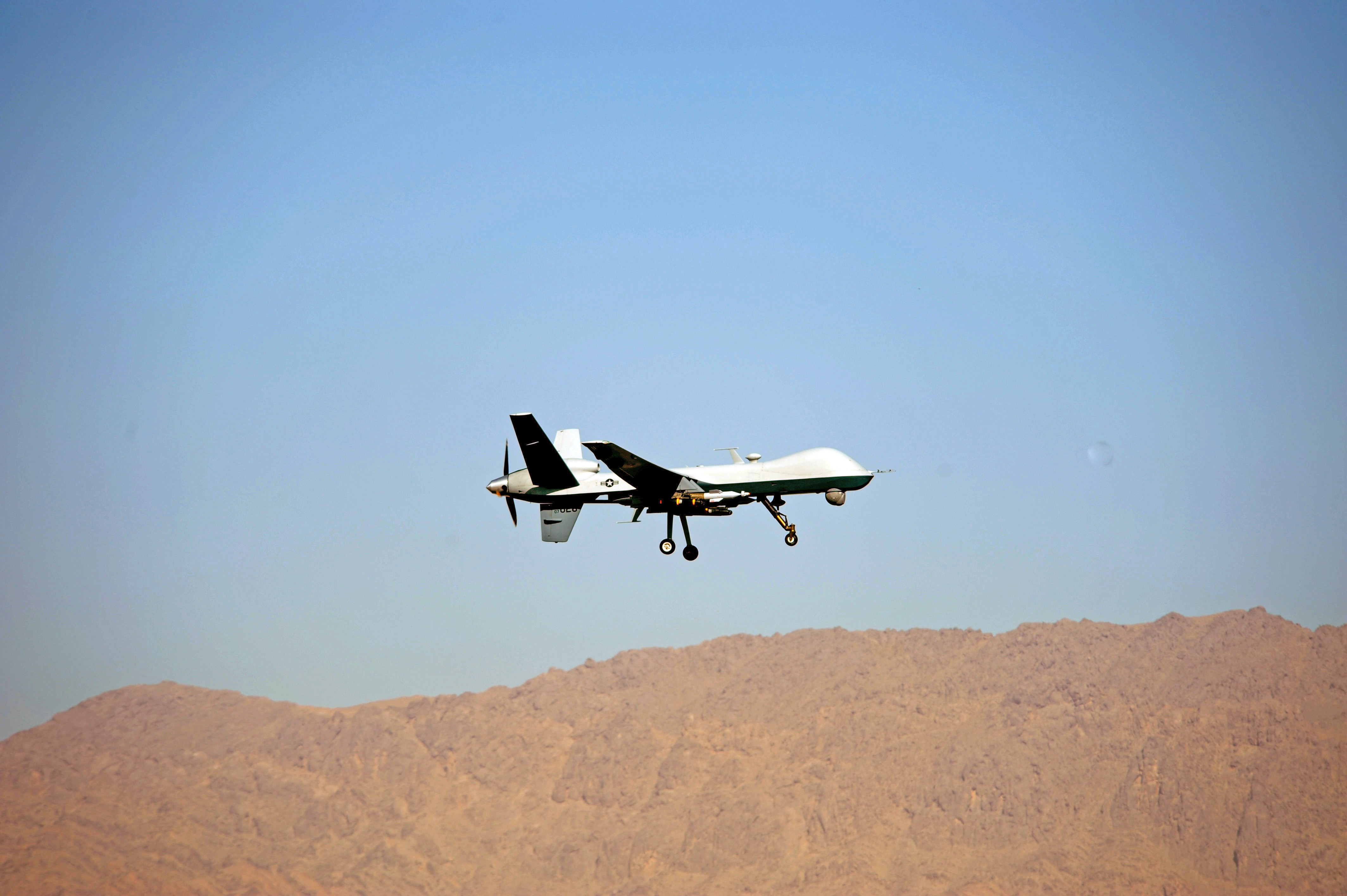
In today’s Wall Street Journal, it is reported that the U.S. is deploying armed drones to the island nation of the Seychelles in order to strike militant targets and, if and when necessary, Somali pirates:

A senior defense official said the U.S. hasn’t yet used the Reapers deployed the Seychelles to conduct armed reconnaissance on pirate ships, but the option is open to use the drones to strike at pirates who have mounted attacks.

“If there was a piracy situation gone wrong, the Seychelles are a good place from which to put something overhead,” said the senior defense official.

The U.S. stationed Reaper drones in the Seychelles from September 2009 until this past spring, when they were withdrawn. Those aircraft weren’t armed and were used only for surveillance. Officials said at the time that those drones were to be used to monitor pirates.

With terrorists and pirates living in such close quarters, it is easy to mistake them as one and the same. Consequently pirates become legitimate targets for pre-emptive attack. But even if pirates are considered to be terrorists (a very big “if”), there are limits as to how they may be engaged. The Deputy National Security Advisor John Brennan recently signaled that the U.S. continues to reserve the right to take unilateral action against individuals who are a threat to the United States. Nonetheless, he recognized: “International legal principles, including respect for a state’s sovereignty and the laws of war, impose important constraints on our ability to act unilaterally—and on the way in which we can use force—in foreign territories.” Even members of al-Qaida are entitled to basic protections afforded by the Geneva Conventions (See Hamdan v. U.S.).

On the other hand, if pirates are treated as criminals, destroying a pirate skiff by a drone-fired missile prior to an attack or even after an attack would constitute summary justice. As I have mentioned before, this does not prevent seafarers from protecting themselves in the face of an attack. But if an attack has occurred and pirates are racing off with their booty or if pirates are discovered at sea with the tell-tale signs of planning an attack (e.g. rifles, ladders), they must be arrested and not scuttled by an unmanned drone.

Although the Prime Minister of Somalia’s Transitional Federal Government (TFG) has no problem with the U.S. targeting members of al-Shabaab within Somalia’s territorial borders, he would not accept similar treatment of pirates. Without the consent of the TFG, drones will likely be restricted to a surveillance role regarding pirates within Somali’s territory and territorial waters. The same is likely true of pirates in international waters, absent extraordinary circumstances.

High Season

As reported here, we are entering the part of the year when seas are flat and conditions are ripe for pirate attacks in the Gulf of Aden/ Indian Ocean.  Therefore, the coming months will likely see a spike in attacks.  The report also includes an assessment that the current military strategy is manifestly inadequate.  As to PMSCs, the chief of staff with EUNAVFOR (the EU naval force patrolling the maritime corridor under attack) states,

“I think a ship with private security onboard will be taken successfully by pirates — it is a matter of time.”

With current methods failing, the UN is faced with a number of proposals for a holistic approach to the problem. Perhaps the Secretary General will take a multi-pronged approach, including development assistance and the creation of a mechanism for prosecution, as part of his proposal due sometime in October.


UN Anti-Piracy Force

Following yesterday’s post on private security forces, the maritime shipping industry has urged the UN to create a peace-keeping operation to protect international waters.  In a letter to the UN Secretary General, the shipping companies assert:

“We believe that an important element in this approach would be the establishment of a U.N. force of armed military guards that can be deployed in small numbers onboard merchant ships.”

“This would be an innovative force in terms of U.N. peacekeeping activity but it would do much to stabilise the situation, to restrict the growth of unregulated, privately contracted armed security personnel and to allow those U.N. member states lacking maritime forces … to make a meaningful contribution in the area of counter-piracy,” they said.

Considering budget constraints at the UN, in particular within peacekeeping operations, it is unclear how such a project would be funded. But it might be a way of limiting legal liability of shippers who are currently hiring PMSCs.