Update: Le Ponant Trial Judgement

Our readers might remember Valerie Gabard’s guest post on the recent trial for the 2008 hijack of the French luxury yacht Le Ponant and the kidnap of its crew. After four years of pre-trial detention, two of the six Somali accused were acquitted, while the four others were convicted and sentenced to four to ten years of imprisonment.

We have now obtained the trial judgement in the case, issued by the 2nd Section of the Court d’Assise of Paris. Contrary to initial speculations, it seems that the Prosecution have decided not to appeal the Court’s decision, which is therefore final. Unfortunately, the judgement won’t shed much light on the Court’s motivations. In keeping with French practice for criminal trials, the judgement, at least when looked at from the perspective of international justice standards, is scantily reasoned, containing little or no more than the accusations against the accused, a recall of the main trial procedural steps and the court’s verdict.

It has to be recalled that the accused were charged with kidnapping, illegal confinement and organized gang theft in pursuance of Articles 224-6 of the French Criminal Code but not with a specific offence of committing piracy due to the temporary absence, in 2008, of a specific definition of piracy in the French criminal system. In the meantime, a new Anti-Piracy legislation was introduced in January 2011.

Somalia Monitoring Group Report Now Available

The latest Report of the UN Monitoring Group on Somalia is now publicly available. The Monitoring Group is tasked to focus on the ongoing violations of the embargo imposed on Somalia since 1992 by the Security Council. The Group prepares reports of its activities, which are then submitted to the UN Security Council and its subsidiary Sanctions Committee on Somalia. The Sanctions Committee concerning Somalia was intially established to oversee the arms embargo and its violations. The mandate  of the Committee was then amended and modified by subsequent Security Council resolutions relevant to Somalia. In parallel, the Committee also oversees a sanction regime imposed on Eritrea. For further information, see here.

The Report, of over 300 pages in length, can be downloaded here. A previous unofficial dissemination of the Report generated a debate on the ongoing situation in Somalia, particularly concerning allegations of widespread corruption and collusion of government officials. Several aspects of the Report are also dedicated to the issue of piracy off the coast of Somalia. (See paras 38-50 and Annex 4). Interestingly, the Monitoring Group has found no evidence that would suggest a structural or organizational link between Al-Shabaab as an organization and Somali pirate networks.

“Somali-based piracy threatens not only the peace, the security and the stability of Somalia, but regional and international security as well. Although pirates have been more active than ever in 2011, the adoption of best management practices by the shipping industry, more effective international counter-piracy naval operations and the increasing use of private maritime security companies have substantially lowered the number of vessels successfully hijacked. As a result, pirates have to adapt and diversify, engaging in kidnap for ransom on land, and marketing their services as “counter-piracy” experts and “consultants” in ransom negotiations. This evolution of the piracy business model is being driven largely by members of the Somali diaspora, whose foreign language skills, passports and bank accounts are all valuable assets. But the Monitoring Group has also been able to confirm the collusion of senior Transitional Federal Government officials in shielding a notorious pirate kingpin from prosecution, providing him with a diplomatic passport and describing him as a “counter-piracy” envoy.”

According to the Monitoring Group, the situation appears particularly concerning in the autonomous Puntland region (see Annex 4.1). In particular, the Report discussed the much rumored Puntland Maritime Police Force, in connection with the use of private security companies operating on the ground in the region (See Annex 5.3).

The Report is also critical of the role of the international community, calling for a more robust commitment to investigate Somali piracy from a law enforcement perspective and to prosecute identifying key individuals who organize, finance or benefit from it, also singlying out a somewhat ambivalent role played by the UK in twarthing piracy.

“The UK Government’s ambivalent posture with respect to Somali piracy is illustrative of a more general international reluctance to tackle Somali piracy as a form of international organized crime, rather than as a sui generis product of Somali statelessness requiring custom-made military and custodial responses. Unless and until this attitude changes, international counter piracy efforts will continue to treat the symptoms of Somali piracy rather than the cause.”

Finally, the Report also discusses the role of private maritime security companies (See paras 72-74 and Annex 5.4) and the risk of some of these representing a potential new channel for the flow of arms into Somalia. In this regard, the Report expresses concern for the increasing use of “floating armouries” to store arms and ammunitions at sea.

“The Monitoring Group recommends that:

(a) The Committee should proceed without further delay to designate known pirates and their associates identified by the Monitoring Group or Member States for targeted measures;

(b) The Security Council should consider the possibility of establishing a specialized investigative group of experts with a mandate to collect information, gather evidence and record testimonies relating to acts of Somali piracy, including and especially the identification of pirate leaders, financiers, negotiators, facilitators, support networks and beneficiaries;

(c) The Security Council should consider making explicit reference, in its next resolutions on Somalia and piracy, to the Monitoring Group’s responsibility of investigating and identifying key individuals responsible for acts of piracy off the coast of Somalia, as well as the movement and investment of piracy proceeds, and call upon Governments, international organizations and national law enforcement agencies to exchange evidence and information with a view to the arrest and the prosecution of senior pirate leaders and their associates, or to their designation for targeted measures;

(d) The Security Council should consider options for the establishment of an international regulatory authority that regulates, monitors and inspects the activities of private maritime security companies operating floating armouries and providing armed protection to vessels in international waters.”

Pirate Attacks Hit “Low Season” in Somalia – Why and What’s Next?

According to the International Maritime Bureau, pirate attacks off the coast of Somalia continued to fall sharply in the first half of 2012.  July 2012 was particularly significant, with no reported attempted attack. Remarkably, it was the first full month with no noteworthy pirate activity off the coast of Somalia and the larger Indian Ocean since at least half a decade. The last reported attack dates back to 26 June 2012, when a Maltese-flagged bulk ship was fired upon near the Yemeni coast. As of 29 July 2012, Somali pirates are still holding at least 11 vessels and 174 crew members.

A piracy situational map we’ve rarely seen – Courtesy Oceanus Live

The suprising drop in Somali pirate activity is spurring a debate on the reasons behind it and the impact of the international efforts to counter pirate attacks. Among the main factors are the pre-emptive and disruptive counter piracy tactics employed by the international navies, with military operations now extending both at sea and on land, the effective implementation of the Best Management Practices by the shipping industry, including the use of citadels and other ship hardening means, the strengthening of a regional judicial system of law enforcement and prosecution, also targeting piracy financiers and kingpins, and in particular, the manyfold increase in the use of Privately Contracted Armed Security Personnel and government-provided Vessel Protection Detachments by ships travelling through the area. It is likely that all these factors together and concurrently have contributed to the falling numbers, tipping the risk aspect to rise above the possible profit expectations for wannabe pirates. Bad monsoon weather is also an additional factor often overlooked, with July and August being traditionally difficult months to set off to sea in the region for both pirate mother ships and small skiffs.

What’s Behind the Horizon?

The current status quo requires the operational strategy to continue and focus also on wider land-based solutions encompassing both security and economic development. Some commentators have warned that pirates and their financiers are simply sitting idle awaiting for better days to come.  Notably, August 2012 will mark the end of the Somalia TGF. While there are high hopes for a better future for Somalia, it is difficult to assess how this will reshape the Country’s current political landscape. There are also fears that the successes of current anti-piracy measures will detract the necessary attention below warning levels with a consequential lull in the international and national effors to combat piracy. If so, the momentum could shift back in the pirates’ favor.

Mauritius Strengthens Its Anti-Piracy Capacity

Last month, Mauritius became the latest country in the Indian Ocean area to enter into an agreement with the United Kingdom for the transfer of suspected pirates before its courts for prosecution. The agreement was announced earlier this year during the London Conference on Somalia, which highligthed the UK driving role in Somalia’s recovery, including the fight against piracy. Mauritius thus follows in the footsteps of Tanzania and the Seychelles who have recently penned similar agreements with the UK, in 2012 and 2010, respectively, aiming to break the pirates business circle by providing a jurisdictional basis for their prosecution after apprehension at sea.
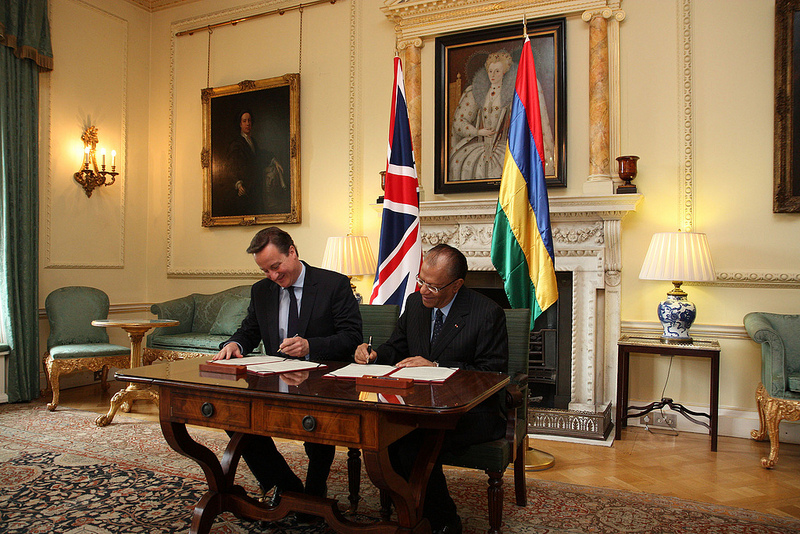
Prime Minister David Cameron and his Mauritius counterpart Navinchandra Ramgoolam sign the prisoners transfer agreement – FCO

Notoriously, foreign navies deployed off the Somali coast to counter piracy are reluctant to take pirate suspects to their own countries because they either lack the jurisdiction to put them on trial, or fear that the pirates may seek asylum. Evidentiary hurdles are also seen as an increasing impediment to effective prosecutions. Suspected pirates detained on the high seas are therefore often released after a brief detention due to the governments’ reluctance to bring them to trial.

Under the terms of the new international agreement, Mauritius will receive and try suspected pirates captured by British Forces patrolling the Indian Ocean. Last year, Mauritius entered into another agreement with the European Union for the transfer, trial and detention of suspected pirates captured by the EUNAVFOR naval mission. As reported on this blog, Mauritius has also inked a deal with the TFG, Somaliland and Puntland to start to transfer convicted pirates to Somali prisons, paving the way for the commencement of prosecutions in Mauritius.

The first trial of a suspected Somali pirates is due to commence in September 2012. In the meantime, Mauritius, already a signatory of UNCLOS, further strengthened its anti-piracy capabilities by adopting various relevant legislative instruments. First and foremost, a new anti piracy law was adopted at the end of 2011. The new Piracy and Maritime Violence Act 2011, premised on the transnational dimension of modern day piracy and the principle of universal jurisdiction to counter it, incorporates nearly verbatim in the national judicial system the definition of piracy as contained in Article 101 of UNCLOS. Acts of violence within Mauritius internal waters are defined as “Maritime Attack”. The novel term adds a degree of fragmentation in the definition of this offence, which is otherwise commonly referred to internationally as “armed robbery at sea”. In an attempt to cater for a wider range of piracy related criminal activities, the Piracy Act also criminalizes the offences of hijacking and destroying ships as well as endangering the safety of navigation. For each of these offences, the Piracy Act provides for a maximum term of imprisonment of 60 years.

More interestingly, the Piracy Act introduces the possibility for the holding of video-link testimonies and/or the admission of evidence in written form where the presence of a witness, for instance a seafearer, cannot be secured. While not uncommon in certain national criminal jurisdictions, as well as those of international criminal courts, the introduction of out of court statements, particularly when relevant to the acts and conducts of an accused, could trigger fair trial rights issues. These issues are principally due to the limited ability of the defence to test such evidence when relied upon at trial in the absence of the witness. In light of these concerns, the Piracy Act provides for the admissibility of evidence in rebuttal as well as for the court’s discretionary power in assessing the weight to be given to written statements.

In addition to the Piracy Act, which entered into force on 1 June 2012, Mauritius also adopted and/or amended its laws concerning assets recovery and mutual assistance in criminal matters in order to foster cooperation with foreign governments to tackle pirates and criminal cartels. The implementation of the agreement with the UK, however, is still to be fully tested. In May 2012, the UK announced that defence budget cuts required it to scale back its naval commitments in the region, withdrawning its ships from full-time counter-piracy operations.
 

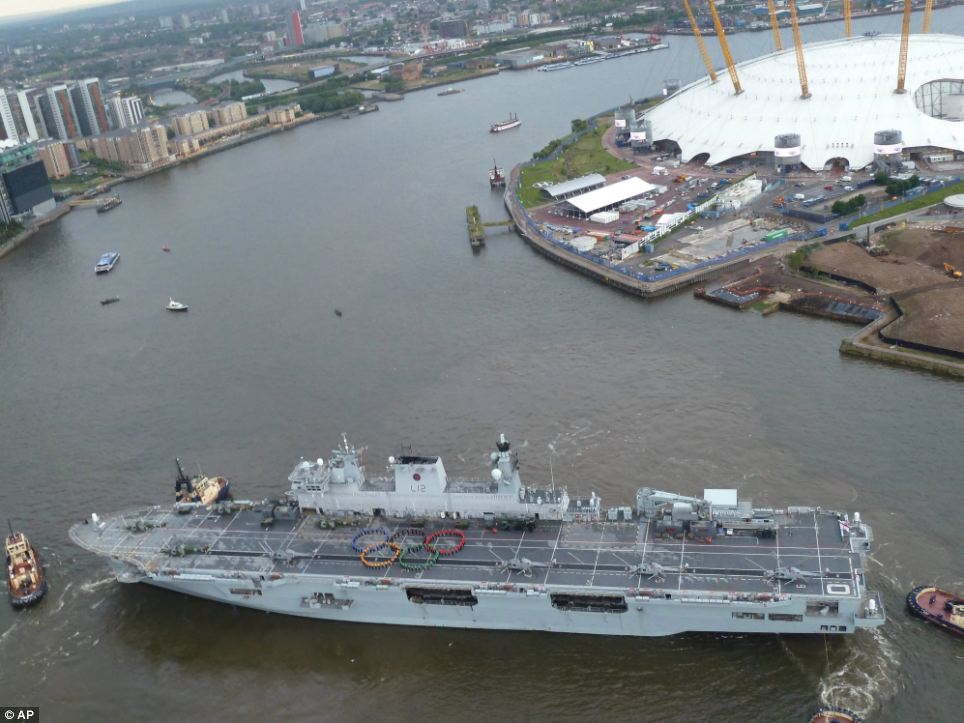
The HMS Ocean Arrives in London Ahead of the London 2012 Olympic Games – Courtesy AP

These difficulties have been compounded by the need to commit ships and personnel to the security efforts for the London 2012 Olympic Games. The UK long-term commitment to combat piracy in Somalia extends beyond its current patrolling and disruption efforts in the Indian Ocean. To remain within the Olympic spirit, French Baron Pierre de Coubertin, considered the founder of the modern Olympics Games, famously noted how “The important thing in life is not the triumph but the struggle, the essential thing is not to have conquered but to have fought well.”  With piracy attacks in the region at their lowest level, during monsoon season, however, it is worth considering whether we should be content with the current efforts to combat piracy, or whether we should be aiming for more.

In Brief: Second International Counter-Piracy Conference Concludes in Dubai

The second International Counter-Piracy Conference concluded yesterday in Dubai, UAE. The Conference, which brought together public and private stakeholders in the fight against piracy, welcomed the significant progress made in combating maritime piracy on land and in the waters off the coast of Somalia and reiterated the need for a comprehensive approach to eradicate piracy and its root causes. The Conference Declaration, adopted by foreign ministers and senior government officials, as well as representatives from UN agencies and top executives from leading maritime companies and organisations, backed the UAE proposal to make the UN Trust Fund to Support Initiatives of States to Counter Piracy off the Coast of Somalia a centralized focal point for funds donated towards the development of Somalia’s maritime security capacity. During the Conference, the UAE pledged US$1million to the Trust Fund. The donation was then matched by a pledge made by Ocean Beyond Piracy.

The Conference also expressed support toward the establishment of a permanent, legitimate, and fully representative government for Somalia and welcomed initiatives to foster long-term economic development in Somalia’s on-shore communities, as well as the increasing financial contributions made by the global maritime industry towards counter piracy initiatives. Industry leaders attending the conference also issued a statement underlining concerns about the impact of hostage taking and violence on seafarers and their families and calling for clear and consistent standards of conduct for privately contracted armed security guards on board of vessels.

Somalia’s Transitional Government President Sheikh Sharif and Somaliland’s President Ahmed Mahamoud Silanyo

One of the most significant development of the Conference, however, has been the holding of unprecendented formal discussions between the leaders of Somalia and the self-proclaimed breakaway region of Somaliland, further to initial talks held last week in London. Somaliland initially agreed to enter into talks with Somalia during the London Conference earlier this year. While the parties are still far apart, particularly with regard to Somaliland’s independence status, they jointly inked the Dubai Declaration, which aims to pave the way for future talks and cooperation between them, including the common fight against piracy and terrorism.