U.S., Iran and China target pirate financiers and Kingpins

Rescued Chinese crew aboard cargo ship Xianghuamen wave to a welcoming Chinese delegation near Bandar Abbas, Iran, April 7, 2012. One of Somalia’s most wanted pirates was captured after Iranian commandos rescued the hijacked ship. PHOTO | XINHUA |

In May, Thomas P. Kelly, Principal Deputy Assistant Secretary of State gave a lengthy speech to the American Petroleum Institute outlining the U.S. strategy to address piracy. The approach includes the following:

  • diplomatic engagement to spur collective international action;
  • expanding security at sea through the use of naval assets to defend private vessels and to disrupt pirate attacks;
  • preventing attacks by encouraging industry to take steps to protect itself;
  • deterring piracy through effective legal prosecution and incarceration; and
  • disrupting the piracy enterprise ashore, including the financial flows that make it possible.

Of particular interest to the prosecution of pirate leaders and organizers was the following:

After an intensive review of our strategy last year, Secretary Clinton approved a series of recommendations which constitute a new strategic approach. A focus on pirate networks is now at the heart of our strategy. We are using all of the tools at our disposal in order to disrupt pirate networks and their financial flows. We are focused on identifying and apprehending the criminal conspirators who lead, manage, and finance the pirate enterprise, with the objective of bringing them to trial and disrupting pirate business processes. Often, the best way to attack organized crime is to follow the money. That’s how the U.S. put some nefarious criminals behind bars. Pirate organizers receive income both from investors and ransom payments, and disburse a portion of the proceeds of ransoms back to these investors. Already, the United States has convicted one Somali pirate negotiator.

This highlights the focus on high-value kingpins as opposed to just the foot soldiers executing attacks. In 2010, President Obama signed Executive Order 13536 concerning Somalia which identified 11 individuals who were suspected of financing piracy. The Executive Order imposed economic sanctions on individuals who “have engaged in acts that directly or indirectly threaten the peace, security, or stability of Somalia” and indicated that “among other threats to the peace, security, or stability of Somalia, acts of piracy or armed robbery at sea off the coast of Somalia threaten the peace, security, or stability of Somalia.” Some of these same individuals were named in a list created by the UN Security Council in February 2012 indicating they are “individuals and entities subject to the travel ban, assets freeze and targeted arms embargo imposed by paragraphs 1, 3 and 7 of Security Council resolution 1844 (2008).”

The list of individuals annexed to the Executive Order includes, Mohamed Abdi Garaad, who was recently arrested together with 12 other suspected pirates on 4 April by Iranian commandos after the pirates had hijacked a Chinese cargo ship. It is reported that Garaad was:

In command of one of the largest pirate militias, Garaad is outspoken and well known to the international media.  He is reported to command 13 separate militia groups, totaling over 800 pirates.  In a 2009 interview, he proclaimed, “The navies, they can’t stop us … we have more than 200 crews and we are increasing all the time.”  Garaad is responsible for the attack on M/V Maersk Alabama, which ended with the successful operation by US Navy SEALs.  After this operation, Garaad publicly threatened to retaliate against US ships and crews.  Garaad is also responsible for the 2009 attack on the M/V Sea Horse, a ship delivering World Food Program aid to Somalia.

See also here and here. It is unclear whether he is in the custody of Iranian or Chinese authorities, whether he will be brought to trial and if so where and under what legal regime.

4th Circuit Decides Definition of Piracy Evolves with the Law of Nations

A three-judge panel of a U.S. appeals court has decided that UNCLOS sets forth the definition of piracy for purposes of U.S. law. As we signalled here and here, the U.S. Court of Appeals for the 4th Circuit was faced with the question of whether “piracy as defined by the law of nations” in 18 U.S.C. § 1651 (adopted in 1816) constitutes a static or evolving concept. In a well-written and extremely thorough decision, the court has determined that the law of nations is an evolving concept and that the definition contained within UNCLOS constitutes the law of nations as defined in the statute.  Since UNCLOS defines piracy in part as ‘an illegal act of violence,’ a completed theft is not requisite to the crime. This has important repercussions for future prosecutions because pirates are often unsuccessful in boarding ships or taking anything of value even though they may fire upon vessels with AK-47s and RPGs.  Limiting the definition to the law of 1816 would have prevented U.S. courts from exercising jurisdiction where conduct less than a completed robbery was perpetrated. Here are the crucial bits of the opinion:

The defendants would have us believe that, since the Smith era, the United States’ proscription of general piracy has been limited to “robbery upon the sea.” But that interpretation of our law would render it incongruous with the modern law of nations and prevent us from exercising universal jurisdiction in piracy cases. See Sosa, 542 U.S. at 761 (Breyer, J., concurring in part and concurring in the judgment) (explaining that universal jurisdiction requires, inter alia, substantive uniformity among the laws of [the exercising] nations”). At bottom, then, the defendants’ position is irreconcilable with the noncontroversial notion that Congress intended in § 1651 to define piracy as a universal jurisdiction crime. In these circumstances, we are constrained to agree with the district court that § 1651 incorporates a definition of piracy that changes with advancements in the law of nations.

We also agree with the district court that the definition of piracy under the law of nations, at the time of the defendants’ attack on the USS Nicholas and continuing today, had for decades encompassed their violent conduct. That definition, spelled out in the UNCLOS, as well as the High Seas Convention before it, has only been reaffirmed in recent years as nations around the world have banded together to combat the escalating scourge of piracy. For example, in November 2011, the United Nations Security Council adopted Resolution 2020, recalling a series of prior resolutions approved between 2008 and 2011 “concerning the situation in Somalia”; expressing “grave[ ] concern[ ] [about] the ongoing threat that piracy and armed robbery at sea against vessels pose”; and emphasizing “the need for a comprehensive response by the international community to repress piracy and armed robbery at sea and tackle its underlying causes.” Of the utmost significance, Resolution 2020 reaffirmed “that international law, as reflected in the [UNCLOS], sets out the legal framework applicable to combating piracy and armed robbery at sea.”

Considering the importance of this opinion, the public defender may choose to petition for en banc review. The three judges on this panel were all Democratic appointees, which may mean they were more receptive to the evolving law concept. Whereas if the entire bench (15 judges) were to hear the case, it could reach a different conclusion.  The defendants also have the option of appealing to the U.S. Supreme Court. Therefore, there may yet be more to this story.

Prosecution seeks death penalty for Felony Murder

Ahmed Muse Salad, Abukar Osman Beyle and Shani Nurani Shiekh Abrar entered their pleas to murder and other charges in U.S. District Court in Norfolk, July 20, 2011. (Credit: AP)

It was recently announced that federal prosecutors in the U.S. intend to seek the death penalty against three Somalis if they are convicted of murder in the fatal shooting of four Americans which occurred aboard a hijacked yacht during a failed rescue attempt last year. Of the other Somalis implicated in the incident: one was released by authorities because he is a juvenile; eleven have pleaded guilty to piracy and been sentenced to life in prison; and the ransom negotiator’s piracy conviction is on appeal.  Furthermore, the AP reports that four of the hijackers died on board, including two who have been identified in court records as those who shot at the Americans. This last assertion is based on the charging documents before a judge or jury has established the actual facts of the case. But, if these facts are borne out at trial, the three Somalis who remain to be prosecuted, and for whom the Federal prosecutors are seeking the death penalty did not commit premeditated murder.

Somali pirates do not take hostages with the intent of killing them; that is bad for business. They intend to hold the hostages for ransom. Of course, the pirates who pointed guns at the American hostages and killed them evidently changed their plans upon the imminent boarding of the yacht by U.S. Navy SEALS (and were killed themselves). But it is not clear that that those charged in this last case intended to kill the hostages. Some of them claim to have attempted to stop the killings. This is supported in part by the Prosecutor’s charging documents which indicate the deaths occurred in the commission or immediate flight from the offenses of kidnapping, hostage taking and violence against maritime navigation. Therefore, the basis for seeking the death penalty on the murder charges in this case appears to be the felony murder rule, whereby a killing that occurs in the course of a dangerous felony, even an accidental death, can be charged as first-degree murder. If the three pirates at issue here were fleeing the scene when two other pirates killed the hostages, is the death penalty a just sentence?

This issue is further highlighted by a discrepancy in the way the US Attorney is charging the eleven pirates who pleaded guilty and the three for whom the death penalty is sought.  By accepting pleas for life imprisonment for the former, the US Attorney has indicated that the death penalty is not forcibly necessary to serve the interests of justice in this case. It may be that there are facts that support a harsher sentence for the latter three. It may also be that the three refused to enter a plea agreement, so the US Attorney is wielding a stiffer penalty as leverage. But the question remains, is the death penalty an appropriate penalty for felony murder?

One final incongruity is the fact that the Prosecutor is not seeking the death penalty on the charge of piracy. From 1790, the crime of piracy pursuant to U.S. statutory law imposed a mandatory death penalty. The death penalty was replaced by “imprisonment at hard labor for life” in 1897, and then “imprisonment for life” in 1909. Therefore, the death penalty is no longer available for the crime of piracy under 18 U.S.C. 1651. The fact that Congress amended the statute to eliminate the death penalty indicates Congress’ view that the death penalty is not an appropriate punishment for piracy. If the principle crime at issue here is piracy, and Congress intended that no person be put to death for the crime of piracy, should that penalty still be available if the crime is charged as hostage taking or violence against maritime navigation resulting in death? Of course, a jury will have to decide whether the aggravating factors have been proven to justify a sentence of death.  But I really am curious as to what you all think on these issues.

Mauritius Officially On Board to Prosecute as Other Options Dwindle

Beau Bassin Prison in Mauritius where pirate suspects may be detained

Reuters is reporting that Mauritius has inked a deal with the TFG, Somaliland and Puntland to start to transfer convicted pirates to Somali prisons, paving the way for prosecutions in Mauritius. This comes as the locations proposed for prosecution by the UN Secretary General have dwindled. In January, the UN Secretary General issued a report noting Somaliland and Puntland as suitable locations for the prosecution of pirates. It is becoming increasingly clear that these autonomous regions may have difficulty in laying the foundations necessary for fair trials in the foreseeable future. For example, last week a Somaliland military court abruptly sentenced 17 civilians to death the day after violent clashes in the northern city of Hargeisa, leading a UN special envoy to urge a retrial in which the fair trial rights of the Accused would be respected. Therefore, the focus will have to shift to the remaining states recommended by Secretary General (i.e. Kenya, Tanzania, Seychelles, and Mauritius). As one of only four states in the region deemed suitable for prosecutions, the Mauritius announcement is undoubtedly appreciated by the states patrolling high risk areas who are searching for states willing to prosecute pirates.

As to the trio of other states identified in the UNSG report, Kenya is moving forward with prosecutions in the High Court in Mombasa, despite a 2010 decision by Judge Ibrahim (now of the Kenyan Supreme Court) holding that Kenyan courts lack jurisdiction to try the crime of piracy. Judge Ibrahim’s decision is pending an appellate decision by the Kenyan Court of Appeal.  But in the interim, his decision is not binding authority on other judges of the High Court (although they are still free to follow Judge Ibrahim’s decision if they so choose). Seychelles continues to prosecute pirates but may periodically refuse suspects due to a lack of space in its prisons. Finally, last month it was reported that Tanzania had yet to sign a pirate-suspect transfer agreement with the EU, indicating that prosecutions in Tanzania will be limited to those captured by Tanzanian naval authorities for the time-being.

Private Navies and Ships on Government Service

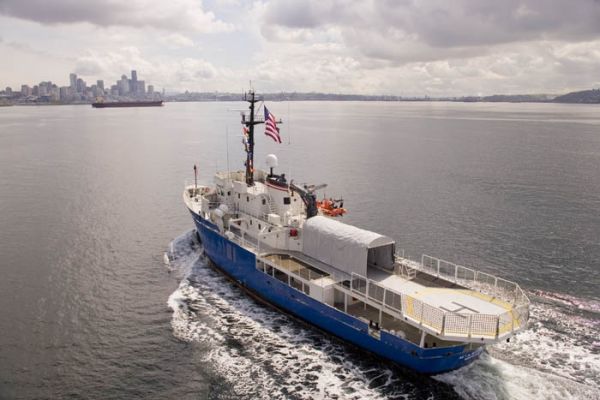
Blackwater’s failed venture – McArthur

Over the last few years, entrepreneurs and private insurers have floated a number of proposals for the creation of private security escorts (so-called “private navies”). These types of proposals address several pressing concerns. The international naval escorts, such as EUNAVFOR, provide protection to a limited number of ships. But waiting for a critical mass of ships to initiate a convoy at the entrance to the high-risk zone can be time-consuming and costly for shippers. Furthermore, international naval escorts can only provide an escort in the highest risk zones (e.g. the Gulf of Aden), leaving ships vulnerable to attack in other areas such as the vast Indian Ocean. Private security escorts promise to be available to individual ships throughout their journey in high-risk waters. Though the cost of such services could be significant, there is the promise of savings in insurance premiums.

In the past, the U.S. state department has expressed hightened concern with regard to private security escorts vis a vis private security guards on-board ships (the latter are now openly encouraged). What then governs the use of force by these private security escorts and under what circumstances is the use of force permissible pursuant to international law?  Three examples provide a useful backdrop to consider the legal issues. The answer, it turns out, will likely depend on whether private security escorts are “on government service” and whether in the circumstances of a particular encounter, they overstretch the concept of self-defence by engaging in pirate hunting.

Blackwater, the security contractor who ran into trouble in Iraq and Afghanistan, was one of the first companies to venture into the private security escort business. It purchased a retired naval vessel, the 183 foot McArthur and, in 2007, it offered its services as a counter-piracy escort vessel. Perhaps due to uncertainty regarding the legal issues, and Blackwater’s compromised reputation, it received no customers and soon left the counter-piracy business. Maybe it was just before its time as several additional ventures have been announced more recently.

In September 2010, it was reported that:

[A] leading London insurer is pushing ahead with radical proposals to create a private fleet of about 20 patrol boats crewed by armed guards to bolster the international military presence off the Somali coast. They would act as escorts and fast-response vessels for shipping passing through the Suez Canal and the Indian Ocean.

Jardine Lloyd Thompson Group (JLT), which insures 14 per cent of the world’s commercial shipping fleet, said the unprecedented “private navy” would work under the direct control of the military with clear rules of engagement valid under international law. Early discussions have also been held with the Ministry of Defence, the Department of Transport and the Foreign Office. (emphasis added).

This particular venture would place the private security escort “on government service.” Article 107 of UNCLOS provides that a pirate boat may be seized by “other ships or aircraft clearly marked and identifiable as being on government service and authorized to that effect.” The idea here is the a government may hire private companies to engage in police functions so long as it is made explicitly clear by markings and identification that the ship is controlled by the government and under a presumably military chain of command. It has been argued that ships on government service could not only provide self-defence to an escorted ship but could also engage in pirate hunting. However, the responsible government, in this case the U.K., would be taking a considerable risk in authorizing defensive as well as aggressive use of force.

Most recently, in November 2011, a company put forward a new proposal.

Convoy Escort Programme Ltd., backed by the marine insurance industry, will initially deploy seven former naval patrol boats, each with armed security teams of eight people on board, Angus Campbell, chief executive officer, said by phone from Swarland, England today. The bullet-proofed boats will charge about $30,000 per ship traveling in a convoy of around four vessels over three to four days, he said.

“We are going to be a deterrent,” Campbell said. “We are not in the business of looking for trouble but if anybody tries to attack a vessel we are escorting, our security teams will deploy force if they have to act in self defence.”

It was confirmed yesterday that this project has secured (paid subscription required) additional funding from private insurers and hopes to have boats on the water by the summer.

In contrast to the prior example, there is no indication that Convoy Escort Programme is being coordinated with regular naval forces. Therefore it is not “on government service.”  Although Article 107 of UNCLOS does not permit private security companies not on government service from engaging in pirate hunting, the general principle of self-defence, and defence of others, would justify protecting vessels from an on-going attack. Such conduct must be carefully circumscribed. The risk here is that private security personnel would, in the heat of battle, step outside of the orbit of “self-defence” and into the breach of pirate hunting.  For example, if personnel decide to chase down suspected pirate boats that have (1) not approached the vessel they are protecting or (2) approached the vessel and fled, the personnel may have overstepped what was strictly necessary to protect the vessel under attack. Furthermore, the absence of clear rules of engagement creates the real possibility of mistaken identity at sea. If these projects go ahead, pirates off the coast of Somalia will have to contend with more heavily-armed foes, but so will Somali and Yemeni fishermen who frequent these same waters.