Creating a Regional Framework to Address Piracy in the Gulf of Guinea

Another Post by Matteo Crippa:

Last week, West African leaders addressed the General Assembly, echoing the recent concerns expressed by the UN over the increase of piracy as well as drug, arms and other illicit trafficking in the region.

Gas flaring from oil extraction in the Niger River Delta

During the 66th General Assembly debate, representatives of Togo, Benin, Gambia and Nigeria, among others, remarked on the closely linked nature of these crimes, and their financial and social impact. They called for a framework for cooperation with the support of the international community. More particularly, they supported the proposal for greater UN engagement with regional leaders and organizations in stamping out these menaces.

Since January 2011, there have been over two dozen piracy attacks in the Gulf of Guinea. Lloyd’s Market Association, a leading group of insurers, ranked the coastal waters off Benin and part of Nigeria in the same high-risk category as Somalia and the Gulf of Aden. Since the UN Security Council expressed this August its concerns over reports of increased piracy, armed robbery and hostage taking in the Gulf of Guinea, a handful of new attacks took place. Notably, also these attacks occurred predominantly within territorial waters. The Economic Community of West African States has also recently called for action against piracy to be widened to include all states along the coast while U.S. and French navy vessels have been deployed in the region to boost surveillance over the coastal areas.

Later this month the Security Council is expected to hold a debate on piracy in the Gulf of Guinea. The Council appears to be unanimous on the issue. Nigeria, which is presiding over the Council in October, is the spearhead for the debate and will likely push for urgent action. The US, a key consumer of oil from the Gulf of Guinea, appears to have shown interest, as have France, Britain and China and elected member Gabon. More particularly, the Council is expected to formally ask the Secretary-General to deploy an assessment mission to examine the phenomenon and suggest possible ways to address it.

Governmental, sea industry and regional partnership is increasingly re-emerging as the primary strategy to counter modern day piracy, in light of its deep social roots, broad-based economic impact and its ties with organized crime. Marking World Maritime Day 2011 under the theme “Piracy: orchestrating the response”, the International Maritime Organization was the latest specialized agency stressing the need for an “orchestral manner” in which governments, shipping companies and operators, military forces and UN agencies should act if they are to combat piracy successfully.

Without further delving into the set of practical and technical measures, most recently developed to effectively target piracy off the coast of Somalia, there are questions as to the legal regime upon which such measures should operate. UN General Assembly Resolution 57/141 urged all states and relevant bodies to cooperate in combating and preventing piracy and armed robbery at sea. Article 100 of the 1982 Law of the Sea Convention created an obligation for all states to cooperate in repressing piracy. Article 108, in addition to several other international agreements on this matter, provided a framework for regional and global cooperation for the suppression of drug trafficking. The very nature of most of the attacks, however, taking place within territorial waters, their private ends being a mixture of criminal activity and social discontent, once again appears to limit the applicability of the general provisions attaching to the customary and treaty-law definition of piracy. The additional framework introduced with the 1988 Convention for the Suppression of Unlawful Acts against the Safety of Maritime Navigation, and its protocols (SUA Convention), provides for a more precise set of obligations for its signatory States. More particularly, the SUA Convention emphasizes several areas of State-to-State cooperation. On the other hand, it bears the risk of swiftly connecting most acts of piracy with anti-terrorism measures which appears unfounded (to date) in the case of piracy in the Gulf of Guinea.

There is a need to consolidate the applicable regime governing piracy insofar as current treaty provisions are too scarce, vague and scattered (in various international agreements) to be effective. In addition, a review and an implementation of counter-piracy legislation at the national level would ensure the enforcement of existing measures and would permit their expansion onto a regional scale. There are helpful precedents of regional agreements from the Asian and Horn of Africa contexts. These agreements should be taken into consideration as a means of achieving comprehensive regional coordination as well as a necessary legal framework. A UN resolution could also precede the regional agreement and form the basis for a cooperative framework. Any such instrument should take into account a variety of activities, including interdiction, the seizure of ships and properties, access to territorial seas, jurisdiction over investigation and prosecution, the rescue of ships, property and personnel, the sharing of information and conduct of shared operations and training.

The experience of the Horn of Africa and its escalation shows how preventive action against modern day piracy and broad-based cooperation beyond traditional state borders is paramount.

India: A Case Study

Indian authorities escort Somalis captured aboard a suspected mother ship

Dear Readers, I have asked M.R. Shamshad, an advocat on record with the Supreme Court of India to provide his insight on the challenges faced by India in combating piracy. Mr. Shamshad is a qualified lawyer based in New Delhi and practicing on a diverse array of issues. Many thanks for his contribution!

Before I hand over to Mr. Shamshad, let me provide some background. India is one of the states most affected by the crime of piracy. As a traditionally sea-faring nation, Indians crew many of the ships in international transit and have suffered as a consequence. Between 2007 and 2011, 495 Indian seafarers were held hostage by Somali pirates. In addition, international efforts to protect the Gulf of Aden have pushed Somali pirates to seek out new targets across the Indian Ocean. In the last year, there were a dozen attacks around the Lakshadweep area in India. The Indian Navy has intensified efforts to combat piracy by participating in EUNAVFOR and patrolling off of its own shores. As a result, the Indian Navy and Coastguard captured 120 pirates in the Arabian Sea and held them in custody in Mumbai. For a tactical assessment, see this interview with Commodore RS Vasan of the Center for Asia Studies. However, the legal framework is not yet in place to fully prosecute these pirates under Indian law and the TFG’s Ambassador to India has asked that these pirates be returned to Puntland and other regions of Somalia. Mr. Shamshad takes it from here:

Legislations against Piracy in India:

Currently, ship safety and security are handled by the International Maritime Organization (IMO) under the International Ship and Port Facility Security Code, which itself is an amendment to the International Convention for the Safety of Life at Sea (SOLAS) of 1974/78 and came into force in 2004. At the international level, Sections 101 to 107 of the United Nations Convention on the Law of the Sea (UNCLOS) relate to sea piracy. But India has still been unable to adopt and form any express municipal legislation to tackle this issue.

Hence to fill this present lacuna the Indian Government has very recently decided on formulating a new express municipal law to tackle piracy. The new law would deal with acts of piracy and other complicated issues on the high seas. Impetus has also been provided by the Supreme Court asking the Centre to come out with a comprehensive law and compensation measure.

Presently there is a need to adopt a domestic law on the subject. In India, piracy issues are tackled by the provisions of Indian Penal Code and the Admiralty law. A draft law is ready and it has gone to the law ministry for final vetting before it goes to parliament. It is likely to be taken up for passing in the next session of Parliament. The draft legislation also prescribes punishment for different acts that constitute piracy under the law. The draft law clearly defines what actions constitute piracy and who would be called a pirate, apart from listing out the legal framework for apprehending them, be it in Indian or international waters, and for prosecuting them in Indian courts. But details of the punishment are not yet final, as it is now under scrutiny for inconsistencies or other things with the law ministry. On nearly a dozen occasions since October 2008 when India joined the anti-piracy operations in the Gulf of Aden, its navy has had to empty the fuel on pirate’s speed boats and let them to drift in the high seas, as nabbing them would raise questions as to where they would be prosecuted and which foreign port would take them into custody.

The ministry of shipping on 30.08.2011 issued guidelines allowing ships with Indian crew to deploy armed guards in a bid to combat piracy in the Gulf of Aden. The move comes on the back of recommendations from the inter-ministerial group (IMG) of officers constituted to handle the hostage situation on hijacked ships and also suggest preventive measures.

In the absence of anti-piracy laws, India charges these pirates under Indian Penal Code with trespassing (Sections 441 & 447), waging war against the country (Section 121), attempt to murder (Section 307) and armed robbery (Sections 397 & 398) against pirates, many of whom are believed to be minors that have been apprehended so far. In India individuals below 18 years of age are considered to be minors and are tried under the Juvenile Justice Act. At present, piracy is dealt with under the provisions of the Indian Penal Code and century-old Admiralty law but the government is planning to have a separate statute with provisions to effectively tackle the problems that take place far away from Indian shores. This apart, though India has ratified the UN Convention on Laws of the Seas, it needs to enact a law to bring it into force.

For further reading, see the excellent resources available at the Indian branch of Oceans Beyond Piracy.

Tanzania Invites UN help with Piracy

In his speech yesterday to the UN General Assembly, Tanzanian President Kikwete invited the assistance of the international community in combating piracy:

The problems of piracy still lingers on and is expanding. We are now witnessing more and more attacks taking place as far South from Somalia to as far as Tanzania, Mozambique and Madagascar. Since last year, when piracy activity moved south into our territorial waters 13 ships have been attacked 5 of them were hijacked. These attacks have caused an increase in the cost of shipping. If we don’t succeed in stopping these attacks they may disrupt shipping services and impact negatively or our economy. We need the support of the international community to help build capacity to fight piracy. We welcome your readiness to assist us improve our courts and prisons to try and punish the pirates. If simply a gesture was extended to build capacity to prevent attacks there would be less pirates to bother us.

This follows the report of the UN Secretary General in June 2011 in which the Tanzanian government signaled its willingness to host a Somali extra-territorial court for piracy if certain conditions were met. Those conditions included the provision or lease of a new naval vessel to Tanzania to fight piracy off its coast and assistance to four or five detention facilities to house pirate suspects in various parts of the country (to reduce security concerns).

Drones v. Pirates


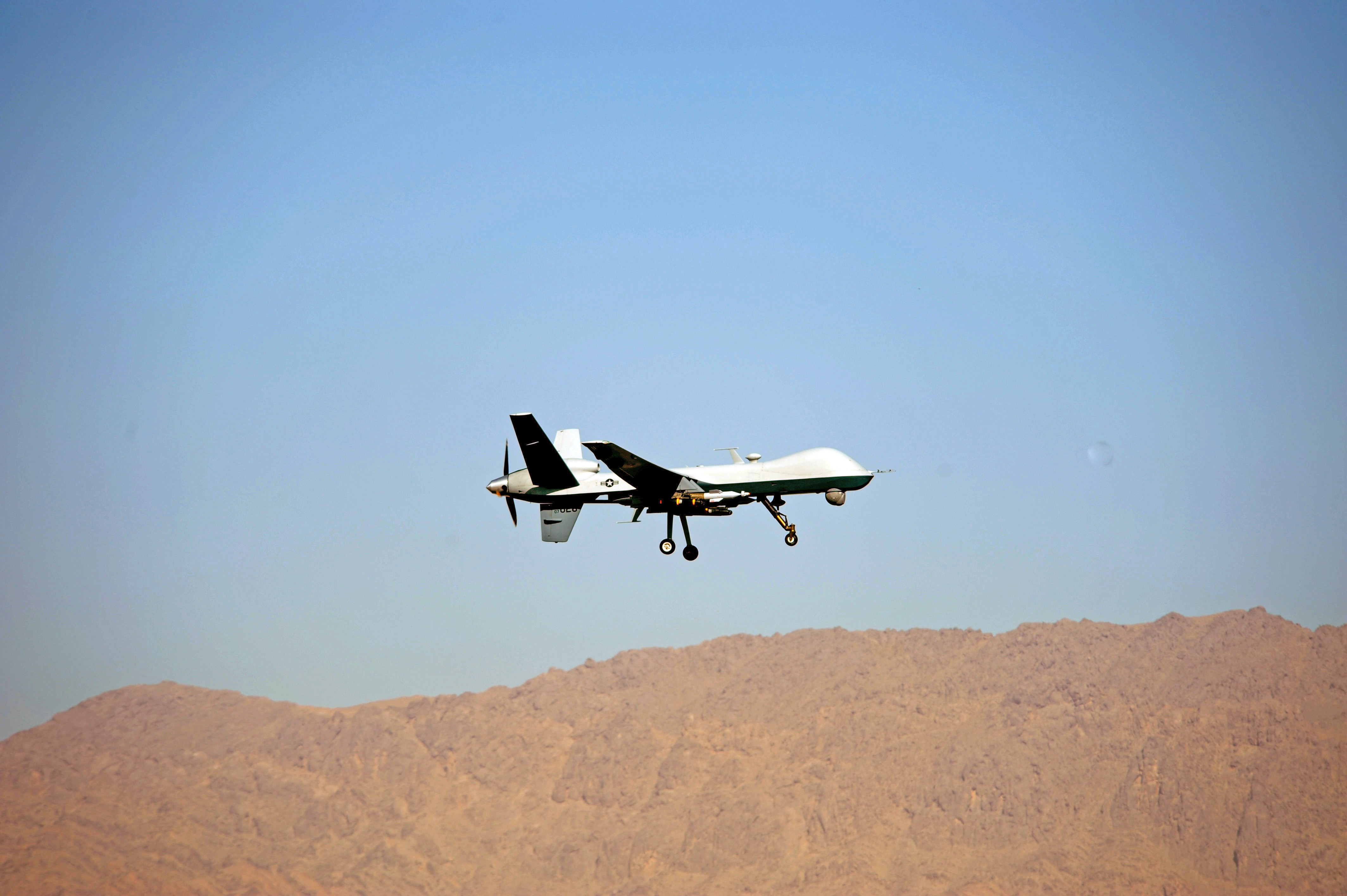
In today’s Wall Street Journal, it is reported that the U.S. is deploying armed drones to the island nation of the Seychelles in order to strike militant targets and, if and when necessary, Somali pirates:

A senior defense official said the U.S. hasn’t yet used the Reapers deployed the Seychelles to conduct armed reconnaissance on pirate ships, but the option is open to use the drones to strike at pirates who have mounted attacks.

“If there was a piracy situation gone wrong, the Seychelles are a good place from which to put something overhead,” said the senior defense official.

The U.S. stationed Reaper drones in the Seychelles from September 2009 until this past spring, when they were withdrawn. Those aircraft weren’t armed and were used only for surveillance. Officials said at the time that those drones were to be used to monitor pirates.

With terrorists and pirates living in such close quarters, it is easy to mistake them as one and the same. Consequently pirates become legitimate targets for pre-emptive attack. But even if pirates are considered to be terrorists (a very big “if”), there are limits as to how they may be engaged. The Deputy National Security Advisor John Brennan recently signaled that the U.S. continues to reserve the right to take unilateral action against individuals who are a threat to the United States. Nonetheless, he recognized: “International legal principles, including respect for a state’s sovereignty and the laws of war, impose important constraints on our ability to act unilaterally—and on the way in which we can use force—in foreign territories.” Even members of al-Qaida are entitled to basic protections afforded by the Geneva Conventions (See Hamdan v. U.S.).

On the other hand, if pirates are treated as criminals, destroying a pirate skiff by a drone-fired missile prior to an attack or even after an attack would constitute summary justice. As I have mentioned before, this does not prevent seafarers from protecting themselves in the face of an attack. But if an attack has occurred and pirates are racing off with their booty or if pirates are discovered at sea with the tell-tale signs of planning an attack (e.g. rifles, ladders), they must be arrested and not scuttled by an unmanned drone.

Although the Prime Minister of Somalia’s Transitional Federal Government (TFG) has no problem with the U.S. targeting members of al-Shabaab within Somalia’s territorial borders, he would not accept similar treatment of pirates. Without the consent of the TFG, drones will likely be restricted to a surveillance role regarding pirates within Somali’s territory and territorial waters. The same is likely true of pirates in international waters, absent extraordinary circumstances.

From the Gulf of Aden Back to the Gulf of Guinea: Piracy Reports in West Africa on the Rise

Dear Readers, Let me introduce you to today’s guest blogger, Matteo Crippa. Mr. Crippa has substantial experience in West Africa and in international criminal law, having served as a legal officer at the Special Court for Sierra Leone from its inception. He brings a fresh perspective and insight to today’s topic. I would like to express my appreciation for his contribution and hope that it is the first of many to come.

The UN Security Council recently expressed concerns over reports of increased piracy, armed robbery and hostage taking in the Gulf of Guinea and their adverse impact on security and economic activities in West Africa. It is calling for the UN Offices for West and Central Africa to work with the UN Office on Drugs and Crime and the International Maritime Organization, all concerned countries and regional organizations. The UN Secretary General further indicated its intention to deploy an assessment mission to explore possible options for UN support.

While today’s counter-piracy attention shifted to the Gulf of Aden, with more than half the global piracy attacks being ascribed to Somali pirates, the Gulf of Guinea has long been a high risk area. With the increase of maritime commercial traffic, discovery of oil off the coasts of countries other than Nigeria, installation of additional offshore extracting infrastructure and on-going instability in various coastal areas, acts of piracy are on the rise. In 2009, the number of attacks fell short of those in the South-East Asia region. But, there are an increasing number of attacks in Togo, Nigeria and Benin.

Albeit sharing similar criminal goals and root causes, the nature of the attacks appears to differ with those off the Somali coast, encompassing an equal amount of armed robberies or hijackings and hostage takings. In addition to the immediate financial effect on oil and natural resource exploration and exploitation, the increased piracy activity appears to have a substantial impact on a set of traditional economic activities, such as commercial trade, regional travel and fishing.

Notwithstanding this difference, one unique feature of West Africa piracy is its limited territorial and regional purview (at least for now). Particularly in the Gulf of Guinea, piracy is mainly a by-product of the Niger Delta crisis. Acts of piracy and related criminal activities are still largely, if not exclusively, confined to territorial waters, and pirates do not yet possess the logistics and organizational capabilities of those operating in Somalia. Piracy per se can only be committed beyond the territorial sea, with all the equivalent acts occurring within territorial and internal waters being a matter for a coastal state’s criminal jurisdiction under the label of armed robbery at sea. All other conditions being met, doubts arise whether the present situation conforms to the customary legal definition of piracy and warrants the import of international-level mechanisms of deterrence and repression.

In the light of these considerations, the UN intervention in the matter at this stage appears to derive principally from the absence of any locally coordinated resources and the need to engage regional cooperation. West African countries, much like East African countries, lack adequate legislative frameworks and enforcement capabilities, as well as logistics and know-how, to address piracy. In addition, they face the increasing threat of becoming a major route for narcotics and drug smuggling. It should be noted that local efforts are underway to counter piracy, including the creation of a piracy task force in Nigeria, coastline patrols in Nigeria and Benin and plans to convene an ad hoc summit to discuss a regional response

The UN counter-piracy strategy in West Africa is thus still at an embryonic stage. An initial point of concern is the immediate risk of resource fragmentation, with already a plethora of UN and regional agencies and organizations involved as possible stakeholders. Building upon the most recent Somali experience and the joint international efforts to tackle piracy, the UN seeks to preemptively mobilize leadership and coordinate resources to avoid the situation in the Gulf of Guinea spiraling further. This perhaps signals a shift from a traditional counter-piracy strategy to a more piracy-prevention oriented approach. Its success will very much depend upon its capacity to include and assess the broader social, political and economic causes feeding piracy.