Seychelles positions itself as anti-piracy command

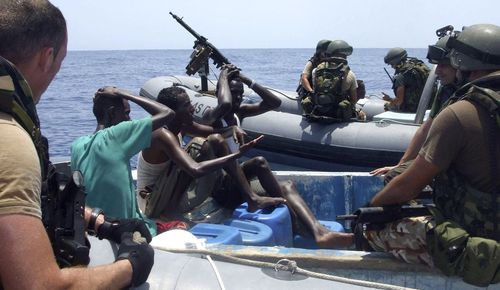
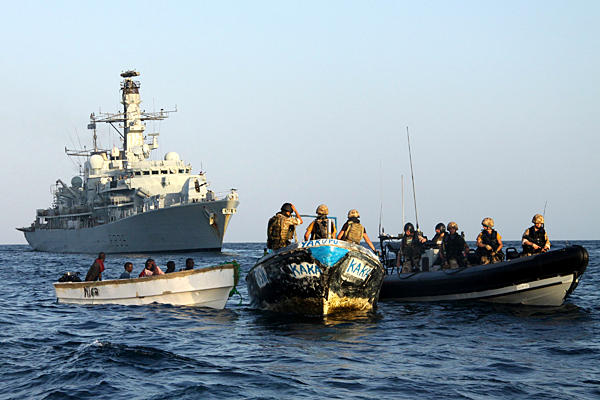
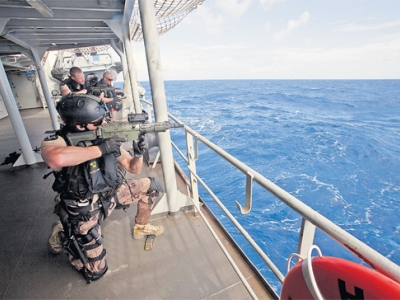
Crew from HMS RICHMOND provide technical assistance to Seychelles Coastguard - Source: EUNAVFOR

Seychelles has been one of the international community’s preferred partners in the fight against piracy. There is productive, on-going cooperation between the country and, amongst others, INTERPOL, EUNAVFOR, UNODC. Likewise, in March 2010, Seychelles National Assembly amended its penal code to re-define piracy in line with the definition in the 1982 LOS Convention which Seychelles ratified in 1991.

In a recent interview, President James Michel highlighted some new initiatives of his government. He noted that, “Seychelles [is] becoming the anti-piracy hub for our international allies, who are committed to the fight against piracy.” In addition, President James Michel emphasized the need to focus police and prosecutorial resources on the financiers of piracy, “Piracy has developed into a lucrative business model and therefore more emphasis needs to be made to target the financiers of piracy, to eliminate the criminal networks and bring to justice the main profiteers of this business.” Therefore, he stated:

We are in the process of setting up a Regional Anti-Piracy Prosecution and Intelligence Centre, with the support of the International Maritime Organisation (IMO) and the UK and its Serious Organised Crime Agency, that will coordinate the tracking of financial transactions and enforcement operations. This will, in turn, assist law enforcement agencies to build cases needed to issue international arrest warrants and prosecute the financiers of piracy.

However, he noted certain constraints on Seychelles’ ability to continue such projects.

We are committed to coordinating international efforts and seek greater participation by all countries in terms of assets, resources and to highlight the adverse effects for small island states such as Seychelles. We have also been at the forefront of prosecuting pirates by framing new anti-piracy laws and formulating partnerships with Somali authorities for the transfer of convicted pirates. We have taken these initiatives despite the tremendous strain on our limited resources.

Main Prison at Bosaso, Puntland - Source: SomaliaReport.com

For example, he explains that 12 % of the prison population in Seychelles is made up of Somali Pirates (although it is noted elsewhere that this consists of 76 prisoners). In addition, his government signed a prisoner transfer agreement with Puntland in early 2011. However, the transfer agreement will likely only take effect upon the completion of new UN-funded prisons in Puntland. This must explain in part the recent decision to refuse the transfer of 24 suspected Somali pirates from the Danish Navy. With Kenya still reticent to recommence prosecutions, and other regional states only taking on a handful of Somali pirates, there will be significant pressure for the Seychelles to pick up the slack and take on significantly more cases. Although Seychelles continues to be one of very few willing regional partners in East Africa and the Indian Ocean, its assistance is necessarily contingent upon continuing financial and other assistance from international powers.

UK House of Commons Issues Piracy Report, Eyes Private Security Guards on Board, Local Prosecutions in East Africa (Part II)

This is the second part of an earlier post discussing the UK Foreign Affairs Committee Report on piracy off the coast of Somalia.

Regional and Local Prosecutions of Pirates (paras 74-110)

The trial and prosecution of pirates is also an extremely relevant, and pressing, topic. As noted in the Report, the peculiar features of modern day piracy, particularly in the Gulf of Aden and the lack of cohesive governance in Somalia, create several practical difficulties, including the apprehension, detention on board and transfer of suspected pirates. One of the primary purposes of policing activities through naval operations is, indeed, its deterrent effect on pirate attacks rather than the arrest and prosecution of the perpetrators.
The collection of sufficient evidence to secure successful prosecutions is particularly problematic, as we noted in a recent post. It should be remarked how any evidentiary assessment on whether to bring alleged perpetrators to justice should, ordinarily, be best placed in the hands of judicial authorities as neutral fact-finders rather than subject to the prelimary evaluation by the naval authorities upon the capture of suspected pirates. Moreover, the Report correctly points out how such assessment could benefit from modern technological means already available to the naval authorities, namely video, radar and satellite recording. In addition, remote testimony via video or audio link is recommended, particularly when victims are located in third countries or, more likely, have already set sail.

Modern international law asserts the possibility to exercise universal jurisdiction over piracy prosecutions. However, as one expert who gave evidence before the Committee put it, the obstacle to prosecution is not identifying the appropriate jurisdiction, but rather the inability, and unwillingness, to prosecute. In addition, the surge of modern piracy and armed robbery at sea has exposed the current inadequacy of national laws, including in the UK, against piracy. For those operating within the field of international criminal prosecutions, the phenomenon is not new. Several states suddenly found themselves incapable to put Genocide suspects on trial before municipal courts due to the inadequacy of their national laws in enacting the provisions of the Genocide Convention.

We have also discussed whether the response to modern piracy should contemplate a revision of the existing international counter-piracy legislation and mechanisms, in particular because it appears that current treaties have difficulty in addressing the difference between political and purely-financial motivations of pirates attacks, or whether attempted attacks are also punishable. Interestingly, as noted in the Report, the IMO has taken the view that “the development of a new multilateral instrument might be premature, or unnecessary, in light of the existing international legal framework on piracy, which was generally considered to be adequate”. Some concerns remain, however, particularly on the practical implementation and effectiveness of these mechanisms.

The main recommendation contained in the Report with regard to options for the investigation and prosecution of pirates is therefore the rejection of the establishment of a specialized Somali tribunal, initially recommended by the UN Special Adviser to the Secretary General Jack Lang as one possible alternative. This option would have established a court outside of Somalia in a neighboring state (most likely Tanzania) with funding and administration from the international community, but would employ Somali judges applying Somali law. There appear to be a number of compelling legal complications against such court, including its legality vis a vis the Somali Constitution. The UK Report rejected this proposal stating:

 “the Government was right to oppose the establishment of an extra-territorial Somali court as proposed in the Jack Lang report to try Somali pirates in a third country. We recommend that the Government set out in its response to this report its views on the more recent proposals for specialised anti-piracy courts established within regional states under ordinary national law.”(para. 92)

Among the main arguments in support of this conclusion are also the possible high costs of an extra-territorial institution, with a tentative figure of $100 million a year. This is not convincing, particularly considering the lack of clarity at the basis of this figure as well as the present estimates of the global costs of piracy, which already identified high costs from the current prosecutions as well as a cost of ransoms alone capping over $130 million per year. In addition, this figure would remain a fraction of the overall economic costs of piracy. It must be acknowledged, however, that an extra-territorial court, financially supported by international organizations, might not be able to promptly contribute as an anti-piracy deterrent and develop effective outreach capabilities within the turned-pirate population in and around the Gulf of Aden.

The rejection of the UN-funded option reflects a gaining trend to favor specialized piracy prosecutions within the area where the alleged attacks took place, counting on a much stronger deterred effect than trials taking place thousands of miles away. Local prosecution projects have already taken shape in Kenya, Mauritius and Seychelles, among other countries in the region. In addition, a small number of historic trials were also held in the US, Germany and the Netherlands, mainly because the alleged pirates were captured by the naval forces of these countries, or due to a nexus between the piracy acts and these latter.

However, while piracy prosecutions in the UK are still contemplated, albeit in limited circumstances, in the Report, the support expressed therein for local or regional anti-piracy courts also present several difficulties which should be carefully weighed. Requesting the help of regional states to prosecute pirates in their courts does not obviate the need to provide support to the various local authorities in the form of financing, training, monitoring and oversight extending not only to the mere prosecutions and trials of suspected pirates, but also to transfer, investigation, security, procurement and infrastructures as well as pre-trial and post sentence detention. Indeed, the fate of a recently arrested group of alleged Somali pirates by the UK Royal Navy after both Kenya and the Seychelles have refused to detain them because “their court systems are swamped”  is a rather timely reminder of some of these difficulties. As the Kenyan government stated last year when it refused to continue piracy prosecutions, ““We discharged our international obligation. Others shied away from doing so. And we cannot bear the burden of the international responsibility.”

Chatham House Report on Piracy

Dear Readers, we have a new contributor to CHO, Shannon Torrens. Ms. Torrens has served as legal adviser for the Marshall Islands Permanent Mission to the UN  and negotiated the LOS and Fisheries resolutions for the country. She has also been involved with the International Tribunal for the Law of the Sea. We’re very excited to benefit from her expertise and look forward to her contributions to the site.

Traditional notions of piracy as an essentially negative enterprise are being increasingly challenged. Whilst Somali piracy off the East coast of Africa has undoubtedly resulted in the loss of lives, the infiltration of violence and fear to coastal communities and ocean dwellers, in addition to the squandering of billions of dollars in ransoms and depleted tourism, it remains relevant that some sectors of the community do benefit from piracy. This raises questions as to what strategies can be put in place to alleviate the root causes of piracy so that the economic incentive is not longer as valuable.

Source: EUNAVFOR

An alternative argument to the belief that piracy ransom money is invested in foreign goods or channelled into neighbouring countries such as Kenya appears in a report released by development economist Dr. Anja Shortland from Brunel University on behalf of the London-based think-tank Chatham House. Perhaps controversially, the report notes that piracy has provided stability to Somalia and structure for the troubled country’s governance. As part of the research for “Treasure Mapped: using Satellite Imagery to Track the Developmental Effects of Somali Piracy“, the report aimed to investigate and analyse the on-land impacts of piracy and specifically where the proceeds from piracy are invested. In doing so, the report looked at both day and night aerial photos and high resolution satellite images of Somalia and at economic data, to establish where the beneficiaries were located.

Conventional economic data on Somalia is lacking, therefore, the report utilised data collected by internationally funded NGOs who monitor commodity prices, which when combined with the aerial shots, provided evidence that a significant percentage of pirate ransoms, are converted into local Somali Shillings, benefitting casual labourers and pastoralists in the Puntland region. Furthermore, the aerial images showed that inland communities such as Garowe and Bosasso in Puntland, from where pirates are said to generally originate, had increased in wealth in line with the rise of piracy activities. Those communities showed more lights on at night (i.e. electricity) and increased construction projects taking place, all of which occurred during the same period as the explosion of pirate ransoms.

Interestingly, coastal communities or “Pirate capitals” such as Eyl and Hobyo which actually host the pirates throughout their off-shore operations did not show similar evidence of having benefitted through additional investments into the community. While the report does not suggest piracy as a method for developing underprivileged regions, it does suggest that piracy clearly benefits some sectors of the Somali community and that if piracy were to stop, there would be sections of the underprivileged in Somalia who would be deeply impacted, which would in turn undermine local security and development. Furthermore, due to the alleged benefits piracy funding has had on the local economy in these inland communities and in provincial Somali capitals, the report suggests that political elites would be unlikely to act decisively against piracy.

The alleged ransom distribution in Puntland is part of what the report points to as a “deep- rooted culture of sharing” whereby wealthy Somalis combine their resources within their social-clan and in doing so aspire to increase their financial standing cooperatively. This is part of a cultural obligation to assist others in one’s community through traditional economic survival patterns, which in this instance involves considerable financial redistribution and investment in inland areas. This reality combined with large local groups who have a vested-interest in the continuation of piracy for development purposes is said by the report to render the off-shore momentum of piracy difficult to stop and is also why the report suggests an on-shore, rather than off shore solution to piracy.

The “Treasure Mapped” report has been subject to a degree of negative commentary from some quarters, for its allegedly weak data, gaps and errors of information that some commentators believe affect the implementation and accuracy of suggestions. Further criticisms have been based on allegations that the report unfairly targets the reputation of the people in Puntland specifically, Somalia more generally and the counter-piracy initiatives of the Somali Government. In doing so, they argue that the report links Puntland and the government to piracy activities, when these areas and institutions have actually taken extensive steps to combat piracy, rather than participating in or facilitating it.

As part of its conclusions, the report suggests finding alternative economic stimulus to the Somali economy, as without such alternative job prospects, Somalis will continue to search out extra legal means of employment, which includes piracy. While controversially for counter-piracy initiatives, the report suggests that a “military crack-down… would deprive one of the world’s poorest nations of an important source of income and aggravate poverty,” the report concludes that despite the fact that a large number of people benefit from the proceeds of piracy, this should not stop the international community from acting to find land-based solutions which would ideally focus on attempts to replace piracy as a source of income in these communities.

UK House of Commons Issues Piracy Report, Eyes Private Security Guards on Board, Local Prosecutions in East Africa (Part I)

The Foreign Affairs Committee of the UK House of Commons recently released an interesting report on piracy off the coast of Somalia.  For those who are not conversant with its work, here is some background.

The Report was originally commissioned in June 2011 in response to the growing concerns from piracy and armed robberies activities in recent years, particularly off the coast of Somalia, and on their effect on the UK’s economy and security:

“Piracy off the coast of Somalia has escalated over the last four years and is a major concern for the UK. The threat is not primarily to UK ships as very few have been captured. Rather, the threat is to the UK’s economy and security. Piracy affects the UK’s banking, insurance and shipping industries, and threatens the large volume of goods which are transported to the UK by sea.” (para. 20)

More particularly, the Committee examined the role of the Foreign Commonwealth Office (FCO) in support of UK and international efforts to combat piracy, including the adequacy of international and domestic anti-piracy legislation, the support for anti-piracy projects on the ground in Somalia (including coordination at the international level, particularly with the United Nations), as well as UK naval involvement with NATO and EU anti-piracy operations. As part of this inquiry, the Committee received evidence from shipping and insurance industries, EUNAVFOR and the Ministry of Defence, in addition to experts on piracy and Somalia. Paul and Rachel Chandler, whose yacht was hijacked by Somali pirates in October 2009 and who were held captive for over a year also provided testimony.

The Report contains a set of wide ranging conclusions, the most important of which is a call for the UK, as a state “whose strengths and vulnerabilities are distinctly maritime”, to “play a leading role in the international response to piracy.” However, while its publication has been promptly noted by an authoritative legal source and welcomed by experts in the shipping, naval and security fields, the Report is yet to receive an in-depth legal analysis, at least with regard to some of its main recommendations. It is hoped that the UK Government response to the Report will help generate more discussion on the UK policies (as well as those of the international community) towards piracy in Somalia. As noted in the Report, the UK is also soon to host an high-profile international conference on piracy, to be held in February 2012.

The Committee’s final recommendations touch upon several relevant issues. These include the UK’s overall response to piracy and the need for the FCO to increase its support to victims and families as well as the continuation of the UK contribution to the naval task forces patrolling the Gulf of Aden. The Report also commended the positive efforts made by the shipping industry to ensure safety and exercise self-defence and discussed the appropriateness of the payment of ransoms to pirates to rescue hijacked boats and kidnapped seafarers as well as the need to improve the financial tracking of the monetary flows connected with piracy. In addition, the Report called for  more coordination in the international response and local solutions on the ground to tackle the social and economic root causes of piracy in Somalia. Finally, the Report addressed the deployment of armed security guards on board of vessels and local efforts to prosecute and enforce penalties against pirates. These two last points appear of particular momentum and interest, thus warranting a more focused comment.

Private Armed Security Guards (paras 26-43)

The use of private armed security guards (PASG) in post-war settings is not a novelty. Most recently, governments have increasingly resorted to outsource their security functions while private security companies have notoriously rushed to provide relief to military intervention forces in places such as Iraq and Afghanistan. It is therefore not surprising that, also considering the high costs associated with episodes of piracy and armed robberies off the Somali coast, the sector of private armed security on board of shipping and cruise vessels is booming. A simple internet search reveals a plethora of security companies offering services to the maritime industry. One cannot but agree with the Report when it cautions a “‘gold rush’ of new private maritime security firms.” As discussed in a recent post, the unprecedented launch of a fleet of fully fledged private armed ships appears imminent. As suprising as this might sound, worthy of note is that private security contractor Blackwater Worldwide appears to have previously attempted to provide similar security services. See also a comprehensive jurisdictional analysis on the use of PASG here, particularly noting how the underlying legal issue is mainly one of the exercise, and limits, of self-defence.

The Report notes and supports the recent UK Government about-face by now permitting the deployment of PASG on board of UK-flagged vessels:

“the evidence in support of using private armed security guards is compelling and, within legal limits and according to guidance, shipowners should be allowed to protect their ships and crew by employing private armed security guards if they wish to do so.”

This recommendation certainly marks a shift in favor of the deterrent effect and towards empowering and calling for shipowners, as well as insurers, to bear some of the responsibilities and costs associated with providing security along the main shipping routes. However, regulation and accountability mechanisms have not kept pace with the surging growth of the private security sector. The Report addresses the various risks of using PASG on board (particularly using lethal force), and calls for further formal and practical guidelines to better regulate their operation. However, it falls short of emphasising any concrete direction on what force can be used and when. The International Maritime Organization (IMO) has also issued interim guidelines on the use of private security guards as well as several aspects of their activities. The IMO previously clarified that these guidelines are not intended to institutionalise the use of armed and privately contracted security guards on ships and that they do not address all the legal issues that could be linked to their use. India and the U.S. have also issued guidances.

Calls for further and uniform clarifications have already been raised and, together with an assessment of the need for a permanent legislative framework that substitutes the current interim guidelines, should be on top of the agenda for the Government response to the report. In addition, with other States having opposed the use of such armed guards, the risk of fragmentation between flag, port and coastal states is of particular concern.  This leaves PASGs in the awkward position of being permitted by a flag-state to bear weapons on board and ship and tossing those weapons overboard before calling to port in a jurisdiction that may not permit armed personnel aboard commercial ships

In addition to the security of commercial ships, any holistic solution will encompass mechanisms for the prosecution, transfer and imprisonment of pirates. The solutions suggested by the Report in this regard will be discussed in a forthcoming separate posting.

India Advocates UN-led Anti-Piracy Force

This past Wednesday, the UN Security Council received a briefing on the current situation in Somalia.  The main focus of the meeting was the increase in size of the African Union Mission in Somalia (AMISOM), which may be coordinating its efforts against al Shabaab with Ethiopian and Kenyan forces.  The meeting also addressed the continuing problem of piracy. In this regard, the Indian ambassador to the UN stated that the UN needs to adopt a comprehensive counter-piracy strategy and that part of this strategy should include a “UN-led anti-piracy force to conduct naval operations.” At present, naval operations in the Gulf of Guinea are fragmented, with several navies operating independently, others working under the auspices of NATO or EUNAVFOR, and soon, a private company operating a fleet of armed ships.  This fragmentation is complicated with the increasing use of armed private security contractors aboard ships which some have suggested should also be replaced with UN forces. The proper mix of international military forces and private security forces will continue to be a point of debate.  But with so many different forces operating in the same seas, a coordinated strategy is desperately needed.