A Globalized System of Criminal Justice

Piracy and armed robbery incidents reported to the IMB Piracy Reporting Centre during 2011. Map courtesy of International Chamber of Commerce.

Criminal Justice for pirates has become a truly global affair, utilizing diverse state resources to funnel pirates through a limited number of regional states in East Africa back to their homeland of Somalia. More specifically, the UN’s preferred option for prosecuting Somali pirates will be national prosecutions in several East African states (Seychelles, Mauritius, Kenya, Tanzania) as well as in several semi-autonomous regions of Somalia (Somaliland, Puntland).  Prosecution in European states and the US would remain a backup plan. But this is only one piece of the criminal justice apparatus. Police functions in the Indian Ocean will continue to be performed by a combination of naval coalitions such as NATO and EUNAVFOR and by individual naval states with interests in commercial shipping through the high-risk piracy corridor (including the motley crew of the U.S., India, China, Iran, and others).  At the other end of the criminal justice chain is the prison system where there is currently a bottleneck.  In this regard, the United Nations Office of Drugs and Crime is in the process of refurbishing and building new prisons in Somaliland and Puntland to house convicted pirates.

This solution has several benefits as compared with the other solutions outlined by Jack Lang in January 2011. Prosecuting pirates in multiple regional states creates redundancies, so that if one or more courts prove incapable of continuing prosecutions, other options remain available. For example, Kenya recently stopped all of its piracy prosecutions due to a High Court decision ruling Kenyan courts did not have jurisdiction over piracy offences. Likewise, the Seychelles recently refused to accept pirates from a Danish ship because there was no guarantee that the pirates, if convicted, could be sent back to Somalia (for lack of prison space) and because the Seychelles’ limited judicial capacity. In situations such as these, other states might serve as back-up solutions so that prosecutions could be directed elsewhere.
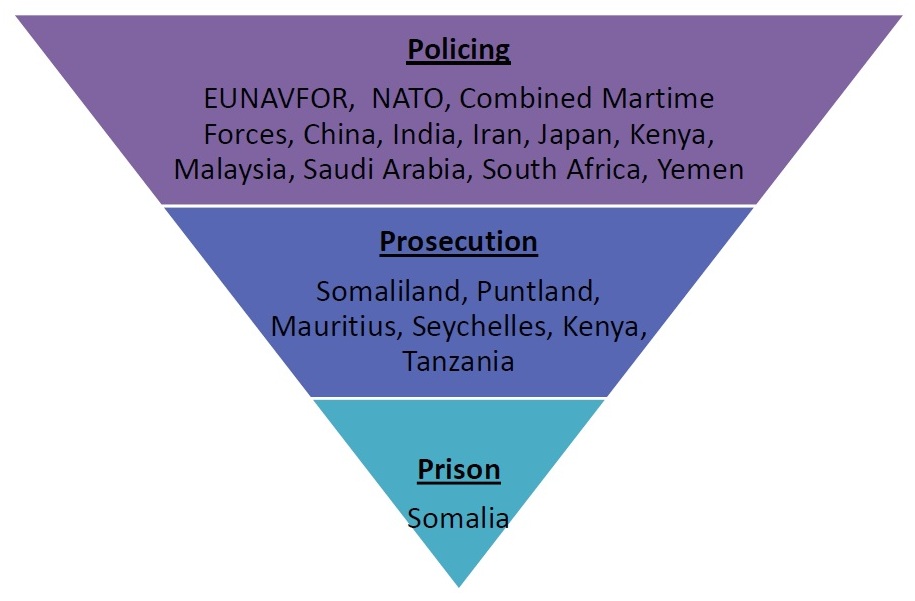
Funneling Pirates Back to Somalia

Another advantage of this proposed solution is that it has the benefit of building local capacity. Instead of directing resources into a foreign institution, providing support to local courts and local prosecutors promises to increase the capacity of regional state institutions to address criminal justice issues beyond piracy.

The report also raises hopes that the financiers and organizers of piracy can be adequately addressed by East African states. In relation to Mauritius and Seychelles in particular, the report highlights the capacity of these states to prosecute inchoate crimes such as conspiracy, incitement and attempts to commit piracy. The UK and the Netherlands are funding a Regional Anti-Piracy Prosecutions Intelligence Co-ordination Centre (RAPPICC) in Seychelles, in part, for this purpose. This capability will be crucial in order to bring to justice those individuals who organize pirate enterprises, but never step foot on board a pirate vessel.

There will be heavy reliance on prisons in Puntland and Somaliland

However, the report and the plan are lacking in several respects.  First, the cost savings of this plan have likely been exaggerated. There is no final accounting provided in the UNSG report. But a cursory survey of the various costs associated with refurbishing courtrooms, providing expert assistance, hiring additional judges and prosecutors, conducting trainings and, especially building prisons, shows a quickly rising price tag. Combine this with additional unspecified costs that would likely accompany this proposal such as rule of law, general training, and governance projects and the costs may actually be about the same as a hybrid tribunal such as the Special Court for Sierra Leone or the Extraordinary Chambers in the Courts of Cambodia (about $40 million each annually). In any event, the proposed solution’s budget is modest compared with the sums that are currently being dumped into unsustainable solutions that fail to address the root of the problem.

In addition, the UNSG report apparently hazards some guesses as to the potential of its proposed course of action. Despite the different conditions in each country or region, the report indicates that Somaliland, Puntland, Kenya, and Mauritius will be capable of performing piracy investigations in 20 months and within two years would be able to prosecute 24 cases of 10 defendants each. These are good benchmarks to evaluate the success of these projects.  But it is hard to believe that they are realistic assessments of local conditions. The report evaluates the local capacities of each state/region indicating the number of prosecutors and judges in each. But it fails to compare these numbers of professionals to the actual populations that they must serve. Three hundred and five (305) Prosecutors in Tanzania seems to be a significant number compared to the 36 prosecutors for the whole of Somaliland. However, Tanzania’s population is 43.5 million and the population in Somaliland appears to be around 3.5 million. Therefore, the number of prosecutors per capita in Somaliland (1/10,000) is higher than in Tanzania (1/140,000). In addition, only 10 Tanzanian prosecutors would be in charge of piracy prosecutions. Likewise, the report fails to take into consideration the caseload of the respective prosecutorial groups that would be responsible for piracy prosecutions (i.e. the number of cases each attorney is responsible for, thereby dictating how much time they would have to devote to piracy cases). This suggests the projected capacities are not based upon a realistic assessment of current capacity.

More importantly, the report acknowledges that it was unable to predict with any accuracy the number of piracy cases that would likely proceed to trial. That is, how much prosecutorial and penal resources will likely be required in the next few years.  Due to the volatility of Somalia, the changing tactics of pirates and of commercial vessels responding with various self-defence measures, an accurate assessment in this regard is quite difficult. However, the report suggests that anticipating the numbers of piracy suspects likely to be apprehended at sea and transferred to regional states for prosecution was not possible because no information was available as to the reasons for the release of piracy suspects from the numerous states conducting naval anti-piracy missions in the Indian Ocean.  It is unclear why the UNSG was unable to obtain this information from various member states of the United Nations. But it has certainly left a conspicuous gap in the report’s findings.

Finally, the report ends without any recommendations as to how to prevent recidivism, including programs to retrain Somali prisoners and integrate them back into the community. In this regard, the proposed solution is short-sighted, enabling the relocation of pirates back to Somalia, but providing no real long-term preventative measures. The only permanent solution to piracy is a stable and economically prosperous Somalia. Hopefully, the London Conference can initiate positive reforms in this regard as it is widely accepted that the solution or piracy resides on land, and not at sea.

New Logo!

A big thanks to Steve Tierney of teaguesart for our new logo and header!

The Economic Cost of Piracy – Oceans Beyond Piracy Report 2011

The economic cost of piracy has joined the already substantial political and security concerns of such operations, as an issue requiring further research and consideration by the relevant stakeholders. In this vein, the Colorado-based One Earth Future Foundation, which studies the effects of piracy through the Oceans Beyond Piracy project, has released its 2011 working paper on The Economic Cost of Somali Piracy. In order to ensure reliability, the report builds on dialogue and feedback from Oceans Beyond Piracy’s 2010 assessment of the cost of piracy with data obtained through collaboration with maritime stakeholders from industry, government and civil society, in addition to commentators and experts in the field. As the second report of its kind, the paper aspires to flag pertinent concerns for the Oceans Beyond Piracy Working Group, which will release recommendations for a more coordinated, and comprehensive strategy against piracy in July 2012.

In highlighting its concerns about the economic cost of Somali piracy to relevant stakeholders and the wider community, the report estimates the 2011 economic cost of piracy to be $6.6 – $6.9 billion US dollars. The majority of which is spent in mitigation of piracy attacks rather than in ransoms, as is most commonly believed and also portrayed by the media. The report only calculates direct costs, as indirect figures were too difficult for the research to quantify and in doing so assesses nine different cost factors specifically focused on the economic impact of Somali piracy. Namely: increased speeds, military costs, security guards and equipment, re-routing, insurance, labour, ransoms, prosecutions and imprisonment and counter-piracy organisations. The report subsequently found that 80% of all costs relating to countering piracy attacks are covered by the shipping industry, while governments finance the remaining 20% of the expenditures. The approximately $7 billion figure for 2011, is down from the $7 – $12 billion that was estimated in the 2010 report. While the 2010 estimate was higher, the 2011 report is said to be based on more authoritative and exact information according to the author of the report Anna Bowden who explained that in reality the figures of 2010 and 2011 are likely to be similar.

Key piracy developments: overview

The report outlines what it believes to be the key piracy developments affecting the cost of piracy in 2011, where there was an increase in attacks by Somali pirates, particularly in the first quarter. There was a record of 237 piracy attacks, rising from the 212 in 2010. However the proportion of successful attacks fell, with only 28 of the vessels actually captured, in comparison to the 44 in 2010. This is most likely due to the use of private armed guards on vessels and naval operations that have become more familiar dealing with piracy issues. The report recognised that 99% of the $7 billion was spent on yearly recurring costs associated with the protection of vessels including $2.7 billion in fuel costs, $1.3 billion for military operations and $1.1 billion for security equipment and armed guards.

In other observations, shipping behaviour altered whereby shippers increased payments necessary to harden vessels, hire private security and increase speed in high risk areas. Further, the geographic expansion of pirate activities increased eastwards towards India, and northeast towards the Gulf of Oman and Strait of Hormuz. New trends in piracy mitigation included the rerouting of ships so that they transited close to the western Indian coastline rather than the Cape of Good Hope. As will be discussed below, only $16.4 million was spent on prosecutions and $160 million was collected by pirates in the form of ransoms, which is only 2% of the overall economic expenditure. These figures represent a disproportionately small contribution to the economic cost of piracy compared to the $7 billion spent in order to stop the attacks.

Further key developments surrounded ransoms, which increased from $4 – $5 million, as did the duration that ships were held hostage during negotiations. Meanwhile, the human cost in the loss of lives cannot be adequately quantified, but notably increased from eight in 2009 to 24 in 2011, despite the significant economic effort to avoid the attacks. 2011 evidenced an increase in seafarer deaths, in addition to specific incidents highlighted in the media where groups of pirates were accused of kidnapping tourists and humanitarian workers on land in Somalia and Kenya. This resulted in a more aggressive response from military forces conducting counter-piracy missions in the region while pirates changed their primary operations from large vessels to smaller fishing boats.

Piracy and prosecutions

An issue of particular interest is the comparatively low cost of prosecutions, imprisonment and local legal capacity building, which at $16.4 million is a relatively small proportion of the $7 billion overall economic cost of piracy. This figure is an estimate of the cost of trials and imprisonment in the four selected regions of Africa, Europe, North America and Asia. The report highlights that in attempting to find a legal resolution to the issue of piracy, in October 2011, the United Nations Security Council called on UN member states to criminalise piracy, asking member states to report to the Secretary General on the measures they have taken to criminalise piracy.

Certain countries such as the United States and Oman have sentenced pirates to life imprisonment, with South Korea sentencing one pirate to death for murder. In estimating the cost of prosecutions in 2011, the report calculated the average cost of pirate trials that were conducted, in addition to the cost of imprisonment for suspected Somali pirates during the year, accordance with economic development and prosecutorial costs. The cost of trials and imprisonment in Kenya and the Seychelles were not included, due to the fact that the relevant costs for these prosecutions are covered by funding from the UNODC Counter Piracy Programme and other international funding mechanisms.

According to a report released in 2011 by Jack Lang, the United Nations Secretary General’s Special Adviser on Legal Issues Relating to Piracy off the Coast of Somalia, more than 90 per cent of captured pirates will be released without prosecution. The report notes that over the previous few years 1,089 pirate suspects had been arrested for piracy and those individuals have either been tried or are awaiting trial in 20 countries, a figure which has risen from 10 countries in 2010. Lang therefore proposed a specialised extraterritorial Somali court system with its seat in Arusha, Tanzania based on an estimated cost of $2.73 and $2.33 for each following year.

In consideration of this, and as already discussed in this blog, criticisms as to the resources needed for a fully internationalised piracy tribunal, that may cost up to an estimated $100 million, are short sighted against the report’s figure of $7 billion for the overall cost of piracy. In an earlier post by Matteo Crippa, we indicated that the most relevant issue in evaluating the effectiveness of international prosecution was its real deterrent effect. In comparison to an overall figure of $7 billion, $100 million for an international tribunal, however costly in isolation is comparatively low. These disparate figures might also justify a substantial increase in funding for the current localised prosecutorial initiatives, which are similarly capable of meeting effective deterred goals. Whatever solution is chosen, it is clear that prosecutions have not been prioritised as a budgetary matter.

Conclusions

The 2010 Oceans Beyond Piracy report was widely referred to in piracy commentary. The updated and more accurate 2011 version has already been critiqued by various sources. When considering that protecting vessels through high insurance premiums, onboard guards and re-routing costs $7 billion in comparison to the $160 million Somali pirates receive in ransoms or the comparatively small $16.4 million spent on prosecutions and imprisonment, there is an obvious disconnect and disproportionality in dealing with this issue. There is an ever present argument that insurance companies, as well as Private Maritime Security Contractors (PMSCs), earn more from piracy than the pirates themselves, which is well supported by this report, which showed evidence that 99% of piracy costs are recurring. This means that they will be repeated every year and will only fluctuate if piracy itself reduces to the extent that it warrants a change in political and economic approaches to the problem.

The report therefore suggests that stakeholders need to reassess the long-term sustainability of the costs outlined. The fear and preventative economic investment in piracy however looks set to increase with incidents such as Somali pirates launching their first attack in territorial waters when they raised a vessel near the Gulf State of Oman. One particularly disturbing piracy trend is that pirates have begun to focus their attention on people rather than ships. There have been incidents where pirates release the ships, but keep the crew for ransom purposes. This has extended to pirates kidnapping hostages on land such as humanitarian aid workers and tourists in Kenya and Somalia.

While not quantifiable in economic terms, the human cost of piracy is higher than any economic figure given. Twenty four people were killed by pirates in 2011, but hostages were held for longer in order to negotiate higher ransoms, which the report states took an average of 178 days (or six months). Also forgotten are the deaths of the pirates themselves. Due to the economic disconnect between pirate ransoms and the overall economic cost of pirate deterrence, it is clear that a purely mitigating or preventative policy does not offer a solution to control or alleviate piracy. Neither the military nor shipping industry have been successful in stemming the problems and the more money that is invested does not seem to reduce the cost to human life. One option is to stabilise the situation on the ground in Somalia in political and economic terms. As the report notes, very little is spent on the root causes of piracy, suggesting a redirection of investments from short-term symptoms to long-term solutions.


Update on London Conference on Somalia: Somaliland to attend Conference

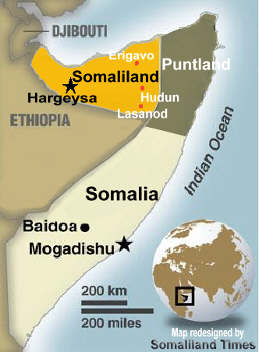
The parliament of Somalia’s separatist region of Somaliland overwhelmingly voted in favor to attend the upcoming international Conference on Somalia. The Conference will be hosted by the UK Government in London, on 23 February 2012. As previously noted, UK officials expect the attendance of world leaders and diplomats from over 40 countries. The vote marks a major policy shift for the separatist region, a former British protectorate, which has deliberately stayed away from several peace conferences concerning the situation in Somalia. Somaliland is located in northwestern Somalia, bordering Ethiopia in the south and west, Djibouti in the northwest and the autonomous Puntland region of Somalia to the east. Somaliland unilaterally declared independence from the rest of the country in 1991 but has not been recognized internationally.

Upcoming event: Panel on Establishment of a Special Anti-Piracy Tribunal: Prospects and Reality

As part of the ABA Section of International Law, 2012 Spring Meeting in New York, 17-21 April 2012, there are two panel discussions that may interest readers. The first will discuss the legal issues surrounding the prosecution of piracy. For further background on the Kenyan High Court decision see here. The second panel will take a look back at one of the precursors to modern international criminal law, the Nuremberg trials.
Establishment of a Special Anti-Piracy Tribunal: Prospects and Reality
Tuesday, 17 April 2012, 4:00 pm – 5:30 pm

Two hundred years ago, piracy was recognized as the first “international” crime. Recently, piracy has re-emerged as a major problem for international commerce. In the last two years, Somali pirate attacks off the Kenyan and Somali coasts have caused over $25 billion in losses. Although the UN Security Council authorized the international community to capture Somali pirates and turn them over to Kenya for prosecution, Kenyan courts have struggled with the novel legal issues presented before them. A Kenyan High Court Judge recently ruled the Kenyan Piracy Court cannot obtain jurisdiction over captured pirates because Kenyan law lacks the requisite statute granting such jurisdiction. Prosecuting pirates involves knowledge of international treaties, criminal law, maritime law, and unusual evidentiary gathering rules, which is challenging and even dangerous. This panel will provide a basic understanding of these complex legal issues and how the many parties involved are trying to resolve this continuing international dilemma.

Moderator: Anthony Colleluori, Anthony Colleluori & Associates, PLLC, Melville, New York

Speakers: Sandra Hodgkinson, National Defense University, Alexandria, Virginia

Rosemelle Mutoka, Kenya Piracy Court  Chief Judge, Kenya

Michael Scharf , Case Western Reserve University, Cleveland, Ohio

The Evolution of International Criminal Law: Problems and Perspectives

19 April 2012,  4:30 pm – 6:00 pm

A conversation with Ben Ferencz, the sole surviving American who served as a prosecutor at the Nuremburg trials of Nazi war criminals. Ferencz was Chief Prosecutor for the United States in The Einsatzgruppen Case, which the Associated Press called “the biggest murder trial in history.” Twenty-two defendants were charged with – and convicted of – murdering over a million people. In addition to his wartime and Nuremburg experiences, Ferencz will discuss Nuremburg’s implications for the rule of law and the international criminal court.

Program Chairs & Moderators: Michael H. Byowitz, Wachtell, Lipton, Rose & Katz, New York, New York

Don Ferencz, The Planethood Foundation, New York, New York

Speaker: Ben Ferencz , New Rochelle, New York