Use of Private Guards and VPDs Remains Controversial

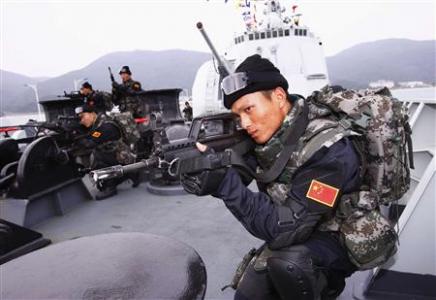
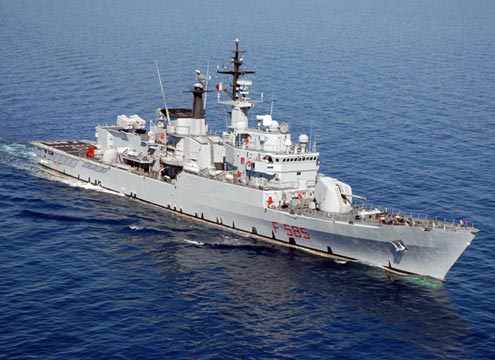
Staff of IntelEdge - A Private Security Firm

The Contact Group on Piracy off the Coast of Somalia, as you will recall, was created by a UN Security Council Resolution in 2009 and is now composed of more than 60 countries and international organizations. It recently held its eleventh plenary session and issued a press communique measuring the progress of the fight against piracy. The statement first notes that the problem of piracy is far from under control:

Concluded that piracy continues to pose a serious threat, noting that while the number of hostages in captivity has decreased since the last meeting (currently 197 individuals as of 19 March 2012, as compared to 250 in November 2011), the number of hijacked vessels has gone up, and currently stands at 13, compared to ten at the last Plenary in November 2011; total incidence of attacks also remains high, with 36 reported so far in 2012, seven of which have been successful;

The statement then acknowledges the assistance that private guards and, government-provided vessel protection detachments (VPDs) can provide.

Noted that the low success rate of attacks was a positive development due to a combination of factors, including the application of best management practices (BMPs) by the shipping industry, the continuing naval presence and more effective engagement rules, deployment of military Vessel Protection Detachments (VPDs), and the more legally challenging issue of privately contracted armed security personnel (PCASP); and recalled the need for close cooperation between coastal states in the region, flag states, and countries deploying VPDs;

Key here are the difficult legal issues raised by the use of private armed guards and the fact that these issues have not found any ready answers. In fact, the statement,

Noted the concern of some coastal states in the Indian Ocean region about the increasing use of armed guards by commercial ships in the proximity of such states, and invited [Working Group] 2 and [Working Group] 3 to discuss the implications of the use of such guards, and potential ways to address the related concerns.

In addition to legal issues such as when the use of force is justified, some new ones have presented themselves. Private Security Companies were always confronted with the difficulty of complying with multiple legal regimes in different ports of call. While a point of origin might permit possession of some weapons, perhaps the next port of call would not. In some instances, this led to the disposal of weapons at sea. See also here. Now, in order to avoid these conflicting legal regimes, some private security companies have reportedly, stored guns aboard floating armories on the high seas in order cut costs and circumvent laws limiting the import and export of weapons. As the statement of the Contact Group makes clear, a consensus position on these issues is still some ways off.

A Broader Trend of Engagement for China? On China’s Vote in Favour of an International Piracy Tribunal


It is fair to observe that China has generally disassociated itself with the flow of the international criminal justice. Voting against the Rome Statute in 1998 has best elaborated its stand on this issue. An “overly active” global court is perceived to have the potential to jeopardize state sovereignty, the cornerstone of the Five Principles of Peaceful Co-Existence China has consistently adhered to in its engagement of international affairs. A survey of China’s involvement with all the other UN-backed tribunals further confirms the above observation. Apart from Chinese judges, I am aware of only two senior staff to work in UN international tribunals. China is rarely interested in the work of these tribunals. Starting with low expectations, commentators were amazed, if not at all surprised, by China’s vote in favour of an international tribunal to prosecute piracy. In his speech at the UNSC debate, Chinese Ambassador Wang said his country would be in favour of the option of prosecution in Tanzania in an international court. To what extent is this an indicator of China’s broader trend of engagement with international criminal justice?

Observers arguing in favour of this proposition would suggest this happens in a wave of change in China’s view on international tribunals. In particular, China (the People’s Republic of China only took back the seat in the United Nations in 1971) for the first time appeared before the International Court of Justice in its proceedings in the Kosovo Advisory Opinion. China’s participation in this case is full-fledged, by both submitting written submissions as well as participating in the oral arguments. Lead by Ministry of Foreign Affair’s Legal Adviser, Ambassador Xue Hanqin (who later become a Judge at ICJ), the strength of the team is also unprecedented. As the words of Ambassador Xue plainly put:

[although] this is the first time for the People’s Republic of China to participate in the proceedings of the Court, the Chinese Government has always held great respect for the authority and importance of the Court in the field of international law.

If it is true that China has always paid tribute to the work of the ICJ, why is it only in 2009 that China first joined in its proceedings? One of the reasons is the nature of this case. It concerns the competing interests of the sovereign territorial integrity of a state and a minority group’s wish for independence under the principle of self-declaration. One may find it very easy to relate the situation to those China has been facing with regard to Taiwan, Tibet and Xinjiang. All of these regions are legally and constitutionally part of China and recognized as such by the overall majority of international community. Yet each of them has been through different degrees of secessionist movements, in particular Taiwan, which arguably has been enjoying a de facto independent status. Beijing has unequivocally submitted these territorial integrity issues as the core interests of China. To resolve these issues in favour of China has always been one of the foremost tasks of Chinese diplomats like Ambassador Xue and her team. Fortunately enough for us in favour of the proper functioning of international law, she has successfully persuaded the country and its rulers to endorse her endeavour at the International Court of Justice.

Those who are sceptical of the above proposition might suggest that this is also true for the case of international prosecution of piracy: enormous Chinese interests are at stake. Chinese vessels are not immune to piracy. In a wave of pirate attacks in 2008, a Hong Kong vessel was seized in September 2008. Later another attempted siege was launched on a Chinese fishery boat in December 2008 and was fortunately defeated by “friendly countries’ force”. At the end of that year, China decided to send its own battle vessels to the area, a practice lasting until today. Nevertheless, Chinese vessels continue to be harassed by pirates. For example, the Chinese vessel “De Xin Hai” was seized in October 2009. After arduous negotiations, Beijing was forced to pay a large ransom. China’s efforts have also extended to transnational crime along international rivers, more particular the Mekong. China has prominently displayed its naval force in response to recent deadly attacks along the river. In conclusion, a lesson has been learnt in Beijing: there must be an orchestrated effort in this regard, probably including the international prosecution of crimes.

Having highlighted the special situation of these two cases, the question to be answered is will these be the only isolated incidents? I would refute that argument. Simply stated, for a country as significant as China with national interests interspersed throughout the globe, these examples tend to exhibit a general pattern rather than isolated incidents. No Chinese would have imagined China being so much involved in piracy off the coast of an East African country. Yet here we are.  As Chinese have frequently said, there is always a direct cause and a fundamental cause for an event. Applying this formulation to the trend of engagement with international criminal justice, the tangible Chinese interests at stake are the direct cause whilst the fundamental cause is the rising awareness of the value of international law, the functioning of the international courts and at its remote back the growing role of China in the global affairs.

A further extension of this principle to the International Criminal Court is still far off and the road to Rome will not be easy. After Ambassador Xue’s team headed back to China, challenges to this endeavour appeared. Critics believe if the sovereign integrity argument was refused by the International Court of Justice, the legitimacy of this consistently adhered-to position will be undermined. This was later proved to be not at all pessimistic. After all, China has much to learn in defending its national interest through the international justice system. Yet the signal is clear, China is getting on board!

The Enrica Lexie and Unintentional Terrorism

GUEST POST BY: Jon Bellish cross-posted at The View From Above.

An interesting exchange took place at the Kerala High Court on Friday between presiding Justice PS Gopinathan and VJ Matthew, counsel for the owner of the Enrica Lexie. Regardless of the level of significance one attributes to Justice Gopinathan’s remarks, the dialogue sheds light on the tension and deep mistrust surrounding the events of February 15th.

Mr. Matthews, representing Dolphin Tankers argued that the Italian marines had to be classified as terrorists in order for the India’s statute implementing the IMO’s SUA Convention (SUA Act)[1] to apply. In response, Justice Gopinathan said, “[t]he firing on Indian fishermen by two Italian marines- Massimiliano Latorre and Salvatore Girone-off the Kerala coast was an act of terrorism…As far as victims are concerned, their relatives are concerned, as far as Indians are concerned [the alleged shooting was] a terrorist act.”

To be fair, Justice Gopinathan did not declare the Italian marines terrorists as a matter of law. He merely stated that that is how the general public viewed them. It is nonetheless disturbing for an officer of an Indian High Court to give voice to his private opinion about the facts of a case before him, especially when that opinion deviates so far from reality.

Where Mr. Matthew’s claims are concerned, it is far from certain that the marines must be classified as terrorists for the SUA Act to apply. Although the SUA Convention was passed with the goal of suppressing international terrorism in mind,[2] the Convention seeks to achieve its aim by proscribing acts, not classes of people. Article 3 of the SUA Convention lists the crimes punishable under the Convention, stating that if “any person” “performs an act of violence against a person on board a ship if that act is likely to endanger the safe navigation of that ship,” that person has committed “an offense” under the Convention. Similarly, the SUA Act states that “whoever unlawfully and intentionally” commits an act of violence against a person on board a ship has violated the Act and is subject to punishment for that act under Indian law.[3]

The words “terror,” “terrorist,” or “terrorism” do not appear at all in the operative clauses of the SUA Convention, nor do they appear in any portion of India’s SUA Act. Thus Mr. Matthew’s argument that legal classification as a terrorist is a prerequisite to be charged under the SUA Act appears at odds with the text of the SUA Act itself and the Convention upon which it is based.

But Justice Gopinathan’s response to Mr. Matthew’s good faith legal claim was far more dubious than the claim itself. Rather than satisfying himself by pointing out that an individual need not be legally classified as a terrorist for the SUA Act to apply, Justice Gopinathan declared by fiat, and counter to all reason, that the Italian marines had indeed committed “an act of terrorism.”

Though some argue that there is simply no internationally recognized definition of terrorism,[4] Judge Antonio Cassese, presiding over the Appeals Chamber at Special Tribunal for Lebanon, announced last year that a definition of terrorism “has gradually emerged” in customary international law.[5] According to the STL, terrorism is defined under customary international law as consisting of the following three elements:

(i) the perpetration of a criminal act (such as murder, kidnapping, hostage-taking, arson, and so on), or threatening such an act; (ii) the intent to spread fear among the population (which would generally entail the creation of public danger) or directly or indirectly coerce a national or international authority to take some action, or to refrain from taking it; (iii) when the act involves a transnational element.

Of the three enumerated elements, only the third, that the act must involve a transnational element, is clearly present. As for the second, there is no way to argue that the Italian marines fired upon the Indian vessel to spread fear among the Indian population or coerce the Indian government. They were acting as agents of the Italian government charged with the protection of a merchant vessel from the real and credible threat of maritime piracy. The unfortunate deaths of two fishermen do not change the character of the marines’ actions. Finally, it is presently impossible to know whether the Italians’ acts could be considered “murder” under the first prong. That determination can only be made once a competent tribunal establishes that the Italians were in fact the ones who shot the Indians and entertains any affirmative claim of self-defense made by the marines.

Furthermore, the alleged acts of the marines fails to satisfy even the minimal, “core definition” of terrorism proposed by Professor Marcello Di Filippo in the European Journal of International Law.[6] After surveying relevant international and domestic laws and sloughing aside any contested definitional aspect of terrorism, Professor Di Filippo concludes that an act of terrorism requires, at the very least: (i) an act of violence; (ii) when that act is targeted at civilians.[7] According to Di Filippo, this core definition is the absolute minimum standard under which an act could be properly considered terrorism.

Implicit in Di Filippo’s core definition is the requirement that the actor must at least believe that the targets are civilians, and one could even argue that the actor must intend to target the victims because they are civilians. Thus unless the Indian authorities can prove, at minimum, that the Italians knew that the Indians were unarmed before firing upon them, the acts of the marines do not rise to the level of terrorism. Justice Gopinathan’s statement that the marines committed a “terrorist act” accuses the Italians of a crime that does not exist – negligent or reckless terrorism.

An oral pronouncement by a Justice with no legal ramifications is hardly a groundbreaking development in what will surely be an interesting case. It does illustrate the depth of mistrust between the Italians and Indians in this particular instance, with the Italians accusing the Indians of a vast conspiracy involving fabricated evidence and the Indians accusing the Italians of murder and now, apparently, terrorism. We are therefore back where we started: waiting for the results of the ballistics report and hoping, perhaps against the available evidence, that cooler heads will prevail and due process will be afforded to all.


[1] Suppression of Unlawful Acts Against Safety of Maritime Navigation and Fixed Platforms on Continental Shelf Act, 2002

[2] The Preamble of the SUA Convention notes that the state parties are “DEEPLY CONCERNED about the world-wide escalation of acts of terrorism in all its forms.”

[3] The Suppression of Unlawful Acts Against Safety of Maritime Navigation and Fixed Platforms on Continental Shelf Act, 2002 Act No. 69 of 2002, art. 3(1)(a) (Dec. 20, 2002).

[4] Jean-Marc Sorel, Some Questions About Terrorism and the Fight Against its Financing, 14 Eur. J Int’l L. 365, 368 (2003) (describing the “confused mix” of definitions).

[5] Interlocutory Decision on the Applicable Law: Terrorism, Conspiracy, Homicide, Perpetration, Cumulative Charging, Case No. STL-11-01/I, at para. 83 (Feb. 16, 2011), available at http://www.stl-tsl.org/x/file/TheRegistry/Library/CaseFiles/chambers/20110216_STL-11-01_R176bis_F0010_AC_Interlocutory_Decision_Filed_EN.pdf

[6] Marcello Di Filippo, Terrorist Crimes and International Co-Operation: Critical Remarks on the Definition of Terrorism in the Category of International Crimes, 19 Eur. J. Int’l L. 533 (2008).

[7] Id. at 558-61.

Historic Piracy Trial Opens in Italy

Another landmark piracy trial involving alleged Somali pirates opened on 23 March 2012 in Rome. The trial is the first international piracy trial taking place in Italy, mirroring similar trials already held in France, Germany, the Netherlands, Spain and the US, among others, in addition to “regional prosecutions” in the Seychelles and neighboring States in the Gulf of Aden. This trial provides a perfect opportunity to examine the interplay of international and municipal law as Italy has incorporated in its own fashion the relevant provisions of UNCLOS and the SUA Convention.

Factual Background – Citadel Saves Seafarers

Before reaching these legal provisions, it is important to have an understanding of the rich factual tapestry underlying this case. Nine suspected Somali pirates have appeared before the Court d’Assise of Rome in connection with the 10 October 2011 attack and highjack of the Montecristo, an Italian-owned cargo vessel, some 600 miles off the Somali Coast. At the time of the attack, the Montecristo was en route to Yemen transporting scrap iron from Liverpool, UK to Vietnam, The vessel’s twenty-three men crew was composed of Italians, Indians and Ukrainians. Among the seven Italians on board were four civilians with security tasks, although unarmed.

According to media reports on the incident, the pirates approached the Montecristo from two skiffs and a mothership, firing at the vessel before successfully boarding it. The vessel’s crew immediately sought refuge in a fortified citadel, from which it could control the engine and continue steering. Some 24 hours after the attack, the Montecristo and its crew were rescued by UK and US troops in a NATO Ocean Shield operation. The then Italian Minister of Defence has since indicated that, prior to the security blitz, Italy agreed with UK authorities to detain and try the perpetrators before its national courts. Despite the pirates managing to cut off the vessel’s means of communication, the crew was able to communicate with the naval authorities, apparently tossing a message in a bottle attached to a flashing beacon. With the crew out of harms’ way, the RFA auxiliary ship Fort Victoria and USS frigate De Wert headed to the rescue, launching a helicopter raid from the former. Eleven suspected pirates were found on board and surrendered without opposing any resistance. Four other suspects were later intercepted 200 miles off the Somali coast on an Iranian dhow deemed to be the pirate mothership from which the attack on the Montecristo was launched. Twenty Pakistani members of the hostage crew manning the hijacked dhow for the pirates were freed. Ladders and weapons were also found on board,  including a rocket-propelled grenade as well as life jackets from the Asphalt Venture, a Panama-flagged ship previously hijacked in 2010 and released after payment of a ransom. All fifteen suspected pirates were handed over to Italian authorities and their arrest confirmed. During the judicial investigation into the incident, two suspects from Pakistan were found to have been also previously kidnapped by pirates. They were therefore released by the Italian authorities.

Prosecutors have charged the alleged pirates with depredation and damage to a foreign vessel, kidnapping and illegal possession of weapons. According to the prosecutors, the pirates have connections with Al-Shabaab and the attack on the Montecristo was aimed at financing its terrorist activities and foster a campaign of obstruction of the free maritime transit in the Indian Ocean. The Italian government is participating in the trial as a civil party not only to emphasize the gravity of modern day piracy as communis hostis omnium but also to highlight its relevant social and economic costs vis a vis security and other prevention and deterrence measures. The trial will continue on 15 May 2012 with the testimony of the Montecristo’s captain as well as the captain of the Iranian dhow. The remaining four alleged pirates were previously found to be below 18 years of age and their case was therefore transferred to the juvenile courts. Their trial will commence on 2 April 2012, also in Rome, and will hopefully shed light on the phenomenon of the involvement and use of juveniles as pirates.

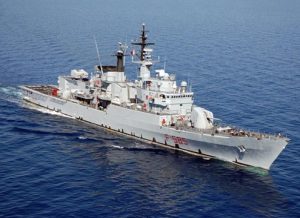
Notably, the highjack of the Montecristo triggered the deployment of military forces onboard Italian merchant ships as Vessel Protection Detachment to protect these against pirate attacks. Law N. 130 of 2 August 2001 allows for the deployment of both army personnel as well as contractors onboard commercial ships. As widely reported, two Italian marines on duty aboard the container ship Enrica Lexie are currently detained in Kerala, India in connection with the murder of two Indian fishermen during the shooting of a suspected pirate boat in the Indian Ocean. In 2005, Italy was the first nation to deploy one of its military ships off the Somali coasts, the frigate Granatiere, with anti-piracy tasks. Contrary to an increasing number of other States, Italy did not fully implement the provisions of L. 130/11 allowing privately contracted armed security guards on board of merchant ships operating under its flag. Previously, 2 Italian-flagged ships, the oil tanker Savina Caylyn and the cargo ship Rosalia D’Amato were captured by Somali pirates and released only after the payment of ransoms.
Italian Anti-Piracy Legislation

In connection with the holding of these trials, it is worth highlighting the main anti-piracy norms currently in force in Italy with regard to piracy and armed robbery at sea. Italy ratified the 1982 UNCLOS by means of Law N. 689 of 2 December 1994 which also gives full execution to the Convention on Italian soil. Italy also ratified and gave full execution to the SUA Convention, adopted in Rome on 10 March 1988, with Law N. 422 of 28 December 1989. Article 3 of L. 422/89 introduced various terms of imprisonment for the crimes contained in the Convention. Italy first criminalized piracy by adopting its Navigation Code back in 1942. Articles 1135-39 of the Italian Navigation Code contain the relevant regime for the criminalization of piracy within the Italian judicial system. Notably, Articles 1135 provides as follows (unofficial translation):

Art. 1135 – Piracy

1.   The Master or Officer of a national or foreign ship, who commits acts of depredation against a national or foreign ship or its load, or for the purpose of depredation commits violence against any person on board, shall be punished with a term of imprisonment from ten to twenty years.

2.   For all the others members of the crew, punishment is reduced by a maximum not exceeding one third; for those individuals extraneous to the crew, the punishment is reduced to the maximum of a half.

Article 1136 is particularly interesting, criminalizing the suspicion of piracy where a ship is illegally equipped with weapons while lacking proper navigation papers:

Art. 1136 – Ship on Suspicion of Piracy

1.   The Master or Officer of a national or foreign ship, illegally equipped with weapons, who sails without proper certification, shall be punished with imprisonment from five to ten years.

2.   Para. 2 from art. n. 1135 applies.

This Article, although rarely utilized, does not find immediate comparison within the UNCLOS provisions relevant to the repression of piracy. As elucidated below, its applicability is relevant as a matter of municipal legislation pursuant to the norms enshrined in Article 7 of the Italian Penal Code. Question arises, yet, on the basis of which national legislation, particularly when concerning Somali pirates, the illegality of weapon possession shall be assessed. Article 1137 instead refers to crimes committed within the Italian territorial seas and is relevant for the punishment of armed robbery at sea. Articles 1138-39 are also worth mentioning, criminalizing not only the seizure of a ship or an agreement to this end, respectively, but also providing for a harsher punishment regime for those who promote these acts.

Considering the charges against the suspected pirates, the oldest of which is of twenty four years of age, it has also to be noted that under Article 289bis of the Italian Penal Code, the crime of kidnapping in connection with terrorism carries a possible sentence of twenty-five to thirty years of imprisonment.

In addition, Article 5 of Law Decree No. 209 of 30 December 2008, relevant to Italy’s participation to several humanitarian and peace enforcement missions, originally established a series of criminal sanctions with specific reference to international maritime piracy. In particular, it states that crimes referred to in Articles 1135-36 of the Italian Navigation Code, committed either on the High Seas or territorial waters and covered by the EU NAVFOR ATLANTA mission, are punished in accordance with Article 7 of the Italian Penal Code, which allows the punishment of certain crimes committed outside the Italian territory by foreigners or national citizens. Pursuant to L. 422/89, Article 7 also applies for crimes contemplated in the SUA Convention. In accordance with Law Decree N. 61 of 15 June 2009, to be punished under this Article, the crimes committed off the coast of Somalia need to retain a link with national interests, for instance damage to Italian citizens or property. Furthermore, territorial jurisdiction for these crimes resides in the Ordinary Tribunal based in Rome.

Finally, in case of arrest for these crimes, Article 5, L. 209/08 extends the provisions of Article 9, para. 5, of the Law Decree N. 421 of 1 December 2001, relevant to Italy’s participation in the chapter of the Enduring Freedom mission in the Horn of Africa. Article 9 provides for the applicability of stricter procedures in cases where it is not immediately possible to bring the arrested individuals before the competent judicial authorities for the confirmation of their arrest. These provisions include the possible extension of further 48 hours after formal notification of the arrest and the use of audio-video conference means for interrogation, confirmation of the arrest and access to a defence lawyer in the place of temporary detention.

How will the prosecution charges play out in the Montecristo trial? Particularly relevant appears the piracy-terrorism link, specifically in relation with the funding of Al Shabaab. In this regard, the trial might become the first major trial discussing the link between the activities of the pirates and those of the militias which has been since long theorized but never so far clearly established.

Direct application of the international law of piracy in municipal systems

Cross-posted at The View From Above.

Most legal authorities assume that signing and ratifying the UN Convention on the Law of the Sea is insufficient, in and of itself, to provide a state a jurisdictional basis to prosecute acts of piracy on the high seas.  For example, Jose Luis Jesus, the former President of the International Tribunal for the Law of the Sea has explained:

The international legal regime on piracy, as codified in articles 100 to 107 of UNCLOS, is, as already mentioned, a jurisdictional regime and, as such, only allows States to arrest pirates, seize their ships and cargo, and bring them to trial in the State’s domestic judicial system. This legal regime is not predicated on the existence of an international criminal substantive law, nor does it contemplate any international judicial means or structure to try pirates.

As it stands now, there is no international court or tribunal that includes in its jurisdiction a mandate to try pirates. Once a State asserts its jurisdiction over pirates and their ship by arresting them, under the international piracy regime, that State is encouraged to try the pirates and dispose of the pirate ship and its cargo in accordance with its own national legislation and judicial system. This means that if the arresting State does not have penal legislation allowing for the punishment of pirates, or if the arresting State does not want to try them in its own territory for political or other convenience, then the legal regime as codified in UNCLOS is of little use.

Similarly, the most recent UNSG report of 19 January 2012 on the problem of piracy in the Gulf of Guinea states that UNCLOS provides for universal jurisdiction to prosecute pirates, but since Benin’s Maritime Code does not incorporate these provisions, Benin’s jurisdiction on piracy acts committed on the high seas is limited to acts committed by its citizens or on board of Benin’s ships.  The same concern has been expressed regarding the failure of the Transitional Federal Government to pass legislation criminalizing piracy in Somalia. Finally, based on UNCLOS Article 100 which requires that states must “cooperate to the fullest possible extent in the repression of piracy”, Douglas Guilfoyle has stated that “the inference is that States have no duty to enact relevant national offences [for piracy] and have ‘a certain latitude’ to cooperate in suppressing piracy by means other than prosecution.”

This view is understandable when observed through the lens of treaty law whereby implementing legislation is a necessary prerequisite to application within a municipal system. But the international law of piracy has also been accepted as customary law. For example, the 2010 Digest of US Practice in International Law, though noting the U.S. has not signed or ratified UNCLOS, states, “the actions and statements of the Executive Branch over more than six decades reflect the consistent U.S. view that this definition [of piracy in Article 101 of UNCLOS] is both reflective of customary international law and universally accepted by states.” Furthermore, each of the UN Security Council resolutions on piracy in Somalia and the Gulf of Guinea have emphasized that the only definition for the crime of piracy in international law is the one set forth in UNCLOS to which 162 states are states parties. UNCLOS has codified the customary international law of piracy.

Considering the law of piracy is settled both in treaty as well as customary law, is it possible that it is directly applicable in municipal systems without the need for implementing legislation? Some states accept that international law, especially with regard to jus cogens or very serious crimes (such as crimes against humanity and war crimes), applies directly within that state without the need to pass such legislation. With regard to piracy, whether or not it may apply directly would appear to hinge on a number of factors, including the gravity of the offence, whether there is a duty to prosecute in international law, whether the applicable treaties are self-executing, and the nature of a municipal system as monist or dualist. (Ward N. Ferdinandusse’s study is particularly helpful on this point.) Direct application of international law is not without precedent in African states, but will obviously need to be addressed on a case by case basis. To cite but one intriguing example, the 2010 Kenyan Constitution provides in Article 2 that the general rules of international law shall form part of the law of Kenya and that any treaty or convention ratified by Kenya shall form part of the law of Kenya under the Constitution.

The somewhat academic question of the indirect or direct application of international legal norms may not have been addressed by many African states confronted with piracy. Therefore, in the absence of clarity on this issue, the least risky practice would be to assume there is no direct application and insist on the codification of the legal definition of piracy in municipal law prior to instituting any prosecution. Indeed this seems to be the strategy adopted by the UN Security Council Resolutions on the issue. Is it, nonetheless, possible that the international law of piracy is directly applicable in certain African states, thereby rendering criminalization in positive law superfluous? The answer could have important ramifications for prosecutions in states without anti-piracy legislation or in those with incomplete legislative frameworks.