Historic Piracy Trial Opens in Italy

Another landmark piracy trial involving alleged Somali pirates opened on 23 March 2012 in Rome. The trial is the first international piracy trial taking place in Italy, mirroring similar trials already held in France, Germany, the Netherlands, Spain and the US, among others, in addition to “regional prosecutions” in the Seychelles and neighboring States in the Gulf of Aden. This trial provides a perfect opportunity to examine the interplay of international and municipal law as Italy has incorporated in its own fashion the relevant provisions of UNCLOS and the SUA Convention.

Factual Background – Citadel Saves Seafarers

Before reaching these legal provisions, it is important to have an understanding of the rich factual tapestry underlying this case. Nine suspected Somali pirates have appeared before the Court d’Assise of Rome in connection with the 10 October 2011 attack and highjack of the Montecristo, an Italian-owned cargo vessel, some 600 miles off the Somali Coast. At the time of the attack, the Montecristo was en route to Yemen transporting scrap iron from Liverpool, UK to Vietnam, The vessel’s twenty-three men crew was composed of Italians, Indians and Ukrainians. Among the seven Italians on board were four civilians with security tasks, although unarmed.
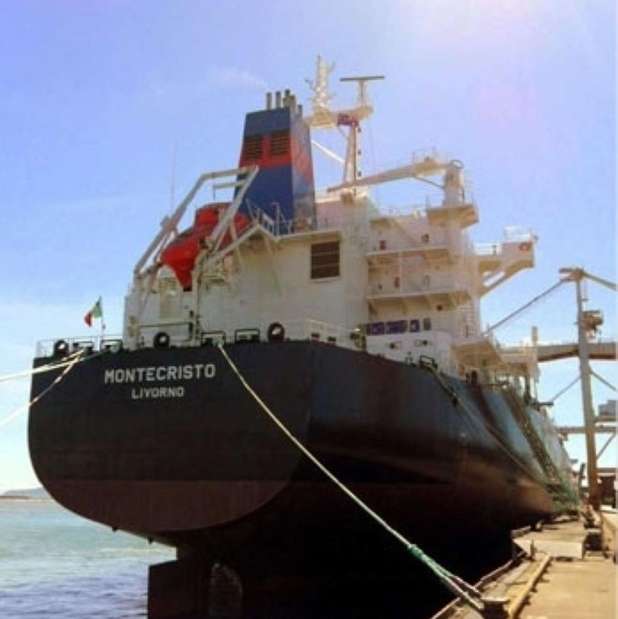
According to media reports on the incident, the pirates approached the Montecristo from two skiffs and a mothership, firing at the vessel before successfully boarding it. The vessel’s crew immediately sought refuge in a fortified citadel, from which it could control the engine and continue steering. Some 24 hours after the attack, the Montecristo and its crew were rescued by UK and US troops in a NATO Ocean Shield operation. The then Italian Minister of Defence has since indicated that, prior to the security blitz, Italy agreed with UK authorities to detain and try the perpetrators before its national courts. Despite the pirates managing to cut off the vessel’s means of communication, the crew was able to communicate with the naval authorities, apparently tossing a message in a bottle attached to a flashing beacon. With the crew out of harms’ way, the RFA auxiliary ship Fort Victoria and USS frigate De Wert headed to the rescue, launching a helicopter raid from the former. Eleven suspected pirates were found on board and surrendered without opposing any resistance. Four other suspects were later intercepted 200 miles off the Somali coast on an Iranian dhow deemed to be the pirate mothership from which the attack on the Montecristo was launched. Twenty Pakistani members of the hostage crew manning the hijacked dhow for the pirates were freed. Ladders and weapons were also found on board,  including a rocket-propelled grenade as well as life jackets from the Asphalt Venture, a Panama-flagged ship previously hijacked in 2010 and released after payment of a ransom. All fifteen suspected pirates were handed over to Italian authorities and their arrest confirmed. During the judicial investigation into the incident, two suspects from Pakistan were found to have been also previously kidnapped by pirates. They were therefore released by the Italian authorities.

Prosecutors have charged the alleged pirates with depredation and damage to a foreign vessel, kidnapping and illegal possession of weapons. According to the prosecutors, the pirates have connections with Al-Shabaab and the attack on the Montecristo was aimed at financing its terrorist activities and foster a campaign of obstruction of the free maritime transit in the Indian Ocean. The Italian government is participating in the trial as a civil party not only to emphasize the gravity of modern day piracy as communis hostis omnium but also to highlight its relevant social and economic costs vis a vis security and other prevention and deterrence measures. The trial will continue on 15 May 2012 with the testimony of the Montecristo’s captain as well as the captain of the Iranian dhow. The remaining four alleged pirates were previously found to be below 18 years of age and their case was therefore transferred to the juvenile courts. Their trial will commence on 2 April 2012, also in Rome, and will hopefully shed light on the phenomenon of the involvement and use of juveniles as pirates.

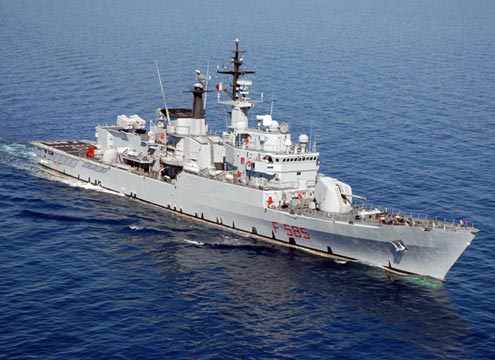
Notably, the highjack of the Montecristo triggered the deployment of military forces onboard Italian merchant ships as Vessel Protection Detachment to protect these against pirate attacks. Law N. 130 of 2 August 2001 allows for the deployment of both army personnel as well as contractors onboard commercial ships. As widely reported, two Italian marines on duty aboard the container ship Enrica Lexie are currently detained in Kerala, India in connection with the murder of two Indian fishermen during the shooting of a suspected pirate boat in the Indian Ocean. In 2005, Italy was the first nation to deploy one of its military ships off the Somali coasts, the frigate Granatiere, with anti-piracy tasks. Contrary to an increasing number of other States, Italy did not fully implement the provisions of L. 130/11 allowing privately contracted armed security guards on board of merchant ships operating under its flag. Previously, 2 Italian-flagged ships, the oil tanker Savina Caylyn and the cargo ship Rosalia D’Amato were captured by Somali pirates and released only after the payment of ransoms.
Italian Anti-Piracy Legislation

In connection with the holding of these trials, it is worth highlighting the main anti-piracy norms currently in force in Italy with regard to piracy and armed robbery at sea. Italy ratified the 1982 UNCLOS by means of Law N. 689 of 2 December 1994 which also gives full execution to the Convention on Italian soil. Italy also ratified and gave full execution to the SUA Convention, adopted in Rome on 10 March 1988, with Law N. 422 of 28 December 1989. Article 3 of L. 422/89 introduced various terms of imprisonment for the crimes contained in the Convention. Italy first criminalized piracy by adopting its Navigation Code back in 1942. Articles 1135-39 of the Italian Navigation Code contain the relevant regime for the criminalization of piracy within the Italian judicial system. Notably, Articles 1135 provides as follows (unofficial translation):

Art. 1135 – Piracy

1.   The Master or Officer of a national or foreign ship, who commits acts of depredation against a national or foreign ship or its load, or for the purpose of depredation commits violence against any person on board, shall be punished with a term of imprisonment from ten to twenty years.

2.   For all the others members of the crew, punishment is reduced by a maximum not exceeding one third; for those individuals extraneous to the crew, the punishment is reduced to the maximum of a half.

Article 1136 is particularly interesting, criminalizing the suspicion of piracy where a ship is illegally equipped with weapons while lacking proper navigation papers:

Art. 1136 – Ship on Suspicion of Piracy

1.   The Master or Officer of a national or foreign ship, illegally equipped with weapons, who sails without proper certification, shall be punished with imprisonment from five to ten years.

2.   Para. 2 from art. n. 1135 applies.

This Article, although rarely utilized, does not find immediate comparison within the UNCLOS provisions relevant to the repression of piracy. As elucidated below, its applicability is relevant as a matter of municipal legislation pursuant to the norms enshrined in Article 7 of the Italian Penal Code. Question arises, yet, on the basis of which national legislation, particularly when concerning Somali pirates, the illegality of weapon possession shall be assessed. Article 1137 instead refers to crimes committed within the Italian territorial seas and is relevant for the punishment of armed robbery at sea. Articles 1138-39 are also worth mentioning, criminalizing not only the seizure of a ship or an agreement to this end, respectively, but also providing for a harsher punishment regime for those who promote these acts.

Considering the charges against the suspected pirates, the oldest of which is of twenty four years of age, it has also to be noted that under Article 289bis of the Italian Penal Code, the crime of kidnapping in connection with terrorism carries a possible sentence of twenty-five to thirty years of imprisonment.

In addition, Article 5 of Law Decree No. 209 of 30 December 2008, relevant to Italy’s participation to several humanitarian and peace enforcement missions, originally established a series of criminal sanctions with specific reference to international maritime piracy. In particular, it states that crimes referred to in Articles 1135-36 of the Italian Navigation Code, committed either on the High Seas or territorial waters and covered by the EU NAVFOR ATLANTA mission, are punished in accordance with Article 7 of the Italian Penal Code, which allows the punishment of certain crimes committed outside the Italian territory by foreigners or national citizens. Pursuant to L. 422/89, Article 7 also applies for crimes contemplated in the SUA Convention. In accordance with Law Decree N. 61 of 15 June 2009, to be punished under this Article, the crimes committed off the coast of Somalia need to retain a link with national interests, for instance damage to Italian citizens or property. Furthermore, territorial jurisdiction for these crimes resides in the Ordinary Tribunal based in Rome.

Finally, in case of arrest for these crimes, Article 5, L. 209/08 extends the provisions of Article 9, para. 5, of the Law Decree N. 421 of 1 December 2001, relevant to Italy’s participation in the chapter of the Enduring Freedom mission in the Horn of Africa. Article 9 provides for the applicability of stricter procedures in cases where it is not immediately possible to bring the arrested individuals before the competent judicial authorities for the confirmation of their arrest. These provisions include the possible extension of further 48 hours after formal notification of the arrest and the use of audio-video conference means for interrogation, confirmation of the arrest and access to a defence lawyer in the place of temporary detention.

How will the prosecution charges play out in the Montecristo trial? Particularly relevant appears the piracy-terrorism link, specifically in relation with the funding of Al Shabaab. In this regard, the trial might become the first major trial discussing the link between the activities of the pirates and those of the militias which has been since long theorized but never so far clearly established.

Direct application of the international law of piracy in municipal systems

Cross-posted at The View From Above.

Most legal authorities assume that signing and ratifying the UN Convention on the Law of the Sea is insufficient, in and of itself, to provide a state a jurisdictional basis to prosecute acts of piracy on the high seas.  For example, Jose Luis Jesus, the former President of the International Tribunal for the Law of the Sea has explained:

The international legal regime on piracy, as codified in articles 100 to 107 of UNCLOS, is, as already mentioned, a jurisdictional regime and, as such, only allows States to arrest pirates, seize their ships and cargo, and bring them to trial in the State’s domestic judicial system. This legal regime is not predicated on the existence of an international criminal substantive law, nor does it contemplate any international judicial means or structure to try pirates.

As it stands now, there is no international court or tribunal that includes in its jurisdiction a mandate to try pirates. Once a State asserts its jurisdiction over pirates and their ship by arresting them, under the international piracy regime, that State is encouraged to try the pirates and dispose of the pirate ship and its cargo in accordance with its own national legislation and judicial system. This means that if the arresting State does not have penal legislation allowing for the punishment of pirates, or if the arresting State does not want to try them in its own territory for political or other convenience, then the legal regime as codified in UNCLOS is of little use.

Similarly, the most recent UNSG report of 19 January 2012 on the problem of piracy in the Gulf of Guinea states that UNCLOS provides for universal jurisdiction to prosecute pirates, but since Benin’s Maritime Code does not incorporate these provisions, Benin’s jurisdiction on piracy acts committed on the high seas is limited to acts committed by its citizens or on board of Benin’s ships.  The same concern has been expressed regarding the failure of the Transitional Federal Government to pass legislation criminalizing piracy in Somalia. Finally, based on UNCLOS Article 100 which requires that states must “cooperate to the fullest possible extent in the repression of piracy”, Douglas Guilfoyle has stated that “the inference is that States have no duty to enact relevant national offences [for piracy] and have ‘a certain latitude’ to cooperate in suppressing piracy by means other than prosecution.”

This view is understandable when observed through the lens of treaty law whereby implementing legislation is a necessary prerequisite to application within a municipal system. But the international law of piracy has also been accepted as customary law. For example, the 2010 Digest of US Practice in International Law, though noting the U.S. has not signed or ratified UNCLOS, states, “the actions and statements of the Executive Branch over more than six decades reflect the consistent U.S. view that this definition [of piracy in Article 101 of UNCLOS] is both reflective of customary international law and universally accepted by states.” Furthermore, each of the UN Security Council resolutions on piracy in Somalia and the Gulf of Guinea have emphasized that the only definition for the crime of piracy in international law is the one set forth in UNCLOS to which 162 states are states parties. UNCLOS has codified the customary international law of piracy.

Considering the law of piracy is settled both in treaty as well as customary law, is it possible that it is directly applicable in municipal systems without the need for implementing legislation? Some states accept that international law, especially with regard to jus cogens or very serious crimes (such as crimes against humanity and war crimes), applies directly within that state without the need to pass such legislation. With regard to piracy, whether or not it may apply directly would appear to hinge on a number of factors, including the gravity of the offence, whether there is a duty to prosecute in international law, whether the applicable treaties are self-executing, and the nature of a municipal system as monist or dualist. (Ward N. Ferdinandusse’s study is particularly helpful on this point.) Direct application of international law is not without precedent in African states, but will obviously need to be addressed on a case by case basis. To cite but one intriguing example, the 2010 Kenyan Constitution provides in Article 2 that the general rules of international law shall form part of the law of Kenya and that any treaty or convention ratified by Kenya shall form part of the law of Kenya under the Constitution.

The somewhat academic question of the indirect or direct application of international legal norms may not have been addressed by many African states confronted with piracy. Therefore, in the absence of clarity on this issue, the least risky practice would be to assume there is no direct application and insist on the codification of the legal definition of piracy in municipal law prior to instituting any prosecution. Indeed this seems to be the strategy adopted by the UN Security Council Resolutions on the issue. Is it, nonetheless, possible that the international law of piracy is directly applicable in certain African states, thereby rendering criminalization in positive law superfluous? The answer could have important ramifications for prosecutions in states without anti-piracy legislation or in those with incomplete legislative frameworks.

U.S. Strongly Favors Armed Guards

Source: BBC News

Last week, U.S. Assistant Secretary of State Andrew J. Shapiro gave an important speech in which he expressed unreserved support for PMSCs in the fight against maritime piracy. His remarks signal a keen interest in tackling the growth of organized criminal gangs perpetrating acts of piracy. Most importantly for commercial shipping operations and for the private security companies they hire, he signaled the willingness of the U.S. government to facilitate PMSCs in their operations. Some highlights:

Yet we must also recognize that best management practices do not guarantee security from pirates. Pirates operate in too large of an area for naval forces to respond quickly. The reality is that international naval forces simply might not be there to respond. The problem of piracy is one that can’t simply be solved by national governments. Therefore, we have also supported industry’s use of additional measures to ensure their security – such as the employment of armed security teams. To date, not a single ship with Privately Contracted Armed Security Personnel aboard has been pirated.Not a single one.

These teams serve as a potential game-changer in the effort to counter-piracy. This is because – and as anyone in the Navy or Marines can tell you – one of the most difficult combat maneuvers to undertake is to board a ship when coming under fire. While many expected these teams to be made up of undisciplined “cowboys” that would increase the violence at sea, from what we have gathered and observed the opposite has happened. We have not seen cases of pitched battles at sea between armed security teams and pirates attempting to board under fire. In fact, in most engagements between armed security teams and pirates, the situation ends as soon as pirates are aware these teams are on board. We have found these teams to be highly professional. In most cases, as pirates approach a ship the armed security teams will use flares or loudspeakers to warn the pirates. If the pirates keep coming, they will fire warning shots. That is usually when the interaction ends. Pirates break off the attack and turn their skiffs around and wait for another less protected target.

At the State Department, we have encouraged countries to permit commercial vessels to carry armed teams. However, we do note that this is a new area, in which some practices, procedures, and regulations are still being developed. We are working through the Contact Group and the International Maritime Organization or IMO on these issues. For instance, we have advised that armed security teams be placed under the full command of the captain of the ship. The captain then is in control of the situation and is the one to authorize the use of any force. Last September, we were encouraged to see language adopted by the IMO that revised the guidance to both flag States and ship operators and owners to establish the ship’s master as being in command of these teams.

There have been some logistical and technical issues that have arisen with armed security teams – particularly relating to weapons licensing and the transit of these teams through third countries. The United States regularly works with other governments to help resolve questions on weapons licensing to facilitate compliance with the laws of individual port States as related to firearms transfer. We engage through the Contact Group and the IMO to encourage all port and coastal States to adopt legislation that is conducive to smooth, facilitated movements of security team firearms and equipment. Currently, some States present challenges in this regard by requiring transfer to a third party while a vessel is moored in a port. Others impose fee schedules that directly charge against the presence of these weapons. In response, we have demarched port and coastal States and let them know that U.S. vessels may have firearms onboard and we request that these teams and their firearms be facilitated under applicable laws. We have also worked with the Coast Guard and Department of Transportation at the IMO and through the Contact Group to further encourage port and coastal States to develop regulations that facilitate the use of these teams aboard commercial vessels. We are working hand in glove with industry in all these endeavors to ensure these teams are both properly regulated and properly equipped.

Changing Landscape of Gulf of Guinea Piracy as UN Takes a Secondary Role

Despite recent efforts to increase naval patrols, pirate attacks and incidents of armed robbery at sea have continued throughout the Gulf of Guinea and in particular in the Niger Delta region of Nigeria and off the coast of Benin. The region is extremely resource-rich, with oil, cocoa, and various minerals filling tankers and bulk carriers. Since the beginning of 2012, there have been numerous attacks on such vessels in the Gulf of Guinea.  Such attacks tend to be more violent than those in the Indian Ocean. For example, in one recent attack, pirates killed the captain and chief engineer of a cargo ship off the coast of Lagos, Nigeria. A number of recent developments in the dynamics of this criminality and the international community’s efforts at addressing it are worth surveying here.

Piracy and Terrorism in the Gulf of Guinea

It has been suggested that increased militancy in the Niger Delta region is the root cause of the rise of piracy in the Gulf of Guinea. For example, in another recent attack, the captain and chief engineer of a Dutch ship were kidnapped and a crew-member injured.  MEND, the Movement for the Emancipation of the Niger Delta, whose mission is to fight for a fairer distribution of Nigerian oil revenue, has been accused of involvement in the recent pirate attack. But MEND has specifically disclaimed responsibility and refused to mediate between the pirates and hostage negotiators. Nonetheless, MEND continues to operate in the Niger Delta despite a widespread amnesty last year aimed at disarming the movement and claims to be responsible for the recent killing of Nigerian police at a marine checkpoint. Nigerian security forces deny this claim. What can be said is that just as with Somali piracy, there has been a tendency to conflate terrorism and piracy in the Gulf of Guinea without a thorough factual analysis. That said, other types of transmaritime criminality clearly interact with and will have an effect upon piracy in the Gulf of Guinea.

Fuel Subsidies and Smuggling

Nigeria President Goodluck Jonathan’s recent move to decrease the fuel-subsidy in his country, hugely unpopular at home, may have an impact on pirate operations. It has been reported that land-based smugglers of cheap Nigerian-subsidized fuel to neighbouring countries are having trouble turning a profit. One smuggler explained:

The removal of subsidy has choked our business. It is no longer lucrative as the price of fuel in Cameroon is between N160 and N180 per litre; by the time you bribe some officials of the two countries at the border, what you get after selling the fuel is not encouraging at all.

Although the reduced fuel subsidies will have the effect of reducing cross-border fuel smuggling, these criminals will be looking for other sources of revenue and could look to piracy as a new source of income. The situation is further complicated by the presence of a more expansive variety of transmaritime criminality in the region, including drug trafficking, illicit fishing, illicit dumping of toxic waste, and illegal or clandestine immigration or migration. For example, The United Nations estimates that $1 billion worth of cocaine, destined for Europe from Latin America, passed through West Africa in 2008. Much of this criminality is perpetrated in and through maritime jurisdictions and will often be associated with pirates. A comprehensive solution must take all transmaritime criminality into account.

General Features of Piracy off the Gulf Guinea

In the face of this volatile situation, the UN undertook an assessment mission and issued two important documents regarding the Gulf of Guinea situation. A recent report of the Secretary General sheds some light of the general features of West African piracy and how the international community plans to address it.
The UN Secretary General reported on 19 January 2012 (only recently released) that piracy in the Gulf of Guinea since the late 1990s has focused on high-value assets, particularly oil shipments.  Shell executive vice president Ian Craig has noted that as much as 150,000 barrels of crude a day is being stolen by oil thieves in the Niger Delta. But since Nigeria has responded robustly to the growth of piracy, attacks have migrated to the Benin port of Cotounou (19 nautical miles to the west). Recent attacks are generally targeted at oil and chemical ships at a distance of over 40 nautical miles from shore (i.e. on the high seas). Pirates generally steal cargo and sell it on the black market – as opposed to holding the goods or crewmen for ransom (as in Somalia).

These attacks have had a significant impact on the economies of West Africa. There are 70 percent fewer ships entering the Cotounou port. This port is the entry point for goods to in-land countries such as Niger, Mali, and Burkina Faso who will also suffer from increased costs due to scarcity of goods and increased insurance rates on all maritime shipments. In contrast, attacks off the Central African coast mainly target oil drilling platforms and ships in order to steal money and goods from crew. The combined effect of these types of piracy is an estimated annual loss of $2 billion to the West African subregional economy.

However, West African countries have had somewhat more success than their East African counterparts in mobilizing regional resources and coordinating efforts to prevent and punish pirates. Of particular note is the cooperation between Nigeria and Benin in conducting joint patrols (albeit with some international contributions). Their relative success may be partly attributable to a more limited geographic area of recent attacks (as compared with Somali pirates who have perpetrated attacks over 1000 nautical miles from the coast of Somalia). More importantly this is attributable to the fact that there are robust state institutions in the areas targeted by pirates. That said, more must be done to increase state capacity, and, in particular naval capacity. Furthermore, pirates are bound to find where governance structures are the weakest and to take advantage of those failures (e.g. by launching attacks from states lacking effective naval or coast guard patrols).

The UN’s Secondary Role and Upcoming Regional Conference

As a result of this organic cooperation, the UN and the international community have taken a secondary role in the fight against piracy in the Gulf of Guinea. The UN, both in the UNSG’s report and in its Security Council Resolution, lauds the current littoral state cooperation and encourages the Gulf of Guinea states to strengthen this cooperation, while promising to provide international financial assistance where required. It is clear from the statements of a number of representatives after the 27 February 2012 briefing on the UNSG report that a number of states would prefer to leave West and Central African states to take the lead in enhancing regional security against piracy and armed robbery in the Gulf of Guinea. The U.S., for one, has responded to this call by committing about $35 million for the training of naval personnel in Nigeria and other countries within the Gulf of Guinea on how to combat piracy and other maritime crimes. It is not suggested that the international community should create a joint naval force, such as EUNAVFOR, to combat pirates. This may encourage a reliance on PMSCs in the Gulf of Guinea where shippers lack confidence in littoral state navies.

Following on the recent report, the UNSC adopted a resolution 2039 on 29 February 2012 encouraging littoral states of the Gulf of Guinea to adopt the recommendations in the report. In particular, it encourages Benin and Nigeria to continue joint naval patrols and to work independently to secure their territorial waters. In addition, it suggests that the international community provide all possible assistance. Finally, it advocates a regional conference including Gulf of Guinea states, in collaboration with the African Union, in order to elaborate a regional strategy to fight piracy. As stated in UNSC 2018, the purpose of the conference would be the following:

to consider a comprehensive response in the region and [for] the States of the Economic Community of West African States (ECOWAS), the Economic Community of Central African States (ECCAS) and the Gulf of Guinea Commission (GGC) to develop a comprehensive strategy, including through: (a) the development of domestic laws and regulations, where these are not in place, criminalizing piracy and armed robbery at sea; (b) the development of a regional framework to counter piracy and armed robbery at sea, including information-sharing and operational coordination mechanisms in the region; and (c) the development and strengthening of domestic laws and regulations, as appropriate, to implement relevant international agreements addressing the safety and security of navigation, in accordance with international law.

The planned conference (a “joint regional summit of Heads of State of the three regional organizations”) is to take place as soon as possible in 2012, but has not yet been assigned a specific date or location. As this conference approaches, regional organisations would do well to consider that further developing regional coordination will be key to formulating a comprehensive counter-piracy strategy in face of the resource fragmentation that currently exists in this sector.

After the London Conference on Somalia: A First Appraisal of Counter-Piracy Measures

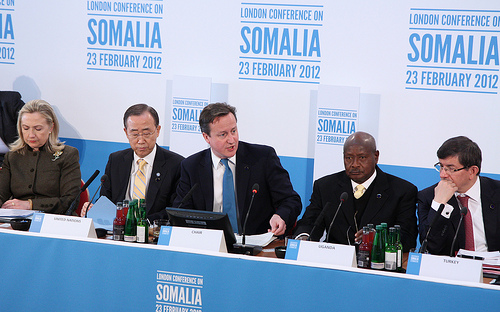
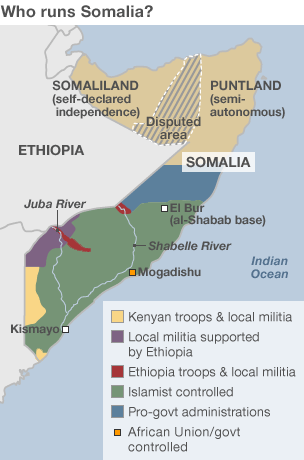
The much awaited London Conference on Somalia was finally held at Lancaster House, London on 23 February 2012. Fifty-five delegations attended the Conference, including the UK Prime Minister, David Cameron, the UN Secretary General, Ban-ki Moon and the US Secretary of State, Hillary Clinton as well as the leaders of various countries in the Gulf of Aden and East Africa region, such as Djibouti, Seychelles, Mauritius, Kenya and Tanzania. Leaders of Somalia’s Transitional Federal Government as well as of the breakaway regions of Puntland, Galmudug and Aluh Sunnah wal Jamaah (ASWJ) also participated. As anticipated, the self declared autonomous region of Somaliland attended the Conference, marking a major policy shift for the former British protectorate which deliberately stayed away from several previous peace conferences on Somalia. While the participation of all regions of Somalia was certainly a legitimating factor for the Conference, it is worth noting that the direct interests of Somalia were represented by 5 different delegations.

The Conference was meant to be a key moment in Somalia’s troubled history and called for a change in the international approach from the fruitless policies of the past 20 years. The Conference was preceded by much debate and a degree of controversy, particularly on the future of Somalia’s transitional federal institutions, whose mandate will end in August 2012. The Somali diaspora showed hope for more inclusiveness in building the political and economic landscape of the country. On the eve of the conference, in a bid to increase leverage of the decisions to be taken in London, the UN Security Council boosted the current African Union peacekeeping mission, raising its troop contingent up to 17000 soldiers.

The Conference registered a series of important political commitments from the stakeholders of the Somali cause, relevant to political, humanitarian, security and governance issues. Notably, leaders attending the Conference recognized the importance of empowering the Somali population and creating accountability for its political leadership, with the international community acting as a facilitator of the process. We will soon assess whether these commitments could turn into effective and practical action and what will be their contribution in shaping the future of this country. Not surprisingly, the fight against piracy occupied a prominent place in the discussion. Perhaps the most important aspect of the Conference in this regard was the acknowledgment that piracy in Somalia requires a comprehensive approach on land as well as at sea to tackle the root causes of piracy. This is a very important step. A military-focused approach of targeting pirates at sea coupled with limited judicial accountability measures could only provide a short term deterrent if not coupled with social development, economic growth and good governance. The underlying causes of piracy, but also its direct effects, are inextricably intertwined with all other problems affecting Somalia.

“We agreed that piracy cannot be solved by military means alone, and reiterated the importance of supporting communities to tackle the underlying causes of piracy, and improving the effective use of Somali coastal waters through regional maritime capacity-building measures.”

Some of the most encouraging developments of the Conference pertain to the immediate fight against piracy. These include the signing of important agreements enhancing the current plans by the international community to create a “cycle of justice”, or, as we called it, a “Globalized System of Criminal Justice”, where pirates are caught at sea, transferred to regional states for prosecution and, finally, imprisoned in Somalia. Hosting the Conference created momentum upon the UK’s own contribution to tackle piracy. The UK and Tanzania signed a memorandum of understanding allowing the UK Royal Navy to transfer suspected pirates apprehended at sea to Tanzania for prosecution. The UK also signed a statement of intent with Mauritius for the same purposes. These agreements are particularly relevant in light of Kenya’s current suspension of the transfer of suspected pirates for prosecution before its national courts. Plans for the imprisonment of pirates also registered some significant development. Puntland committed to the transfer of convicted pirates in the region to its prisons from August 2012. In an effort to enhance its anti-piracy strategy, Somaliland will also focus on improving its capacity to jail suspected and convicted offenders. Somaliland signed a ground breaking agreement with Seychelles for the transfer of convicted pirates to its prisons. In addition, Somaliland has recently passed a law declaring piracy illegal and making it an offense punishable by a maximum of twenty-five years. Somaliland previously limited prosecutions to charging alleged pirates with armed robbery.

“There will be no impunity for piracy. We called for greater development of judicial capacity to prosecute and detain those behind piracy both in Somalia and in the wider region and recognised the need to strengthen capacity in regional states. We welcomed new arrangements, which enable some states and naval operations to transfer suspected pirates captured at sea for trial by partners across the Indian Ocean region, and if convicted, to transfer them to prisons in Puntland and Somaliland which meet international standards. We noted the intention to consider further the possibility of creating courts in Somalia specialised in dealing with piracy.”

The first chance to evaluate the outcome of the London Conference will be, yet again, at another conference. Turkey, an increasingly growing ally of the Somali cause, will organize in cooperation with the UN the Second International Conference on Somalia. The conference will be held on 1 June 2012 in Istanbul. In addition, the UAE, the current chair of the Contact Group on Piracy off the Coast of Somalia. will host a second International Maritime Counter-Piracy Conference on 27-28 June 2012 in Dubai, further to an initial event hosted in April 2011. But the real work will be on the ground as attempts are made to execute the promises made at the conference, including exercising the rights and obligations set out in the newly minted transfer agreements.